
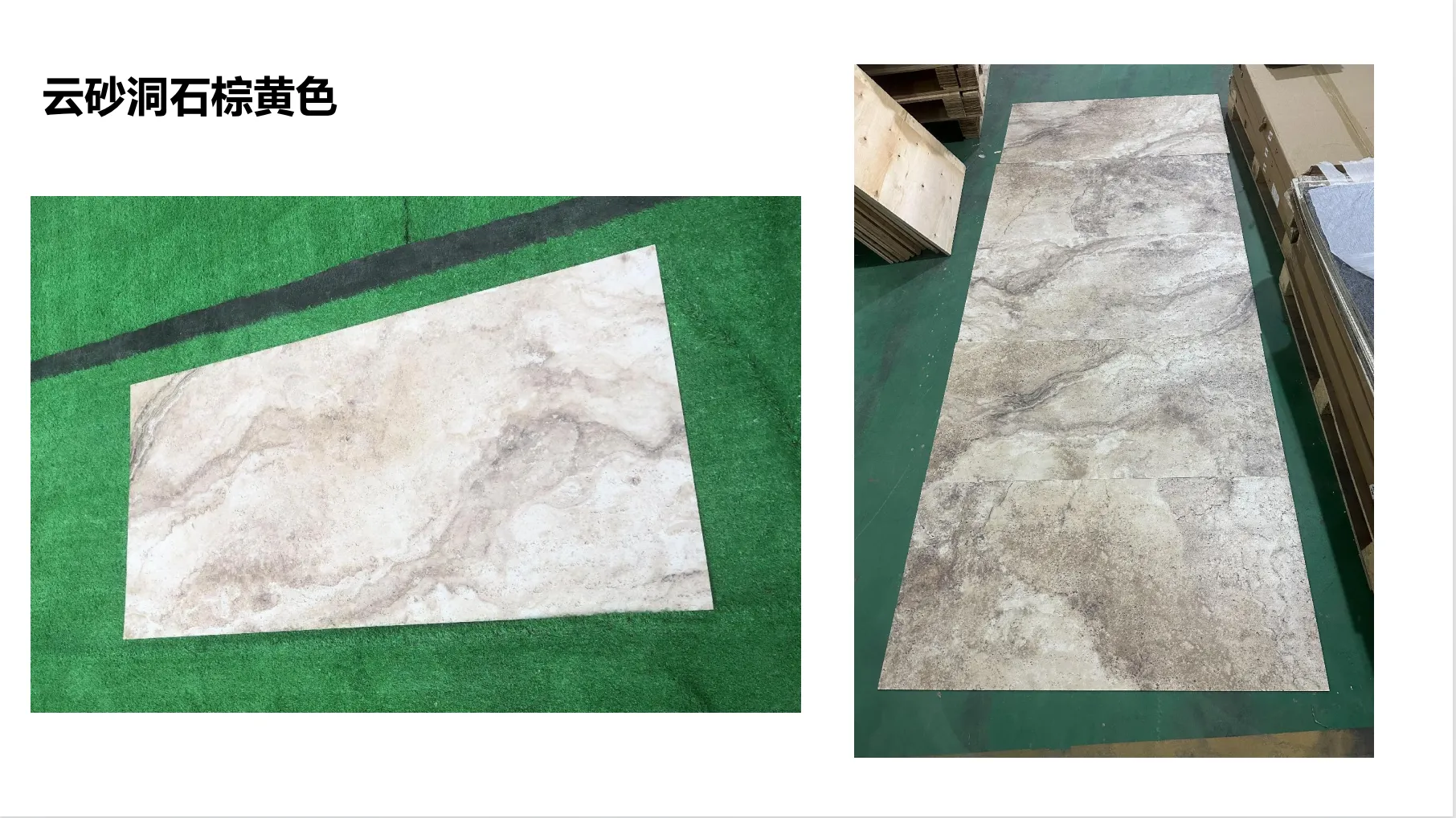
A journey through time, texture, and the enduring legacy of a remarkable stone
Elara paused at the edge of the quarry, her boots crunching on gravel as she reached out to trace the surface of a half-hewn slab. The stone beneath her fingertips was warm, even in the early morning chill—a soft, earthy claybank hue shot through with subtle veins of gray, like the memory of rain on parched soil. This was dolomitic travertine (claybank), a material that had whispered stories to builders for millennia. "It's not just stone," she murmured to her assistant, who was busy sketching the slab's unique texture. "It's a conversation between the past and the present."
That conversation, as Elara well knew, stretched back farther than most of us can fathom. From the sun-baked temples of ancient civilizations to the sleek facades of 21st-century skyscrapers, dolomitic travertine (claybank) has been more than a building material—it's been a historical pathfinder stone , guiding architects and craftsmen toward beauty, durability, and meaning. Today, as we stand at the crossroads of tradition and innovation, this unassuming stone continues to bridge eras, reminding us that some materials are not just made to last—they're made to connect .
Long before concrete mixers or 3D printers, ancient societies turned to the earth itself for building blocks. In regions like modern-day Italy, Turkey, and Iran, dolomitic travertine (claybank) emerged as a favorite—not just for its strength, but for its warmth . Unlike the cold sterility of some granites or the flashy opulence of marble, this stone felt alive, as if it retained the sun's energy from the moment it formed in mineral-rich springs.
Take the Etruscans, for example, those enigmatic predecessors to the Romans. They carved dolomitic travertine (claybank) into sarcophagi and temple friezes, its claybank tones complementing the rich woods of their interiors—woods that would later be known, in architectural circles, as ancient wood . Together, stone and wood created spaces that felt both grounded and sacred, a harmony of natural elements that mirrored their belief in the interconnectedness of life.
But it was the Romans who truly elevated dolomitic travertine (claybank) to an art form. Think of the Colosseum: while its outer layers are famous for their travertine blocks, many of the inner corridors and lesser-known chambers were lined with dolomitic travertine (claybank). Why? Because it was easier to quarry in large slabs, more resistant to moisture than pure limestone, and its neutral hue didn't compete with the vibrant frescoes that once adorned the walls. A Roman architect's journal, discovered in the 19th century, even refers to it as "the people's stone"—durable enough for public baths, elegant enough for villas, and accessible enough for ordinary homes.
As the Roman Empire fell, dolomitic travertine (claybank) didn't vanish—it simply adapted. In medieval Europe, monks used it to build abbeys and cloisters, its soft texture ideal for intricate carvings of saints and biblical scenes. In the Middle East, traders carried slabs along the Silk Road, where it was used to line mosques and palaces, its claybank color blending seamlessly with the desert landscapes. Even then, it was a historical pathfinders stone , marking the routes of commerce and faith, and binding distant cultures through a shared appreciation for quality.
The Industrial Revolution brought with it a flood of new materials: steel, glass, concrete. For a time, traditional stones like dolomitic travertine (claybank) took a backseat, seen as old-fashioned compared to these shiny, "modern" alternatives. But by the mid-20th century, architects began to crave something more authentic. They'd grown weary of cold, sterile buildings that felt disconnected from nature—and dolomitic travertine (claybank) answered the call.
Consider the work of Carlo Scarpa, the Italian architect famous for his poetic use of materials. In the 1960s, he used dolomitic travertine (claybank) in the Brion Cemetery, pairing its earthy tones with water features and ancient wood accents to create a space that felt both mournful and life-affirming. "Stone is not just a surface," Scarpa once said. "It's a memory of the earth's slow, patient work."
Today, dolomitic travertine (claybank) is experiencing a renaissance—this time, with a sustainable twist. Architects like Elara are specifying it for green buildings, drawn to its low carbon footprint (it's quarried with minimal energy) and its ability to regulate indoor temperatures, reducing the need for heating and cooling. In urban projects, it's often paired with materials like marble interstellar gray , a sleek, modern stone that contrasts beautifully with dolomitic travertine's organic warmth. Together, they create facades that feel both cutting-edge and timeless.
Take the recently completed Riverfront Museum in Portland, Oregon. Its exterior features large panels of dolomitic travertine (claybank) interspersed with strips of marble interstellar gray, the combination evoking both the region's rocky rivers and its forward-thinking spirit. Inside, the stone lines the lobby floors, where visitors often pause to run their hands over its surface—a subconscious nod to the ancient builders who first recognized its magic.
| Material | Ancient Use | Modern Use | Key Characteristic |
|---|---|---|---|
| Dolomitic Travertine (Claybank) | Temple walls, sarcophagi, public baths | Green building facades, museum interiors, sustainable homes | Warm claybank hue with gray veins; regulates temperature naturally |
| Historical Pathfinders Stone | Trade route markers, boundary stones | Cultural heritage sites, memorials | Durable, weather-resistant; tells stories of human migration |
| Ancient Wood | Temple beams, sarcophagus lids, furniture | Accent walls, sustainable furniture, eco-friendly interiors | Warm, organic texture; pairs harmoniously with stone |
As Elara left the quarry that morning, she carried a small sample of dolomitic travertine (claybank) in her pocket. It was rough around the edges, still bearing the marks of the quarryman's chisel, but she could already imagine it in the lobby of the community center she was designing—a space where families would gather, children would run their fingers over its surface, and strangers would pause, if only for a moment, to feel connected to something larger than themselves.
Dolomitic travertine (claybank) isn't just a material, after all. It's a thread that weaves through human history, a silent witness to our triumphs and tragedies, our creativity and our longing for meaning. From the Etruscans to Elara, from temples to community centers, it reminds us that the best buildings aren't just made of stone and wood—they're made of stories . And in a world that's always rushing forward, there's something profoundly comforting about a story that's been told, and retold, for thousands of years.
Recommend Products












