

Walk through a historic town square, and you'll feel the weight of time in every cobblestone and stone wall—rough, unyielding, etched with the marks of weather and wear. Fast forward to a modern city skyline, and the buildings seem to defy gravity: sleek, light, their facades shifting with the sun like living surfaces. This transformation isn't just about aesthetics; it's a revolution in how we build. At the center of this shift lies a material that has quietly redefined possibility: MCM flexible stone . And among its most celebrated creations? Fine Line Stone (White)—a product born from the need to blend the warmth of natural stone with the practicality of 21st-century engineering.
It started with a problem as old as construction itself: stone is beautiful, but it's heavy. Architects and builders have long grappled with this paradox. A marble lobby might take your breath away, but hoisting those slabs to the 50th floor? A logistical nightmare. Traditional materials like travertine (beige) or even fair-faced concrete —valued for their raw, industrial charm—came with trade-offs: weight, brittleness, or limited design flexibility. By the early 2000s, the industry was crying out for something new: a material that could mimic the look of natural stone but bend, lighten the load, and reduce environmental impact.
Enter MCM (Modified Composite Material), a category of engineered cladding that would change the game. MCM's promise was simple: take the durability of stone, the flexibility of plastic, and the sustainability of recycled materials, and fuse them into one. But within MCM, there was a gap: a product that offered the understated elegance of a neutral palette, with a texture so refined it could stand alone in minimalist designs or complement bolder elements. That's where Fine Line Stone (White) was born—not as a replacement for traditional stone, but as its smarter, more adaptable cousin.
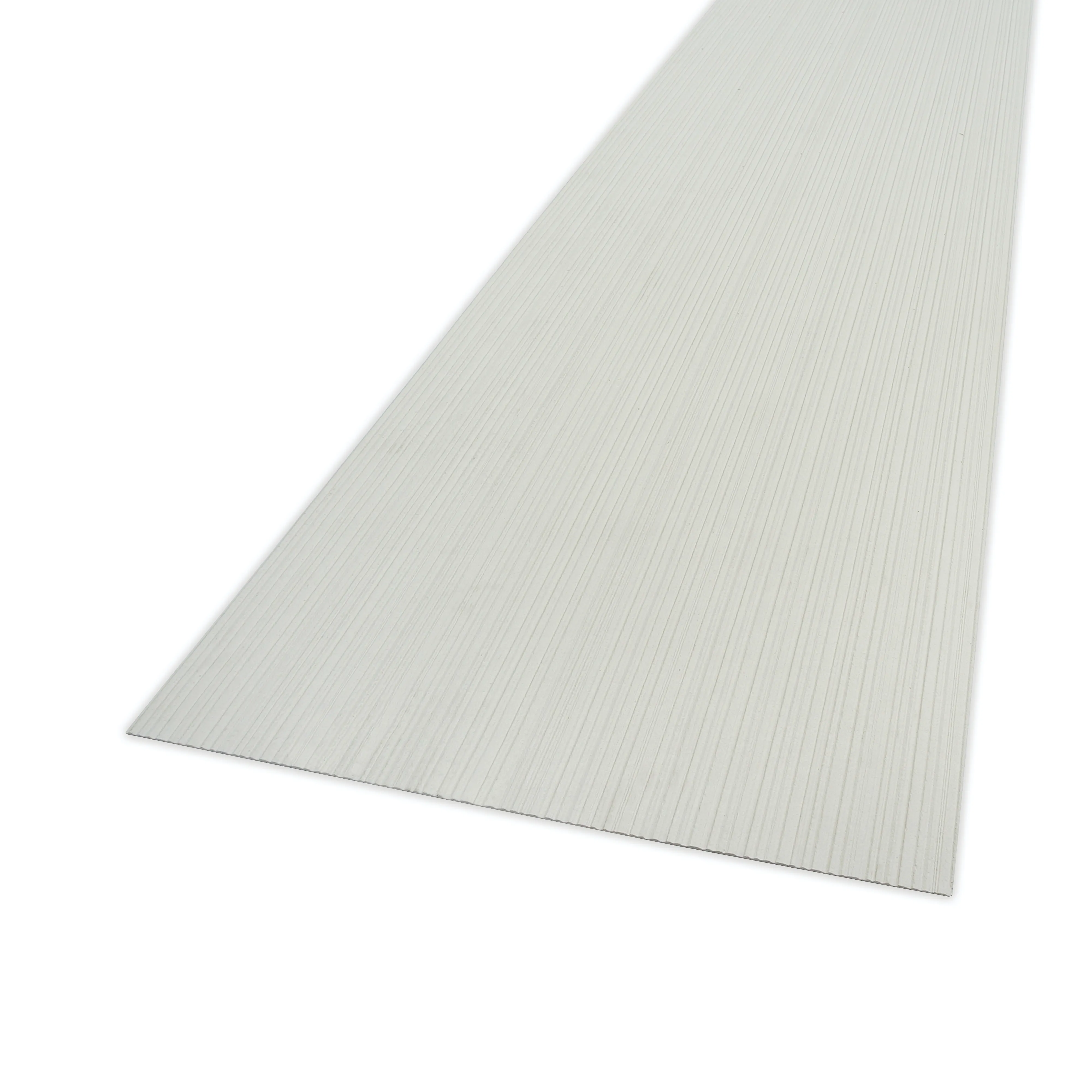
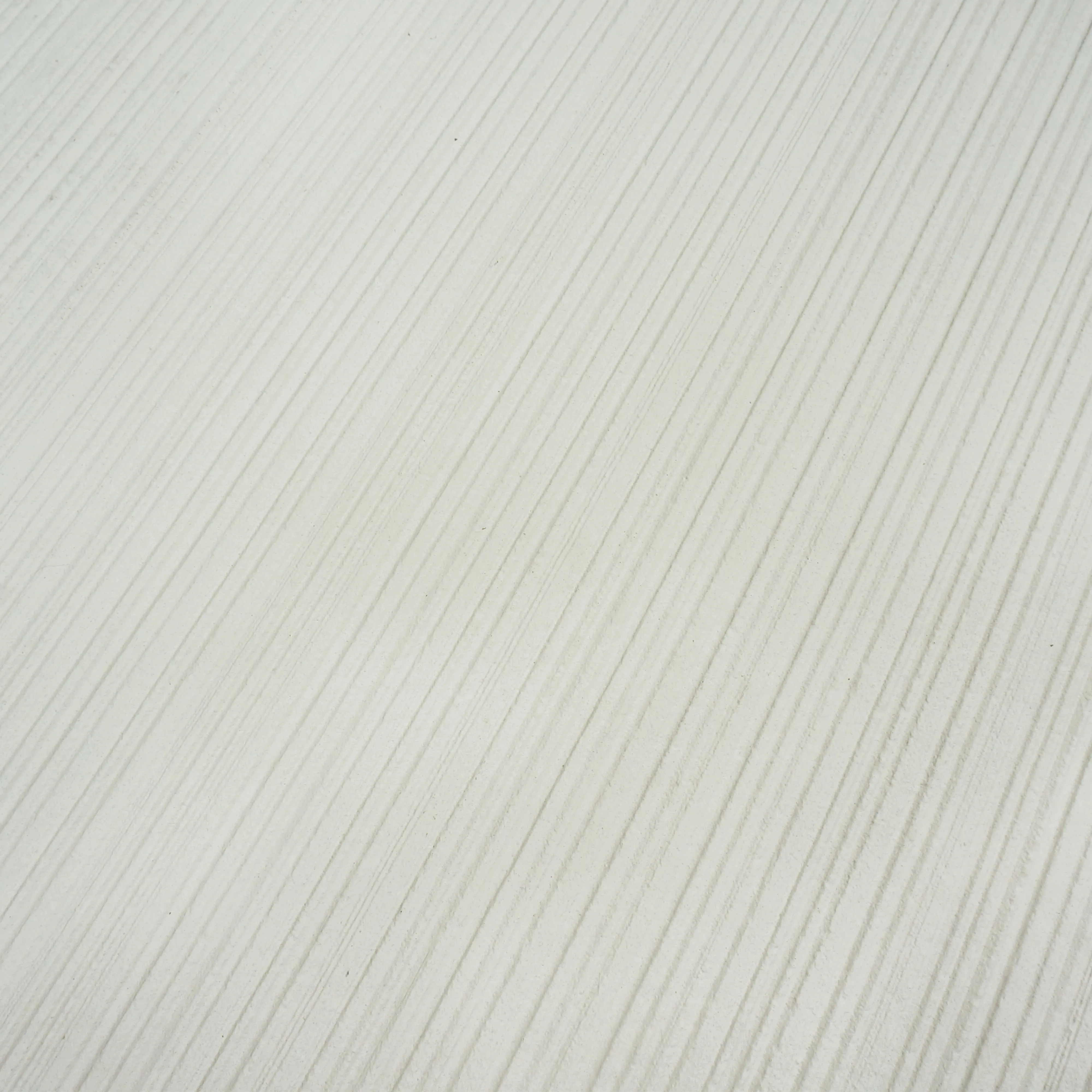
The story of Fine Line Stone (White) isn't one of overnight success. It began in a small material science lab in 2010, where a team of engineers and designers obsessed over a single question: How do you make stone "bend" without losing its soul? Early prototypes felt too synthetic, like cheap plastic masquerading as stone. Others were too fragile, cracking under the stress of temperature tests. "We spent two years just getting the texture right," recalls Dr. Elena Marquez, lead material scientist on the project. "We wanted that soft, matte finish you see in aged travertine (beige) —the kind that catches light gently, not harshly. But we also needed it to withstand hailstorms in Canada and humidity in Singapore."
Breakthroughs came from unexpected places. A visit to a traditional paper mill inspired the team to layer recycled stone dust with polymer resins, creating a composite that was both strong and pliable. By 2015, they had a prototype: a thin, 4mm sheet that could curve 30 degrees without breaking, yet still had the heft of stone when you touched it. "We took it to a group of architects, and one of them ran his hand over it and said, 'This feels like stone, but it moves like fabric,'" Marquez laughs. "That's when we knew we had something."
Testing wasn't just about strength. Aesthetic consistency was critical. Unlike natural travertine (beige) , which varies wildly in veining and color, Fine Line Stone (White) needed to look uniform across large surfaces. The team turned to MCM 3D printing series technology, using 3D scanners to map the subtlest variations in natural stone and replicate them digitally. The result? A finish with the organic look of stone but the reliability of a manufactured product—a detail that would make it a favorite among designers craving precision.
To understand Fine Line Stone (White)'s appeal, you have to compare it to the materials it was built to outperform. Let's start with weight: A square meter of traditional travertine (beige) weighs roughly 25kg; Fine Line Stone (White)? Just 8kg. That's a 68% reduction—enough to slash construction time and costs, especially in high-rises where every kilogram counts. "We once worked on a 20-story hotel where switching to Fine Line Stone (White) cut the crane time by half," says Mike Chen, a construction manager in Shanghai. "And because it's so light, we could install it with a two-person crew instead of four."
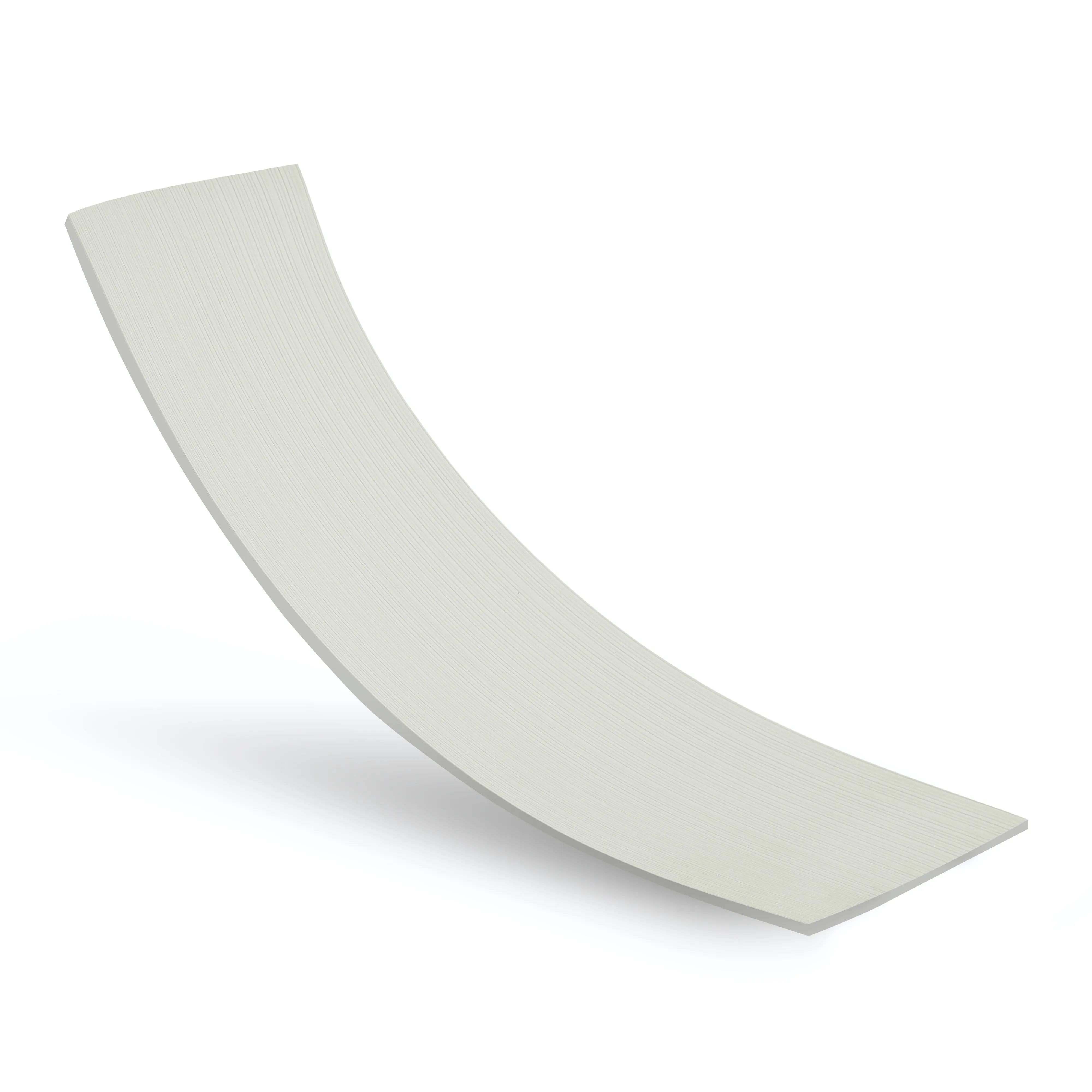
Then there's flexibility. Traditional stone is rigid; even fair-faced concrete , for all its versatility, can't curve without complex (and expensive) formwork. Fine Line Stone (White), though, bends. Picture a museum facade that sweeps in a gentle arc, or a retail space with a curved accent wall—designs that would have been impossible with stone just a decade ago. "It's like giving architects a new set of crayons," says interior designer Sarah Lopez. "Suddenly, walls don't have to be flat. They can flow."
Durability? It holds its own. In accelerated aging tests, Fine Line Stone (White) withstood 2,000 hours of UV exposure (the equivalent of 20 years in direct sunlight) without fading. It resisted water absorption better than natural stone, making it ideal for rainy climates, and its fire-resistant core met strict safety codes. Even in freeze-thaw cycles—where traditional stone can crack—Fine Line Stone (White) stayed intact. "We installed it on a ski lodge in the Alps five years ago," Chen adds. "Last winter, I checked in, and it still looks brand new. Not a chip, not a stain."
And let's talk sustainability. Quarrying travertine (beige) or marble can scar landscapes and consume massive amounts of water. Fine Line Stone (White), by contrast, is made with up to 30% recycled stone dust and resin, and its production process uses 70% less water than traditional stone cutting. For developers chasing LEED or BREEAM certifications, that's a huge win. "Sustainability isn't just a buzzword anymore," Lopez notes. "Clients ask for it upfront, and Fine Line Stone (White) checks that box without sacrificing beauty."
| Material | Weight (kg/m²) | Flexibility | UV Resistance | Sustainability |
|---|---|---|---|---|
| Fine Line Stone (White) MCM | 8 | Curves up to 30° without cracking | 2,000+ hours (no fading) | 30% recycled materials; low water usage |
| Travertine (Beige) (Traditional) | 25 | Rigid; prone to chipping if bent | 1,000–1,500 hours (may fade) | High quarrying impact; high water usage |
| Fair-Faced Concrete | 22 | Limited; requires custom formwork for curves | 1,500–2,000 hours (may discolor) | High carbon footprint (cement production) |
| Lunar Peak Silvery (MCM) | 9 | Curves up to 25° | 2,500+ hours (metallic finish resists fading) | 25% recycled materials |
Fine Line Stone (White) didn't just stay in the lab. Its first big break came in 2018, with a boutique hotel in Barcelona. The designer, known for minimalist interiors, wanted a lobby wall that felt "serene, like a blank canvas." Traditional travertine (beige) was too busy; fair-faced concrete felt too cold. Fine Line Stone (White) fit perfectly—its soft, matte finish and uniform color created a calming backdrop for the hotel's art installations. Photos of the lobby went viral in design circles, and suddenly, orders poured in.
From there, it spread like wildfire. In Dubai, a luxury residential tower used it for its facade, drawn to its ability to reflect the desert sun without overheating. In Tokyo, a museum chose it for its curved entrance, citing its lightweight nature as a key factor in meeting seismic safety standards. Even in smaller projects—a café in Portland, a home renovation in Sydney—designers fell for its versatility. "It works everywhere," says Lopez. "Modern, industrial, even coastal—its neutral tone plays well with any palette."
What truly cemented its global status, though, was its compatibility with other MCM lines. Architects began pairing Fine Line Stone (White) with bolder options like lunar peak silvery —a metallic MCM with a starry, iridescent finish—to create dynamic facades. "We did a tech office in Berlin where we used Fine Line Stone (White) as the base and lunar peak silvery for accent panels," Chen recalls. "The contrast between the soft white and the silvery sheen was stunning. Clients started asking for 'the Berlin look.'"
The story of Fine Line Stone (White) isn't over. The team behind it is already experimenting with new textures and finishes, including a version that mimics the rough-hewn look of travertine (beige) but retains the signature flexibility. There's also talk of integrating smart technology—imagine a facade made of Fine Line Stone (White) that changes color subtly in response to temperature, or embedded with sensors to monitor building health.
Sustainability, too, remains a focus. The next generation of MCM is set to use even more recycled materials, and the team is exploring carbon-negative production processes. "We want to be net-zero by 2030," says Marquez. "Fine Line Stone (White) was born from a desire to do better—for builders, for designers, for the planet. That mission isn't going anywhere."
At the end of the day, though, its greatest legacy might be intangible: proving that innovation and tradition can coexist. Fine Line Stone (White) doesn't replace travertine (beige) or fair-faced concrete ; it honors them by taking their best qualities and making them accessible to more projects, more designers, more dreamers. In a world where building materials often feel cold or impersonal, it's a reminder that even engineered products can have heart.
Fine Line Stone (White) isn't just a cladding material. It's a symbol of how far we've come in reimagining the built environment. From the first sketch in a lab to the skyline-altering projects of today, it's a testament to what happens when we refuse to accept the limitations of the past. As architects and builders continue to push boundaries, one thing is clear: the future of construction will be lighter, more flexible, and more beautiful—thanks in no small part to materials like this.
So the next time you walk past a building with a sleek, white facade that seems to glow in the light, take a closer look. It might just be Fine Line Stone (White)—quietly, steadily, writing the next chapter in the history of how we build.
Recommend Products












