
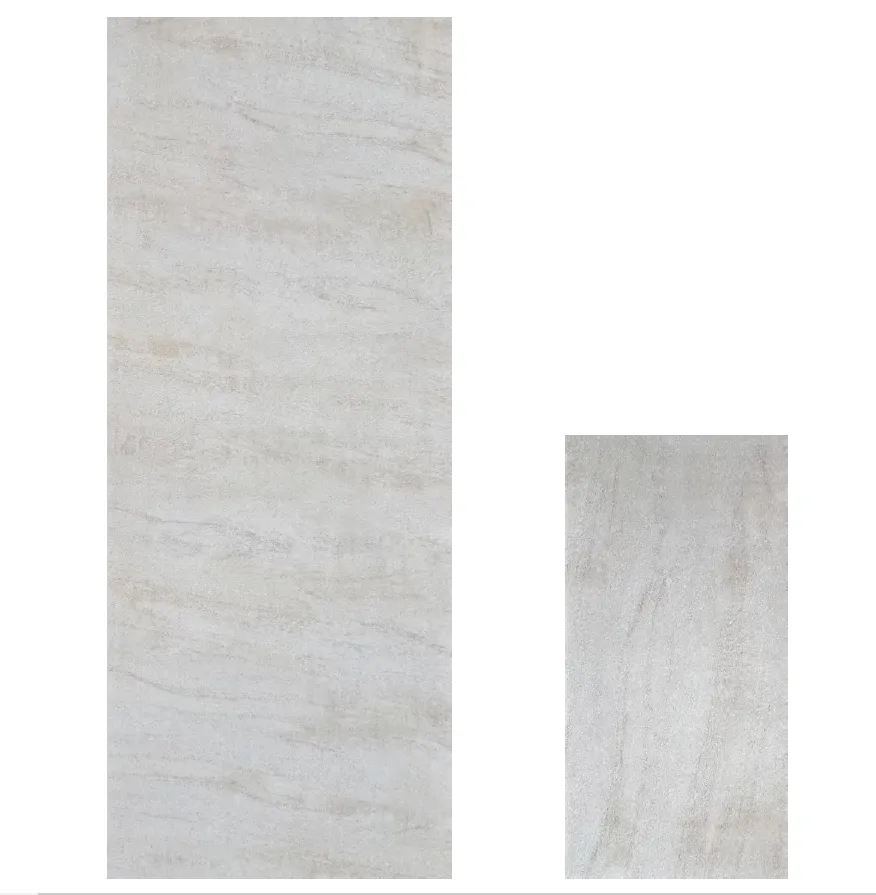
Walk into any contemporary boutique hotel, sleek office lobby, or high-end residential complex these days, and you'll likely notice something remarkable about the walls. They might shimmer with the soft veining of marble, but there's a subtle twist—an almost liquid-like flow to the patterns, as if a mountain stream was frozen mid-movement. Run your hand over the surface, and it feels cool and stone-like, yet surprisingly lightweight. Chances are, you're touching Marble Stream Stone —a material that's redefined how we think about natural aesthetics in modern design. But to understand its story, we need to start with the visionaries who dared to ask: What if we could make stone bend, flow, and adapt without losing its soul?
Long before Marble Stream Stone became a staple in architectural circles, there was a problem plaguing designers worldwide: natural stone is stunning, but it's a diva. Heavy, brittle, and notoriously tricky to install on curved surfaces or tall buildings, traditional marble and granite slabs often forced compromises. Architects would fall in love with a stone's texture, only to realize it couldn't be transported up 50 floors or shaped to fit a rounded facade. Enter MCM—Modified Composite Material—a category of building materials born in the early 2000s from a simple yet radical idea: blend the beauty of natural stone with the versatility of modern composites.
MCM's founding principle was deceptively straightforward: take crushed natural stone particles, mix them with high-performance polymers, and compress them into thin, flexible sheets. The result? A material that looked and felt like the real thing but weighed a fraction of the cost, resisted cracks, and could be bent into almost any shape. Early MCM products focused on replicating basic stone textures, but the team at MCM had bigger dreams. They wanted to capture not just the look of nature, but its movement .
It was a crisp autumn day in 2010 when a small group of MCM designers and engineers took a field trip to the Italian Alps. Hiking along the banks of the Aare River, they paused to watch water rush over smooth, rounded stones, carving delicate grooves and swirling patterns into the rock. "It was like the stone itself was alive," recalls Maria Grazia, lead designer on the project. "The way light hit the wet surfaces, the way the veins of the marble in the riverbed seemed to flow with the current—we thought, 'Why can't our cladding materials tell that story?'"
That moment sparked the concept for Marble Stream Stone . The goal wasn't just to copy marble; it was to distill the essence of a natural process—centuries of water erosion, pressure, and time—into a material that could be mass-produced. The team spent months studying riverbed stones, taking thousands of photos of marble formations in quarries, and even creating 3D models of how water interacts with rock. They wanted the final product to evoke the same emotion as standing beside that alpine stream: calm, dynamic, and deeply connected to the earth.
Turning that vision into reality wasn't easy. The first prototypes, created in 2012, were promising but lacked depth. "We could get the color right, but the 'flow' felt forced," says Grazia. "It looked like someone had painted swirls on a flat surface, not like nature had carved them over millennia." The breakthrough came when the team began experimenting with MCM flexible stone technology—a proprietary process that allows the composite material to be manipulated at the molecular level, creating layers of texture that mimic the way sediment builds up in riverbeds.
By 2014, after hundreds of iterations, the first batch of Marble Stream Stone rolled off the production line. What set it apart? Its "veining" wasn't just printed on top; it was embedded within the material. Tiny particles of natural marble were arranged in patterns that followed the flow of the composite during manufacturing, creating a depth that no printed finish could match. And thanks to MCM's flexible core, the sheets could be bent up to 90 degrees without cracking—something unheard of with traditional marble.
While Marble Stream Stone wowed designers with its aesthetics, it was the launch of the MCM big slab board series in 2016 that truly changed the game. Traditional stone slabs max out at around 2 meters in length, leaving unsightly seams when covering large walls. MCM's big slab technology shattered that limit, producing sheets up to 3.2 meters long and 1.6 meters wide—big enough to cover an entire accent wall with just a few pieces. Suddenly, architects could create seamless, waterfall-like installations that made Marble Stream Stone feel even more immersive.
"I remember the first time we installed a 3-meter Marble Stream Stone slab in a luxury penthouse in Dubai," says Ahmed Hassan, a lead installer with MCM's partner firm. "The client walked in, ran her hand along the wall, and said, 'It looks like the stone is moving.' That's the magic of the big slabs—no seams, no breaks. Just this continuous flow of texture that draws you in."
| Feature | Marble Stream Stone (MCM Big Slab) | Traditional Natural Marble Slab |
|---|---|---|
| Weight (per m²) | 8–10 kg | 25–30 kg |
| Maximum Slab Size | 3.2m x 1.6m | 2.0m x 1.2m |
| Flexibility | Bends up to 90° without cracking | Rigid; cracks under minimal flex |
| Installation Time | 30% faster (lighter, larger slabs) | Slower (requires heavy lifting, more seams) |
| Moisture Resistance | High (polymer core repels water) | Low (porous; prone to staining) |
| Aesthetic Options | 12+ vein patterns, 8 finishes | Limited by natural quarry variations |
What truly cemented Marble Stream Stone 's place in design history was its adaptability. Early on, designers realized it wasn't just for walls. Hotels began using it for reception desks, curved to mimic the flow of a river. Restaurants installed it on ceilings, creating the illusion of a stone canopy. Even furniture designers got creative—think coffee tables with edges that "flow" onto the floor, or bathroom vanities that look like they were carved from a single block of liquid stone.
One of the most iconic uses came in 2019, when the Azure Museum in Singapore clad its entire facade in Marble Stream Stone (in a custom "ocean blue" vein, inspired by the nearby sea). The building, which curves like a wave, required a material that could bend with its contours. Traditional stone would have been impossible; MCM's flexible slabs made it effortless. "Visitors often stop and touch the walls," says the museum's architect, Kenzo Tanaka. "They can't believe it's not real marble. That's the power of Marble Stream Stone —it bridges the gap between nature and innovation."
As the world grew more eco-conscious, Marble Stream Stone found another advantage: sustainability. Quarrying natural marble is resource-intensive, often leaving scars on landscapes and generating tons of waste. MCM's process, by contrast, uses 70% recycled stone particles and 30% plant-based polymers, cutting carbon emissions by 40% compared to traditional stone production. What's more, the material's light weight reduces fuel consumption during transportation—a single truck can carry 10 times more MCM slabs than natural stone slabs, slashing emissions even further.
"We had a client in Norway who refused to use natural stone due to environmental concerns," says Grazia. "When we showed them our sustainability report, they were sold. Now their office building's lobby is covered in Marble Stream Stone , and they're winning awards for green design. It's proof that beauty and responsibility don't have to be enemies."
Fast forward to 2025, and Marble Stream Stone has evolved into a global phenomenon. The MCM big slab board series now includes over 50 variants, from the classic "Alpine Stream" (soft whites and grays) to bold new options like "Volcanic Flow" (deep reds and blacks swirled with gold). Designers are pairing it with other MCM innovations, like travertine (starry blue) accents, creating spaces that feel both grounded and otherworldly.
But perhaps the most exciting development is the rise of customization. Thanks to 3D scanning technology, clients can now bring in photos of their favorite natural stone formations—say, a family heirloom marble fireplace or a beloved beach stone—and MCM will replicate those exact patterns in Marble Stream Stone . "We had a bride request a wedding venue wall that matched the marble in her childhood home," laughs Grazia. "We scanned the original stone, digitized the veins, and recreated it perfectly. That's the future—stone that's not just beautiful, but personal."
Looking back, Marble Stream Stone 's success isn't just about technology. It's about capturing something timeless: humanity's love affair with nature's chaos and order. In a world of sleek minimalism, there's a hunger for materials that tell a story—materials that feel like they've been shaped by wind, water, and time. Marble Stream Stone does exactly that, but with a modern twist: it bends, adapts, and fits into the spaces we build, rather than forcing us to build around it.
So the next time you encounter those flowing, liquid-like patterns on a wall, take a moment to appreciate the journey. From a riverbank in the Alps to a state-of-the-art factory, from a bold idea to a global movement—this is the history of Marble Stream Stone . And if the past decade is any indication, its story is just getting started.
Recommend Products












