
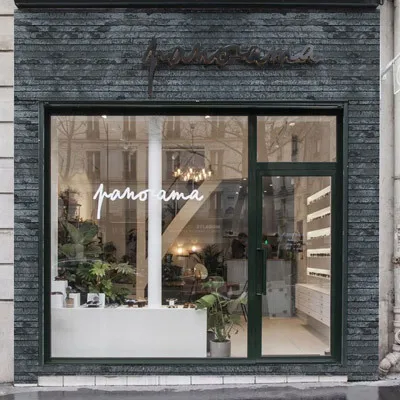
Architecture is more than just walls and roofs—it is the language of human creativity, a dialogue between past and present, and a testament to how we shape our world. For centuries, builders have turned to stone, wood, and clay to craft spaces that tell stories, evoke emotions, and stand the test of time. Yet as technology advances and design aspirations evolve, the materials that define our built environment must also transform. Enter Muretto Stone —a modern marvel that bridges the warmth of traditional craftsmanship with the precision of contemporary engineering. Its journey from a conceptual sketch to a staple in cutting-edge architecture is not just a tale of material science, but a story of passion, innovation, and the relentless pursuit of beauty in functionality.
The story of Muretto Stone begins in the early 2010s, when a team of architects, material scientists, and designers grew frustrated with a familiar dilemma: traditional building materials often forced a trade-off between aesthetics and practicality. Natural stone, like the travertine quarried in Italy for millennia, offered unparalleled texture and depth, but its weight made installation costly and its porosity left it vulnerable to weathering. Synthetic alternatives, meanwhile, lacked the organic character that made natural stone so beloved. "We wanted something that felt alive—like it had a history—without the limitations of the past," recalls Elena Marini, lead designer at the Milan-based studio that pioneered Muretto Stone. "It wasn't just about creating a new product; it was about reimagining how we interact with the surfaces around us."
Inspiration struck during a research trip to the Italian countryside, where the team encountered ancient villages built with muretto —a traditional dry-stone walling technique that uses irregular stones stacked without mortar. The walls, weathered by wind and rain, told stories of generations of builders, their textures shifting with the light of day. "There was a raw, tactile quality to those walls that synthetic materials couldn't replicate," Marini says. "But we also saw their flaws: they were heavy, hard to scale for large projects, and prone to erosion. We thought, 'What if we could capture that soul, but make it stronger, lighter, and more adaptable?'"
The team began by studying the chemical composition of natural stones, from the crystalline structure of travertine (starry green) to the layered density of lunar peak silvery —a material known for its iridescent finish. They also looked to modern innovations, like foamed aluminium alloy board (vintage silver) , which offered strength at a fraction of the weight of solid metal. "We were like alchemists," jokes Marco Rossi, the materials engineer who led the project's technical development. "We mixed elements of the old and new, testing hundreds of formulations until we found a balance that felt right."
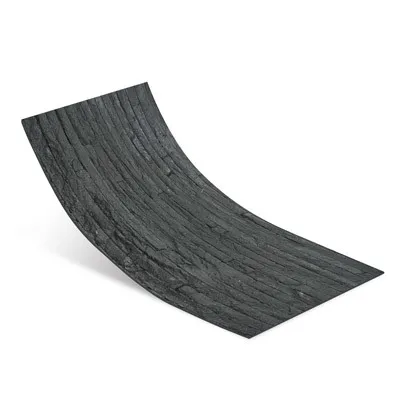
The development of Muretto Stone was not a quick process. For three years, the team worked in a small lab outside Turin, experimenting with composite materials, binders, and texturing techniques. Early prototypes felt too artificial—"like plastic trying to be stone," Marini admits. Others were too fragile, cracking under the stress of temperature tests. It wasn't until they incorporated rammed earth board technology, a method that compresses soil and natural fibers to create dense, durable panels, that the project gained momentum. "Rammed earth gave us the organic matrix we needed," Rossi explains. "By combining it with a proprietary blend of polymers and mineral aggregates, we could mimic the porosity of travertine while adding tensile strength."
One of the biggest challenges was replicating the variability of natural stone. No two pieces of travertine are identical—some have larger voids, others richer veining—and that uniqueness is part of their charm. To achieve this, the team developed a 3D-texturing process inspired by MCM 3D printing series technology, which allowed them to program subtle variations into each panel. "We'd scan samples of ancient muretto walls, then translate those patterns into digital models," says Rossi. "When we printed the molds, we added randomness—extra pits here, a thicker vein there—to ensure no two Muretto Stone panels are exactly alike. It's controlled chaos, and it's what makes the material feel alive."
Durability testing was another hurdle. The team subjected prototypes to extreme conditions: freezing temperatures, heavy rainfall, UV radiation, and even simulated earthquakes. "We wanted Muretto Stone to outlast the buildings it's used in," Rossi says. "Traditional travertine might need sealing every few years; we aimed for a material that could withstand decades of exposure without losing its character." By 2016, they had a breakthrough: a composite blend of natural minerals, recycled glass, and reinforced polymers that was 30% lighter than natural travertine, 50% more resistant to water absorption, and just as visually striking.
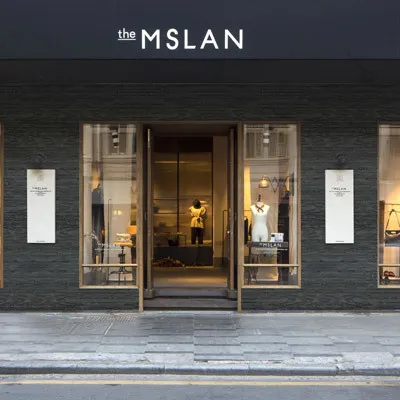
A material is only as good as its performance in the field, so in 2017, the team partnered with a small construction firm to install Muretto Stone on a residential project in Bologna. The client, a restaurateur named Luca Bertoli, wanted the exterior of his new bistro to evoke the warmth of a countryside trattoria but with the durability to withstand the city's busy streets. "I was skeptical at first," Bertoli admits. "I'd grown up around natural stone; I thought anything man-made would feel fake. But when I saw the samples, I was blown away. They had the same depth as the travertine in my grandmother's kitchen, but they were lighter and easier to work with."
The installation process proved to be a revelation. Unlike traditional stone, which requires cranes and specialized labor, Muretto Stone panels could be carried by two workers and installed with standard tools. "We saved weeks on labor costs," says Giovanni Conti, the project's contractor. "And when we finished, the building looked like it had been there for a hundred years, not a hundred days. Passersby would stop and touch the walls, commenting on how 'authentic' they felt. That's the magic of Muretto Stone—it tricks the eye, but in the best way."
The bistro's success caught the attention of architects across Europe. Soon, Muretto Stone was being used in projects ranging from a boutique hotel in Barcelona (paired with lunar peak golden accents for a luxurious contrast) to a community center in Berlin (combined with foamed aluminium alloy board (vintage gold) for a modern-industrial vibe). "What surprised us most was how versatile it was," Marini says. "We thought it would appeal to traditionalists, but young designers loved it too. They'd pair it with fair-faced concrete or thread patterns, creating juxtapositions that felt fresh and exciting."
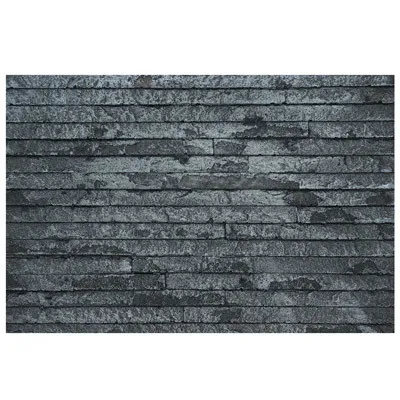
At its core, Muretto Stone is a composite material, but its magic lies in the details. Let's break down what sets it apart:
Unlike uniform synthetic panels, Muretto Stone features controlled variability —subtle differences in texture, color, and pattern that mimic the randomness of natural stone. "We use a 3D printing process to create molds that replicate the look of hand-chiseled stone," Rossi explains. "Each panel has its own 'personality': some have deeper pits, others finer veins, just like you'd find in a quarry. It's why people keep touching it—there's always something new to discover."
Natural stone like travertine (vintage black) can weigh up to 200 pounds per square meter, making it impractical for high-rise buildings or retrofits. Muretto Stone, by contrast, weighs just 45 pounds per square meter, thanks to its cellular core structure (a technology borrowed from foamed aluminium alloy board ). "This opens up possibilities for projects that would have been impossible with traditional stone," says structural engineer Sofia Patel, who used Muretto Stone on a 12-story apartment complex in London. "We could clad the entire facade without reinforcing the building's foundation—something that would have added millions to the budget with natural stone."
One of the biggest drawbacks of natural travertine is its porosity: it absorbs water, leading to cracks in freezing temperatures and stains from pollution. Muretto Stone's surface is treated with a nano-coating that repels water and resist stains, while its composite core resists warping and erosion. "We installed Muretto Stone on a coastal home in Croatia five years ago," Conti says. "The salt air would have eaten through natural stone by now, but those panels still look brand new. It's a game-changer for harsh climates."
In an era of eco-conscious design, Muretto Stone stands out for its green credentials. It contains 60% recycled materials, including crushed glass and reclaimed stone dust, and its lightweight nature reduces carbon emissions during transportation. "We also use a water-based binder instead of toxic resins," Marini notes. "Builders love that they can meet sustainability certifications without sacrificing style."
Muretto Stone is available in a range of finishes, from the earthy tones of lime stone (beige) to the dramatic depth of lunar peak black . It can be cut into custom shapes, curved for organic designs, or even combined with other materials like wood or metal. "We've seen designers use it for accent walls, fireplace surrounds, outdoor patios—even furniture," Marini says. "The only limit is imagination."
| Feature | Muretto Stone | Natural Travertine | Lunar Peak Series |
|---|---|---|---|
| Weight (per sq. meter) | 45 lbs | 200 lbs | 60 lbs |
| Water Absorption | <1% | 5-8% | 2-3% |
| Installation Time | 2-3 hours per 100 sq. ft | 8-10 hours per 100 sq. ft | 4-5 hours per 100 sq. ft |
| Sustainability | 60% recycled materials | Quarrying impact | 30% recycled materials |
| Texture Variability | High (controlled randomness) | High (natural randomness) | Medium (uniform pattern) |
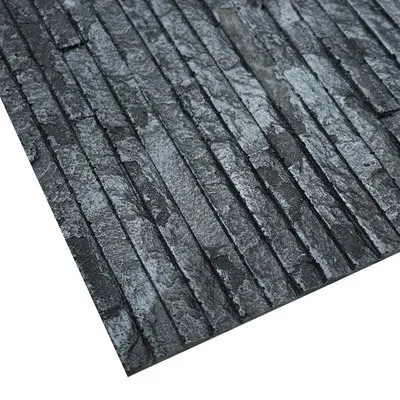
From urban skyscrapers to rural retreats, Muretto Stone has left its mark on projects that blend functionality with artistry. Here are a few standouts:
Designed by Elena Marini herself, this gallery in the heart of Florence uses Muretto Stone in a travertine (starry blue) finish to complement the city's Renaissance architecture. The walls, which curve gently around the exhibition spaces, create a sense of flow, while the stone's texture adds depth to the neutral palette. "We wanted the building to feel like a canvas for the art," Marini says. "The Muretto Stone doesn't compete with the paintings; it enhances them, reflecting light in a way that makes the colors pop."
Nestled between Iceland's volcanic landscapes, this boutique hotel pairs Muretto Stone with lunar peak silvery accents to evoke the Northern Lights. The exterior, clad in Muretto Stone's lunar peak black finish, absorbs the harsh Icelandic sun, while the interior features rammed earth board (gradient) walls that warm the space. "Guests often comment on how the hotel feels both otherworldly and cozy," says hotel manager Kristin Olafsdottir. "The Muretto Stone walls, with their subtle texture, make you want to curl up with a book by the fire. It's like bringing the outside in, but in a soft, inviting way."
In Mongolia, where extreme temperatures and high winds challenge builders, Muretto Stone has proven its mettle. The Gobi Community Center uses gobi panel (a Muretto Stone variant inspired by the desert's rugged terrain) for its exterior, paired with foamed aluminium alloy board (vintage silver) for durability. "The stone withstands -30°C winters and sandstorms in the summer," says project architect Tuvshinbayar Munkhbat. "And it looks stunning—like a rock formation that's been there for centuries. The community loves it; kids climb on the walls (gently!) and elders sit outside, running their hands over the stone. It's become a gathering place, all because of how the material makes people feel."
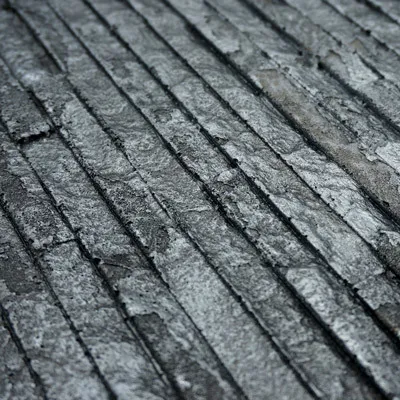
As Muretto Stone enters its second decade, the team shows no signs of slowing down. They're currently developing a new line inspired by historical pathfinders stone —a rare, fossil-rich limestone that tells the story of ancient civilizations. "We're using 3D scanning to replicate the fossils and textures of pathfinders stone, then integrating them into Muretto Stone panels," Rossi explains. "Imagine a museum wall that looks like it's made of 200-million-year-old stone, but it's lightweight and easy to install. That's the future we're building."
They're also exploring new applications, from furniture to art installations. "A sculptor in Paris recently commissioned us to create Muretto Stone blocks for a public artwork," Marini says. "The stone is so malleable, she was able to carve it like marble, but without the risk of cracking. It's opening doors for artists who want to work with stone but can't afford the weight or cost of natural materials."
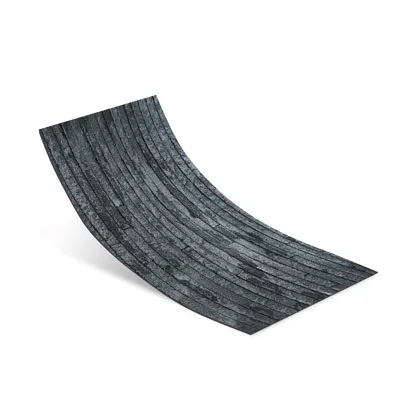
The journey of Muretto Stone is a testament to the power of curiosity—to asking, "What if?" It began with a simple desire to create something that felt both new and familiar, and ended with a material that has transformed how we build, design, and experience space. Whether paired with travertine (starry red) in a boutique or foamed aluminium alloy board (gold) in a skyscraper, Muretto Stone brings warmth, character, and resilience to every project it touches.
In a world that often prioritizes speed and efficiency over soul, Muretto Stone is a quiet rebellion—a reminder that the materials we build with should do more than just serve a function. They should tell stories. They should evoke emotions. They should make us pause, reach out, and feel. And in that, Muretto Stone has succeeded beyond measure. As Marini puts it: "Stone is forever. Muretto Stone? It's forever, reimagined."
Recommend Products












