
A Journey Through Time, Texture, and the Timeless Allure of a Stone That Breathes
Picture this: golden hour in the Italian countryside. The sun dips low, casting honeyed light over a villa's facade. Its walls, clad in white travertino, glow softly—porous, tactile, as if the stone itself is exhaling the warmth of centuries. Run a hand along its surface, and you'll feel the faint ridges left by ancient chisels, the tiny pockets where rainwater once pooled and evaporated, leaving behind stories of weather and time. This is the magic of white travertino: it's not just a building material. It's a living, breathing chronicle of the Mediterranean, a bridge between the hands that shaped it millennia ago and the designers reimagining it today.
For centuries, this stone has been the silent protagonist of Mediterranean architecture, from the grand arches of Rome to the sun-baked courtyards of Santorini. But like many classics, its story isn't static. Today, a new chapter is being written—one where tradition meets innovation, where the old soul of travertino is reborn through modern craftsmanship. Enter MCM: a name synonymous with reviving heritage materials for the demands of contemporary design. Through series like the MCM project board and MCM flexible stone, white travertino isn't just preserved; it's reimagined, made lighter, more adaptable, and more alive than ever. Let's trace its journey—from ancient quarries to modern walls, and the human hands that have kept its spirit intact.
To understand white travertino, we must first dig into the earth—literally. The story begins in the Tiber Valley, outside Rome, where quarries like Tivoli have yielded this stone for over two millennia. Walk those quarries today, and you can still see the scars of ancient tools: deep grooves where slaves and craftsmen once levered massive blocks from the earth, their muscles straining, their voices echoing in the cool, damp air. White travertino, formed by mineral-rich hot springs depositing calcium carbonate over eons, was prized for its unique structure: porous yet surprisingly strong, with a warm, off-white hue that softens even the harshest sunlight.
In ancient Rome, this stone wasn't just building material—it was a statement of permanence. The Colosseum, that colossus of concrete and ambition, wears travertino like armor, its honeycombed blocks fitting together with the precision of a puzzle. Imagine the roar of 50,000 spectators as gladiators clashed below, the stone absorbing the sound, holding it like a secret for centuries. Then there's the Pantheon, its dome soaring 43 meters high, its floor a mosaic of travertino and marble. Stand beneath that oculus on a rainy day, and you'll watch water kiss the travertino, darkening its pores like a ink blot, only to fade as the sun returns—a dance of light and moisture that the Romans knew intimately.
But travertino wasn't reserved for grand monuments. It lined the streets of Pompeii, underfoot of merchants and children chasing goats. It formed the walls of modest villas, where families cooked over hearths, their shadows stretching across its textured surface. To touch it then was to touch the everyday: the calloused palms of stonemasons, the sticky fingers of children, the dust of market days. It was a stone of the people, even as it adorned emperors' palaces.
Rome may have been travertino's first great love, but the stone soon wandered, seducing cultures across the Mediterranean basin. In Greece, where marble reigned supreme, travertino found a niche in rustic villas, its earthy tones complementing the blue of the Aegean. On the Turkish coast, in cities like Ephesus, it became the backbone of public baths, its porous nature perfect for absorbing steam and heat, turning bathhouses into havens of warmth on cold winter days.
Nowhere, though, did travertino weave itself into the landscape quite like in Italy. In Tuscany, it clung to the hillsides of Siena, its warm white tones blending with the terracotta roofs of the medieval city. In Venice, where stone and water are eternal rivals, travertino proved surprisingly resilient, used in the foundations of palazzos that have stood for centuries against the lagoon's salt-kissed waves. Even in the sun-scorched south, in places like Matera, where cave dwellings (sassi) have been inhabited for 9,000 years, travertino was carved into doorframes and window sills, a soft contrast to the dark tufa stone of the caves.
What made travertino so beloved? It was more than just durability. It was the way it interacted with light. In the morning, when the Mediterranean sun is sharp and bright, white travertino glows like a beacon, its surface reflecting light to turn courtyards into pools of warmth. At dusk, as the sun dips toward the horizon, it softens, taking on a pinkish hue that makes even the simplest wall feel romantic. And when it rains? The stone darkens, its pores swelling with water, releasing a faint, earthy scent—like wet soil after a summer storm. To live with travertino was to live with the rhythm of the Mediterranean itself: light, shadow, water, and time.
But even the most enduring stories have their quiet chapters. As empires fell and tastes shifted, travertino's star dimmed. The Industrial Revolution brought new materials—steel, concrete, synthetic stones—that promised speed and uniformity. Quarries that had hummed with activity for centuries fell silent. By the mid-20th century, white travertino was often dismissed as "old-fashioned," a relic of a bygone era. Architects turned to sleek, polished surfaces, and the stone that once built civilizations was reduced to a niche choice for enthusiasts.
Yet, as with all great loves, absence made the heart grow fonder. In the late 20th century, a quiet revolution began. Designers, weary of the cold sterility of modern materials, started craving something with soul—something that told a story. They looked to the past, and there, waiting, was travertino: weathered, wise, and full of memory. It began appearing in boutique hotels on the Amalfi Coast, in minimalist homes in Barcelona, in restaurants in Istanbul that wanted to evoke the warmth of a grandmother's kitchen.
But there was a problem: traditional travertino, while beautiful, was heavy. Transporting large slabs was costly, and installing them on modern buildings—many of which lack the structural support of ancient temples—was a logistical nightmare. It was also porous, requiring constant sealing to protect against stains, a hassle for busy homeowners and commercial spaces. For travertino to truly return, it needed a makeover.
Enter MCM—a brand that saw not just a stone, but a legacy. "We didn't want to replicate travertino," says a senior designer at MCM, her voice warm with passion. "We wanted to reimagine it. To keep its heart, but give it a new body—one that fits the way we live now." And so, the MCM project board series was born, followed by MCM flexible stone: innovations that would make travertino accessible, adaptable, and as relevant today as it was in ancient Rome.
At the core of this revival is MCM flexible stone—a marvel of modern engineering. Unlike traditional travertino slabs, which can weigh hundreds of pounds, MCM flexible stone is thin, lightweight, and… well, flexible. It can bend around curves, cling to uneven surfaces, and even be installed in places traditional stone never could: on accent walls in tiny city apartments, on the facades of eco-friendly office buildings, or as backsplashes in kitchens where space is at a premium. "It's like taking the soul of travertino and putting it in a more versatile body," the designer explains. "Suddenly, that Mediterranean courtyard feel isn't just for villas in Tuscany. It's for a loft in Berlin, a café in Tokyo, a home in Sydney."
Then there's the MCM 3D printing series—a marriage of ancient craft and cutting-edge tech. Using 3D printing, MCM can create travertino-inspired panels with intricate textures that mimic the look of hand-chiseled stone, but with precision and consistency that would make ancient stonemasons weep. Imagine a wall panel that replicates the rough, organic ridges of a Roman column, or a backsplash that echoes the pitted surface of a travertino quarry wall—all made possible by 3D printing, yet still retaining that tactile, human quality that makes travertino so special.
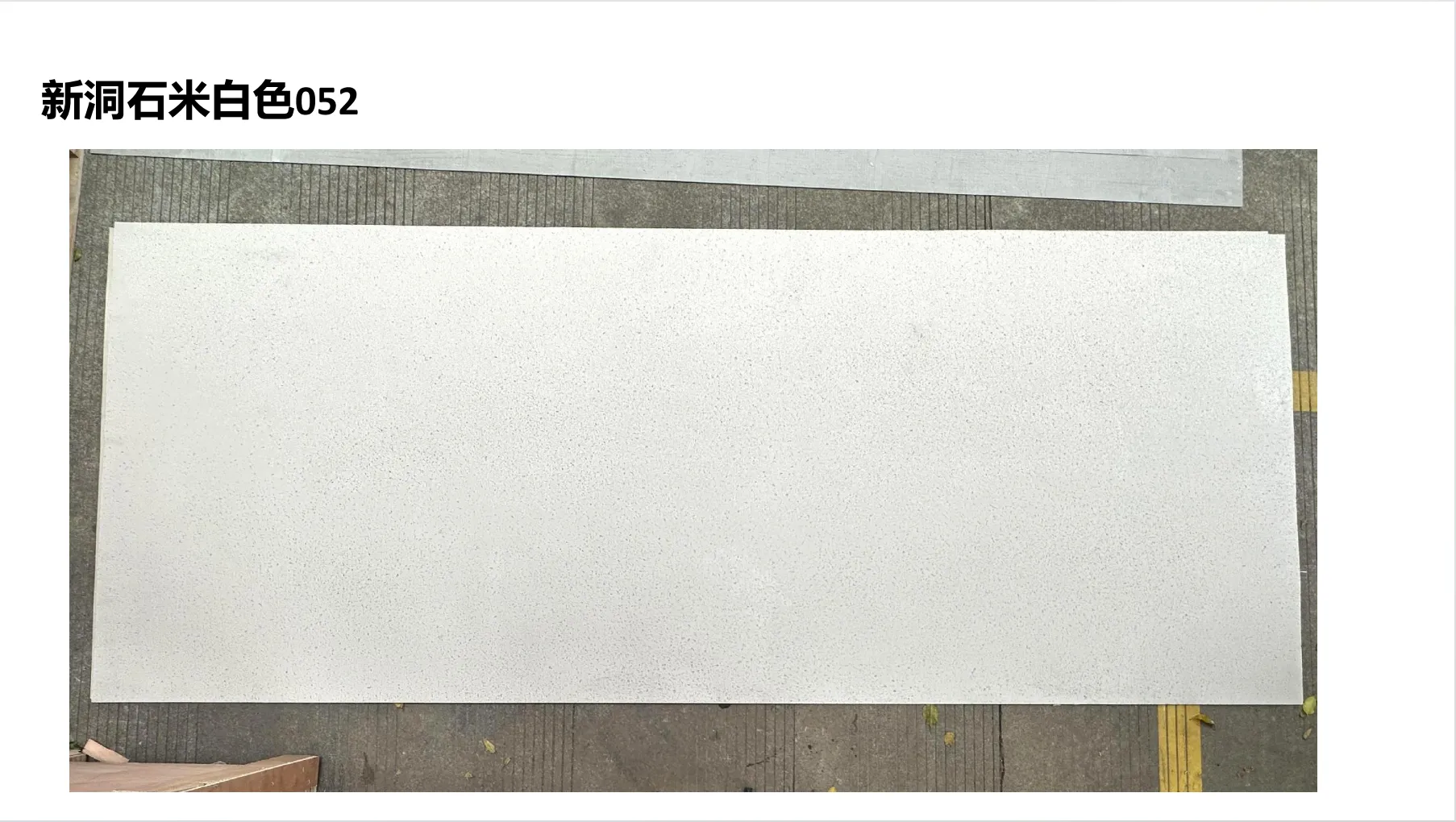
But MCM didn't stop at flexibility and technology. They also leaned into variety, honoring travertino's natural diversity. While white travertino remains the star, the brand offers a spectrum of hues that pay homage to the stone's many faces: travertine (starry green), with tiny flecks of emerald that catch the light like moss on a sunlit wall; travertine (vintage gold), which shimmers with warm, metallic undertones, as if the stone has been kissed by the Mediterranean sun; and even travertine (starry blue), its surface dotted with deep blue specks that evoke the night sky over the Aegean. These variations aren't just about aesthetics—they're about choice. "Every space has a story," the designer says. "White travertino tells one, but maybe a homeowner in Stockholm wants a touch of warmth, so they choose vintage gold. A boutique hotel in Dubai might crave drama, so they go for starry blue. We're not just selling stone—we're selling the ability to tell your own story."
Today, step into a modern home or commercial space clad in MCM's travertino-inspired products, and you'll feel it immediately: that same warmth, that same connection to the past, but with a twist that fits 21st-century life. Take, for example, a small apartment in Paris, where the owner, a young architect, used MCM flexible stone on her living room accent wall. "I grew up visiting my grandparents in Sicily," she says, running a hand over the surface. "Their house had travertino floors, and I always loved the way it felt underfoot—cool in summer, warm in winter. Now, even in this tiny Parisian flat, I can close my eyes and almost smell the orange blossoms from their garden."
In commercial spaces, too, MCM's travertino offerings are making waves. A trendy café in Brooklyn uses MCM project board series panels in white travertino for its counter tops, the stone's porous surface softening the harshness of stainless steel appliances. "Customers love it," the café owner notes. "They run their fingers along the edge while waiting for their coffee, like they're touching something alive. It's not just a counter—it's a conversation starter." Even luxury hotels are getting in on the action: a five-star resort in the Maldives recently installed MCM's travertine (vintage gold) panels in its spa, the warm metallic tones complementing the overwater bungalows and turning treatment rooms into sanctuaries of calm.
What's most striking about these modern applications is how they honor travertino's roots while embracing the future. MCM flexible stone, for instance, is eco-friendly, made with recycled materials and requiring less energy to produce than traditional stone. It's also easy to install, reducing labor costs and minimizing waste—a far cry from the backbreaking work of ancient quarries. Yet, for all its modern perks, it still feels human . Run your finger over an MCM travertino panel, and you'll feel the same slight irregularities, the same subtle pits and ridges that ancient stonemasons left behind. It's a reminder that even in our fast-paced, tech-driven world, we crave connection—to the past, to nature, to the hands that make things.
| Aspect | Ancient Mediterranean Travertino | MCM Modern Travertino-Inspired Products |
|---|---|---|
| Weight & Installation | Heavy slabs, requiring teams of laborers to transport and lift; limited to load-bearing structures. | Lightweight and flexible (MCM flexible stone), installable by small crews; suitable for walls, ceilings, and even furniture. |
| Texture & Finish | Hand-chiseled, with irregular pits and ridges; polished only in high-end spaces like palaces. | Replicated natural texture via 3D printing (MCM 3D printing series) with options for polished, honed, or rustic finishes. |
| Color Range | Primarily white, beige, and light gray; natural variations due to mineral deposits. | Expanded palette including starry green, vintage gold, starry blue, and more (MCM project board series). |
| Durability & Maintenance | Durable but porous; required regular sealing to prevent staining. | Engineered for durability with added resistance to stains and moisture; minimal maintenance. |
| Accessibility | Limited to regions with quarries; expensive due to transportation and labor. | Globally accessible via MCM's distribution network; cost-effective due to efficient production. |
White travertino is more than a stone. It's a story—a story of ancient quarries echoing with the clink of chisels, of Mediterranean sunsets painting walls pink, of families gathering in courtyards where the stone underfoot holds the warmth of generations. For centuries, it has been a silent witness to human life: joy, sorrow, triumph, and decay. And now, thanks to MCM, it's a story that continues—written not just in the walls of ancient temples, but in the living rooms, cafés, and offices of today.
As we stand in a modern space clad in MCM flexible stone, running a hand over its surface, we're not just touching a building material. We're touching the past. We're touching the hands of Roman stonemasons, the laughter of Greek villagers, the quiet moments of families in Tuscan villas. We're touching the Mediterranean itself—the light, the water, the earth that gave birth to this remarkable stone.
In the end, that's the magic of white travertino, and of MCM's revival: it reminds us that some things never truly fade. They evolve, adapt, and find new ways to speak to us. Whether in the Colosseum or a Brooklyn café, in ancient chisels or 3D printers, travertino remains a bridge between then and now—a stone that breathes, remembers, and continues to tell our story.
Recommend Products












