
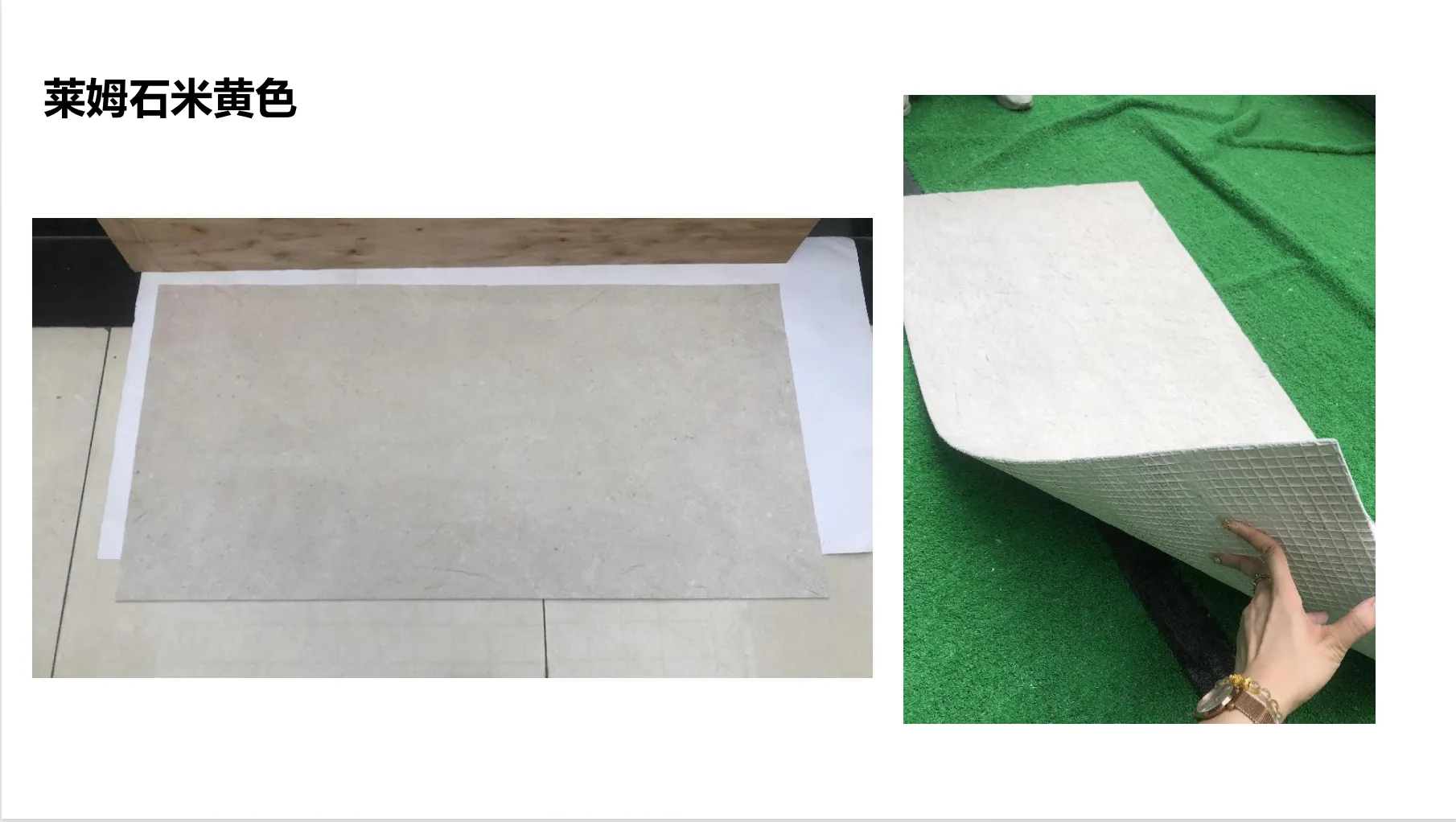
Walk into any well-designed space—a boutique hotel lobby, a cozy café, or a sleek corporate office—and you'll notice something immediately: the materials tell a story. The texture of a wall, the warmth of a countertop, the way light plays off a facade—these elements don't just fill a room; they shape how we feel in it. Among the most timeless storytellers in architecture is limestone. From ancient Roman ruins to modern minimalist homes, limestone has been a canvas for designers to weave narratives of elegance, durability, and connection to the earth. But here's the catch: the story limestone tells is only as true as the images we use to represent it. In a world flooded with stock photos and filtered "material inspiration" shots, the value of authentic lime stone real photos has never been more critical. Let's unpack why these unretouched, unfiltered snapshots aren't just nice-to-haves—they're the backbone of successful architectural projects.
Before we dive into the "why" of real photos, let's first celebrate the "what" of limestone. There's a reason it's been a staple for centuries. Lime stone (beige), with its soft, earthy tones and subtle veining, brings a sense of calm to spaces—think of a sunlit kitchen where the countertop seems to glow, or a hotel lobby where walls feel like they've been carved from the earth itself. Then there's the diversity within the limestone family: travertine (starry blue) adds a celestial twist with its flecked patterns, while linear travertine (claybank) introduces organic, flowing lines that mimic riverbeds. Even modern iterations, like the ones paired with mcm flexible stone, blend limestone's natural charm with cutting-edge durability, making it suitable for everything from exterior cladding to high-traffic commercial floors.
But limestone isn't just about aesthetics. It's a material with personality. Its porosity, the way it ages over time, the unique variations in each slab—these are the details that make a space feel "lived-in" and authentic. An architect might choose slate veil white limestone for a gallery wall because its matte finish won't compete with artwork, or opt for red travertine to infuse a restaurant with warmth and energy. Each choice is intentional, rooted in the material's inherent traits. And here's the problem: if the photos used to select that material don't capture those traits accurately, the entire design vision can unravel.
Picture this: a design team is working on a residential project, and the client has fallen in love with "lime stone (beige)" after seeing a stock photo online. The image shows bright, uniform beige slabs with zero variation, smooth as a polished marble. Excited, the team orders the material—only to receive deliveries with uneven veining, patches of lighter and darker beige, and a slightly rough texture. The client is disappointed; the contractor is confused; the project timeline stalls as everyone scrambles to adjust. What went wrong? The photo lied. It was a highly edited shot, taken under studio lights with filters to "perfect" the stone's appearance. It didn't show the natural inconsistencies that make limestone unique—and beautiful.
This scenario isn't rare. Inauthentic material photos come in many forms: stock images that blend multiple slabs to create a "perfect" version, close-ups that crop out flaws (or, more accurately, character), or photos taken under lighting that drastically alters color (warm filters making beige look yellow, cool filters washing out warmth). Even well-meaning "inspiration" posts on social media can be misleading—what looks like travertine (vintage gold) in a filtered Instagram reel might actually be a cheap imitation with none of the real stone's depth. For architects and designers, relying on these images is like trying to bake a cake with a recipe that lists "flour" but doesn't specify if it's all-purpose or self-rising. The end result? Miscommunication, wasted resources, and a final product that misses the mark.
So, what makes an "authentic" lime stone real photo different? It's simple: it shows the material as it truly is. No heavy editing, no staged lighting, no cherry-picked "best slabs." A real photo might capture a lime stone (beige) slab with a slightly darker vein snaking through one corner, or a travertine (starry orange) piece where the "stars" are more concentrated in some areas than others. It might even include small imperfections—a tiny chip, a natural pit—that tell the story of the stone's formation. These details aren't flaws; they're proof of authenticity. And in architecture, authenticity translates to three critical benefits:
1. Design Accuracy: Architects don't just design with colors—they design with textures, light interaction, and scale. A real photo of lime stone (beige) taken in natural daylight will show how the stone absorbs and reflects light at different times of day. Does it look warm in morning sun? Cool in afternoon shade? How does its texture interact with artificial lighting, like recessed ceiling fixtures? These are questions that can't be answered by a stock image. When designers have access to unedited photos, they can make precise choices: pairing limestone with specific paint colors, adjusting lighting plans, or even modifying a space's layout to highlight the stone's best features.
2. Client Trust and Alignment: Clients often struggle to visualize materials from samples alone. A 2x2 inch stone chip can't convey the grandeur of a full wall clad in lunar peak golden limestone. Authentic real photos bridge that gap. When a client sees a photo of a completed project using the exact lime stone (beige) slab they're considering—unfiltered, in context—they can trust that what they see is what they'll get. This alignment reduces scope creep, minimizes change orders, and builds confidence in the design process. Imagine a client hesitant about using rough granite stone (medium grey) because they're worried it will feel "cold." A real photo of a living room with that granite as a fireplace surround, paired with warm wood accents, can turn hesitation into excitement.
3. Material Integrity and Sustainability: In an era where green building practices are paramount, knowing exactly what you're specifying matters. Authentic photos often come directly from manufacturers or suppliers who stand behind their materials. For example, mcm flexible stone, a modern composite that combines limestone with flexible polymers, relies on real photos to showcase its eco-friendly credentials—like how its lightweight design reduces transportation emissions, or how its durability means less frequent replacement. When photos are authentic, they're more likely to be paired with accurate material data sheets, ensuring that architects can make sustainable choices without guesswork.
Let's ground this in a real-world example (names changed for privacy). A design firm was tasked with revamping a 1920s boutique hotel in a historic district, aiming to blend modern luxury with the building's original charm. The client wanted the lobby walls to feel "timeless but not old-fashioned," and the team settled on a combination of fair-faced concrete for the structural elements and lime stone (beige) for the accent walls. Initially, the firm used stock photos of limestone to present the concept—bright, uniform images that made the stone look sleek and contemporary. The client loved it.
But when the first batch of limestone arrived, the team noticed a problem: the real stone had more variation in color and texture than the stock photos suggested. Some slabs were lighter, some darker; some had visible fossilized fragments (a natural feature of limestone). Panicked, the client worried the walls would look "messy" and "unprofessional." That's when the supplier stepped in with a folder of authentic real photos—unfiltered shots of the exact batch of lime stone (beige) slabs, taken in the warehouse under natural light. The photos showed the variation, the fossil details, the way the stone caught light. Suddenly, the client saw not "flaws," but character. "It looks like the stone has a story," they said. The team adjusted the layout to highlight the variation—using the lighter slabs near windows, darker ones in shadowed corners—and the result was a lobby that felt rich, layered, and deeply connected to the building's history. Without those real photos, the project might have shifted to a more uniform (and less interesting) material. Instead, the limestone became the lobby's star feature, with guests often commenting on its "unique, organic feel."
| Material | Key Trait Captured in Real Photos | Architectural Application Example |
|---|---|---|
| Lime Stone (Beige) | Natural veining, color variation, fossil inclusions, and light interaction | Boutique hotel lobby walls, where variation adds warmth and historical depth |
| Fair-Faced Concrete | Formwork marks, subtle color gradients, and texture from curing processes | Modern office building exteriors, highlighting raw, industrial elegance |
| MCM Flexible Stone | Flexibility (curved applications), surface texture, and color consistency across large panels | Retail store facades, where lightweight durability and design versatility are key |
Limestone isn't the only material that benefits from authentic real photos. Let's compare it to two other architectural staples: fair-faced concrete and mcm flexible stone. Each has unique traits that only real photos can capture—and each relies on authenticity to shine in projects.
Fair-faced concrete, with its raw, industrial aesthetic, is beloved for its "unfinished" look. But that look is defined by tiny details: the slight indentations left by formwork, the way the concrete absorbs stains from weathering, the subtle differences in color between batches. A stock photo might smooth over these details, making the concrete look too perfect. An authentic real photo, though, shows the material's honesty—like the faint wood grain marks from the formwork boards, or the way rainwater leaves temporary dark streaks. For a project like a museum extension aiming for a "brutalist elegance," these details are non-negotiable. They turn a plain concrete wall into a canvas of texture and history.
Then there's mcm flexible stone, a newer player that's revolutionizing how we use natural materials. MCM (Modified Composite Material) flexible stone combines limestone particles with polymers to create lightweight, bendable panels that mimic the look of real stone. For this material, real photos are critical to showcase its unique selling points: how it wraps around curved surfaces (a feat impossible with traditional limestone slabs), how its texture holds up against weathering, and how consistent the color is across large installations. A designer specifying mcm flexible stone for a rooftop bar's curved bar front needs to see real photos of the material in action—not just a flat, studio-shot panel. They need to see how it bends, how the light hits its edges, how it pairs with other materials like wood or metal. Without that, they might underestimate its flexibility or overestimate its texture, leading to design compromises.
Authentic real photos don't just show color and texture—they capture technical details that can make or break a project. Let's take lime stone (beige) again. A real photo might reveal that the stone's surface has a slight "tooth" (roughness) that affects how it takes sealant. If an architect assumes the stone is smooth based on a filtered photo, they might specify a sealant that doesn't adhere properly, leading to staining or water damage down the line. A real photo, though, would prompt them to test sealants on the actual texture, ensuring longevity.
Or consider scale. Stock photos often zoom in on small sections of stone, making veining or patterns look larger than they are. A linear travertine (claybank) photo might make the stone's lines seem bold and dramatic, but a real photo taken from a distance (say, 10 feet away, mimicking how guests would view a lobby wall) might show that the lines are more subtle. This difference could change whether the material is chosen for a feature wall or a secondary accent. Real photos, taken from multiple angles and distances, provide that crucial context.
Lighting is another technical nuance. Limestone, like all natural materials, behaves differently under different light sources. A real photo taken in north-facing daylight will show cooler undertones, while one taken in afternoon sun will highlight warmth. For a project in a city with limited natural light (like a basement restaurant), photos taken under artificial lighting (LED, incandescent) can predict how the stone will look in the space. This level of detail ensures that the final design doesn't have "surprises" once the material is installed.
Now that we've established why authentic real photos are essential, how do you actually source them? Here are a few practical tips for architects, designers, and project managers:
Ask for "Warehouse Shots," Not Studio Shots: Suppliers often have both, but warehouse shots (taken on-site, with the stone in its natural state) are more likely to show true color and texture. If a supplier only has heavily edited studio photos, that's a red flag—ask if they can provide unretouched images of the specific batch you'll be ordering.
Request Photos in Context: Photos of stone slabs leaning against a wall or laid out on the ground are helpful, but even better are photos of the stone installed in real projects. For example, if you're considering travertine (vintage gold) for a hotel bathroom, ask to see photos of it in a completed bathroom—how does it look with tile, fixtures, and lighting? This bridges the gap between "sample" and "space."
Check for Consistency Across Photos: Authentic photos will show variation between slabs, which is normal. If every photo of a lime stone (beige) batch looks identical, it's likely they've been edited to hide natural differences. Embrace the variation—ask for photos of the "best" and "worst" slabs in the batch so you can plan accordingly.
Verify with Material Samples: Real photos should align with physical samples. If you receive a sample of lime stone (beige) that's warmer than the photos suggest, trust the sample—but also ask why the photos are different. A reputable supplier will be transparent about lighting or editing and provide updated photos if needed.
At the end of the day, architecture is about more than buildings—it's about creating spaces that feel meaningful, intentional, and alive. Materials are the building blocks of that vision, and lime stone, with its rich history and organic beauty, is one of the most powerful storytellers in that toolkit. But stories can't be told with lies. Inauthentic photos distort the narrative, turning a unique, character-filled material into a generic, forgettable one. Authentic real photos, on the other hand, honor the material's truth—its variations, its textures, its flaws and its beauty. They empower designers to make confident choices, clients to trust the process, and projects to reach their full potential.
So the next time you're scrolling through material photos, pause. Ask: Is this stone being shown as it truly is? Does this photo capture the details that will shape how the space feels? For lime stone (beige), for fair-faced concrete, for mcm flexible stone—for every material that makes our built environment special—the answer should be yes. Because in the end, the best architectural projects aren't just designed with materials. They're designed with honesty.
Recommend Products












