
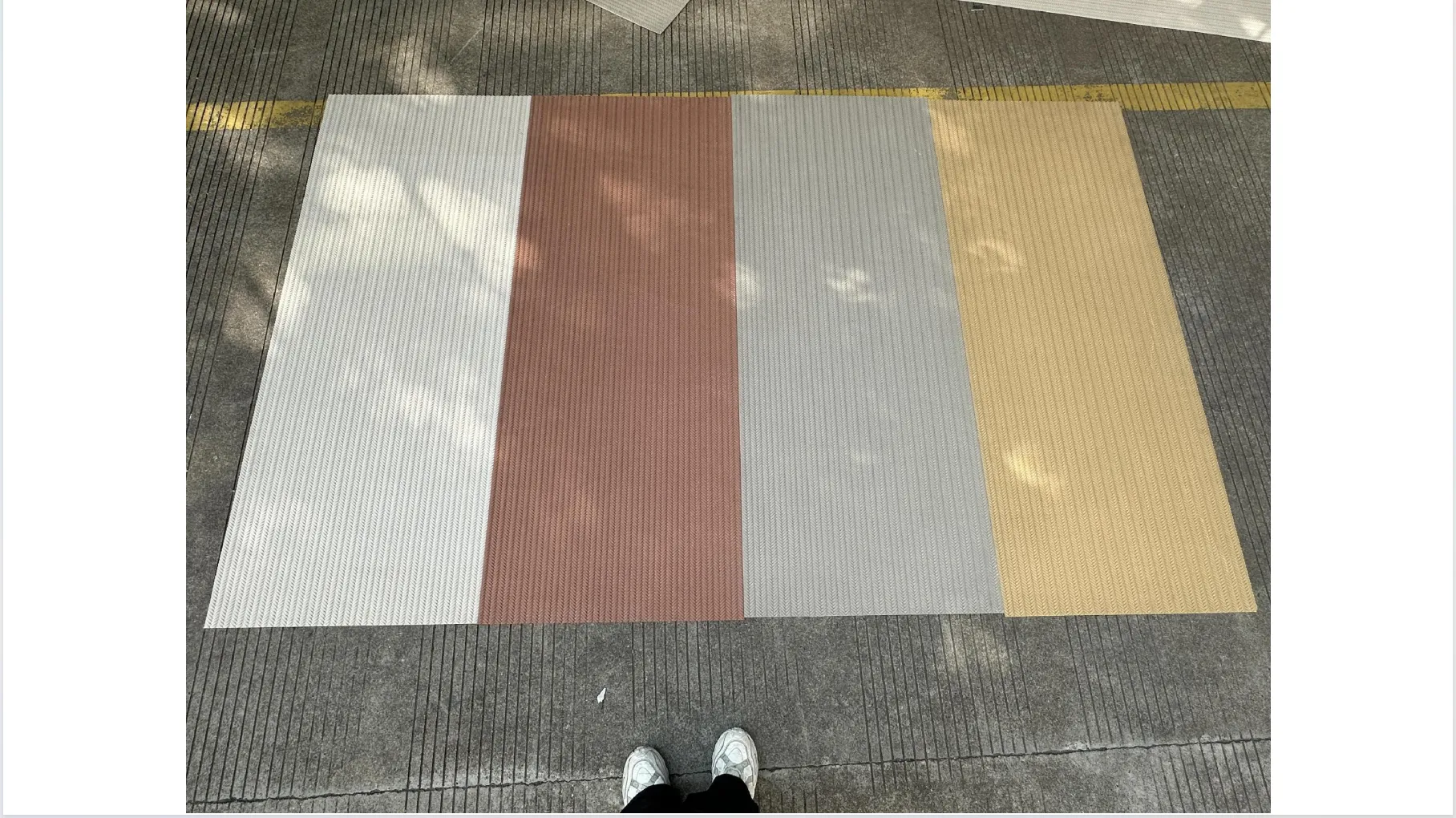
In the world of architecture and design, every choice matters. From the curve of a hallway to the texture of a wall, each element shapes the way people experience a space. When it comes to materials, few categories are as versatile and visually striking as MCM (Modified Composite Material) products. Among these, woven textures have emerged as a favorite for designers aiming to infuse warmth, depth, and tactile interest into their projects. But here's the catch: selecting the right woven MCM material isn't just about picking a color or pattern from a catalog. It's about seeing the material for what it truly is—and that's where high-resolution woven real photos become indispensable.
Imagine scrolling through a website and seeing a swatch labeled "weaving (khaki)" with a tiny, pixelated image. It looks nice, sure, but can you tell if the threads are tightly woven or loosely interlaced? Can you see how the light catches the fibers, creating subtle shifts in tone? Probably not. And that's a problem. Because when you're designing a hotel lobby, a retail storefront, or a residential living space, those tiny details—the way the weave feels under fingertips, the way the color deepens in shadow—are what turn a "good" design into an unforgettable one. High-resolution woven real photos bridge the gap between digital screens and physical reality, giving designers the clarity they need to make confident, informed choices.
MCM materials, known for their durability, flexibility, and eco-friendly composition, have revolutionized the way we approach building exteriors and interiors. Products like MCM flexible stone offer the beauty of natural stone with the lightweight practicality of modern composites, while woven MCM textures add a softness and organic quality that's hard to replicate with other materials. But with great variety comes great responsibility: choosing the wrong woven texture can throw off an entire design's balance, leading to costly reworks, client dissatisfaction, or a final space that feels flat and uninspired.
Consider a scenario where a designer selects "weaving (jacinth)" based on a low-quality image. The catalog shows a rich, reddish-pink hue, but in reality, the physical material has a more orange undertone. When installed in a space with cool blue accents, the clash is jarring. Or picture a project where the woven texture was supposed to have a loose, airy weave for a coastal vibe, but the actual material is tightly knit, making the room feel cramped. These aren't just hypothetical—they're common headaches that could have been avoided with clearer, more detailed visual references. High-resolution woven real photos don't just show a material; they tell its story, capturing the nuances that make it unique.
In an age of quick digital browsing, many material suppliers rely on generic stock photos or low-resolution snapshots to showcase their products. But woven MCM materials are anything but generic. Each type—whether it's weaving (khaki) , weaving (jacinth) , or another variant—has its own personality, shaped by thread thickness, weave density, fiber composition, and color variation. Low-quality photos flatten these nuances, turning distinct textures into indistinguishable blurs.
Color accuracy is another major issue. Screens vary widely in how they display hues: a "khaki" on a designer's calibrated monitor might look beige on a client's smartphone, or greenish on a contractor's laptop. Without a high-resolution photo that's true to life, there's no way to gauge how the material will interact with natural or artificial light in a real space. A woven texture that looks bright and cheery in a backlit catalog photo might appear dull and lifeless under warm overhead lighting, or overly vibrant in direct sunlight. These discrepancies can derail a project's aesthetic vision and lead to expensive do-overs.
Texture misrepresentation is equally problematic. Woven MCM materials derive much of their appeal from their tactile quality—the way the weave creates peaks and valleys, or how individual threads add dimension. A low-res photo might make a loosely woven texture look tight, or a thick-threaded weave look thin. This isn't just about visuals; it affects functionality too. A tightly woven material might be better suited for high-traffic areas, while a looser weave could be ideal for acoustic absorption. Without seeing the texture clearly, designers can't align the material's properties with the project's needs.
High-resolution woven real photos aren't just "better" photos—they're tools for precision, creativity, and trust. Here's how they transform the material selection process:
Zoom in on a high-resolution woven real photo, and you'll see more than just a pattern. You'll see individual threads—their thickness, their sheen, even the slight irregularities that make the material feel authentic. For example, a photo of weaving (khaki) taken in natural light might reveal that the threads aren't a uniform tan, but a blend of warm beige and soft taupe, with occasional flecks of lighter fibers that catch the light. This level of detail lets designers imagine how the texture will play with other materials: Will it complement a smooth MCM flexible stone accent wall? Will it add enough contrast to a polished concrete floor?
For weaving (jacinth) , a high-res photo might highlight how the reddish threads interlock with deeper burgundy fibers, creating a rich, layered effect that's impossible to convey in a low-quality image. Designers can see if the weave has a subtle diagonal pattern or a more structured grid, helping them align the material with the project's overall design language—whether it's modern and geometric or organic and free-flowing.
One of the biggest advantages of high-resolution woven real photos is their ability to showcase color in context. Unlike catalog swatches, which are often shot in controlled studio lighting, real photos capture the material in conditions that mimic real-world environments: soft morning light, harsh midday sun, warm evening glow. This means designers can see how weaving (khaki) shifts from a warm honey tone in sunlight to a deeper, earthier shade in shadow, or how weaving (jacinth) looks vibrant under cool LED lighting but takes on a cozier, more muted tone under incandescent bulbs.
These photos also reveal color consistency (or intentional inconsistency) across the material. Some woven textures, for example, have slight color variations from thread to thread, adding character and a handcrafted feel. A high-res photo will capture these variations, letting designers decide if they want a uniform look or one with more visual interest. This is especially important for large-scale applications, like feature walls or exterior cladding, where even small color shifts can become noticeable over a wide surface.
A tiny swatch photo can't convey how a woven texture will look when applied to a 10-foot wall or a 20-foot ceiling. High-resolution woven real photos often include scale references—a hand holding the material, or the texture installed in a mock-up space—to give designers a sense of proportion. For example, a photo of weaving (grey) installed on a sample wall might show that the weave pattern repeats every 12 inches, helping designers plan how the material will align with windows, doors, or other architectural features.
This is critical for avoiding design missteps, like choosing a small-scale weave that gets lost on a large surface, or a large-scale pattern that overwhelms a small room. High-res photos let designers "test" the material in silico, visualizing how it will fit into the project's overall scale before making a purchase.
At the end of the day, high-resolution woven real photos are a mark of transparency. When a supplier invests in detailed, authentic photos, it signals confidence in their product—they're not hiding behind generic images or oversaturated filters. This builds trust with designers, who can be sure they're getting exactly what they see. For example, if a photo of weaving (beige) shows a slight irregularity in the weave (a happy accident of the manufacturing process), the designer knows to expect that character in the physical material, rather than being surprised by it on delivery.
Trust is especially important in the MCM industry, where materials often need to meet strict performance standards (water resistance, fire rating, durability). High-res photos that show the material's quality—tight seams, consistent fiber distribution, even coloring—reinforce that the product is not just visually appealing, but well-crafted and reliable.
To truly understand the power of high-resolution woven real photos, let's dive into specific examples. Below is a breakdown of four popular woven MCM textures— weaving (khaki) , weaving (jacinth) , weaving (grey), and weaving (beige)—as seen through high-quality, real-world images.
| Weaving Type | Key Details Revealed by High-Res Photos | Best For... |
|---|---|---|
| Weaving (khaki) | Soft, earthy base with interwoven threads of warm beige and light taupe; medium-tight weave with visible thread texture; slight sheen that intensifies in natural light; subtle color variation between threads for organic appeal. | Eco-friendly cafes, residential living rooms, spa interiors—spaces aiming for a calm, grounded vibe. |
| Weaving (jacinth) | Rich, reddish-pink hue with deeper burgundy accents; thick, sturdy threads with a matte finish; loose-to-medium weave that creates gentle texture peaks; color deepens dramatically in shadow, adding depth. | Boutique hotels, restaurant accent walls, retail fitting rooms—spaces where bold color and texture make a statement. |
| Weaving (grey) | Neutral cool grey with hints of blue undertones; tight, uniform weave with thin, smooth threads; subtle metallic flecks in threads that catch light; consistent color throughout, ideal for modern minimalism. | Corporate offices, tech startups, modern apartments—spaces needing a sleek, sophisticated backdrop. |
| Weaving (beige) | Warm, creamy beige with soft yellow undertones; loose, airy weave that allows light to filter through slightly; thick, fluffy threads that add tactile softness; uniform color with minimal variation for a clean look. | Nurseries, healthcare facilities, yoga studios—spaces prioritizing warmth and serenity. |
Without high-resolution photos, these details would be lost. A low-res image of weaving (jacinth) might flatten its depth, making it look like a solid red fabric instead of a dynamic blend of red and burgundy. Similarly, a pixelated shot of weaving (khaki) could obscure its subtle color variations, making it appear dull and one-dimensional. High-res woven real photos don't just show these materials—they let designers experience them, even before they hold a sample in their hands.
While the visual appeal of woven MCM materials is undeniable, their practical performance is just as important. High-resolution woven real photos can even help designers assess functional aspects of the material. For example, a close-up photo of a woven texture can reveal how easy it is to clean (tight weaves may trap dust, while looser weaves might be easier to wipe down), or how well it hides imperfections (thicker threads can camouflage small dents or scratches).
These photos also aid in collaboration. When presenting material options to clients, designers can use high-res woven real photos to explain their choices with confidence: "See how the weaving (khaki) will warm up the north-facing wall in your living room? The loose weave will also help absorb sound, making the space feel cozier." Clients, in turn, can visualize the material in their project, leading to faster approvals and fewer revisions.
In a industry where time is money, this efficiency is invaluable. High-resolution woven real photos reduce the need for physical sample shipping, cut down on back-and-forth communication, and minimize the risk of materials. They empower designers to work faster, smarter, and with greater creativity—knowing that the material they've chosen will look and perform exactly as expected.
In the world of MCM material selection, high-resolution woven real photos are more than a luxury—they're a necessity. They bridge the gap between digital and physical, ensuring that designers can see, understand, and trust the materials they choose. Whether it's the earthy warmth of weaving (khaki) , the bold vibrancy of weaving (jacinth) , or the sleek neutrality of weaving (grey), these photos capture the essence of woven MCM materials, from their color and texture to their scale and personality.
For designers, suppliers, and clients alike, the message is clear: when it comes to woven MCM materials, settle for nothing less than the real thing. High-resolution woven real photos don't just sell a product—they sell a vision. And in the end, it's that vision that turns ordinary spaces into extraordinary ones.
Recommend Products












