
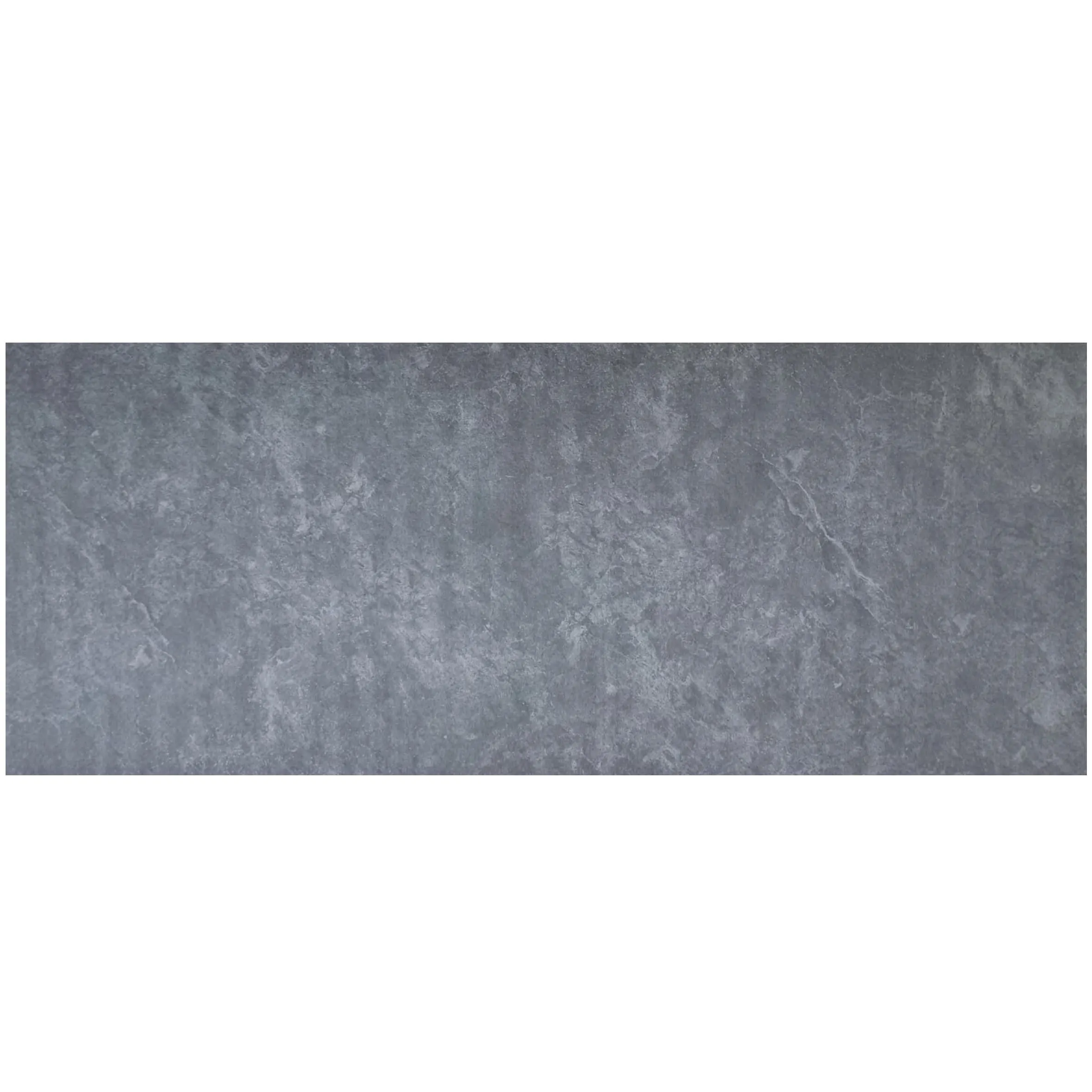
Walk into a modern boutique hotel lobby, and your eyes might be drawn to a wall that seems to hold a piece of the night sky. It's not just gray—it's a depth of charcoal and silver, with subtle veins that twist like distant galaxies, catching light in a way that makes the surface feel alive. That's Marble Interstellar Gray MCM, a material that's redefining how we think about stone in architecture and design. It marries the timeless elegance of natural marble with the flexibility and durability of cutting-edge technology, creating something that feels both ancient and futuristic. But what truly sets it apart isn't just its beauty; it's the innovation that goes into making every slab. Let's peel back the curtain and explore the manufacturing journey that turns raw materials into this celestial-inspired surface.
Marble Interstellar Gray isn't just another stone product. It's part of MCM's broader mission to push the boundaries of what building materials can do. For years, designers and architects have grappled with the limitations of natural stone—its weight, fragility, and the difficulty of customizing large or curved surfaces. MCM, short for Modified Composite Material, was born to solve these pain points. And within that family, Marble Interstellar Gray stands out as a showcase of how far material science and manufacturing technology have come. From the precision of 3D printing to the engineering of flexible composites, every step of its creation is a testament to human ingenuity.

At the heart of Marble Interstellar Gray lies a material that defies traditional categorization: MCM flexible stone. Unlike natural marble, which is quarried as a solid block, MCM flexible stone is a composite material engineered to mimic the look and feel of stone while adding a crucial element—flexibility. Imagine holding a thin slab of what looks like marble, then bending it gently in your hands without it cracking. That's the magic of MCM flexible stone, and it's the starting point for creating Marble Interstellar Gray.
The recipe for MCM flexible stone is a closely guarded secret, but we know it starts with a blend of natural mineral aggregates (think crushed stone, marble dust, and quartz) mixed with a polymer resin binder. This combination creates a material that's lightweight—up to 70% lighter than natural marble—yet surprisingly strong. It's also resistant to water, fire, and UV rays, making it suitable for both interior and exterior use. But what makes it truly revolutionary is its flexibility. Traditional marble is rigid; even a small bend can cause it to fracture. MCM flexible stone, on the other hand, can be curved, rolled, or cut into intricate shapes, opening up a world of design possibilities. For Marble Interstellar Gray, this flexibility is key to achieving the material's signature "interstellar" texture—subtle undulations and veins that would be nearly impossible to replicate with rigid stone.
"MCM flexible stone changes the game for us," says Elena Torres, a senior architect at a leading global design firm. "We recently used Marble Interstellar Gray on a curved feature wall in a museum, and the client couldn't believe it was man-made. The way it bends and flows—you'd think it was carved from a single piece of natural marble, but it's actually multiple lightweight panels that we installed in days, not weeks. That's the difference flexibility makes."
The production of MCM flexible stone begins with sourcing high-quality mineral aggregates. MCM's team works with suppliers to select aggregates that match the color and texture goals for Marble Interstellar Gray—deep grays, silvers, and subtle hints of blue to create that "interstellar" effect. These aggregates are then cleaned, crushed to a precise particle size, and mixed with the polymer binder in a controlled environment. The ratio of aggregates to binder is critical; too much binder, and the material loses its stone-like (texture); too little, and it becomes brittle. This mixture is then spread into thin sheets, compressed under high pressure to remove air bubbles, and cured at a specific temperature to activate the resin. The result is a flexible, durable base layer that's ready to be transformed into Marble Interstellar Gray.

If MCM flexible stone is the canvas, then the MCM 3D Printing Series is the brush that paints the masterpiece. Traditional stone manufacturing often relies on cutting and polishing slabs, which can lead to waste and limit design complexity. 3D printing, however, allows for layer-by-layer construction, enabling unprecedented precision and customization. For Marble Interstellar Gray, this technology is used to replicate the intricate veins and patterns that make natural marble so desirable—only with more control and less waste.
The 3D printing process for Marble Interstellar Gray starts with a digital design. Using advanced scanning technology, MCM's design team captures the patterns of rare natural marble varieties, then enhances them to create the "interstellar" effect. Think of it as editing a photograph: they might amplify subtle silver veins to look like starlight, or exaggerate a dark streak to resemble a cosmic dust cloud. This digital file is then fed into large-format 3D printers specifically calibrated for MCM materials. Unlike consumer 3D printers that use plastic filaments, MCM's printers extrude a specialized mortar-like mixture composed of the same mineral aggregates and binders used in the base layer, but with added pigments to create the vein patterns.
| 3D Printing Step | Process Details | Why It Matters for Marble Interstellar Gray |
|---|---|---|
| Digital Design | Scanning of natural marble patterns, enhanced with "interstellar" elements (silver veins, cosmic dust-like textures) | Ensures each slab has a unique yet consistent look, avoiding the repetition of natural stone |
| Material Extrusion | Layer-by-layer deposition of pigmented mortar mixture onto MCM flexible stone base | Creates depth and dimension, making veins appear to "flow" beneath the surface |
| Calibration & Curing | Printers adjust for temperature and humidity; printed layers cured with UV light for instant bonding | Prevents warping and ensures the final product is strong and stable |
| Finishing | Light sanding and sealing to smooth edges and enhance shine | Brings out the metallic/silver highlights in the "interstellar" pattern |
One of the most impressive aspects of MCM's 3D printing technology is its ability to vary the thickness of layers. For Marble Interstellar Gray, this means some veins can be raised slightly above the surface, creating a subtle 3D texture that catches light differently throughout the day. In the morning, soft sunlight might highlight a silver vein, making it glow; in the evening, warm artificial light could emphasize a dark streak, deepening the "night sky" effect. This dynamic quality is nearly impossible to achieve with traditional stone polishing, which tends to create a flat, uniform surface.
Waste reduction is another key benefit of 3D printing. In traditional stone cutting, up to 30% of the original block can be wasted as offcuts. With 3D printing, material is only deposited where it's needed, cutting waste to less than 5%. For Marble Interstellar Gray, which uses specialized pigments and aggregates, this efficiency not only reduces costs but also aligns with MCM's commitment to sustainability. The company estimates that the 3D printing process for this product reduces carbon emissions by 25% compared to traditional marble manufacturing, thanks to less energy use and waste.

After 3D printing, Marble Interstellar Gray undergoes a series of finishing steps to ensure it meets MCM's rigorous quality standards. The first step is surface sanding, where a robotic arm equipped with fine-grit sandpaper gently smooths the 3D-printed layers, blending them seamlessly with the base MCM flexible stone. This creates a consistent texture that's smooth to the touch but still retains the subtle depth of the printed veins.
Next comes sealing. Marble Interstellar Gray is treated with a water-based sealant that penetrates the surface, protecting it from stains, moisture, and UV damage without altering its appearance. Unlike natural marble, which often requires regular resealing, MCM's sealant is designed to last for years, even in high-traffic areas. For exterior applications, an additional UV-resistant topcoat is applied to prevent fading—a crucial feature for a material with such a rich, dark color.
Quality control is paramount at every stage. Each slab of Marble Interstellar Gray is inspected by a team of technicians who check for thickness consistency, color uniformity, and structural integrity. They use specialized lighting to highlight any imperfections in the vein patterns and perform bend tests to ensure the material retains its flexibility. Slabs that don't meet the standards are recycled back into the production process, further reducing waste. This attention to detail is why architects and designers trust MCM products—they know that what arrives on-site will match the samples and perform as promised.

To truly appreciate the innovation behind Marble Interstellar Gray, it helps to compare it to a more traditional material like fair-faced concrete. Fair-faced concrete, known for its raw, industrial aesthetic, has long been a favorite in modern design for its simplicity and durability. But it lacks the warmth and elegance of marble, and its rigid nature limits its use in curved or custom applications. Marble Interstellar Gray, by contrast, offers the best of both worlds: the durability of concrete and the beauty of marble, with the added bonus of flexibility.
Fair-faced concrete is typically poured on-site, which can lead to inconsistencies in color and texture. It's also heavy, requiring strong structural support, and difficult to repair if damaged. Marble Interstellar Gray, being a lightweight MCM product, is easier to transport and install, reducing labor costs and construction time. Its flexibility allows it to be used on curved walls or ceilings, where concrete would require expensive formwork. And while fair-faced concrete has a uniform, matte finish, Marble Interstellar Gray's 3D-printed veins and sealant create a surface that's dynamic and reflective, adding depth to a space.
That's not to say fair-faced concrete doesn't have its place. It's excellent for large, monolithic structures where a minimalist look is desired. But for designers seeking to combine durability with visual interest, Marble Interstellar Gray is a game-changer. It can be used alongside fair-faced concrete to add contrast—imagine a concrete wall with a Marble Interstellar Gray accent panel, the cool gray of the concrete complementing the silvery veins of the MCM material. Together, they create a space that feels both grounded and ethereal.
Marble Interstellar Gray doesn't exist in a vacuum; it's part of MCM's broader lineup of innovative materials, including the Lunar Peak series. Lunar Peak silvery, golden, and black offer a metallic, moon-like finish that pairs beautifully with Marble Interstellar Gray's cosmic theme. Imagine a restaurant interior where Lunar Peak silvery panels line the ceiling, resembling moonlight, while Marble Interstellar Gray covers the walls, evoking a starry sky. The combination creates an immersive, otherworldly atmosphere that diners won't forget.
Other MCM products, like the foamed aluminium alloy boards (vintage silver, vintage gold) or the bamboo mat board, can also complement Marble Interstellar Gray. Foamed aluminium alloy boards add a touch of industrial chic, while bamboo mat board brings warmth and natural texture. This versatility is what makes MCM such a valuable resource for designers—it allows them to mix and match materials to create unique, cohesive spaces.
The Lunar Peak series, in particular, shares some of the same manufacturing innovations as Marble Interstellar Gray. Like its interstellar counterpart, Lunar Peak uses MCM flexible stone as a base and 3D printing to create its signature metallic finish. But instead of replicating marble veins, Lunar Peak's 3D-printed layers are designed to mimic the cratered surface of the moon, with subtle indentations and metallic flecks that catch light. When used together, Marble Interstellar Gray and Lunar Peak create a narrative—of earth and sky, of stone and metal—that elevates the design beyond just materials.
Innovation isn't just about technology and design; it's also about responsibility. MCM recognizes that building materials have a significant impact on the environment, and the manufacturing process for Marble Interstellar Gray reflects this commitment. From reducing waste with 3D printing to using recycled aggregates in the MCM flexible stone base, every effort is made to minimize the product's carbon footprint.
The use of recycled mineral aggregates is a key sustainability feature. MCM partners with quarries and construction sites to collect waste stone and concrete, which is then crushed and reused in the MCM flexible stone mixture. This not only reduces the need for virgin materials but also diverts waste from landfills. The polymer binder used is also low-VOC (volatile organic compound), meaning it releases fewer harmful chemicals into the air during production and installation. For indoor applications, this is especially important, as it improves air quality and contributes to healthier living spaces.
Energy efficiency is another focus. MCM's manufacturing facilities are powered by a combination of solar panels and renewable energy credits, reducing reliance on fossil fuels. The 3D printing process itself is energy-efficient, as it only operates when material is being extruded, unlike traditional cutting machines that run continuously. And because Marble Interstellar Gray is lightweight, transporting it requires less fuel than natural marble, further lowering its carbon footprint.
"Sustainability is no longer a 'nice-to-have'; it's a requirement for our clients," says James Chen, a sustainability consultant for architecture firms. "When we specify materials like Marble Interstellar Gray, we're not just choosing something beautiful—we're choosing something that aligns with our carbon reduction goals. MCM's transparency about their manufacturing process and waste reduction efforts makes it easy to justify to clients. It's innovation with a conscience."
Marble Interstellar Gray MCM is more than a building material; it's a symbol of how far we've come in merging nature and technology. By combining MCM flexible stone with 3D printing, MCM has created a product that honors the beauty of natural marble while overcoming its limitations. It's lightweight, durable, flexible, and sustainable—qualities that make it ideal for the challenges of modern construction.
As architects and designers continue to push the boundaries of what's possible, materials like Marble Interstellar Gray will play a crucial role. They allow for more creative freedom, faster construction times, and a smaller environmental footprint. And as MCM continues to innovate—perhaps incorporating even more advanced 3D printing techniques or new sustainable materials—the future of building looks brighter (and more beautiful) than ever.
So the next time you encounter a surface that takes your breath away—a wall that shimmers like a starry night or a countertop that feels both solid and alive—take a moment to appreciate the innovation behind it. Chances are, it's products like Marble Interstellar Gray that are redefining what we build and how we build it. And in that redefinition, we're not just creating structures; we're creating experiences—spaces that inspire, comfort, and connect us to something greater than ourselves. That's the true power of manufacturing innovation.
Recommend Products












