
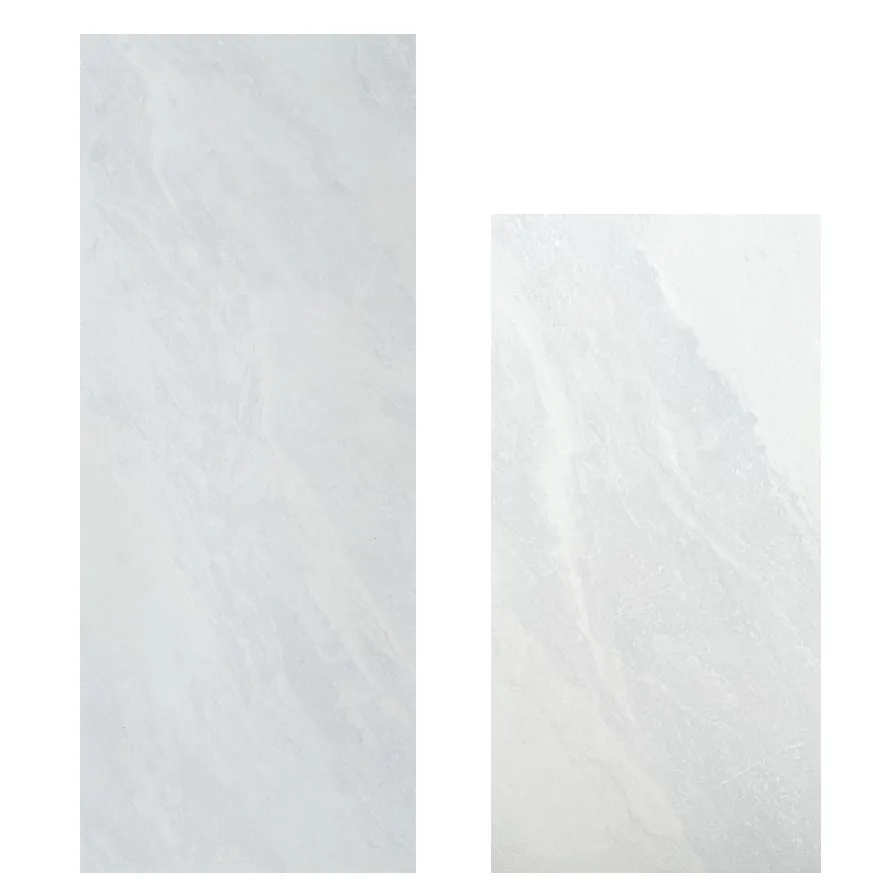
Walk into any modern boutique hotel, upscale restaurant, or sleek office lobby, and you'll likely notice it before anything else—the walls. Not just any walls, but surfaces that feel alive: textures that catch the light, colors that shift with the angle, materials that seem to tell a story. In the world of architecture, the right material doesn't just fill a space; it defines it. Today, we're diving into one such material that's redefining elegance in construction: Marble Veil White MCM. But before we get to the "how," let's talk about the "why."
First things first: MCM stands for Modified Composite Material. Think of it as the Swiss Army knife of building materials—lightweight, flexible, and surprisingly tough. Unlike traditional stone slabs that are heavy and prone to cracking, MCM bends without breaking, hangs effortlessly on walls, and weighs a fraction of the stone it mimics. It's the reason architects can now clad skyscrapers in "marble" without reinforcing the entire structure, or wrap a curved staircase in "travertine" without worrying about brittleness.
Marble Veil White, a standout in the MCM lineup, takes this innovation a step further. Imagine the soft, ethereal veining of white marble—the kind that looks like clouds drifting across a moonlit sky—paired with the practicality of a composite that won't chip, stain, or require constant sealing. It's not just a material; it's a bridge between nature's artistry and human ingenuity. And making it? That's where the magic (and the science) happens.
Creating Marble Veil White isn't just about mixing chemicals in a lab. It's a dance of precision, creativity, and patience—one that turns raw ingredients into a material that feels both luxurious and lived-in. Let's pull back the curtain.
Every great material starts with great ingredients. For Marble Veil White, the team sources ultra-fine marble dust (think powder from quarried white marble, leftover from traditional stone cutting) and travertine aggregates—tiny fragments that add depth to the texture. These natural elements are mixed with high-performance resins (the "glue" that holds everything together) and fiberglass mesh for reinforcement. Why fiberglass? It's lightweight but strong, like adding a skeleton without the bulk. The goal? To capture marble's natural veining without the weight or fragility.
Fun fact: The marble dust often comes from sustainable quarries, turning waste from traditional stonework into something beautiful. It's circular economy in action—no stone left unappreciated.
Walk into the mixing room, and you'll see giant vats swirling with a creamy, white mixture. Here, the marble dust, travertine bits, resins, and pigments (for that subtle "veil" tint) are blended in precise ratios—down to the gram. Too much resin, and the material becomes brittle; too little, and it won't hold its shape. The team uses computerized mixers to ensure consistency, but there's still a human touch: a master technician checks the color and viscosity by eye, adjusting pigments to match the "veil white" standard—a shade that's neither stark white nor off-white, but something in between, warm and inviting.
This step is critical for the veining effect, too. Tiny amounts of gray or beige pigment are added in streaks, mimicking the way minerals seep through marble over millennia. It's not random—each batch is tested on small samples to ensure the veins flow naturally, like water across stone.
Now comes the artistry. The mixed slurry is poured into large molds, but these aren't just any molds. They're 3D-printed (part of MCM's 3D printing series) using scans of real marble slabs, capturing every dip, ridge, and vein. It's like pressing a leaf into clay, but on an industrial scale. The mold ensures that the surface of the MCM panel looks just like a polished marble slab—complete with the slight imperfections that make natural stone feel authentic.
Once poured, the mold is vibrated gently to release air bubbles (no one wants a panel with holes!) and left to set for a few hours. The fiberglass mesh, laid into the mold before pouring, becomes embedded in the material, giving it that signature flexibility. Ever bent a Marble Veil White panel? It flexes like a thick cardboard sheet—something traditional marble would never do without shattering.
After molding, the panels are moved to a curing room—a climate-controlled space where temperature and humidity are kept constant. Here, they rest for 24–48 hours, allowing the resins to cross-link and harden. Think of it like baking bread: rushing the process leads to a dense, crumbly mess, while patience creates something light and airy (but strong!). The curing room smells faintly of resin and stone—a weirdly satisfying mix, like a workshop meets a mountain quarry.
Once cured, the panels are demolded and sent to the finishing line. Here, they're sanded gently to smooth any rough edges, then polished with diamond-tipped buffers to bring out that marble-like shine. But unlike real marble, which needs constant sealing, Marble Veil White gets a clear, UV-resistant coating. This layer protects against stains (coffee spills, anyone?) and fading, ensuring that "veil white" stays bright even in sunlit rooms.
The final touch? A hand inspection. Each panel is checked for consistency in color, texture, and veining. If a panel's veins look too uniform (too "perfect"), it might be rejected—because real beauty lies in imperfection. It's the human eye that ensures the material feels natural, not manufactured.
Before a panel leaves the factory, it's put through the wringer. Testing machines bend it repeatedly (to check flexibility), drop weights on it (durability), and spray it with harsh chemicals (stain resistance). The team even exposes samples to extreme temperatures—from desert heat to freezing cold—to ensure the color doesn't fade or the material crack. Only panels that pass all these tests get the "Marble Veil White" stamp of approval.
You might be wondering: Why not just use real marble? Let's break it down. Traditional marble is stunning, but it's heavy (a 4x8 ft slab can weigh 200+ pounds), porous (easily stains), and expensive. MCM, on the other hand, checks all the boxes. Here's how they stack up:
| Feature | Marble Veil White MCM | Traditional White Marble | Fair-Faced Concrete |
|---|---|---|---|
| Weight (per sq ft) | 2–3 lbs | 15–20 lbs | 8–10 lbs |
| Flexibility | Bends up to 5 degrees without cracking | Brittle—no flexibility | Low flexibility |
| Stain Resistance | High (sealed surface) | Low (porous; needs sealing every 6–12 months) | Medium (can stain if unsealed) |
| Installation Cost | Lower (lightweight = easier to install) | Higher (needs structural support) | Medium |
So, where do you find this material in the wild? Everywhere. Interior designers love it for accent walls in living rooms—it pairs beautifully with wood grain board, adding warmth to the cool marble tone. Restaurants use it for bar fronts, where its stain resistance means it stays looking fresh even after years of wine spills and ketchup splatters. Architects clad entire building facades with it, turning skyscrapers into glowing monoliths at night.
One memorable project? A boutique hotel in Bali that used Marble Veil White panels in the lobby, paired with bamboo mat board and Bali stone. The result? A space that feels both modern and rooted in nature—like bringing a marble quarry to the tropics, but without the heaviness.
In a world where "sustainable" is more than a buzzword, Marble Veil White delivers. The use of recycled marble dust cuts down on quarry waste, and the lightweight panels reduce transportation emissions (fewer trucks needed to haul them). Plus, MCM lasts for decades—no need to replace panels every few years—so it's a material that grows with the spaces it adorns.
Marble Veil White MCM isn't just about building walls. It's about creating spaces that feel intentional—where luxury doesn't mean fragility, and beauty doesn't require sacrifice. From the hands that select the marble dust to the machines that 3D-print the molds, every step is a testament to what happens when human creativity meets engineering smarts.
So the next time you run your hand over a smooth, veined wall and think, "Is that marble?"—it just might be MCM. And now, you'll know the journey it took to get there: from quarry dust to a material that turns houses into homes, and buildings into stories.
Recommend Products












