
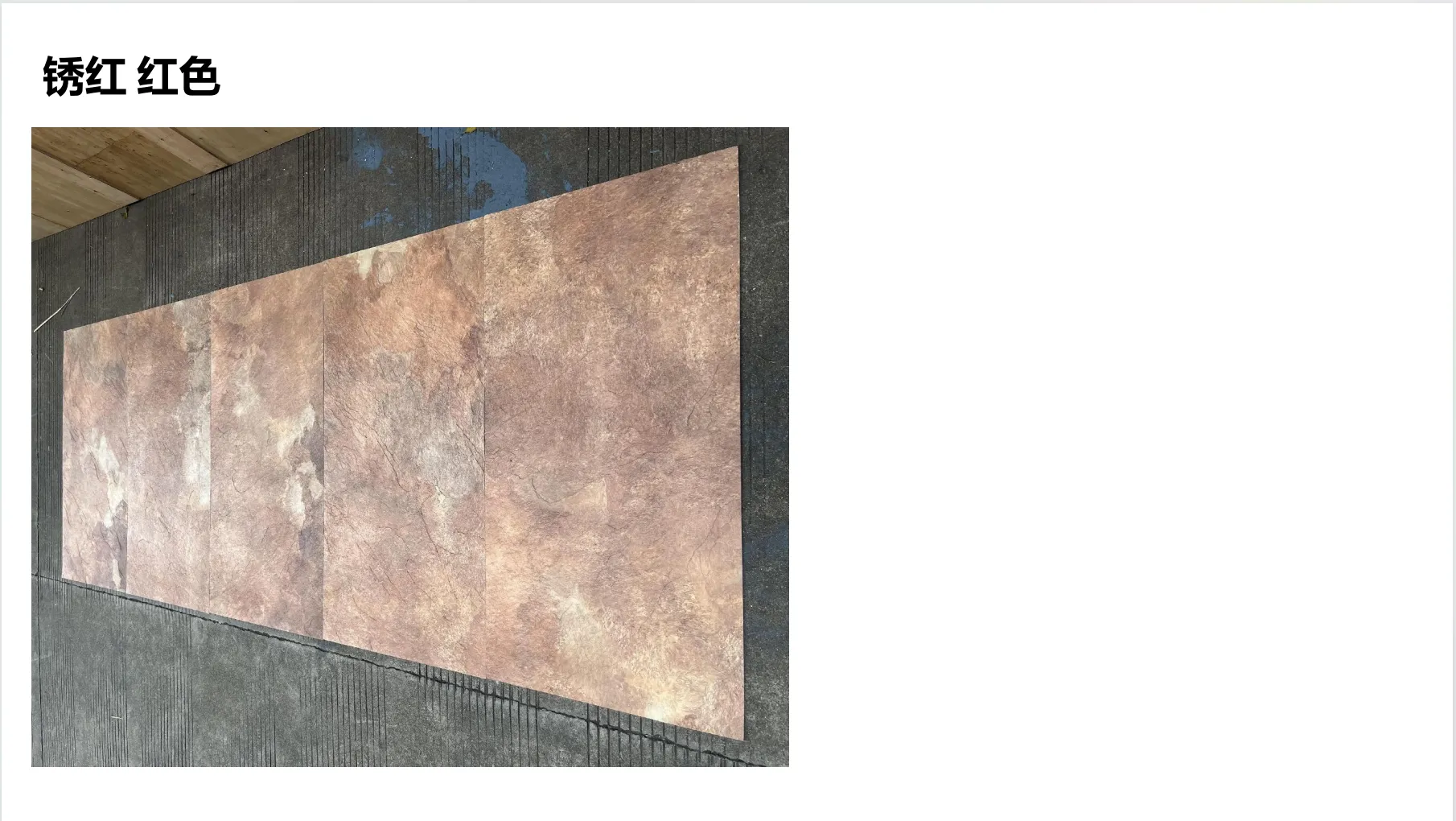
Walk into a modern café, a boutique hotel, or even a residential lobby these days, and you'll likely notice something special about the walls or floors—materials that feel both rugged and refined, historic and contemporary. Among these standout elements, Rusty Red MCM panels have been turning heads, not just for their striking color but for the way they blend durability with design flair. But have you ever wondered how that rich, earthy hue comes to life? How a mix of minerals, polymers, and craftsmanship transforms into the panels that adorn some of today's most innovative spaces? Let's pull back the curtain and explore the journey of Rusty Red MCM, from the ground up.
First things first: MCM stands for Modified Composite Material. Think of it as the Swiss Army knife of building materials—lightweight, flexible, and tough enough to handle the elements, whether it's scorching sun, heavy rain, or the daily wear and tear of a busy public space. Unlike traditional stone or concrete, which can be bulky and brittle, MCM panels are engineered to be thin (often just a few millimeters thick) and adaptable, making them ideal for both interior and exterior use. And Rusty Red? It's not just a color—it's a vibe. That warm, weathered tone evokes everything from ancient terracotta structures to industrial-chic warehouses, bridging the gap between past and present.
Every great product starts with great ingredients, and Rusty Red MCM is no exception. The process begins with sourcing raw materials that will give the panels their signature strength, flexibility, and color. Here's what goes into the mix:
One of the most important things about sourcing these materials is sustainability. Many MCM manufacturers today prioritize eco-friendly options, like recycled aggregates or low-VOC (volatile organic compound) polymers, to reduce their environmental footprint. After all, a material that looks good should feel good too—for both the planet and the people who interact with it.
| Raw Material | Role in the Panel | Why It Matters |
|---|---|---|
| Mineral Aggregates (Iron-Rich Clays, Red Sandstone) | Provide structure and base color | Ensures the panel has a natural, earthy foundation; reduces reliance on synthetic colorants |
| Polymer Binders (Acrylic or Epoxy Resins) | Holds aggregates together; adds flexibility | Allows the panel to bend without breaking, making installation easier on uneven surfaces |
| Iron Oxide Pigments | Creates the signature Rusty Red color | Mimics natural weathering; resists fading from UV rays |
| Glass/Carbon Fibers | Reinforces structural integrity | Prevents cracking under stress; extends the panel's lifespan |
Once the raw materials are gathered, it's time to mix them into a uniform paste. This is where precision meets artistry. Imagine a giant industrial kitchen, but instead of mixing cake batter, you're blending minerals and polymers. The aggregates, binders, pigments, and fibers are measured out in exact proportions—too much binder, and the panel might be too soft; too little, and it could be brittle. The goal is a consistency that's thick enough to hold shape but smooth enough to spread evenly.
For Rusty Red MCM, the color blending is especially crucial. Manufacturers often start with a base of iron-rich aggregates, then add iron oxide pigments in small increments, testing the color on sample panels until they hit that perfect "rusty" sweet spot—not too orange, not too brown, but with depth and variation, like the patina on an old barn door. It's a bit like a painter mixing oils on a palette; no two batches are exactly alike, which gives each panel a unique, organic look.
Now that the mixture is ready, it's time to give it shape. This is where MCM really shows off its flexibility—literally. The blended paste is spread onto a carrier sheet (usually made of fiberglass or aluminum) using a machine that ensures an even thickness, often between 3mm and 6mm. Think of it like rolling out dough with a pasta maker, but on an industrial scale.
But here's where the "MCM Flexible Stone" name comes into play: after spreading, the material is still malleable, so it can be formed into different textures or patterns. Want a smooth, polished finish for a modern lobby? No problem. Prefer a rough, textured surface that looks like hand-chiseled stone? The machine can press a mold onto the wet mixture, imprinting grooves, ridges, or even simulated "cracks" that mimic natural weathering. For Rusty Red panels, a slightly textured finish is often chosen to enhance the color—those tiny indentations catch the light, making the red appear deeper in some areas and lighter in others, just like real rust.
Once shaped, the panels need time to harden. This process is called curing, and it's a bit like letting a cake cool before frosting it—rush it, and you'll ruin the result. The panels are placed in a controlled environment (think a giant oven, but at a low temperature, around 60–80°C) where they slowly dry and set. Depending on the thickness and the type of binder used, curing can take anywhere from a few hours to a full day.
During this time, the polymer binders cross-link, forming strong chemical bonds that lock the aggregates and fibers together. The result? A panel that's no longer a wet paste but a solid, flexible sheet that can be handled without breaking. It's also during curing that the Rusty Red color fully develops—those iron oxide pigments oxidize slightly, deepening the hue and giving it that authentic, weathered look.
After curing, the panels are rough around the edges—literally. They're trimmed to standard sizes (common dimensions include 1200x600mm or 1000x500mm, though custom sizes are available) and sanded to remove any uneven spots. But the real magic happens in surface treatment, where the Rusty Red color is enhanced and protected.
First, the panels might undergo a washing process to remove any dust or residue from curing. Then, a sealant is applied—usually a clear, UV-resistant coating that locks in the color and prevents fading. For extra texture, some manufacturers will add a "patina wash," a diluted acid solution that reacts with the iron oxides in the panel, creating subtle variations in color (darker spots here, lighter streaks there) that make the rust effect even more convincing. It's a delicate balance: too much acid, and the color could become patchy; too little, and the finish might look flat.
Before the panels are packaged and shipped, they undergo a rigorous inspection. Every panel is checked for thickness (is it consistent across the sheet?), color (does it match the Rusty Red standard?), and strength (can it bend without cracking?). Samples are also tested for durability: they're exposed to extreme temperatures, sprayed with water to check for water resistance, and even scraped with a metal tool to ensure the finish doesn't chip easily.
Why all the fuss? Because MCM panels are meant to last. A poorly made panel could fade, crack, or peel after just a few years, leaving a building looking shabby. But a well-made Rusty Red MCM panel? It should stand up to decades of use, maintaining its color and texture through rain, snow, and sun. Think of it like buying a quality leather jacket—it might cost a bit more upfront, but it ages beautifully and lasts longer than a cheap alternative.
Once they pass inspection, the panels are stacked, wrapped, and sent off to construction sites, design studios, and homeowners around the world. So where might you spot Rusty Red MCM in the wild? Here are a few examples:
At the end of the day, Rusty Red MCM is more than just a building material—it's a story. It's the story of miners and suppliers who source the raw ingredients, of engineers who blend science and art to create the perfect mixture, of craftsmen who ensure each panel meets the highest standards. It's a material that doesn't just fill space; it shapes how we experience space—whether we're grabbing a coffee in a café with Rusty Red walls or walking into a hotel lobby that feels both grand and grounded.
So the next time you pass a building with that warm, rusty hue, take a second look. Behind that color is a journey—one that starts in quarries and factories, and ends in the spaces where we live, work, and connect. And isn't that the beauty of great design? It's not just about how something looks—it's about the care, creativity, and craftsmanship that went into making it.
Rusty Red MCM might be a modern innovation, but in its color and texture, it carries echoes of history—of ancient civilizations, of weathered barns, of the earth itself. It's a reminder that the best materials don't just build spaces; they build stories. And that, perhaps, is the most important ingredient of all.
Recommend Products












