

There's a material that has quietly shaped the face of architecture for millennia—one that carries the warmth of sunlit canyons and the depth of ancient rivers in its very pores. Red travertine, with its rich, earthy hues and distinctive veining, isn't just a stone; it's a storyteller. Walk through the streets of Rome, and you'll find it in the Colosseum's weathered arches, whispering tales of gladiators and emperors. Step into a modern boutique hotel in Dubai, and it might greet you in a sleek, polished lobby wall, blending timeless elegance with contemporary flair. But where does this remarkable stone come from? How does it journey from the heart of the earth to the facades of our most iconic buildings? Let's trace its path—from sun-baked quarries to the skylines we admire.
Red travertine's story begins not with human hands, but with the slow, patient work of nature. Unlike granite, which forms deep underground under intense heat and pressure, travertine is a sedimentary rock—born in the light, at the surface, where water and minerals dance in a delicate ballet. It all starts with mineral-rich hot springs or limestone caves, where groundwater, saturated with calcium carbonate, emerges into the open air. As the water evaporates or loses carbon dioxide, the calcium carbonate crystallizes, layer by layer, building up over centuries into soft, porous deposits. Think of it as nature's own sculpture, crafted drop by drop.
But what gives red travertine its signature color? The answer lies in impurities—tiny traces of minerals that tint the stone like pigments in a painter's palette. Iron oxides, in particular, are the culprits behind those warm reds, oranges, and rusty hues. When groundwater flows through iron-rich soil or rocks, it picks up these oxides, depositing them alongside the calcium carbonate. The result? A stone that ranges from soft terracotta to deep, fiery crimson, often swirled with cream or gold veins. Some varieties, like travertine (starry red) , take this a step further: tiny mineral inclusions or gas bubbles create a "starry" effect, as if someone scattered stardust across the stone's surface. It's nature's way of adding a little magic to the mix.
This process is slow—agonizingly so. A single centimeter of travertine might take decades to form. That means the red travertine we quarry today could have started forming when the Roman Empire was at its height, or even earlier. When you run your hand over a red travertine slab, you're touching a material that has been in the making for longer than most human civilizations. That's not just stone—that's a time capsule.
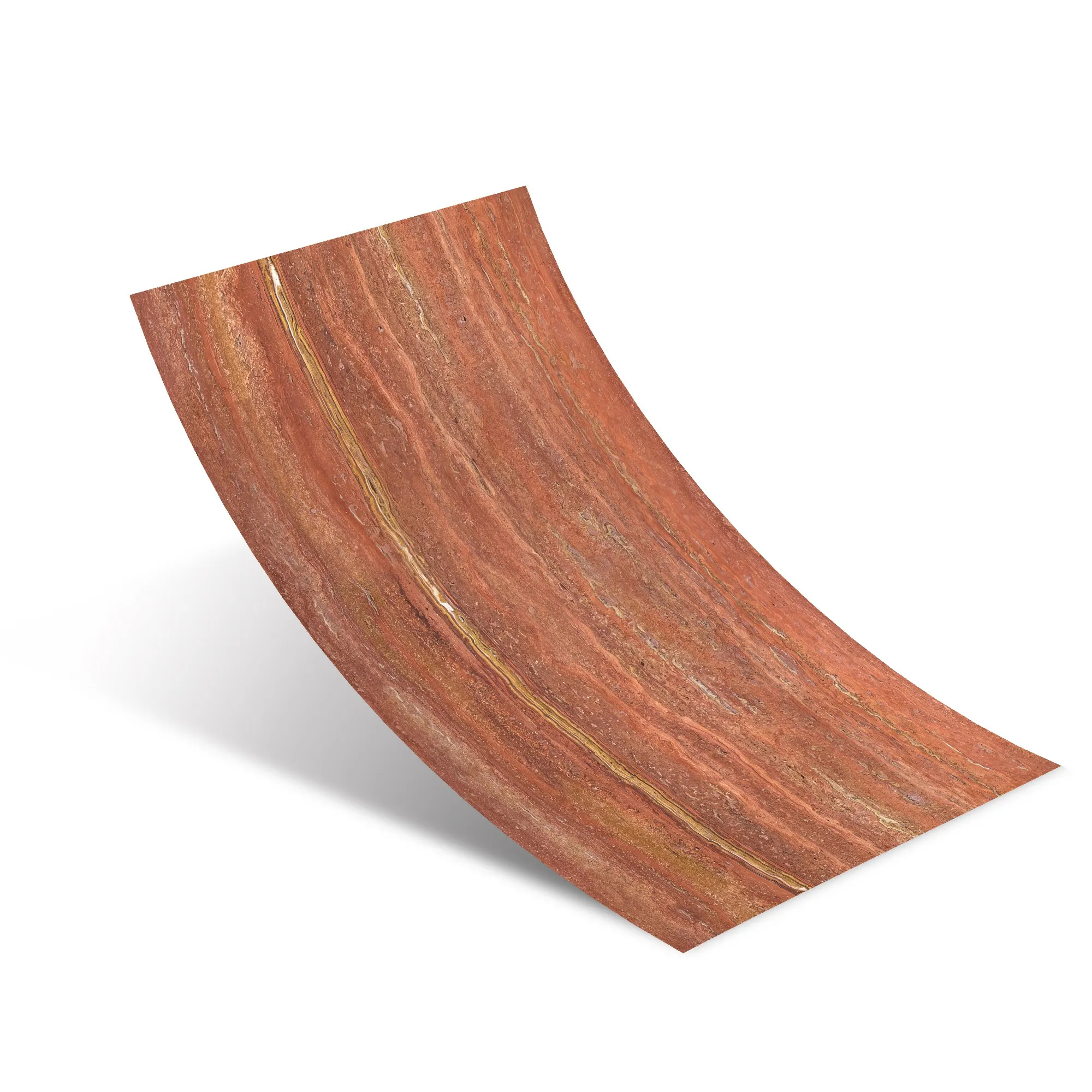
To find red travertine, you have to go where nature has laid its deposits bare. The world's most famous travertine quarries lie in regions with active geothermal activity: Italy's Tivoli, Turkey's Denizli, Iran's Yazd, and parts of the American Southwest. These are places where the earth's crust is thin, and mineral-rich water has been bubbling up for millennia. In Tivoli, just outside Rome, quarries have been operating since ancient times; the same stone that built the Colosseum is still being extracted there today, though with far more advanced tools than the Romans used.
Visiting a travertine quarry is an awe-inspiring experience. Imagine standing at the edge of a vast, terraced pit, where walls of red and gold stone rise like layered cakes, each stratum a snapshot of a different era. The air smells of dust and damp earth, and the sound of machinery—roaring saws, rumbling trucks—mingles with the calls of workers in hard hats. Yet for all the modern equipment, there's a rhythm here that feels ancient. Quarrying travertine is a delicate balance between strength and care: you need to extract large blocks without shattering them, preserving the stone's natural beauty.
Traditionally, workers used hand tools—chisels and hammers—to split the stone along its natural bedding planes, where it's weakest. Today, they use diamond-tipped wire saws and hydraulic drills, which can cut through the stone with precision, minimizing waste. But even with technology, there's an art to it. A skilled quarry worker can read the stone's veins, predicting how it will split, ensuring that each block is as large and intact as possible. "You don't fight the stone," one quarry manager in Tivoli told me. "You listen to it. It tells you where to cut."
Once extracted, the blocks are loaded onto trucks and transported to processing facilities. But before they leave the quarry, they're marked with codes—tracking their origin, quality, and intended use. A block from the top layer of the quarry might be softer, with more pores, ideal for a rustic, textured finish. One from deeper down could be denser, perfect for a high-gloss polish. Every block has its own personality, and it's up to the quarry team to match it with the right project.
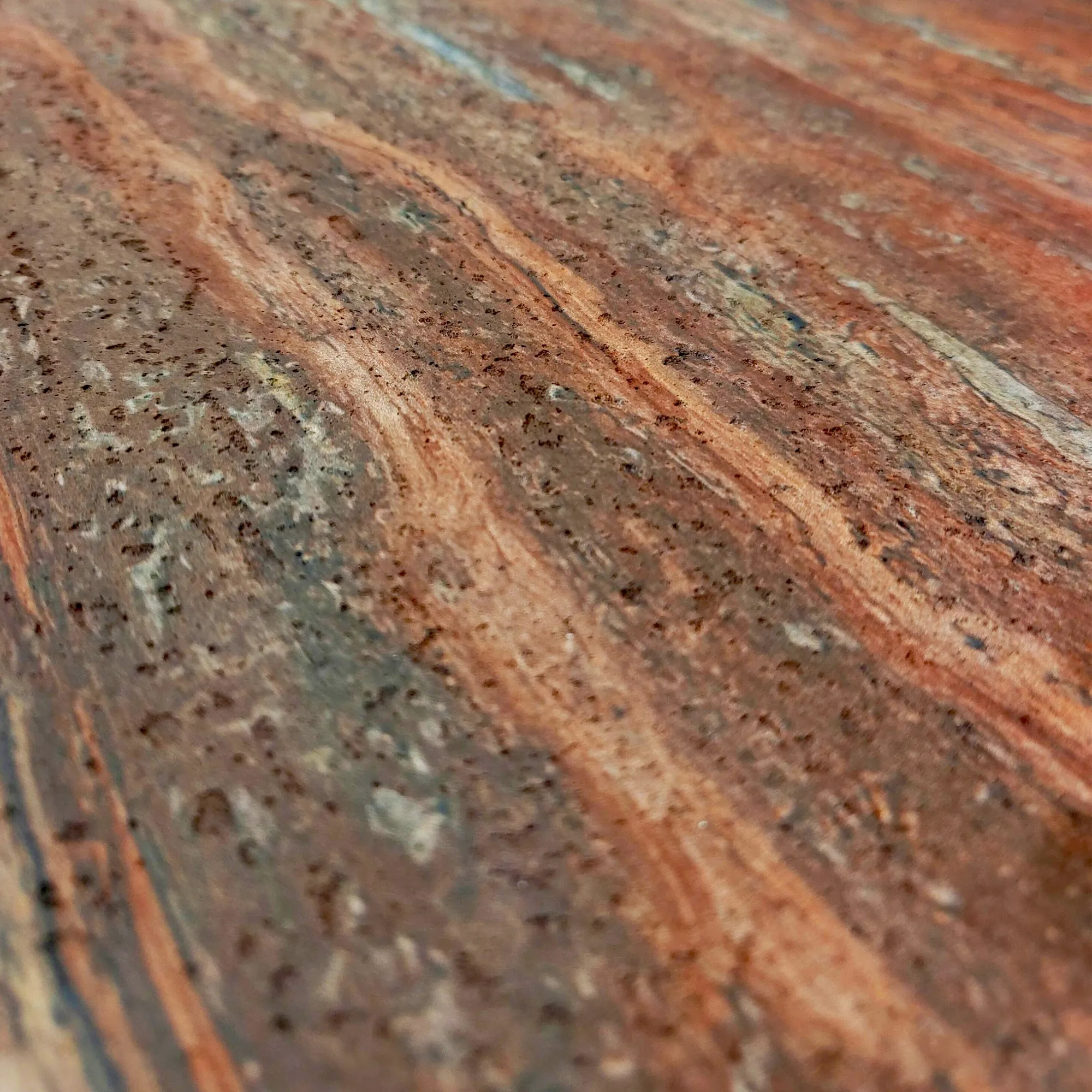
Arriving at the processing facility, the red travertine blocks look like giant, irregular chunks of earth—impressive, but far from the sleek panels you'd see on a building facade. Transforming them into usable material is a journey of precision and patience, involving a series of steps that blend old-world craftsmanship with cutting-edge technology.
The first stop is the cutting line, where massive gang saws—some as long as 10 meters—slice the blocks into slabs. These saws, fitted with diamond-tipped blades, can cut through a block in hours, producing slabs of uniform thickness (usually 2-3 centimeters for facades, though thicker slabs are available for countertops or flooring). For travertine (starry red) , this step is especially critical: the saw must follow the stone's natural veins to preserve those star-like inclusions, turning a random pattern into a deliberate design element.
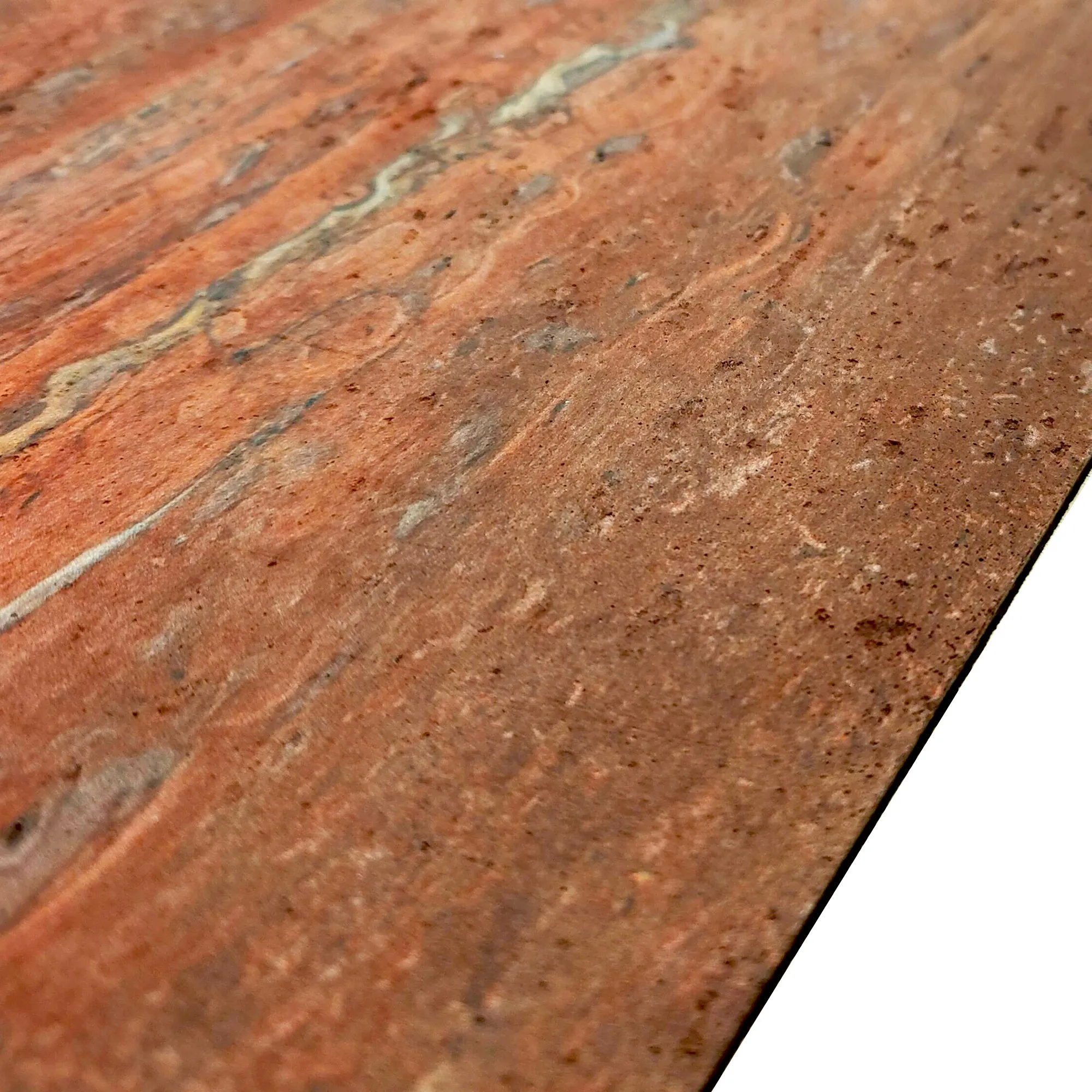
Travertine is naturally porous—those tiny holes and channels are a result of gas bubbles escaping during its formation. While some designers embrace this porosity for a rustic look, most facade applications require a smoother surface. That's where filling comes in. Workers apply a resin or cement-based filler, tinted to match the stone's color, pressing it into the pores with a roller or trowel. Once dry, the slab is sanded to remove excess filler, leaving a smooth, even surface that still retains travertine's characteristic texture.
Next, the slabs head to the polishing line, where a series of abrasive pads—from coarse to fine—grind and buff the surface. The goal? To bring out the stone's natural luster. A high-polish finish reflects light, making the red hues pop and the veins stand out in sharp relief. A honed finish, by contrast, is matte, giving the stone a soft, velvety feel that emphasizes its earthy tones. Some projects even opt for a "rough" or "bush-hammered" finish, where the surface is textured with small indentations, mimicking the look of hand-chiseled stone. For a modern twist, you might see travertine (vintage silver) or travertine (vintage gold) —variants where the stone is treated with metallic pigments to add a subtle shimmer, blending the organic with the industrial.
Before leaving the facility, every slab undergoes rigorous quality control. Inspectors check for cracks, uneven thickness, or filler inconsistencies, rejecting any slabs that don't meet standards. For facade panels, this is especially important: the stone must withstand wind, rain, and temperature fluctuations for decades. A single flaw could compromise the entire installation. Once approved, the slabs are labeled, packed into crates, and shipped to construction sites around the world—from Paris to Tokyo, New York to Sydney.
While red travertine is beloved for its warmth and versatility, it's not the only stone gracing our building facades. Rough granite stone (dark grey) , for example, is a popular alternative, prized for its durability and bold, speckled appearance. How do these two stones stack up? Let's compare:
| Attribute | Red Travertine | Rough Granite Stone (Dark Grey) |
|---|---|---|
| Formation | Sedimentary; formed by mineral-rich water evaporation | Igneous; formed deep underground from molten magma |
| Color Palette | Reds, oranges, terracottas, with cream/gold veins; includes variants like travertine (starry red) | Dark grey to black, with flecks of white, silver, or gold |
| Texture | Porous, with visible pores (often filled); can be polished, honed, or rough | Dense, grainy, with a crystalline structure; typically left rough or lightly polished |
| Durability | Moderate; resistant to weathering but prone to staining if unsealed | High; extremely hard and scratch-resistant, ideal for high-traffic areas |
| Aesthetic Vibe | Warm, organic, timeless; blends with both classical and modern designs | Bold, industrial, robust; adds a sense of strength and permanence |
| Sustainability | Generally sustainable; quarries often use water recycling and reforestation practices | Energy-intensive to extract and process, but highly durable (long lifespan reduces replacement needs) |
The choice between red travertine and rough granite often comes down to the project's aesthetic goals. A historic restoration might lean into travertine's classical roots, while a modern office tower could opt for granite's sleek, industrial edge. Sometimes, they're even used together: a red travertine facade with granite accents, creating a dynamic interplay of warmth and strength.
Once the slabs arrive at the construction site, the final chapter of red travertine's journey begins: installation. This is where the stone meets the building, and precision is everything. A poorly installed facade panel can crack, warp, or even fall, so installers follow strict guidelines to ensure safety and longevity.
Most modern facades use a "dry cladding" system, where slabs are attached to the building's structural frame with metal brackets or anchors, leaving a small air gap between the stone and the wall. This gap allows for ventilation, preventing moisture buildup that could damage the stone or the building. For high-rise buildings, wind load is a critical factor: each panel must be securely fastened to withstand gale-force winds. Installers use specialized tools to level each slab, ensuring the facade is plumb and even—a task that requires both technical skill and an eye for detail.
For heritage buildings, the process is often more hands-on. When restoring a 19th-century mansion in Paris, for example, artisans might use traditional lime mortar to attach the travertine slabs, matching the original construction methods to preserve the building's historical integrity. In these cases, the stone itself might be left unpolished, with visible tool marks, to blend with the building's weathered character.
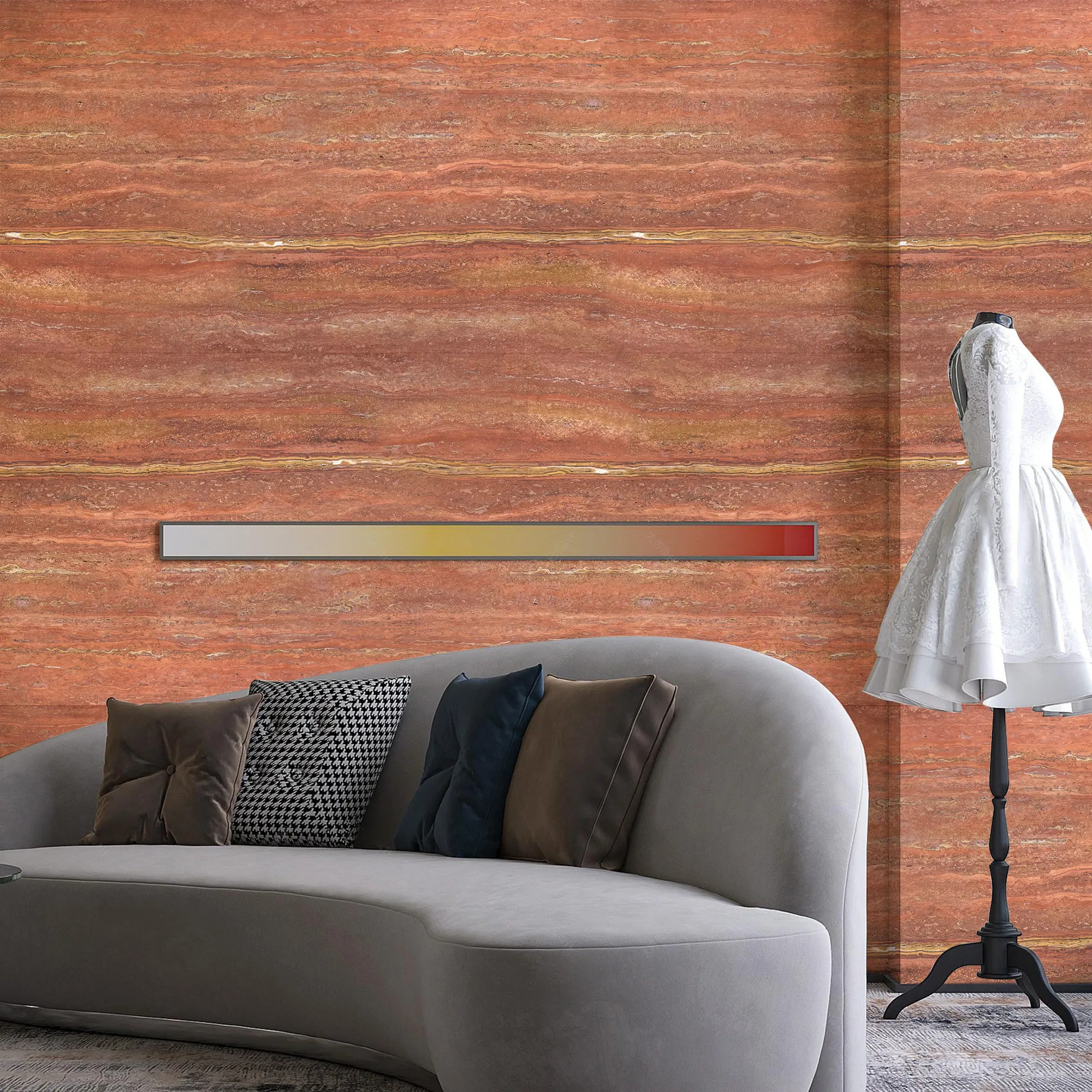
One of the most innovative uses of red travertine in modern architecture is in mcm flexible stone systems. MCM (Modified Composite Material) panels combine thin layers of natural stone with a flexible backing, making them lighter and easier to install than solid slabs. This technology has opened up new possibilities: curved facades, intricate patterns, even 3D-printed designs that would be impossible with traditional stone. A hotel in Singapore, for instance, used mcm flexible stone panels in travertine (starry red) to create a wave-like facade, where the stone appears to flow around the building's curves—a feat of engineering that merges nature and technology.
But red travertine isn't just for exteriors. Interior designers love it for feature walls, fireplaces, and even flooring. In a residential project in California, a homeowner paired travertine (vintage gold) with oak flooring and brass fixtures, creating a warm, inviting living room that feels both luxurious and grounded. The stone's natural veining becomes a focal point, drawing the eye and adding depth to the space.
In an era where "green building" is more than a buzzword, the stone industry is under pressure to reduce its environmental footprint. Red travertine, with its natural origins, has an edge—but quarrying and processing still have an impact. So, how are producers ensuring that this timeless stone remains a responsible choice for future generations?
Quarrying, for starters, has become more sustainable. Many modern quarries use water recycling systems, capturing and reusing the water used in cutting and polishing to reduce waste. Some have even begun reforesting quarried areas once extraction is complete, turning barren pits into lush forests or nature reserves. In Tivoli, one quarry has transformed an old extraction site into a public park, where visitors can walk among the stone cliffs and learn about travertine's geological history—a powerful reminder that responsible quarrying can coexist with environmental stewardship.
Processing facilities are also adopting greener practices. Energy-efficient machinery, solar-powered lighting, and carbon offset programs are becoming standard. Some companies even offer "carbon-neutral" travertine, where the emissions from extraction, processing, and transportation are offset by investments in renewable energy or reforestation projects. For architects and developers aiming for LEED or BREEAM certifications, these initiatives make red travertine an attractive choice.
Another sustainability advantage? Red travertine's longevity. Unlike synthetic cladding materials, which might need replacement every 20-30 years, a well-maintained travertine facade can last centuries. The Colosseum, after all, has stood for nearly 2,000 years—and its travertine blocks are still going strong. This durability means less waste in the long run, as buildings require fewer repairs and replacements over time.
From the moment it crystallizes in a hot spring to the day it's installed on a building facade, red travertine embodies the tension between permanence and change. It's a stone that carries the slow work of nature, shaped by human hands into something new—yet always retaining a connection to its origins. Whether it's gracing the walls of an ancient amphitheater or a cutting-edge skyscraper, it tells a story: of the earth's power to create, of human ingenuity to craft, and of our shared desire to build something that outlasts us.
So the next time you pass a building with a red travertine facade, take a moment to look closer. See the veins of gold that trace the path of ancient water. Notice the tiny pores, frozen in time like bubbles from a long-ago spring. Touch the surface—cool and smooth, or rough and textured—and feel the weight of history beneath your fingertips. Red travertine isn't just a building material. It's a bridge between past and present, a reminder that the most beautiful things in our world are often the ones that take time to grow.
And as we look to the future—with new technologies like mcm 3d printing series and a growing focus on sustainability—one thing is clear: red travertine will continue to evolve, adapting to the needs of our changing world while staying true to its roots. After all, some stories are too good not to be told again and again.
Recommend Products











