


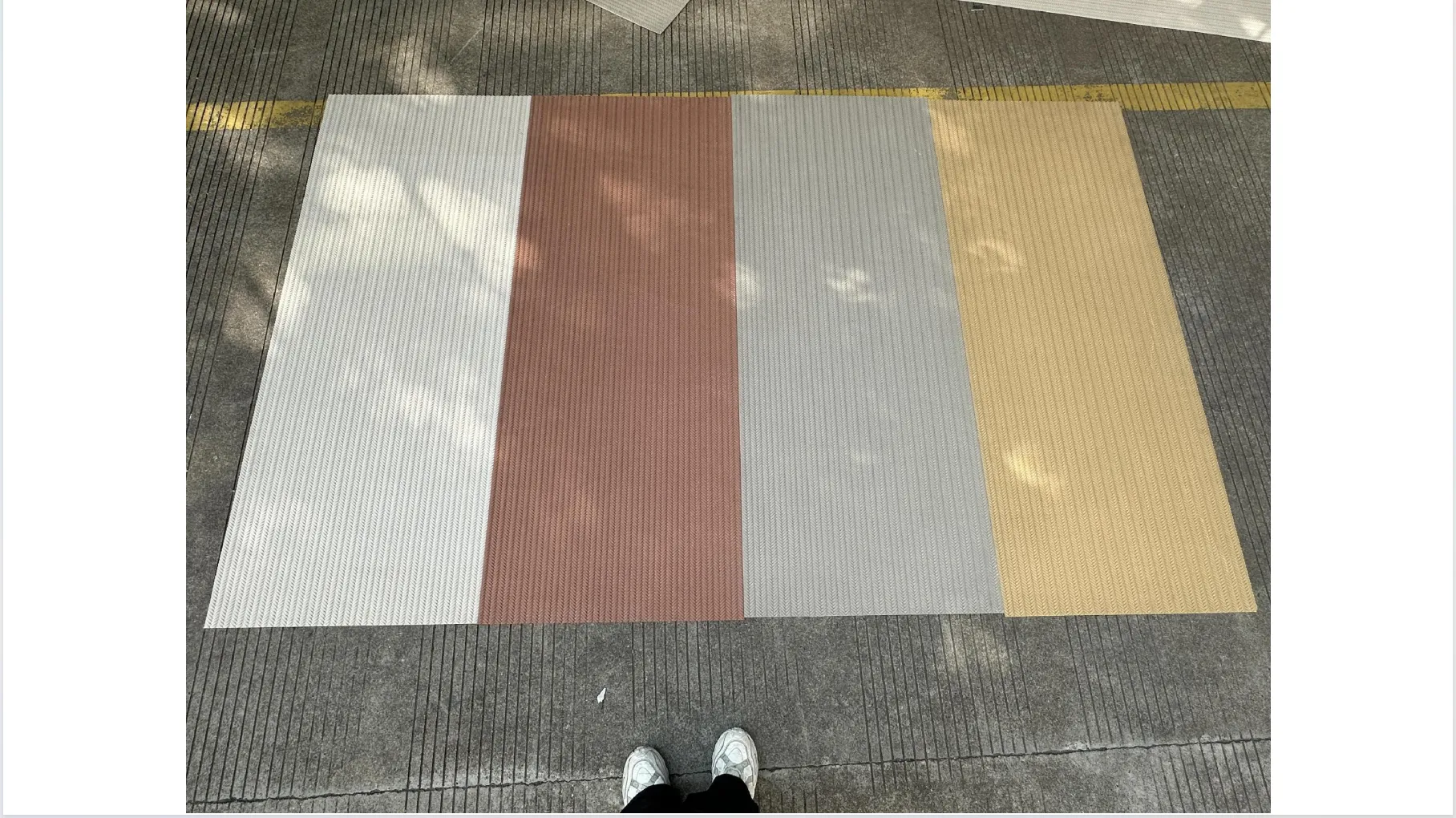
Long before a single light is set up or a product is placed on a backdrop, the process starts with a conversation. Picture a small conference room at COLORIA's headquarters, where the marketing team, product designers, and the photography crew huddle around a table covered in samples. There's a stack of weaving swatches—weaving (khaki), weaving (beige), weaving (grey)—each with a tiny tag noting its origin and intended use. Next to them sits a slab of MCM flexible stone, its surface smooth yet surprisingly pliable, and a piece of travertine (starry blue), which shimmers faintly under the overhead lights, like someone sprinkled stardust into its pores.
"The goal isn't just to take a photo," says Maria, the lead product designer, as she runs a finger over the edge of the weaving (khaki) sample. "It's to capture why someone would choose this over any other material. Is it the warmth of the khaki weave? The way the threads catch the light? Or maybe the durability that makes it perfect for a high-traffic lobby? We need the photo to answer those questions without saying a word."
This meeting is all about aligning on the "story" of each product. For weaving (beige), the team decides, the story is "timeless comfort"—think a cozy café wall or a boutique hotel lobby where guests want to linger. For MCM flexible stone, it's "versatility redefined"—showcasing how it can bend around curves without cracking, a feature that architects rave about. And for travertine (starry blue)? "That one's easy," jokes Raj, the photographer. "It's 'bring the night sky indoors.'"
From there, the team creates a mood board: torn pages from design magazines, photos of spaces where similar materials have been used, even paint swatches to match the desired color palette. For the weaving series, they pin up images of sunlit porches with woven furniture, earthy-toned living rooms, and close-ups of handwoven textiles to reference texture. For MCM flexible stone, it's snapshots of modern buildings with curved facades, proving that flexibility doesn't mean sacrificing style.
The final step in pre-production? A detailed shot list. "We don't leave anything to chance," explains Lina, the studio manager. "For each product, we list the angles—close-up for texture, 45-degree for depth, wide shot for context—the lighting setup, and even the props. For example, with fair-faced concrete, we knew we wanted to pair it with a potted olive tree to highlight its raw, organic side. It's those little details that make the photo feel lived-in, not just staged."










