
How Aged Wood Textures Are Transforming Modern Spaces with Warmth, History, and Sustainability
Walk into any trendy café, boutique hotel, or upscale retail store today, and you might notice something different about the walls, floors, or accent pieces. Gone are the days of stark, sterile minimalism—instead, there's a quiet rebellion happening: a return to textures that feel lived-in, stories that feel real, and materials that whisper of time. At the heart of this shift? Ancient wood. Not the polished, uniform planks of yesteryear, but weathered, textured, and authentic wood-inspired surfaces that bring the soul of centuries into contemporary commercial spaces.
This isn't just about nostalgia. In a world dominated by screens and synthetic materials, people are craving connection—to nature, to history, and to something tangible. Ancient wood trends tap into that universal desire, offering spaces that feel both grounded and alive. But what exactly is driving this resurgence, and how are designers reimagining this classic material for the demands of modern commerce? Let's dive in.
To understand the rise of ancient wood in commercial design, we need to look at the cultural and emotional shifts of recent years. After months of isolation and digital overload, people are yearning for environments that feel "real." Biophilic design—the idea that humans innately connect with nature—has moved from a buzzword to a necessity, and wood, with its organic grain and warm tones, is a natural protagonist.
But it's not just any wood. The trend leans into "ancient" textures—think weathered barn wood, driftwood smoothed by tides, or reclaimed timber with nail holes and patina. These imperfections tell stories: of time, of resilience, of a world that existed before mass production. In a commercial landscape saturated with glossy, impersonal surfaces, these textures create instant intimacy. A restaurant with a wall of reclaimed wood doesn't just serve food; it invites guests to step into a narrative.
Sustainability is another key driver. As consumers and brands prioritize eco-conscious choices, green building materials have moved center stage. Ancient wood trends align perfectly with this, often relying on reclaimed materials or innovative composites that mimic aged wood without depleting forests. This blend of aesthetics and ethics is irresistible for modern businesses looking to build trust with their audience.
Here's the secret: today's ancient wood trends aren't limited to actual timber. While reclaimed wood still has its place, designers are increasingly turning to cutting-edge materials that capture the look and feel of aged wood—without the drawbacks of maintenance, cost, or environmental impact. Let's explore some of the stars of this movement:
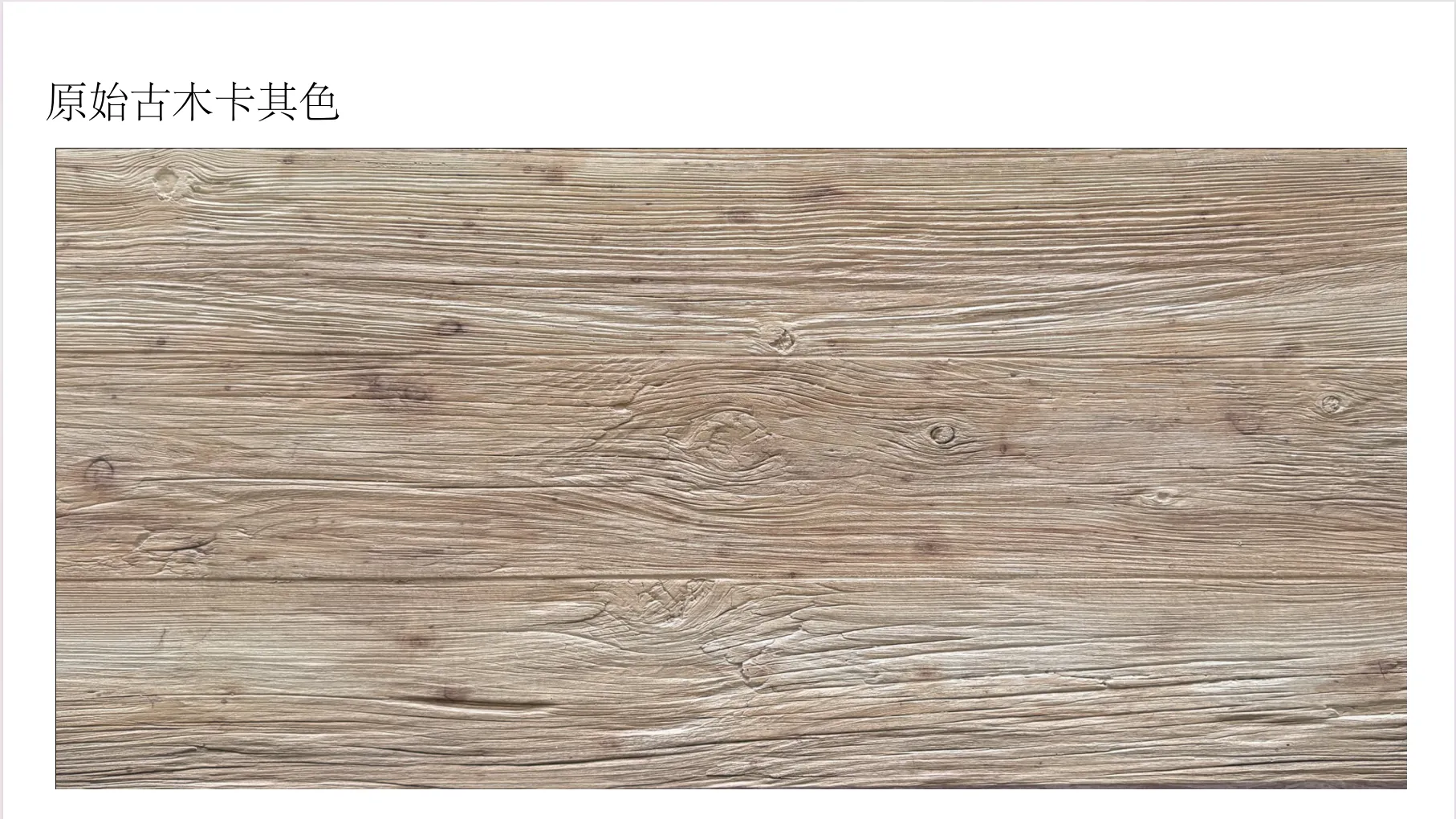
Wood grain board is a masterclass in mimicry. Using advanced printing and texturing techniques, manufacturers can replicate the intricate patterns of oak, walnut, or teak—down to the knots, swirls, and color variations—on durable substrates like MDF, PVC, or even stone composites. The result? A surface that looks and feels like centuries-old wood but resists scratches, moisture, and fading. It's a game-changer for high-traffic commercial spaces like retail stores or airports, where real wood would quickly show wear.
Inspired by the Japanese technique of shou sugi ban (where wood is charred to preserve it), charcoal burnt wood board takes ancient wood aesthetics to dramatic new heights. The process involves torching the surface of wood (or wood-like composites) to create a deep, smoky finish—ranging from jet black to ambered edges—that's both striking and surprisingly practical. The charring makes the material fire-resistant and bug-proof, while the uneven texture adds instant visual interest. It's become a favorite for accent walls in restaurants and boutique hotels, where a single burnt wood panel can become the focal point of a room.
For spaces that need durability without sacrificing warmth, wood concrete board is a revelation. This hybrid material blends wood fibers (often reclaimed) with concrete, creating a surface that's tough enough for floors or countertops but retains the organic charm of wood. The wood grains peek through the concrete matrix, softening its industrial edge and adding depth. It's particularly popular in coworking spaces and tech offices, where the contrast of raw concrete and natural wood balances professionalism with approachability.
Wood line takes a more graphic approach, using linear wood patterns to create visual rhythm. Think vertical slats, horizontal planks, or even diagonal stripes of wood grain board or real wood. This technique adds movement to spaces, making them feel larger or more dynamic. A retail store might use vertical wood line panels on walls to draw the eye upward, while a café could install horizontal wood line ceilings to evoke the cozy feel of a forest canopy. It's a versatile tool that designers use to shape how we experience a room—all while leaning into the ancient wood aesthetic.
| Material | Aesthetic Features | Durability | Sustainability | Best For |
|---|---|---|---|---|
| Wood Grain Board | Replicates natural wood knots, grains, and color variations | High (scratch, moisture-resistant) | Eco-friendly (often uses recycled materials) | Retail walls, restaurant ceilings |
| Charcoal Burnt Wood Board | Deep, smoky finish with textured, fire-kissed surface | Excellent (fire, bug-resistant) | Sustainable (extends wood lifespan) | Accent walls, hotel lobbies |
| Wood Concrete Board | Blends wood fibers with concrete for industrial-warmth | Very high (load-bearing, impact-resistant) | Uses reclaimed wood fibers; low VOC | Coworking floors, reception desks |
| Wood Line | Linear patterns (vertical/horizontal) for visual rhythm | Depends on substrate (often high with MCM backing) | Sustainable when paired with green materials | Retail displays, café partitions |
Ancient wood-inspired materials aren't just pretty—they're transformative. Let's look at how they're reshaping different commercial environments:
Restaurants have embraced ancient wood more than any other sector, and for good reason: food tastes better in a space that feels like home. Take the trend of "rustic-chic" eateries, where wood grain board lines the walls, paired with charcoal burnt wood accents on the bar. The warm tones and tactile textures make diners linger longer, turning a quick meal into an experience. In Tokyo, a sushi restaurant recently garnered attention for its wood concrete board countertops—blending the precision of Japanese cuisine with the organic warmth of wood, creating a space that feels both traditional and modern.
Luxury and boutique retailers are using ancient wood to elevate their brand narratives. A high-end leather goods store in Paris, for example, installed wood line panels along its walls, the vertical slats echoing the craftsmanship of hand-stitched leather. The message? "Our products, like this wood, are built to last." Even fast-fashion brands are getting in on the action, using wood grain board in fitting rooms to soften harsh lighting and make customers feel more comfortable—boosting sales in the process.
Hotel lobbies are no longer just transit spaces—they're storytelling hubs. Many are now featuring statement walls of charcoal burnt wood or reclaimed timber, immediately signaling "stay awhile." A boutique hotel in (Dali), China, went viral for its lobby ceiling: a mosaic of wood line planks in varying shades of amber and brown, designed to mimic the rolling hills outside. Guests often take photos of the ceiling before even checking in—proof that ancient wood textures create shareable moments, a goldmine for social media-driven businesses.
Coworking spaces are ditching cold, sterile environments for biophilic design, and ancient wood is leading the charge. Wood concrete board desks, paired with wood grain board partitions, create zones that feel private yet connected to nature. Studies show that such environments reduce stress and boost creativity—key for spaces competing to attract freelancers and startups. One popular coworking chain even uses wood line panels to divide work areas, the linear pattern creating a sense of flow that keeps energy high.
As technology advances, the possibilities for ancient wood trends are expanding. Imagine wood grain board with embedded LED lights that mimic sunlight filtering through trees, or wood concrete board that doubles as a wireless charging pad. Digital fabrication is already allowing designers to create custom wood patterns—think wood line panels shaped like constellations or wood grain board printed with brand logos. The line between "ancient" and "futuristic" is blurring, and the results are thrilling.
Sustainability will continue to drive innovation, too. Brands are experimenting with mycelium (mushroom-based) composites that grow into wood-like shapes, or recycled plastic blended with wood fibers to create ultra-durable, eco-friendly boards. The goal? To capture the soul of ancient wood without a single tree being cut down.
At its core, the rise of ancient wood in commercial design is about more than aesthetics. It's about creating spaces with heart—spaces that acknowledge our need for connection, history, and authenticity. In a world that often feels rushed and disposable, these materials remind us to slow down, to appreciate the beauty of imperfection, and to find comfort in the stories that surround us.
Whether it's a coffee shop with a charcoal burnt wood accent wall or a hotel lobby wrapped in wood grain board, ancient wood trends are here to stay. They're not just decorating spaces—they're humanizing them. And in a commercial world that's finally waking up to the power of emotion, that's priceless.
Recommend Products












