
Middle Eastern architecture has always been a dialogue between the past and the present—a dance of sun-baked traditions and cutting-edge innovation. From the intricate mosaics of Damascus to the sleek skyscrapers of Dubai, the region's built environment tells stories of heritage, resilience, and creativity. Today, a new chapter is being written with the rise of gradient color rammed earth boards, a material that marries ancient construction wisdom with contemporary design sensibilities. More than just a building material, these boards are a canvas for emotion, a bridge between the earthy roots of Middle Eastern design and the dynamic aesthetics of modern living.
Rammed earth is no stranger to the Middle East. For millennia, civilizations across the region—from the Nabataeans of Petra to the Berbers of Morocco—used this technique to build homes, forts, and temples. The process, which involves compressing layers of moistened soil, gravel, and straw into formwork, results in walls that are not only durable but deeply connected to the land. In places like Yemen's mud-brick skyscrapers or Iran's desert villages, rammed earth structures have withstood scorching summers and sandstorms for centuries, a testament to their strength and sustainability.
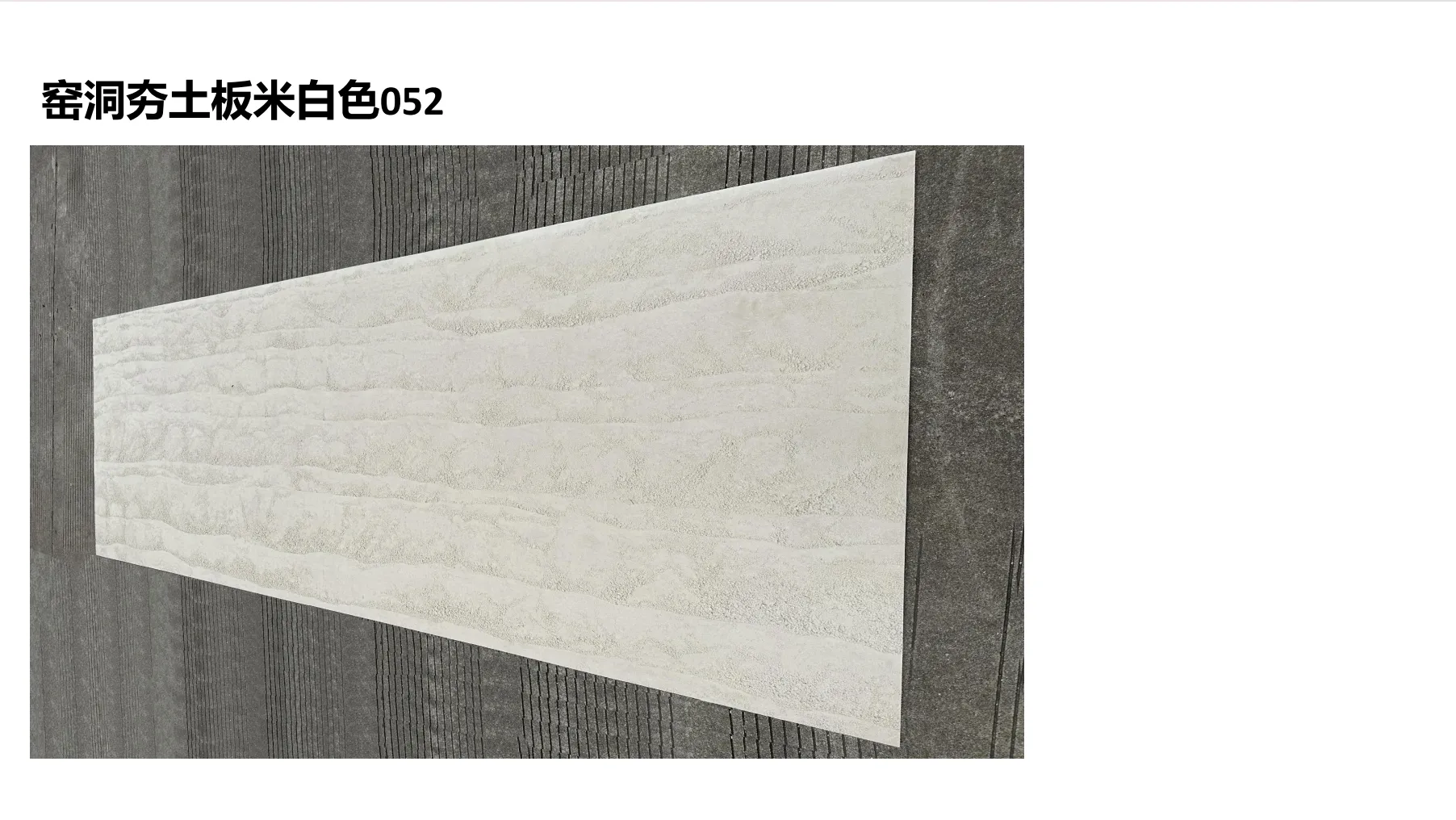
But while traditional rammed earth is celebrated for its earthy tones and tactile texture, it has long been limited to a narrow palette of browns, beiges, and terracottas. Enter gradient color rammed earth boards—a innovation that reimagines this ancient material as a medium for color, movement, and storytelling. By layering natural pigments and carefully controlling the compression process, artisans can now create boards where hues shift seamlessly: from the soft pink of dawn over the Arabian Gulf to the deep amber of a desert sunset, or the cool gray of a mountain mist transitioning into the warm gold of sunlight breaking through clouds.
The magic of gradient rammed earth lies in its connection to the Middle East's diverse landscapes. Designers aren't just adding color arbitrarily—they're channeling the region's natural beauty into built form. Take, for example, a gradient that flows from "rammed earth board (light yellow)" to "rammed earth board (khaki)"—it mirrors the way sunlight plays on the dunes of the Rub' al Khali, where sand shifts from pale gold to rich amber as the day progresses. Another popular gradient, blending "rammed earth board (gradient b)" (a soft terracotta) into "rammed earth board (gradient c)" (a deep rust), evokes the stratified rock formations of Jordan's Wadi Rum, where iron oxides paint the cliffs in ever-changing shades.
Even celestial inspiration finds its way into these boards. A gradient that fades from "lunar peak silvery" to "lunar peak golden" captures the glow of the moon rising over the desert, while hints of "travertine (starry blue)"—with its subtle, star-like flecks—adds a touch of cosmic wonder to earthbound walls. It's a material that doesn't just sit in a space; it transports you, grounding you in the region's natural heritage while sparking the imagination.
"When we designed the gradient rammed earth feature wall for the lobby of that Riyadh boutique hotel, we wanted guests to feel like they were standing at the edge of a desert at dusk," says Lebanese architect Zaina Hassan. "The way the color shifts from warm orange to deep violet isn't just beautiful—it's emotional. People pause, they touch the wall, they take photos. It's not just a surface; it's an experience."
Middle Eastern design has always balanced reverence for tradition with a bold embrace of the new, and gradient rammed earth boards fit this ethos perfectly. They honor the region's history of craftsmanship—each board is still made by hand, with artisans relying on skills passed down through generations—while pushing boundaries with color and form. This duality makes them a favorite in projects that aim to tell a story of cultural continuity.
Consider, for instance, a cultural center in Cairo that uses gradient rammed earth boards alongside "historical pathfinders stone"—a material that mimics the weathered limestone of ancient Egyptian temples. The gradient walls, with their flowing colors, represent the evolution of Egyptian culture, while the "historical pathfinders stone" anchors the space in its ancient roots. Together, they create a narrative of past and present coexisting, a theme deeply resonant in a region where history is always close at hand.
Even in ultra-modern settings, gradient rammed earth holds its own. In Dubai's Design District, a tech startup's office features gradient boards in "rammed earth board (matcha green)" transitioning to "rammed earth board (white)"—a nod to the region's growing focus on sustainability and wellness—paired with sleek "foamed aluminium alloy board (vintage silver)" accents. The contrast is striking: the warm, organic gradient of the rammed earth softens the cool, industrial edge of the metal, creating a space that feels both forward-thinking and deeply human.
In an era where sustainability is no longer a trend but a necessity, gradient rammed earth boards shine as an eco-friendly alternative to synthetic cladding materials. Like traditional rammed earth, they're made from locally sourced soil, reducing carbon emissions from transportation. The pigments used to create gradients are natural—derived from iron oxides, clay, and plant-based dyes—eliminating the toxic chemicals found in many conventional paints and coatings. And because the color is integral to the material (not just a surface layer), these boards won't fade or peel over time, ensuring longevity with minimal maintenance.
What's more, the production of gradient rammed earth boards supports local craftsmanship. In countries like Oman and Morocco, where rammed earth has been a building tradition for centuries, workshops are now training artisans in the art of color layering and gradient creation, breathing new life into old skills. It's a material that doesn't just build buildings—it builds communities, preserving heritage while creating livelihoods for the next generation of craftspeople.
| Material | Core Aesthetic | Sustainability | Best For |
|---|---|---|---|
| Gradient Rammed Earth Boards | Organic color transitions, tactile texture, connection to natural landscapes | High: Local materials, natural pigments, low carbon footprint | Feature walls, exterior cladding, cultural spaces, residential interiors |
| Lunar Peak Golden | Metallic sheen, uniform color, modern industrial vibe | Medium: Synthetic pigments, energy-intensive production | Accent panels, commercial facades, high-tech interiors |
| Travertine (Beige) | Classic, porous texture, neutral tone | Medium: Quarrying impacts, but durable and natural | Traditional interiors, flooring, heritage projects |
| Foamed Aluminium Alloy Board (Vintage Gold) | Sleek, reflective, lightweight | Low: Aluminum production is energy-heavy, non-biodegradable | Modern exteriors, high-rise cladding, statement pieces |
As Middle Eastern architecture continues to evolve, gradient color rammed earth boards are poised to play an even bigger role. Designers are already experimenting with bolder color combinations—think "rammed earth board (red)" fading into "rammed earth board (gradient)" (a deep burgundy)—inspired by the vibrant hues of traditional Persian carpets or the rich reds of Oman's Jebel Akhdar mountains. Others are pairing gradient boards with complementary materials like "mcm flexible stone"—a lightweight, durable cladding that adds geometric contrast to the organic flow of gradients—or "weaving (khaki)" panels, which introduce texture and softness to hard surfaces.
There's also growing interest in large-scale applications: imagine a university campus in Doha where entire buildings are wrapped in gradient rammed earth, their colors shifting with the angle of the sun, or a mosque in Istanbul where the qibla wall features a gradient that guides worshippers' eyes from earth to sky. The possibilities are as limitless as the region's landscapes.
In the end, gradient color rammed earth boards are more than just a building material—they're a celebration of the Middle East's identity. They honor the past by preserving the wisdom of rammed earth, embrace the present by reflecting the region's dynamic design culture, and look to the future by offering a sustainable, emotionally resonant alternative to generic, mass-produced cladding. In a world that often prioritizes the sleek and the uniform, these boards remind us that the most impactful spaces are those that feel alive —rooted in the land, rich in color, and full of stories waiting to be told.
Recommend Products












