
First, let's break down the basics. MCM, or Modified Composite Material, is a game-changer in construction. Think of it as nature's best qualities—durability, texture, beauty—reimagined with modern engineering. Unlike traditional materials like solid stone or hardwood, MCM is flexible, lightweight, and often crafted from recycled or low-impact ingredients. This makes it a darling for architects and builders aiming to meet green building standards, which have become more than just a trend; they're a necessity in a world grappling with climate change.
Green building certification systems like LEED (Leadership in Energy and Environmental Design), BREEAM (Building Research Establishment Environmental Assessment Method), and GSAS (Global Sustainability Assessment System) reward projects that prioritize energy efficiency, reduce waste, minimize carbon footprints, and enhance indoor air quality. For developers, these certifications aren't just badges—they boost property value, attract eco-conscious tenants, and align with global sustainability goals. But here's the catch: achieving certification often means making tough choices between "green" and "gorgeous." That's where MCM's weaving real photos step in.
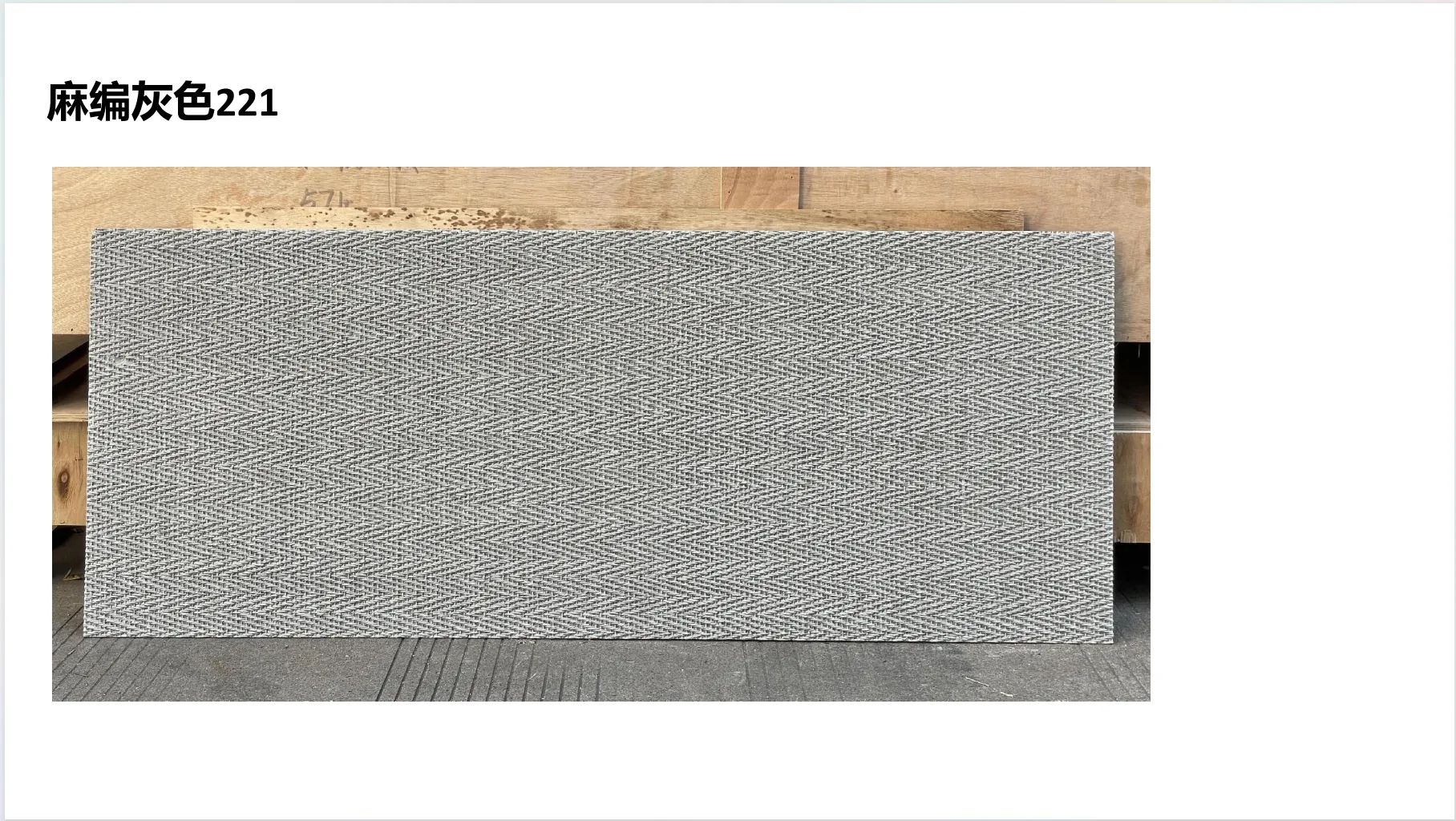
Let's clarify: "weaving real photos" aren't literal photographs printed on panels. Instead, they're ultra-realistic textured surfaces that mimic the look and feel of woven materials—think rattan, jute, or handwoven textiles—captured in such intricate detail that they might as well be high-resolution photos brought to life. These panels come in a spectrum of colors and patterns: soft weaving (khaki) that evokes sun-dried straw, rich weaving (jacinth) that resembles burgundy thread, muted weaving (grey) for a modern edge, and warm weaving (beige) that blends with natural landscapes. Each design is engineered to replicate the depth and character of handwoven fabrics without relying on resource-heavy materials like natural fibers, which often require intensive farming, water, or chemical treatments.
Take weaving (khaki) as an example. Traditional woven panels might use natural jute, which demands land, water, and pesticides to grow. Over time, jute can fray, fade, or attract pests, leading to frequent replacements. MCM's version, by contrast, is made from a blend of recycled polymers, mineral powders, and plant-based fibers. The result? A panel that looks and feels like woven straw but is water-resistant, fire-retardant, and built to last decades. It's sustainability with a tactile, inviting finish—no compromise required.
Now, let's dive into the nitty-gritty: how do these textured panels actually help projects earn green building certification? It boils down to three key areas: resource efficiency, durability, and aesthetic versatility.
One of the biggest hurdles in green building is reducing reliance on virgin resources. Natural stone, hardwood, and even traditional concrete require mining, logging, or energy-intensive production—all of which deplete ecosystems and release carbon. Weaving real photos tackle this by offering a "vegan" alternative to resource-heavy textures. For instance, using weaving (jacinth) panels on a facade eliminates the need for rare or endangered woods, which are often harvested unsustainably. Similarly, weaving (khaki) can replace natural rattan, which is often imported from tropical regions, adding to transportation emissions.
MCM manufacturers take this a step further by incorporating recycled content into their weaving panels. Many are made with post-consumer plastic waste, industrial byproducts like fly ash, or reclaimed wood fibers. This not only keeps waste out of landfills but also reduces the demand for new raw materials—a key metric in certifications like LEED, which awards points for recycled content use.
Green building isn't just about what materials you use—it's about how long they last. A beautiful but fragile material that needs replacement every 5-10 years negates its eco-friendly credentials by creating ongoing waste. Weaving real photos excel here. MCM panels are designed to withstand the elements: rain, wind, UV rays, and even extreme temperatures. Unlike natural woven materials that rot or fade, weaving (grey) or weaving (beige) panels retain their color and texture for 20+ years with minimal maintenance. This longevity reduces the need for frequent repairs or replacements, cutting down on waste and the carbon emissions associated with manufacturing and transporting new materials.
Consider a hotel project in a coastal area. Traditional wooden or rattan cladding would warp or degrade quickly due to saltwater and humidity, requiring annual upkeep. Swap that for MCM weaving (khaki) panels, and suddenly the building's exterior stays intact for decades. Less waste, less hassle, and more points toward certification.
Here's the secret weapon: weaving real photos let architects have their cake and eat it too. Green building doesn't mean settling for a sterile, "industrial" look. With textures that range from rustic weaving (khaki) to elegant weaving (jacinth) , these panels add warmth, depth, and personality to spaces—qualities that are critical for human-centric design. For example, a healthcare facility using weaving (beige) panels in patient rooms creates a calming, home-like atmosphere, which studies show improves patient recovery. A retail store with weaving (grey) accents feels modern and inviting, drawing in customers without relying on resource-heavy decor.
Certification bodies like LEED recognize the importance of indoor environmental quality, including visual comfort and occupant well-being. By enhancing aesthetics without harmful materials, weaving real photos contribute to points in categories like "Indoor Environmental Quality" and "Innovation in Design."
To put this into perspective, let's compare MCM weaving panels with two common alternatives: traditional woven rattan and fair-faced concrete (a popular "industrial chic" material). The table below highlights key sustainability metrics that matter for certification:
| Metric | Traditional Woven Rattan | MCM Weaving (Khaki) Panels | Fair-Faced Concrete |
|---|---|---|---|
| Resource Use | High: Requires land, water, and pesticides for rattan cultivation; limited to tropical regions. | Low: Made with recycled polymers, mineral powders, and reclaimed fibers; no virgin resource extraction. | High: Cement production emits CO2; requires mining of limestone and clay. |
| Durability | Low: Fades, frays, and rots in 5-8 years; prone to pest damage. | High: Resists UV, moisture, and pests; lasts 20+ years with minimal maintenance. | High: Long lifespan but heavy; prone to cracking if not reinforced. |
| Recyclability | Low: Difficult to recycle; often ends up in landfills. | High: Can be recycled into new MCM panels at end-of-life. | Low: Recyclable but energy-intensive to process; often downcycled. |
| VOC Emissions | Medium: May be treated with chemical preservatives that off-gas. | Low: Zero or low VOC (volatile organic compound) emissions; safe for indoor use. | Medium: May emit formaldehyde from sealants or admixtures. |
| Transportation Impact | High: Often imported from Southeast Asia, increasing carbon footprint. | Low: Lightweight (1/5 the weight of concrete), reducing fuel use during transport. | High: Extremely heavy, requiring specialized trucks and increasing emissions. |
The data speaks for itself: MCM weaving panels outperform traditional rattan in nearly every category and even hold their own against fair-faced concrete, a material often hailed as "sustainable" due to its longevity. For certification bodies, these metrics translate directly to points—whether it's LEED's "Materials and Resources" credits or BREEAM's "Waste" and "Pollution" categories.
Let's look at a real-world example. The GreenWave Office Tower, a 15-story commercial building in Dubai, set out to achieve LEED Gold certification. The design team wanted a facade that felt warm and welcoming but wouldn't compromise on sustainability. After evaluating options, they chose weaving (jacinth) panels for the lobby and exterior accents, paired with MCM flexible stone for the main structure.
Why weaving (jacinth) ? The rich, burgundy texture added a touch of luxury, which was key for attracting high-end tenants, while the panels' lightweight nature reduced the building's structural load—cutting down on steel and concrete use. Additionally, the panels' recycled content (35% post-consumer plastic) contributed to LEED's "Recycled Content" credit, and their low VOC emissions helped score points in "Indoor Environmental Quality."
The result? GreenWave achieved LEED Gold, with the weaving panels cited as a standout feature in the certification report. Tenants praised the lobby's "organic, inviting" feel, and the building's energy use was 23% lower than similar structures in the area. As the project architect noted, "We didn't have to choose between 'green' and 'gorgeous.' The weaving panels gave us both."
Critics might argue: "If it's a composite material, isn't it just another plastic? How is that green?" It's a fair question. But here's the nuance: not all synthetics are created equal. MCM weaving panels are engineered to be low-impact from cradle to grave. Many manufacturers use bio-based polymers or plant-derived resins, reducing reliance on fossil fuels. Others partner with recycling facilities to ensure panels are repurposed at the end of their life, closing the loop on waste.
Moreover, the alternative—using natural materials—isn't always greener. For example, harvesting natural rattan contributes to deforestation in Southeast Asia, while importing exotic woods drives habitat loss. MCM's weaving real photos offer a way to honor the beauty of these materials without contributing to their depletion. It's about balance: choosing the option that does the least harm while delivering the most value.
As green building standards evolve, the demand for materials that blend aesthetics and sustainability will only grow. MCM's weaving real photos are at the forefront of this shift, proving that "eco-friendly" doesn't have to mean "cold" or "cookie-cutter." With advancements in 3D printing (hello, MCM 3D printing series ), we might soon see even more intricate weaving textures, customized to mimic regional crafts or historical textiles—all while keeping sustainability at the core.
Imagine a community center in a desert region using weaving (khaki) panels that echo local basket-weaving traditions, reducing the need for imported materials. Or a school in a coastal area choosing weaving (grey) panels that withstand salt spray, ensuring the building remains beautiful and functional for generations. These aren't just dreams—they're real possibilities, made tangible by MCM's commitment to innovation.
At the end of the day, green building certification is about more than checklists and points. It's about reimagining how we build—creating spaces that nurture people and the planet alike. Weaving real photos, with their lifelike textures and low environmental footprint, are a powerful tool in this mission. They remind us that sustainability and beauty aren't enemies; they're partners. Whether it's the earthy warmth of weaving (khaki) , the bold richness of weaving (jacinth) , or the understated elegance of weaving (beige) , these panels prove that the future of construction can be both green and gorgeous.
So, the next time you walk into a building and pause, thinking, "That texture feels so real—like it was woven by hand," take a closer look. It might just be MCM's weaving real photos, quietly working to make our built world a little more sustainable, one thread at a time.
Recommend Products












