
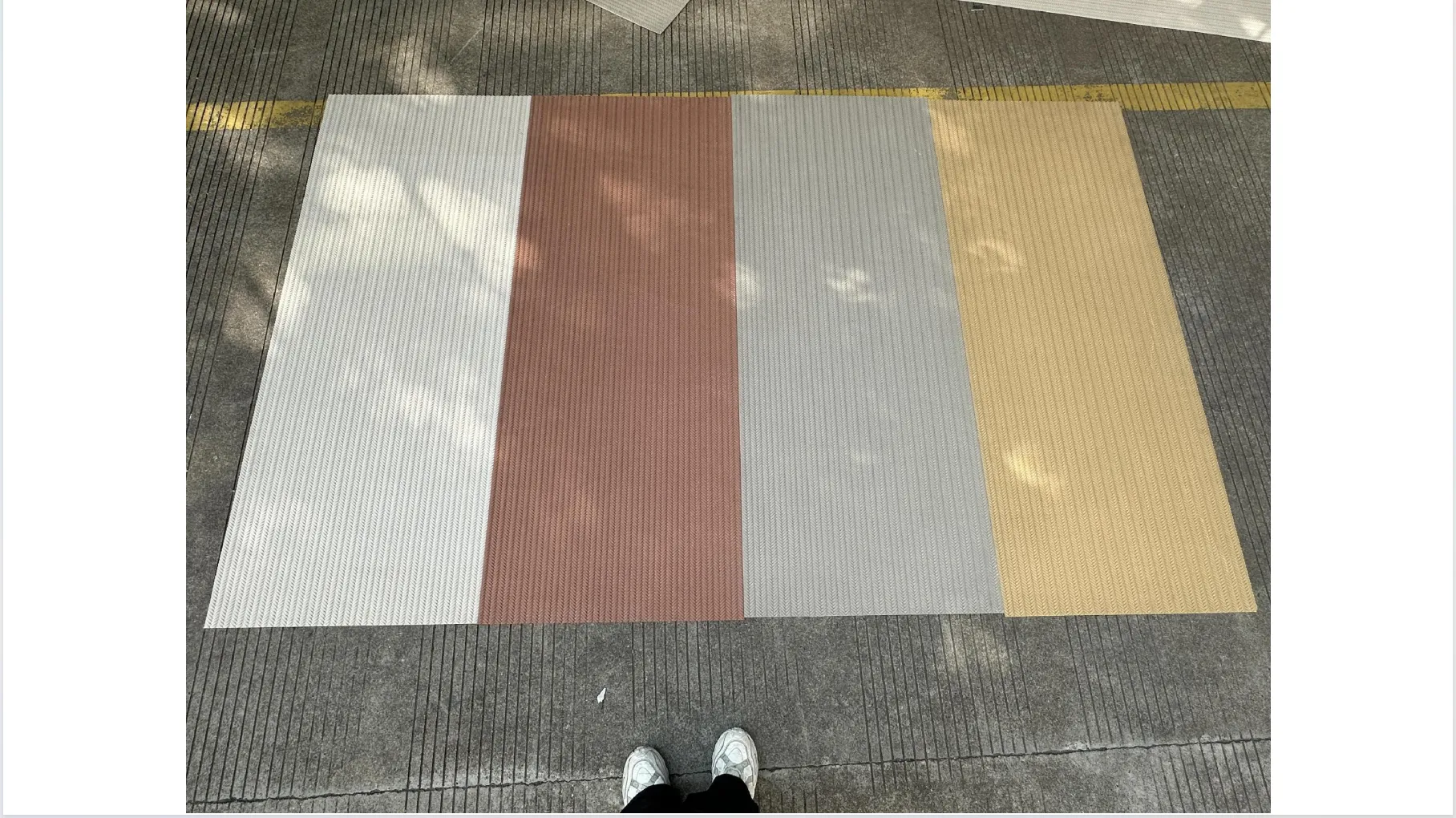
Picture this: You're a designer tasked with selecting materials for a LEED-certified community center. The client wants eco-friendly options that don't skimp on style. You flip through a catalog and see a swatch labeled "weaving (beige)"—a small, flat image that tells you nothing about how it'll look under natural light, or how it pairs with the fair-faced concrete you're considering. Frustrating, right? This is the reality for many in green building: great materials, but visuals that fail to sell their story. In an industry where sustainability and aesthetics go hand in hand, the gap between "green" credentials and "visual appeal" is often bridged by one powerful tool: woven real photos.
Over the past decade, green building materials have moved from niche to mainstream. According to the World Green Building Council, the global green building market is projected to grow at a CAGR of 11.2% through 2030, driven by demand for energy efficiency, reduced carbon footprints, and healthier indoor environments. Materials like MCM flexible stone, recycled metal panels, and low-VOC composites are now staples in commercial and residential projects alike. But here's the catch: while buyers care deeply about a material's eco-credentials—recycled content, durability, low embodied carbon—they still need to see why it matters. A material could be 100% recycled, but if its marketing photos look flat, generic, or disconnected from real-world use, it's unlikely to win over designers, architects, or homeowners.
This is where the "visual gap" emerges. Traditional building material marketing relies heavily on stock images: close-ups of material swatches, isolated on white backgrounds, or overly edited renderings that feel more like fantasy than reality. For green materials, which often prioritize texture, natural patterns, and organic aesthetics, these generic visuals fall short. Take weaving (khaki), for example—a woven material made from recycled fibers, designed to add warmth and acoustic benefits to interior spaces. A stock photo might show a small square of the fabric, but it won't capture how the threads catch the light in a sunlit lobby, or how the material softens the harsh lines of fair-faced concrete in a modern home. Without that context, even the most sustainable material becomes just another item on a list.
Let's break it down: "Woven" refers to materials with interlaced fibers, threads, or strands—think textiles, natural fibers, or composite weaves designed for building cladding, wall panels, or furniture. "Real photos" are exactly what they sound like: high-resolution images captured in real-world settings, not studios. No overly filtered backgrounds, no perfectly staged lighting—just the material, installed, in use, and interacting with its environment. For example, a woven real photo of weaving (beige) might show it lining the walls of a community library, where sunlight streams through floor-to-ceiling windows, highlighting the subtle variations in thread color and the way the weave softens the echo of children's laughter. Another might capture it paired with MCM flexible stone on a restaurant facade, showing how the woven texture balances the stone's ruggedness to create a welcoming, eco-conscious vibe.
These photos aren't just pretty pictures—they're stories. They answer the questions designers and buyers silently ask: How does this material feel in a space? Does it age well? Can it work with other materials I love, like fair-faced concrete or reclaimed wood? When done right, woven real photos turn abstract sustainability claims into tangible, relatable experiences.
To understand the power of woven real photos, let's step into the shoes of a typical green building buyer: an architect working on a net-zero office project. They're juggling budgets, client demands, and strict sustainability targets. When evaluating materials, they don't just need specs—they need inspiration. Woven real photos deliver that inspiration in three key ways:
Green building buyers are savvy. They've seen "greenwashed" products before—materials marketed as sustainable with little evidence to back it up. Woven real photos cut through the noise by showing the material as it truly is: imperfect, textured, and alive with character. A photo of weaving (khaki) installed in a school gym, for instance, might show a few loose threads or slight color variations—details that a stock image would airbrush out. But to the architect, those imperfections signal authenticity: "This is a real material, made from real recycled fibers, and it's built to stand up to daily use." In a market where trust is currency, that matters.
One of the biggest challenges in material marketing is conveying tactility—how a surface feels to the touch. For woven materials, texture is everything. Weaving (beige), with its soft, matte threads, feels different than the cool, smooth surface of fair-faced concrete. A well-captured woven real photo can almost make you feel that texture through the screen. Think of a close-up shot of weaving (khaki) where the camera focuses on the way light catches the individual threads, creating shadows that mimic the sensation of running your hand over the material. To a designer, that's gold: it helps them imagine how the material will interact with human touch, from a student leaning against a wall to a homeowner brushing their hand along a woven accent panel.
Green building isn't just about numbers—it's about purpose. Buyers want materials that align with their values: reducing waste, supporting local production, or creating spaces that promote well-being. Woven real photos tell these stories visually. Imagine a photo series of weaving (beige) panels in a senior center: one shows the material lining a hallway, where its acoustic properties reduce noise for residents with hearing aids; another captures it in a sunroom, where its warm tone contrasts beautifully with the cool gray of fair-faced concrete, creating a space that feels both modern and cozy. These images don't just show the material—they show the impact of choosing it. And in a world where decisions are driven by emotion as much as logic, that emotional connection is often the push that turns interest into a purchase.
| Aspect | Stock Images of Woven Materials | Woven Real Photos |
|---|---|---|
| Authenticity | Often staged or overly edited; lacks real-world context. | Shows materials in actual installations; includes natural imperfections (e.g., loose threads in weaving khaki). |
| Emotional Impact | Flat and generic; fails to evoke feeling or connection. | Tells a story (e.g., weaving beige in a community center); sparks imagination and purpose. |
| Texture Representation | Minimizes texture; makes woven materials look flat or artificial. | Highlights texture through lighting and angle (e.g., shadow play on weaving khaki threads). |
| Designer Utility | Hard to visualize in a space; limits (e.g., with fair-faced concrete). | Shows material with other green materials; helps designers plan layouts. |
| Conversion Potential | Low; fails to differentiate from competitors. | High; builds trust and inspiration, leading to more inquiries and sales. |
To see woven real photos in action, let's look at a hypothetical but realistic example: a manufacturer of MCM flexible stone, a lightweight, durable cladding material made from recycled stone aggregates and polymer resins. The company had long struggled to market its "weaving series"—panels that mimic the look of woven textiles (including weaving khaki and weaving beige)—because their catalog relied on stock photos of the panels alone, not installed. Sales were steady but not growing, and feedback from designers was clear: "We love the sustainability angle, but we can't picture how these panels will look on a building."
The solution? A photo shoot focused on real installations. The manufacturer partnered with a local architecture firm to document two projects: a community center using weaving (khaki) panels on its exterior, and a café with weaving (beige) panels on the interior walls, paired with fair-faced concrete countertops. The photos captured the materials in context: the khaki panels glowing warm in afternoon sun, the beige panels softening the café's industrial vibe, and close-ups of the weave pattern that showed how it added depth to otherwise flat surfaces.
The results were striking. Within six months of updating their website and catalog with these woven real photos, inquiries for the weaving series increased by 45%. Designers cited the photos as a key factor: "I could finally see how the weaving panels worked with other materials, like the fair-faced concrete we wanted to use," one wrote. "It wasn't just a product anymore—it was a design solution." Sales of the weaving series jumped by 30%, proving that when green materials are paired with visuals that tell their story, buyers take notice.
Woven real photos don't exist in a vacuum—they're most powerful when paired with other green building materials. Take fair-faced concrete, for example: a material prized for its raw, industrial aesthetic and low environmental impact. On its own, fair-faced concrete can feel cold or stark. But when paired with woven materials like weaving (beige), the contrast creates balance—warmth meets edge, softness meets strength. A woven real photo that shows this pairing in a home's living room—beige woven panels on the accent wall, fair-faced concrete floors, natural wood furniture—doesn't just sell the woven material; it sells a cohesive, sustainable design vision.
Similarly, MCM flexible stone, with its stone-like texture, pairs beautifully with woven materials. A photo of a commercial building's facade, where MCM flexible stone forms the base and weaving (khaki) panels climb the upper floors, tells a story of durability and warmth. It shows buyers that green materials aren't one-size-fits-all—they're versatile, and when combined thoughtfully, they create spaces that are both eco-friendly and visually stunning.
Not all woven real photos are created equal. To maximize their impact, follow these best practices:
In the world of green building materials, sustainability sells—but so does beauty. Woven real photos are the bridge between these two truths, turning abstract eco-credentials into tangible, inspiring visuals that resonate with designers, architects, and homeowners alike. Whether it's the warm threads of weaving (khaki) in a community center, the soft texture of weaving (beige) in a café, or the way these materials pair with staples like fair-faced concrete and MCM flexible stone, these photos tell a story of purpose: that green building doesn't mean sacrificing style, and that the most sustainable materials are often the most beautiful.
So the next time you're marketing a woven green material, remember: it's not just about what it's made of—it's about how it makes people feel. And with woven real photos, you can make them feel inspired, confident, and ready to build a better, more beautiful world.
Recommend Products












