
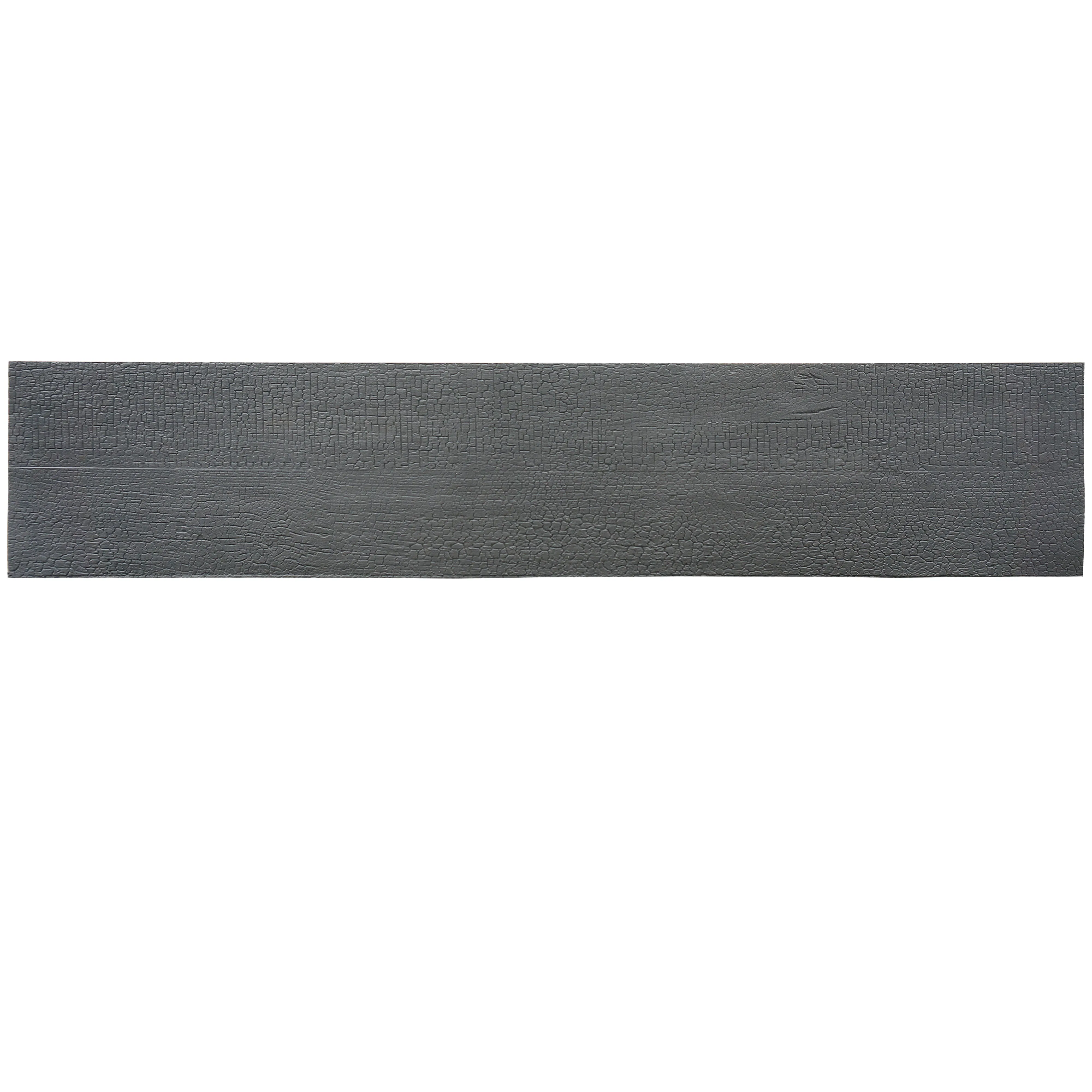
In a world of high-tech building materials—where concrete is reinforced with steel and plastics are engineered for durability—there's something surprisingly revolutionary about a material that draws its strength from fire. Charcoal burnt wood board, often overlooked in favor of flashier synthetics, is a quiet powerhouse. Its secret? A centuries-old process of controlled burning that transforms ordinary wood into a material that rivals the toughness of stone and the resilience of modern composites. Let's dive into the science that makes this ancient technique a star in contemporary architecture and design.
At first glance, burning wood might seem like a surefire way to weaken it—after all, a campfire turns logs to ash. But charcoal burnt wood board isn't about destruction; it's about transformation . The process, known as carbonization, involves heating wood in a low-oxygen environment (think: a kiln or sealed chamber) to temperatures between 200°C and 600°C. This slow, controlled burn is worlds apart from a raging fire. Instead of reducing wood to ash, it breaks down its weakest components while forging a stronger, more stable structure.
Traditional forms of this technique, like Japan's shou sugi ban (used for centuries to weatherproof wood siding), focused on surface charring. Modern iterations, however, take it further. Engineers now fine-tune temperature, burn duration, and oxygen levels to achieve uniform carbonization throughout the wood's thickness. The result? A material that retains the natural beauty of wood but with a core of carbon that's dense, rigid, and remarkably resistant to the elements.
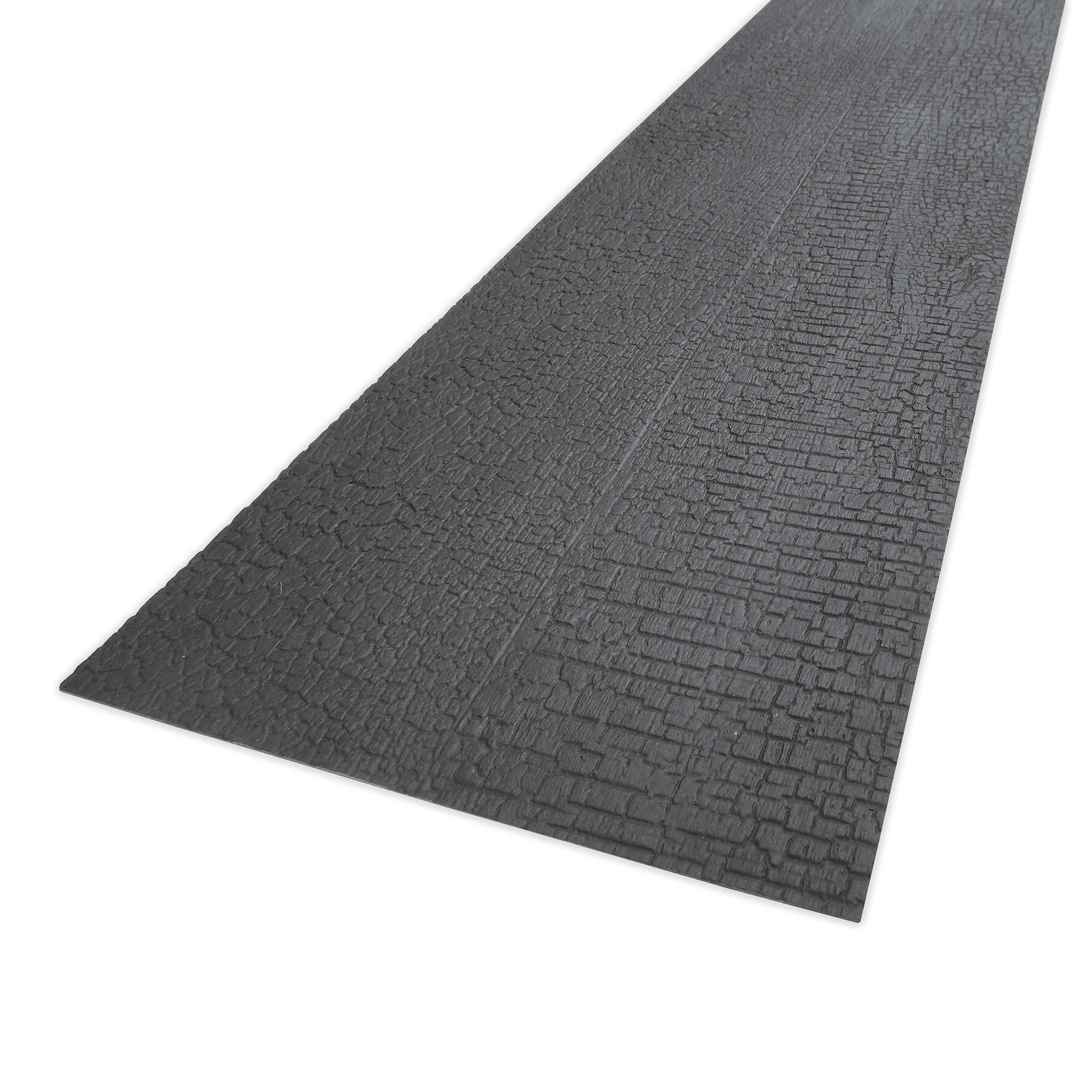
To understand charcoal burnt wood board's strength, we need to zoom into its chemistry. Wood is primarily made of three polymers: cellulose (the "skeleton" of plant cells), hemicellulose (the "glue" that holds cells together), and lignin (the rigid binder that gives wood its shape). When heated, these components break down in a predictable sequence—each reaction contributing to the material's final strength.
At around 200°C, hemicellulose (the most heat-sensitive of the three) starts to decompose. It releases water, volatile gases, and small organic molecules, leaving behind a more concentrated matrix of cellulose and lignin. By 300°C, cellulose—once a flexible, chain-like molecule—begins to break down, releasing more gases and leaving behind a carbon-rich residue. Lignin, the toughest of the trio, holds on until temperatures exceed 400°C, at which point it cross-links with the remaining carbon to form a rigid, three-dimensional network.
The magic lies in this cross-linking. As lignin molecules bond together, they create a dense, interwoven structure that's far more stable than the original wood polymers. This carbon-lignin matrix acts like a microscopic scaffold, resisting compression, bending, and impact in ways unmodified wood never could. It's why a plank of charcoal burnt wood board can support heavy loads without warping, even in humid or rainy climates.
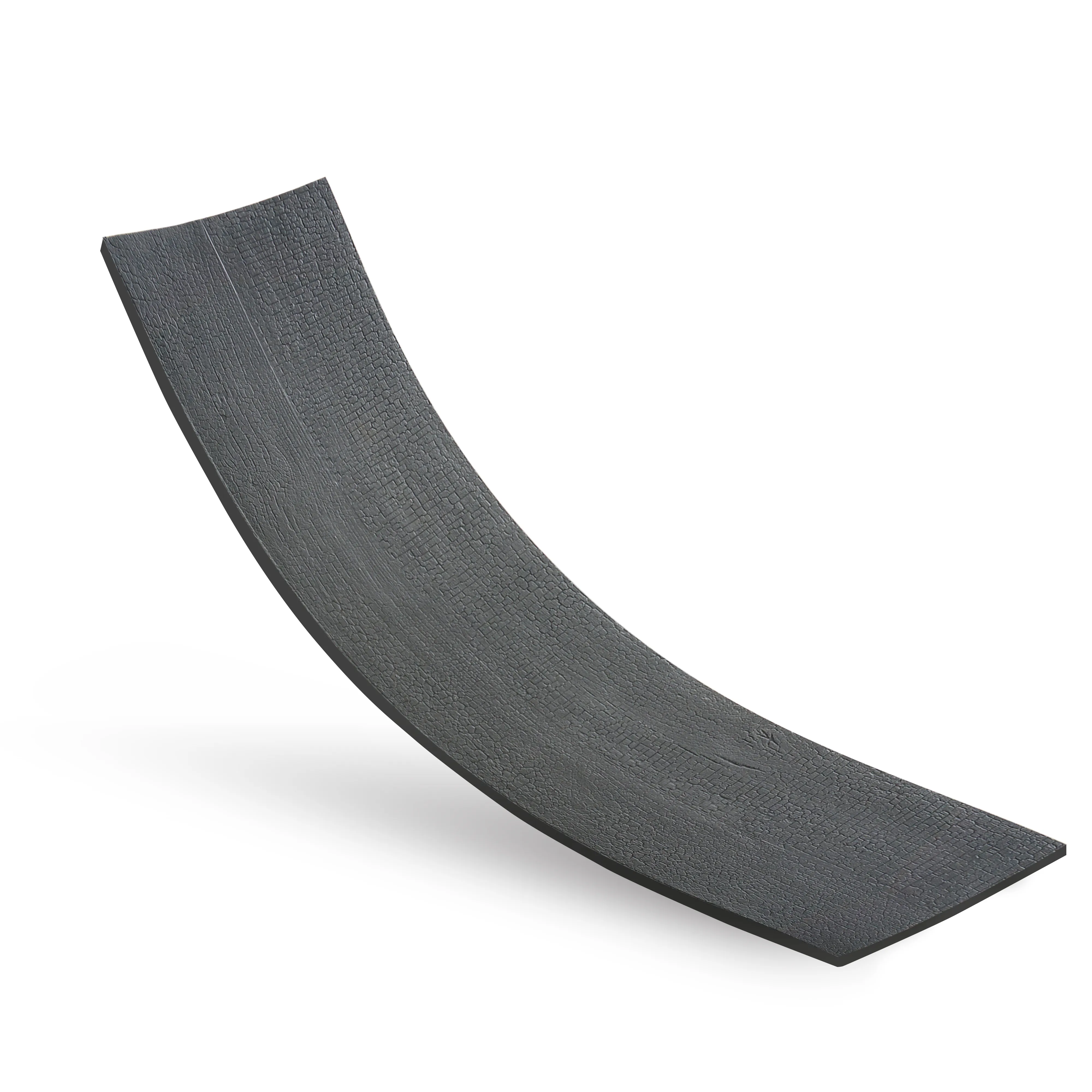
If chemistry explains the "why," microstructure reveals the "how." Wood is a marvel of natural engineering, with a cellular structure designed to transport water and nutrients. Its cells—long, hollow tubes called tracheids (in softwoods) or vessels (in hardwoods)—are arranged in parallel lines, like tiny straws. While this structure makes wood lightweight and flexible, it also leaves it vulnerable: water seeps into the hollow cells, bacteria feast on the organic polymers, and impacts can split the cellular alignment.
Carbonization changes all that. As wood burns, the heat shrinks the cell walls, thickening them and reducing the size of the hollow centers. The once-porous structure becomes denser, with fewer gaps for moisture or pests to penetrate. Even better, the carbon residue left behind seals these cells, creating a barrier that repels water and blocks decay. Under a microscope, unburnt wood looks like a sponge; charcoal burnt wood board looks more like a solid block of carbon-reinforced armor.
This densification also boosts strength. Imagine a stack of straws versus a stack of thick-walled pipes—the latter can support more weight without collapsing. Similarly, the thickened cell walls of charcoal burnt wood board increase its compressive strength (how much weight it can bear without crushing) and flexural strength (how much it can bend without breaking). Tests show that properly carbonized wood can have a compressive strength of up to 60 MPa—comparable to some grades of concrete and far higher than untreated wood's 10–20 MPa.
To truly appreciate charcoal burnt wood board's strength, let's pit it against four common building materials: wood concrete board , rough granite stone , fair-faced concrete , and traditional untreated wood. The table below breaks down key metrics like strength, moisture resistance, and sustainability—areas where charcoal burnt wood board often outshines its competitors.
| Material | Compressive Strength (MPa) | Flexural Strength (MPa) | Moisture Resistance | Density (kg/m³) | Sustainability |
|---|---|---|---|---|---|
| Charcoal Burnt Wood Board | 50–60 | 10–12 | Excellent (sealed carbon matrix) | 700–900 | High (renewable wood, low-energy process) |
| Wood Concrete Board | 20–30 | 5–7 | Moderate (prone to swelling if unsealed) | 1200–1500 | Medium (uses wood fibers but requires cement) |
| Rough Granite Stone | 100–200 | 8–15 | Good (naturally dense) | 2600–2800 | Low (non-renewable, high mining impact) |
| Fair-Faced Concrete | 30–50 | 3–5 | Moderate (porous, requires sealing) | 2400–2500 | Low (high CO₂ emissions from cement production) |
| Untreated Wood | 10–20 | 8–10 | Poor (absorbs water, rots easily) | 400–700 | Medium (renewable but short lifespan) |
The numbers tell a clear story: while rough granite stone has higher compressive strength, it's far heavier (making it harder to transport and install) and non-renewable. Fair-faced concrete and wood concrete board, meanwhile, can't match charcoal burnt wood board's flexural strength or sustainability. Even untreated wood, though lighter, lacks the moisture resistance and durability to stand up to the elements long-term.
Charcoal burnt wood board's appeal isn't just about raw strength. Its unique combination of properties makes it a dream for architects and designers. For starters, it's lightweight—about half the density of concrete and a third that of granite. This reduces structural load, making it ideal for retrofits or buildings where weight is a concern (think: rooftop gardens or cantilevered structures).
Then there's its aesthetics. Unlike the uniform gray of concrete or the cold sheen of metal, charcoal burnt wood board retains wood's natural grain—now deepened and enriched by the charring process. The surface can range from a soft, silvery black to a rich, chocolate brown, depending on burn temperature. This beauty means it often requires no additional cladding or paint, cutting down on maintenance costs and material waste.
Perhaps most importantly, it's sustainable. Unlike concrete, which emits CO₂ during production, or aluminum, which requires massive energy to refine, charcoal burnt wood board relies on a low-energy process. It uses renewable wood (ideally from sustainably managed forests) and sequesters carbon in its structure—meaning every board locks away CO₂ for decades, if not centuries. In a time when builders are scrambling to reduce embodied carbon, this is a game-changer.
Don't just take our word for it—charcoal burnt wood board is already proving its mettle in real-world applications. In Stockholm, the Havre Björk housing complex uses it for exterior cladding, standing up to harsh Nordic winters and salty sea air without cracking or warping. In Portland, Oregon, a boutique hotel employed it for flooring in high-traffic areas; after five years, the surface shows minimal wear, even with daily foot traffic.
It's also making waves in furniture design. A recent collaboration between Japanese craftsmen and Italian designers produced a line of outdoor dining tables made from charcoal burnt wood board. These tables, left exposed to rain, sun, and humidity for two years, showed no signs of rot, splitting, or fading—outperforming teak and ipe, two woods long prized for outdoor use.
As the building industry shifts toward low-carbon, high-performance materials, charcoal burnt wood board is poised to take center stage. Researchers are already experimenting with ways to enhance its properties further: mixing in bio-based resins to boost flexural strength, or adding fire-retardant additives (though its natural carbon content already makes it highly fire-resistant). There's even talk of using it in structural beams—a role traditionally reserved for steel or heavy timber.
At its core, charcoal burnt wood board is a reminder that innovation doesn't always mean invention. Sometimes, the strongest solutions lie in looking back—in reimagining ancient techniques with modern science. It's a material that honors the past while building a more durable, sustainable future. And in a world of fleeting trends, that's a strength that will never go out of style.
So the next time you walk past a building with rich, dark wood cladding, or run your hand over a smooth, resilient wooden surface, take a closer look. It might just be charcoal burnt wood board—quietly proving that fire, when harnessed with care, doesn't destroy strength. It forges it.
Recommend Products












