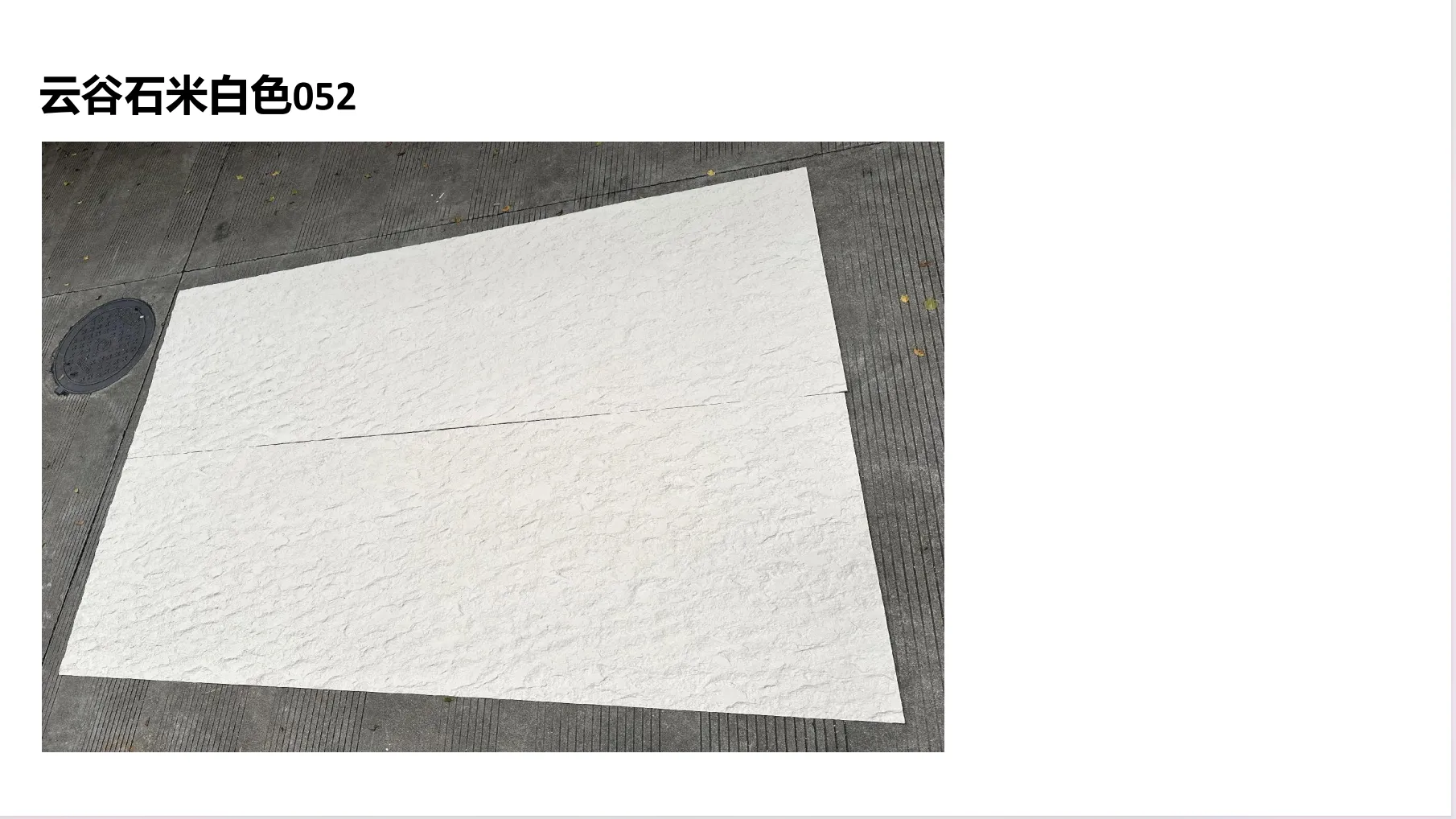
Lightweight materials often get a bad rap—think of flimsy particleboard or brittle plastic siding. But Cloud Stone defies that stereotype, thanks to a rigorous engineering process that balances three key factors: density, strength, and flexibility. Here's how it works:
First, the density. By controlling the size and distribution of those micro-bubbles, engineers can adjust Cloud Stone's weight to fit specific needs. A panel meant for a residential backsplash might be lighter than one designed for a commercial lobby floor, but both maintain a minimum compressive strength of 30 MPa—stronger than many types of concrete. That means it can withstand foot traffic, weathering, and even the occasional stray basketball in a school courtyard.
Second, the strength. The polymer binders used in Cloud Stone are chosen for their ability to flex under pressure, then return to their original shape. This "give" is crucial for withstanding earthquakes, temperature fluctuations, and the natural settling of buildings. Unlike rigid materials that crack under stress, Cloud Stone bends slightly, absorbing impact and reducing the risk of damage over time.
Third, the flexibility. This is where innovations like mcm flexible stone come into play. MCM, or Modified Composite Material, is a cousin to Cloud Stone, designed to be even more pliable—think of it as Cloud Stone's "flexible sibling." While Cloud Stone is rigid enough for structural use, MCM flexible stone can wrap around curves, adhere to uneven surfaces, and even be used in 3D-printed architectural elements. Together, they represent a shift in how we think about building materials: not as static slabs, but as adaptable, almost "living" surfaces that respond to the spaces they occupy.
To put this in perspective, consider installation. A standard 2x4-foot panel of traditional fair-faced concrete weighs around 80 pounds; a Cloud Stone panel of the same size? Just 32 pounds. That means a two-person crew can install twice as much material in a day, reducing labor costs and project timelines. On a construction site, every pound saved translates to less strain on cranes, fewer trucks, and a smaller carbon footprint—something architects and developers are increasingly prioritizing.