
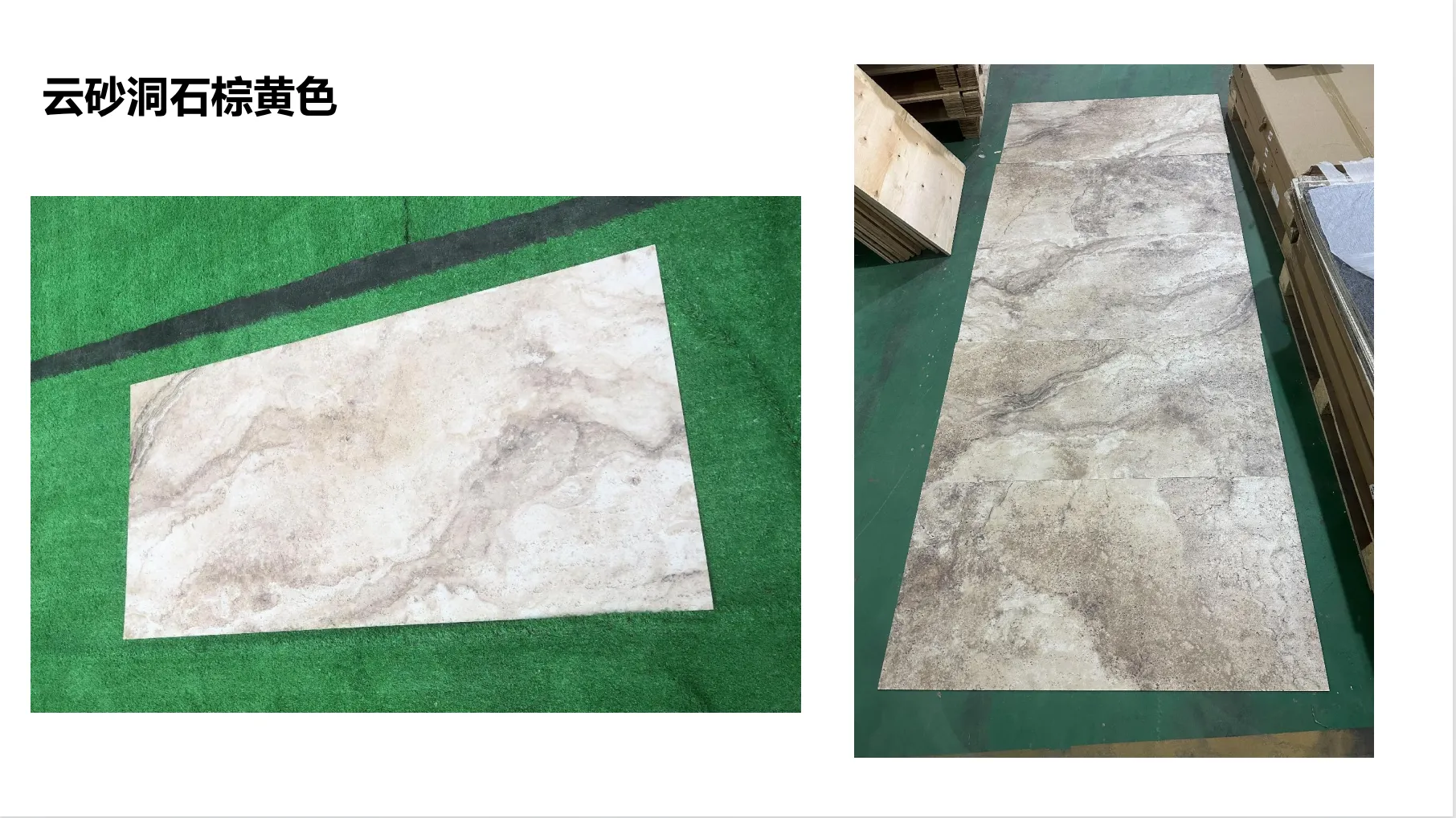
Walk into any modern boutique hotel, and you might find your hand gliding over a wall that feels both ancient and contemporary—cool to the touch, with subtle veins that tell a story of time. That wall could very well be clad in dolomitic travertine (claybank), a stone that marries rugged durability with a soft, earthy warmth. But what makes this material stand up to the daily grind of high-traffic spaces, while still retaining its beauty? The answer lies in its hardness, a property measured by the Mohs Scale—a tool as old as geology itself, yet still vital to architects, designers, and homeowners today.
Before we dive into hardness, let's get to know the star of the show. Dolomitic travertine (claybank) is a cousin to traditional travertine, but with a twist: it's rich in dolomite, a mineral formed when calcium carbonate in limestone mixes with magnesium. This gives it a unique color—think warm terracotta with hints of sand, like sunlight hitting a desert canyon at dawn. Unlike its smoother marble counterparts, dolomitic travertine (claybank) often has tiny pores and natural pits, relics of the water that once flowed through its veins as it formed in hot springs or limestone caves over millennia.
But here's the thing: those pores don't make it weak. In fact, dolomitic travertine (claybank) is prized for its balance of strength and character. It's not as brittle as some marbles, nor as dense as granite, but it holds its own in spaces where both beauty and brawn matter. To understand why, we need to talk about the Mohs Scale—the ultimate "scratch test" for minerals.
Invented in 1812 by German mineralogist Friedrich Mohs, the Mohs Scale is a simple yet genius way to measure a mineral's resistance to scratching. It ranges from 1 (talc, so soft it crumbles under a fingernail) to 10 (diamond, the hardest known natural substance). The scale is relative —a mineral with a higher number can scratch one with a lower number, but the differences between levels aren't equal. For example, a diamond (10) is exponentially harder than corundum (9), which is used to make (sandpaper).
Why does this matter for dolomitic travertine (claybank)? Because in real life, "hardness" translates to how well a stone resists scratches from keys, furniture legs, or even the occasional dropped tool. A stone with a higher Mohs rating will stay looking newer longer, which is why architects might choose it for a lobby floor, while a softer stone might be reserved for a low-traffic accent wall.
Dolomitic travertine (claybank) typically falls between 3.5 and 4 on the Mohs Scale. That might sound low compared to granite (6-7) or quartzite (7), but context is key. Let's break down the factors that give it this specific hardness:
Traditional travertine is mostly calcium carbonate (aragonite or calcite), which has a Mohs hardness of 3. But dolomitic travertine (claybank) swaps some calcium for magnesium, forming dolomite (CaMg(CO₃)₂), which bumps the hardness up slightly to 3.5-4. It's a small shift, but it makes a big difference in durability. Think of it like adding a pinch of salt to a recipe—it doesn't change the dish entirely, but it elevates the flavor (or in this case, the strength).
You might assume that a stone with pores would be weaker, but travertine's porosity is actually a result of how it forms. As mineral-rich water evaporates, it leaves behind layers of calcium carbonate and dolomite, with gas bubbles creating those signature pits. These pores aren't just empty space—they're often filled with minerals over time, acting like tiny reinforcements. It's similar to how a sponge, when dried and hardened, can still support weight despite its holes. When sealed properly, dolomitic travertine (claybank) becomes even more resistant to scratches and stains, making its 3.5-4 Mohs rating punch above its weight.
No natural stone is 100% pure, and dolomitic travertine (claybank) is no exception. Trace amounts of silica (Mohs 7), iron oxides (rusty red hues), or even clay minerals can sneak into its structure. These impurities act like grit in a matrix, increasing the stone's overall hardness. For example, a sample with higher silica content might edge closer to 4 on the Mohs Scale, while one with more clay might sit at 3.5. It's why every slab of dolomitic travertine (claybank) is unique—not just in color, but in strength too.
To truly appreciate dolomitic travertine (claybank)'s hardness, let's compare it to some of its stone siblings. Below is a table of popular materials, their Mohs ratings, and how they hold up in real-world scenarios:
| Stone Type | Mohs Hardness | Real-World Durability |
|---|---|---|
| Dolomitic Travertine (Claybank) | 3.5-4 | Great for walls, low-traffic floors; needs sealing for kitchens/bathrooms |
| Dolomitic Travertine (Dark Grey) | 3.5-4 | Similar to claybank, with a moody, industrial vibe |
| Travertine (Starry Blue) | 3-3.5 | Softer, better for accent walls (those starry flecks are delicate!) |
| Lunar Peak Silvery | 5-6 | Harder, ideal for high-traffic floors; sleek, metallic finish |
| Fair-faced Concrete | 4-5 | Durable for industrial spaces; less porous than travertine |
| Granite (Portoro) | 6-7 | Top choice for countertops; resists scratches, heat, and stains |
Notice how dolomitic travertine (claybank) sits in the middle? It's not the toughest kid on the block, but it's far from fragile. Take Travertine (Starry Blue) , for example—with its dreamy, star-like mineral inclusions, it's softer (3-3.5 on Mohs) and better suited for a statement wall than a busy hallway. On the flip side, Lunar Peak Silvery , with its silvery, moon-like sheen, clocks in at 5-6, making it a workhorse for commercial lobbies. And Fair-faced Concrete , that raw, industrial staple? It's a touch harder than dolomitic travertine (claybank) at 4-5, but lacks the organic warmth of natural stone.
You don't need a lab to test a stone's hardness—you can do it with everyday objects, just like Mohs did 200 years ago. Here's how it works for dolomitic travertine (claybank):
These simple tests highlight why context matters. In a home office, where the biggest threat is a stray pen, dolomitic travertine (claybank) is more than tough enough. But in a garage, where tools and heavy boxes are common, you might opt for something harder, like Lunar Peak Silvery or even fair-faced concrete.
Dolomitic travertine (claybank)'s hardness isn't just a number on a scale—it influences every step of its life, from how it's mined to how it's installed. Quarry workers use diamond-tipped saws (since diamond is Mohs 10) to cut through the stone, but because it's not overly hard, it can be shaped into custom sizes without shattering. This flexibility makes it a favorite for designers who want unique, curved walls or intricate patterns.
Once installed, its hardness determines maintenance. Unlike granite, which can handle acidic spills (think lemon juice or wine) without etching, dolomitic travertine (claybank) needs a sealant to protect its pores and resist stains. But here's the trade-off: that sealant also enhances its natural color, making those claybank hues pop even more. It's a small price to pay for a stone that brings so much character to a space.
Let's be honest: if hardness were the only factor, we'd all be building with diamond walls. But part of dolomitic travertine (claybank)'s charm is its softness. Those tiny scratches that might appear over time? They're not flaws—they're stories. A scuff from a moving chair, a water stain that fades into a ghostly pattern—these marks give the stone a lived-in warmth that no perfectly hard, uniform material can match.
Take, for example, a restaurant bathroom clad in dolomitic travertine (claybank). Over the years, the stone will pick up the patina of a thousand hands, a thousand doors opening and closing. It won't stay "perfect," but it will become authentic —a reflection of the people who pass through. That's the magic of natural stone: it ages with grace, turning a space from "new" to "home".
Dolomitic travertine (claybank)'s Mohs hardness of 3.5-4 is more than a scientific detail—it's a sweet spot. It's hard enough to stand up to daily life, yet soft enough to feel human. It reminds us that in design, as in life, balance is everything. We don't need the hardest, shiniest, most "perfect" materials to create something meaningful—sometimes, the stones with a little give, a little character, are the ones that make us feel at home.
So the next time you run your hand over a wall of dolomitic travertine (claybank), take a moment to appreciate the science beneath your fingertips: the dolomite minerals, the ancient water that formed it, the Mohs Scale that helps us understand its strength. It's not just a stone—it's a story written in geology, and hardness is just one chapter. And what a fascinating chapter it is.
Recommend Products












