
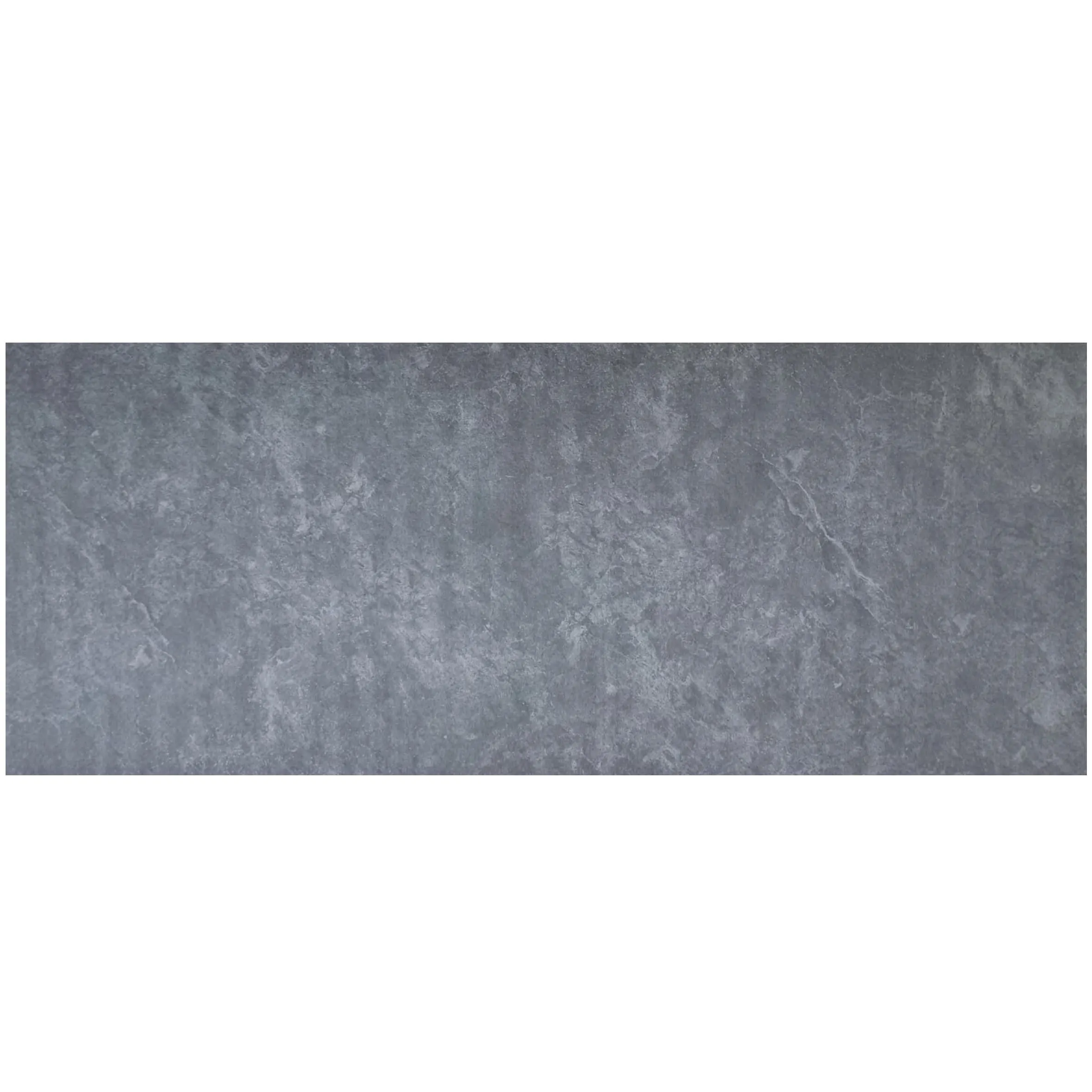
Marble has long been the gold standard of luxury in architecture and design—its veined patterns, cool touch, and timeless elegance have adorned palaces, museums, and modern homes alike. But in recent years, a new player has emerged, redefining what marble can be: Marble Interstellar Gray . Unlike traditional marble, this stone isn't quarried from the earth; it's crafted. And its most striking feature? That ethereal, almost otherworldly hue—a deep, moody gray that shimmers with subtle undertones, like stardust trapped in stone. How does it achieve that unique color? The answer lies in MCM technology , a revolutionary approach to material science that's changing the game for designers and builders worldwide.
In this article, we'll dive into the science behind Marble Interstellar Gray's captivating hue, exploring how MCM (Modified Composite Material) technology transforms raw ingredients into a material that's not just beautiful, but smarter, more versatile, and more sustainable than traditional stone. We'll also touch on why this innovation matters—for architects chasing bold aesthetics, for homeowners craving durability, and for a planet needing greener building solutions.
Before we get to MCM, let's talk about traditional marble. Formed over millions of years from limestone exposed to heat and pressure, natural marble is prized for its uniqueness—no two slabs are exactly alike. But that uniqueness comes with trade-offs. For starters, natural marble is heavy: a standard 2cm slab can weigh up to 50kg per square meter, making installation tricky and requiring reinforced structures. It's also porous, meaning it stains easily (spill red wine on it, and you're in for a fight) and etches when exposed to acids like citrus or vinegar.
Worst of all for color consistency? Natural marble's hue is at the mercy of Mother Nature. Veins, mineral deposits, and impurities can create unpredictable patterns—gorgeous, but not ideal if you're aiming for a uniform, modern look. Enter Marble Interstellar Gray, a product of MCM technology that sidesteps these issues while delivering a hue that's both consistent and infinitely more dynamic.

MCM stands for Modified Composite Material —a blend of natural minerals, polymers, and advanced additives that's engineered to mimic the look and feel of natural stone, but with supercharged performance. Think of it as "stone 2.0": all the beauty of marble, granite, or travertine, but lighter, stronger, and more customizable. At the heart of MCM is a process called microcomposite engineering , which bonds tiny mineral particles (like marble dust, quartz, or feldspar) with a polymer matrix to create a material that's both rigid and flexible.
But what really sets MCM apart is its precision. Unlike natural stone, which is mined and cut, MCM products are manufactured —often using techniques like 3D printing (part of the MCM 3D printing series) to layer materials with microscopic accuracy. This control is key to creating Marble Interstellar Gray's signature hue: a deep, uniform gray with subtle metallic undertones that catch the light, giving it that "interstellar" depth.

So, how exactly is that "interstellar" color created? It starts with the base materials. MCM manufacturers begin with a blend of high-purity calcium carbonate (the same mineral in marble) and aluminum hydroxide, which gives the material its light weight. But the magic is in the pigments and additives—nano-sized particles that are dispersed throughout the composite to create color and texture.
For Marble Interstellar Gray, the color recipe is a closely guarded secret, but we can break down the science:
The result? A hue that's neither flat nor one-dimensional. It's a gray that feels alive—responsive to light, dynamic in different spaces, and perfectly suited to modern design's love of contrast and texture.
| Property | Traditional Marble | MCM Marble Interstellar Gray |
|---|---|---|
| Weight | ~50kg/m² (2cm slab) | ~12kg/m² (same thickness) |
| Flexibility | Brittle; cracks under stress | Flexible; can bend up to 30° without breaking |
| Color Consistency | Variable; veins and impurities common | Uniform; controlled by nano-pigments |
| Durability | Porous; stains and etches easily | Non-porous; resistant to stains, UV rays, and impact |

While MCM technology itself is groundbreaking, the MCM 3D printing series takes it a step further—especially when it comes to creating complex textures and color gradients, like those in Marble Interstellar Gray. Traditional MCM panels are made using compression molding, but 3D printing allows manufacturers to build up layers of material with micrometer precision. This means they can control not just the color, but also the texture: tiny pits that catch light, subtle ridges that mimic natural stone, or even custom patterns designed for specific projects.
For Marble Interstellar Gray, 3D printing ensures that the metallic flakes and pigments are distributed evenly, avoiding the "splotchiness" that can happen with traditional mixing. It also allows for thinner panels—some as thin as 3mm—without sacrificing strength, making them ideal for applications where weight is a concern, like high-rise facades or ceiling cladding.

Marble Interstellar Gray isn't just a pretty face—it's a flexible stone , part of MCM's lineup of lightweight, bendable materials that solve real-world building problems. Here's why that matters:
So, where does this innovative material shine? Everywhere. Architects are using Marble Interstellar Gray for exterior cladding on commercial buildings, where its durability and light weight reduce construction costs. Interior designers love it for feature walls, kitchen backsplashes, and even bathroom surfaces—since it's non-porous, it's mold and mildew resistant. Homeowners are choosing it for fireplaces, accent walls, or even custom furniture pieces, drawn to its modern, moody aesthetic.
One standout example? A boutique hotel in downtown Chicago, where the lobby features a 20-foot curved wall clad in Marble Interstellar Gray. By day, the panels reflect natural light, creating a soft, silvery glow; by night, LED lighting behind the panels makes the gray shimmer like a starry sky. It's a showstopper—and a testament to how MCM technology is pushing the boundaries of what building materials can do.
Marble Interstellar Gray is more than a new color—it's a glimpse into the future of building materials. By combining science, engineering, and design, MCM technology is proving that we don't have to choose between beauty and performance, or between tradition and innovation. Whether you're a designer chasing the perfect hue, a builder looking to simplify installation, or a homeowner wanting a material that lasts, MCM flexible stone—and Marble Interstellar Gray, in particular—delivers.
So, the next time you walk into a space with that striking, deep gray stone that seems to glow from within, take a closer look. It might just be MCM technology at work—turning science into something truly beautiful.
Recommend Products












