
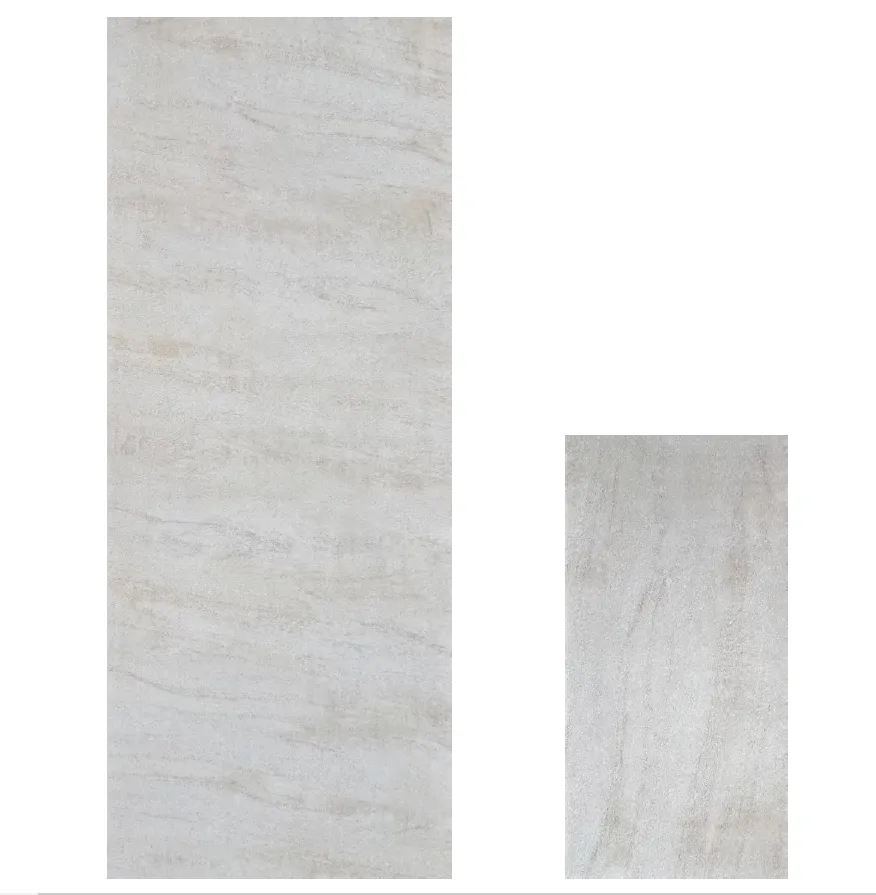
There's a moment in every designer's career when a material stops being just a "surface" and becomes a storyteller. For me, that moment happened in a boutique hotel lobby in Kyoto, where the walls seemed to breathe with the quiet energy of a mountain stream. The material? Marble Stream Stone . Its surface rippled with delicate, silvery veins that wound like water currents through a base of soft, moonlit grey, catching the light in such a way that even on a cloudy day, the room felt alive with movement. It wasn't just beautiful—it was alive . But what makes this stone so visually arresting? To answer that, we need to dive into the science of its creation, the art of its processing, and the magic of how nature and human ingenuity collide to create something timeless.
Marble Stream Stone's beauty begins, quite literally, with the earth's patience. Unlike the sharp, crystalline structure of granite or the porous charm of travertine , this stone is a product of slow, gentle transformation. It forms in marine environments where mineral-rich water—laden with calcium carbonate—settles over millennia, layer by layer, like snowflakes piling into a drift. As these layers accumulate, the weight of overlying sediment compresses the material, squeezing out water and fusing the particles into a dense, solid mass. But here's where the "stream" effect comes in: during this process, tiny fractures and channels form in the sediment. When mineral-rich fluids seep through these channels, they deposit additional calcite or aragonite, creating the stone's signature veining. Imagine a river cutting through rock, leaving behind trails of mineral deposits—that's essentially what's happening, but on a geological timescale.
The color palette of Marble Stream Stone is another gift from nature's chemistry. The base hue, often a soft grey or cream, comes from pure calcium carbonate. But introduce trace elements, and the stone transforms: iron oxides add warm golds or rusty reds, while manganese might tint veins lavender. In rare cases, organic materials trapped during formation create inky, almost black streaks, resembling shadows cast by overhanging trees on a sunlit stream. This interplay of minerals isn't random—it's a geological fingerprint, making each slab as unique as a snowflake.
Walk past a slab of Marble Stream Stone, and you'll notice something strange: the veins seem to shift. Step left, and they appear to flow upward; step right, and they drift downward. This optical illusion is rooted in the stone's physical structure. Unlike polished marble, which reflects light uniformly, Marble Stream Stone has a micro-texture —tiny peaks and valleys on its surface, invisible to the naked eye but crucial to how it interacts with light. These imperfections scatter light in different directions, so as your angle of view changes, different parts of the veining catch the light, creating the illusion of movement.
The veining itself also plays a role. Unlike the bold, jagged veins of some marbles, Marble Stream Stone's veins are fine and branching, mimicking the natural path of water. Our brains are hardwired to recognize patterns from nature—think of how we see clouds as animals or constellations as shapes. When we look at Marble Stream Stone, our minds interpret those veins as motion, triggering a subconscious connection to the natural world. It's why the stone feels so calming: it taps into our primal affinity for flowing water, a symbol of life and tranquility.
Nature provides the canvas, but human innovation turns Marble Stream Stone into a material that works in the real world. Enter MCM big slab board series —a game-changer in stone processing. Traditional natural stone slabs are heavy, brittle, and limited in size, making them tricky to install on large surfaces. MCM (Modified Composite Material) technology solves this by bonding a thin layer of natural Marble Stream Stone to a lightweight, flexible backing, creating slabs that are up to 30% lighter than solid stone. This not only makes installation easier but also allows for larger formats—think 10-foot-tall slabs that can clad an entire wall without seams, preserving the stone's uninterrupted "stream" effect.
But MCM doesn't just make the stone more practical; it enhances its beauty. The backing material stabilizes the stone, reducing the risk of cracking and ensuring that the veining remains crisp and defined. It also allows for precision cutting, so designers can shape the stone into custom sizes or even curved surfaces—imagine a circular lobby wall wrapped in Marble Stream Stone, where the veins spiral like a whirlpool. Compare this to traditional travertine slabs, which often require grout lines that break up the visual flow, and you begin to see why MCM technology has made Marble Stream Stone a favorite for high-end commercial projects.
A great material doesn't exist in a vacuum—it plays well with others. Marble Stream Stone, with its cool, neutral palette and fluid texture, is a master collaborator. One of the most striking pairings is with wood grain board . The warm, organic texture of wood—think oak or teak—complements the stone's coolness, creating a balance of yin and yang. In a residential living room, for example, a Marble Stream Stone fireplace surround paired with wood grain board walls feels both luxurious and cozy, like bringing a forest stream indoors. The contrast of smooth stone and tactile wood also adds depth; your eye moves from the stone's subtle movement to the wood's rich grain, creating visual interest without overwhelming the space.
Another inspired combination is with flexible stone , a lightweight, durable material often used for accent walls. Flexible stone, with its rough, earthy texture (think river rock or sandstone), adds a rustic counterpoint to Marble Stream Stone's elegance. In a restaurant, this pairing might evoke a mountain lodge by a stream—sophisticated yet grounded. The key here is contrast: the stone's fluidity softens the flexible stone's ruggedness, while the flexible stone adds texture that makes the Marble Stream Stone's veins pop even more.
To truly appreciate Marble Stream Stone, it helps to see how it measures up against other popular design materials. Below is a comparison of its key aesthetic and practical properties with travertine , wood grain board , and flexible stone :
| Material | Aesthetic | Durability | Weight (per sq. ft) | Best For |
|---|---|---|---|---|
| Marble Stream Stone (MCM) | Fluid, silvery veins; soft grey/cream base; light-catching movement | High (resistant to scratches/stains with sealing) | 5-7 lbs (vs. 10-12 lbs for solid marble) | Feature walls, large-format cladding, high-end interiors |
| Travertine | Porous with honeycomb-like holes; warm beige/ivory tones; irregular veining | Moderate (prone to staining without sealing) | 8-10 lbs | Floors, backsplashes, rustic/Mediterranean designs |
| Wood Grain Board | Warm, organic grain patterns; natural wood tones (oak, walnut, pine) | High (water-resistant variants available) | 3-4 lbs | Accent walls, furniture, cozy residential spaces |
| Flexible Stone | Rough, textured surface; earthy tones (sand, river rock, slate) | Very high (impact-resistant, weatherproof) | 2-3 lbs | Exterior facades, accent walls, industrial/rustic designs |
In an era where "green design" is more than a trend, Marble Stream Stone holds its own. Because it's processed using MCM technology, which uses a thin layer of natural stone bonded to recycled composite backing, it minimizes waste compared to traditional quarrying, where large chunks of stone are often discarded. Additionally, its durability means that once installed, it rarely needs replacement—unlike materials like wallpaper or paint, which fade or peel over time. A Marble Stream Stone wall in a hotel, for example, might last 50 years or more, reducing the environmental impact of frequent renovations.
Its light weight also contributes to sustainability: lighter slabs mean less fuel is needed for transportation, and installation requires fewer resources (no heavy machinery or excessive labor). Compare this to solid stone slabs, which often require cranes and specialized equipment, and you can see why eco-conscious designers are turning to MCM-processed Marble Stream Stone for LEED-certified projects.
At the end of the day, the science of Marble Stream Stone is fascinating—but its real power lies in how it makes us feel. In a world that's increasingly digital and disconnected from nature, materials that evoke the organic rhythms of the natural world have become essential. Marble Stream Stone doesn't just decorate a space; it transports us—to a quiet forest, a mountain stream, a moment of calm in a chaotic day. Its veins, formed over millions of years, remind us of the earth's patience, while its modern processing speaks to human innovation. It's a bridge between past and present, nature and design, science and art.
So the next time you encounter Marble Stream Stone—whether in a luxury hotel, a boutique café, or a friend's home—take a moment to really look at it. Trace the veins with your eyes. Notice how the light shifts as you move. You're not just looking at a stone; you're looking at a story: of ancient oceans, of geological forces, of human ingenuity, and of the timeless beauty that happens when all three collide. And in that moment, you'll understand why this stone isn't just a material—it's a masterpiece.
Recommend Products












