
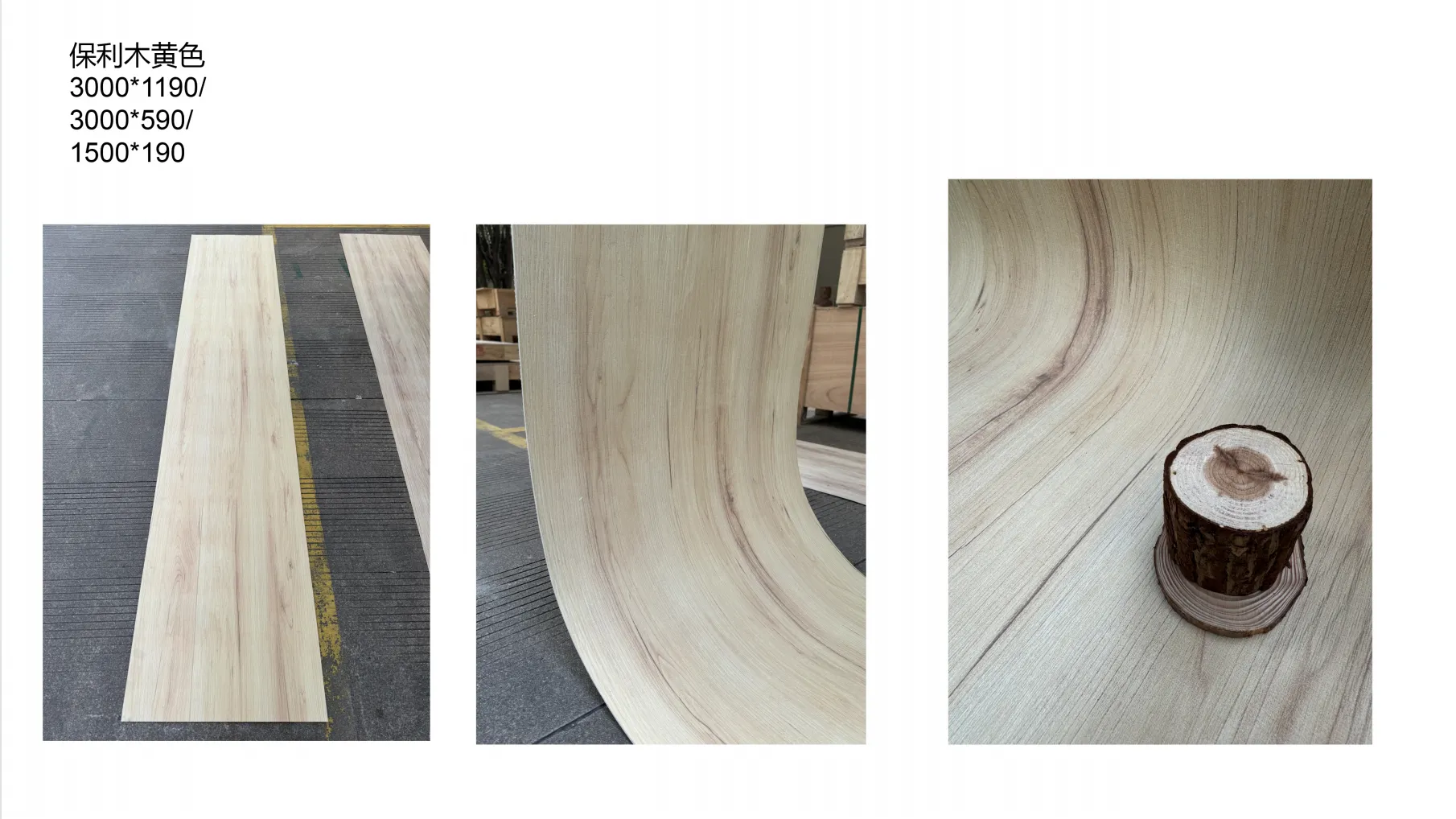
Walk into any modern café, boutique hotel, or even a trendy home these days, and you might notice something intriguing: walls that look like weathered oak, decking that mimics reclaimed teak, or ceilings with the warm grain of ash—yet none of it feels quite like wood. Tap it gently, and it has the solid, reassuring heft of stone or concrete. Run your hand over it, and the texture is uncannily natural, down to the tiny knots and grain patterns. Chances are, you're looking at poly wood board—a material that's quietly revolutionizing how we build, blending the timeless beauty of wood with the durability of modern engineering. But what makes this material tick? Behind its organic appearance lies a world of cutting-edge science: modified cementitious technology. Let's dive in.
For centuries, wood has been a go-to for builders and designers. Its warmth, versatility, and natural charm are unmatched. But wood has a dark side: it warps in humidity, rots in rain, cracks in extreme heat, and falls prey to termites and fungi. Traditional alternatives—like vinyl siding or composite wood (made from plastic and wood fibers)—offer better durability but often look plasticky, feel cheap, or leach harmful chemicals over time. On the flip side, materials like fair-faced concrete or natural stone bring strength but lack wood's softness, making spaces feel cold or industrial.
Enter poly wood board. Developed to bridge this gap, it's part of a new generation of "modified composite materials"—think of it as wood reimagined through chemistry and engineering. At its core is modified cementitious technology, a process that takes the tried-and-true strength of cement and supercharges it with polymers, fibers, and natural aggregates to create something entirely new: a material that bends like wood, lasts like stone, and looks so authentic, even seasoned carpenters do a double-take.
Let's start with the basics: Poly wood board is a lightweight, high-performance building material designed to replicate the look and texture of natural wood—without a single tree being cut down. Unlike traditional wood or even composite wood, it's not made from plant fibers. Instead, its base is a "modified cementitious matrix"—a fancy term for cement that's been tweaked with additives to make it flexible, lightweight, and less brittle. Mixed into this matrix are things like recycled mineral aggregates (for texture), polymer modifiers (for bendability), and glass or cellulose fibers (for tensile strength). The result? A material that's 70% cement by composition but behaves nothing like the concrete in your driveway.
But here's where it gets clever: During manufacturing, the material is molded and textured to mimic wood grain, knots, and even the slight imperfections that make real wood so appealing. Advanced 3D printing techniques (yes, similar to mcm 3d printing series technology) are often used to etch hyper-realistic patterns, ensuring that no two boards look identical. The finish is then sealed with a protective layer that enhances durability without sacrificing that "lived-in" look—so it ages gracefully, like real wood, but without the decay.
Cement is the backbone here, but not the ordinary Portland cement used in sidewalks. Poly wood board relies on "modified cement," which starts with a Portland cement base but adds mineral admixtures like fly ash (a byproduct of coal power plants) or silica fume (from metal production). These additives do two key things: First, they fill in the tiny pores in the cement matrix, making the material denser and more water-resistant. Second, they reduce the amount of water needed to mix the cement, which cuts down on shrinkage and cracking as the material cures.
Think of it like baking a cake: Regular cement is like a basic cake mix—functional, but prone to being dry or crumbly. Modified cement is the gourmet version, with added ingredients (the admixtures) that make it moist, dense, and less likely to fall apart. This denser matrix is the first line of defense against moisture, pests, and wear—critical for a material meant to mimic wood, which is notoriously vulnerable to these threats.
If modified cement is the backbone, polymers are the muscles that let poly wood board bend. Traditional cement is strong in compression (it can handle heavy weights pressing down on it) but terrible in tension (it cracks when pulled or bent). Wood, by contrast, has natural fibers that allow it to flex slightly—think of a tree swaying in the wind without snapping. To replicate that, engineers add polymer modifiers, which are long-chain molecules that act like microscopic springs within the cement matrix.
These polymers—often acrylics or epoxies—bind to the cement particles, creating a network that can stretch and compress. When the material is bent (say, to fit a curved wall or a rounded countertop), the polymers absorb the stress, preventing cracks from forming. This is why poly wood board can be used in applications that would shatter traditional concrete or splinter real wood, like curved facades or wavy accent walls (hello, wave panel designs!). It's also what makes it so durable in high-traffic areas: unlike wood, it won't split under foot traffic or warp when humidity spikes.
Polymers handle flexibility, but for tensile strength—the ability to resist being pulled apart—poly wood board relies on fibers. These can be glass fibers (strong and corrosion-resistant), cellulose fibers (made from recycled paper or wood pulp, adding a eco-friendly touch), or even carbon fibers (for ultra-high-strength applications). The fibers are mixed into the cementitious matrix before molding, creating a structure that's similar to reinforced concrete but on a micro scale.
Imagine a spiderweb woven through the cement: when stress is applied (like a heavy object dropping on the board), the fibers catch the cracks and distribute the force, preventing them from spreading. This is why poly wood board can withstand impacts that would leave real wood with a permanent dent or traditional concrete with a spiderweb of cracks. It's also why it has such a high load-bearing capacity—making it suitable for everything from flooring to outdoor decking.
Even the most durable material would fall flat if it didn't *look* like wood. That's where the texturing process comes in, and it's a marriage of art and science. Early poly wood boards had a plastic-like finish, but today's versions use advanced molding and 3D printing (again, drawing on mcm 3d printing series innovations) to create textures that are impossible to distinguish from real wood—even up close.
First, molds are created using high-resolution scans of real wood planks, capturing every knot, grain line, and even the slight (unevenness) of aged wood. The cementitious mixture is then poured into these molds, and pressure is applied to ensure the material fills every tiny crevice. After curing, the surface is treated with stains or dyes that penetrate the top layer, mimicking the way wood absorbs color—darker in the pores, lighter on the raised grain. Finally, a clear, breathable sealant is applied to protect against UV rays and moisture, but it's formulated to let the material "breathe," allowing it to develop a subtle patina over time, just like real wood.
So, we've covered the science—but what does it all mean for builders, designers, and homeowners? Let's break down the properties that make poly wood board a game-changer:
Traditional wood has a lifespan of 10–15 years outdoors (less if untreated), and even pressure-treated wood needs re-sealing every 2–3 years. Poly wood board? It's rated to last 50+ years with minimal maintenance. Why? No organic material means no food for pests like termites or carpenter ants. The dense, modified cement matrix resists rot, mold, and mildew—even in humid climates like bathrooms or coastal areas. It's also fire-resistant (unlike wood, which ignites at 572°F), and UV-stable, so it won't fade or crack in direct sunlight. In fact, tests show it retains 95% of its strength after 20 years of exposure to rain, snow, and extreme temperatures.
Remember those polymer modifiers and fibers? They give poly wood board a flexural strength of 8–12 MPa (megapascals), compared to 3–5 MPa for traditional wood and 4–6 MPa for standard concrete. In plain English: it can bend up to 3% of its length without cracking. That might not sound like much, but it's enough to allow for curved walls, arched doorways, or even wave-like ceiling panels (perfect for that wave panel aesthetic). Designers no longer have to choose between beauty and functionality—they can have both.
In an era where green building is non-negotiable, poly wood board shines. First, it uses recycled materials: up to 30% of its composition is fly ash, silica fume, or recycled aggregates, diverting waste from landfills. Second, it's low-VOC (volatile organic compounds), meaning it doesn't off-gas harmful chemicals into indoor air—unlike some composite woods that rely on formaldehyde-based adhesives. Third, its long lifespan reduces the need for replacement, cutting down on resource use over time. And since it mimics wood, it reduces demand for logging, helping preserve forests. It's no wonder it's become a favorite for LEED-certified projects and eco-conscious homeowners.
At the end of the day, even the most durable, flexible, and sustainable material won't win over designers if it looks fake. But poly wood board has come a long way from the plastic-y imitations of the past. Today's versions are so realistic that even professionals struggle to tell them apart from real wood without a lab test. Part of this is thanks to advances in texturing, but it's also due to the material's ability to absorb and reflect light like wood. Unlike glossy composites or flat fair-faced concrete, poly wood board has a matte, warm finish that softens spaces—exactly what we love about natural wood.
And it's not just about wood grain: Manufacturers now offer a range of "wood-like" aesthetics, from the weathered gray of coastal driftwood to the rich amber of teak, and even custom colors. Pair that with the ability to mimic other natural textures (think: the rough-hewn look of masonry stone or the smoothness of marble veil white), and it's easy to see why designers are falling for it.
Still not convinced? Let's put poly wood board head-to-head with traditional wood and fair-faced concrete—the two materials it's most often replacing:
| Property | Poly Wood Board | Traditional Wood | Fair-Faced Concrete |
|---|---|---|---|
| Lifespan (Outdoor) | 50+ years | 10–15 years (untreated) | 50+ years |
| Water Resistance | High (resists rot/mold) | Low (warps/rots when wet) | High (but porous, needs sealing) |
| Flexibility | High (bends without cracking) | Medium (splits under stress) | Low (brittle, cracks easily) |
| Aesthetic Warmth | High (mimics wood grain/texture) | High (natural wood appearance) | Low (cold, industrial look) |
| Sustainability | High (recycled materials, long lifespan) | Variable (depends on sourcing) | Medium (high carbon footprint to produce) |
Poly wood board isn't just a lab experiment—it's already transforming spaces around the world. Here are a few places you might spot it:
Homeowners are using poly wood board for everything from accent walls in living rooms to kitchen backsplashes, and even outdoor decking. Imagine a backyard deck that looks like reclaimed oak but doesn't require staining every year, or a bedroom wall with the texture of barnwood that won't attract termites. In bathrooms, it's a game-changer: unlike real wood, it thrives in humid environments, making it perfect for shower walls or vanity fronts. And because it's customizable, homeowners can match it to their existing decor—whether that's the warm tones of wood line or the sleekness of marble concrete board.
Restaurants, hotels, and retail stores love poly wood board for its ability to handle heavy foot traffic and frequent cleaning. A café with poly wood paneling on the walls not only looks inviting but can withstand spills, scratches, and the wear and tear of daily life. Boutique hotels use it for headboards, lobby walls, and even elevator interiors, creating a cozy, upscale vibe without the maintenance headaches of real wood. And in high-end retail, it's used for display shelves and cash wraps, where durability and aesthetics are equally important.
From parks to airports, poly wood board is popping up in public areas where durability is non-negotiable. Playground equipment (seesaws, benches) made from poly wood board can handle roughhousing kids and rainstorms without splintering. Airport lounges use it for seating and wall panels, combining comfort with the ability to resist scuffs and stains. Even outdoor amphitheaters are getting in on the action, using curved poly wood board for seating that's both beautiful and built to last.
With any new material, myths abound. Let's set the record straight:
As architects and builders push for more sustainable, creative, and durable materials, poly wood board is poised to lead the charge. Manufacturers are already experimenting with new additives to boost flexibility even further, opening up possibilities for ultra-curved structures or even furniture that bends like rubber. We're also seeing more integration with other innovative materials, like mcm flexible stone and foamed aluminium alloy board, creating hybrid systems that combine the best of multiple worlds.
And as 3D printing technology advances, the customization options will only grow. Imagine ordering poly wood board with a texture scanned from your grandmother's old oak table, or a pattern inspired by the starry night sky (hello, travertine (starry blue) vibes!). The line between "natural" and "engineered" is blurring, and that's a good thing—it means we can build spaces that feel connected to nature without sacrificing the durability our modern lives demand.
Poly wood board is more than just a building material—it's a testament to human ingenuity. By taking the best of natural wood (its beauty, warmth) and pairing it with the best of modern science (modified cementitious technology, polymers, fibers), we've created something that doesn't just replace wood or concrete—it redefines what building materials can be. It's a reminder that progress doesn't have to mean sacrificing the things we love about the natural world; instead, it can mean enhancing them, making them stronger, more sustainable, and more accessible.
So the next time you run your hand over a wall that looks like wood but feels like stone, take a moment to appreciate the science behind it. It's not magic—it's modified cementitious technology, and it's building the future, one poly wood board at a time.
Recommend Products












