

There's something inherently captivating about red travertine . Walk into a boutique hotel lobby with walls clad in its warm, earthy panels, or step onto a sunlit patio paved with its textured tiles, and you'll feel it immediately—a sense of depth, history, and quiet luxury. Unlike the cool sleekness of marble or the understated neutrality of granite, red travertine wraps a space in warmth, as if each slab holds a story of ancient rivers, mineral-rich springs, and the slow, patient work of nature. But what gives this stone its distinctive crimson hue? The answer lies in the very minerals that form it, a dance of geology and chemistry that turns ordinary limestone into a material beloved by architects and designers for centuries.
Before we dive into the "red" of red travertine, let's start with the basics: What is travertine, anyway? At its core, travertine is a type of limestone, but not just any limestone. It forms in areas where mineral-rich groundwater—think hot springs, geysers, or mineral deposits—bubbles to the surface. As the water evaporates, it leaves behind layers of calcium carbonate, the same compound that makes up seashells and chalk. Over time, these layers build up, trapping air bubbles, plant matter, and other minerals along the way. The result? A stone with a porous, honeycombed texture, unique veining, and a color palette that ranges from soft beiges to deep rusts, depending on the minerals present during its formation.
Unlike other stones formed under intense heat and pressure deep underground, travertine grows in "layers" near the Earth's surface, often in caves or along riverbanks. This slow, surface-level formation is what gives it its signature porosity—those tiny holes and indentations that add character and grip (making it a popular choice for flooring, where slip resistance matters). It's also why travertine feels less "perfect" than, say, polished marble; its imperfections are a record of its journey, a reminder that it was shaped not by brute force, but by the gentle persistence of water and time.
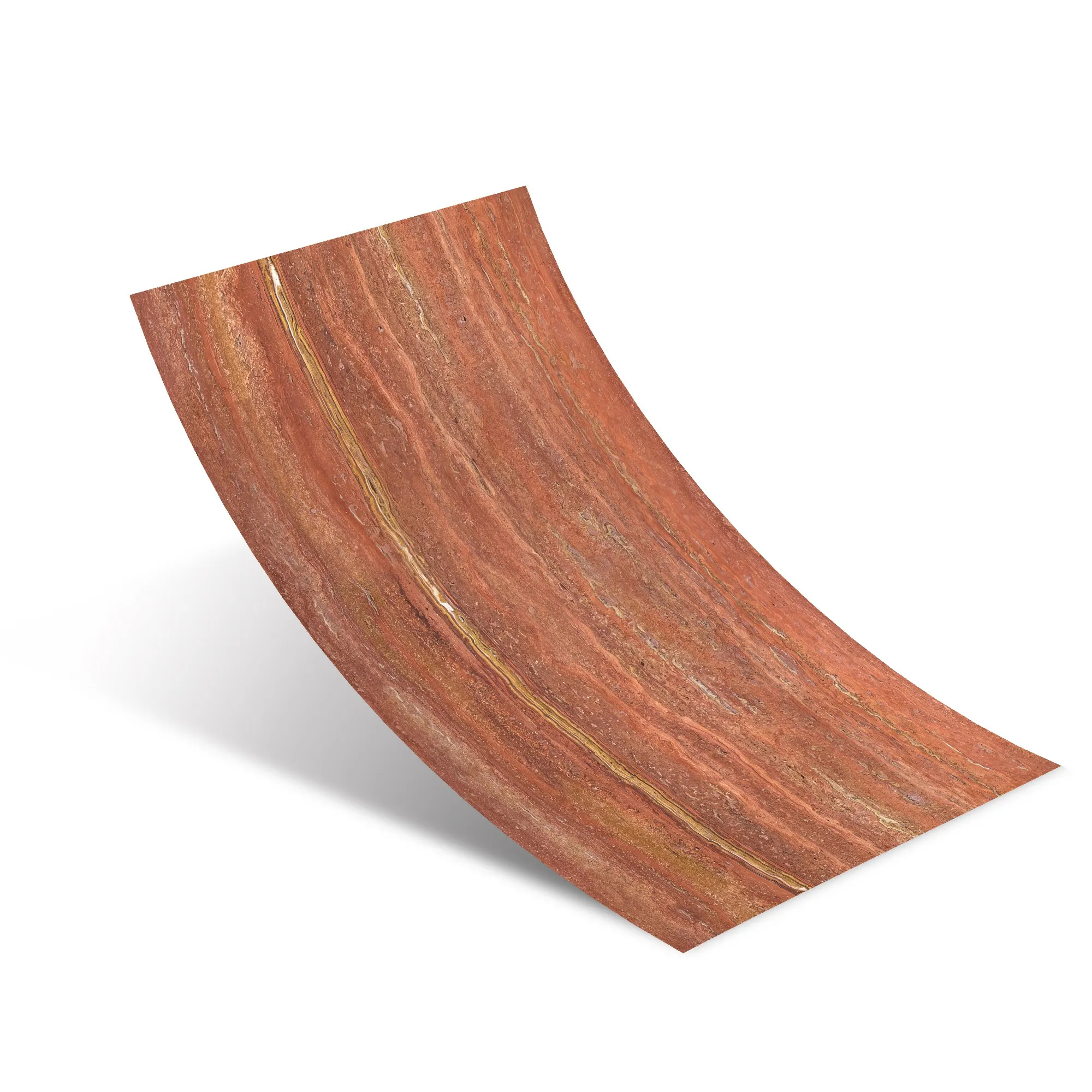
Now, let's get to the star of the show: the red color. The secret ingredient here is iron oxide —specifically, a compound called hematite (Fe₂O₃), which is essentially rust in its most stable form. When groundwater flows through rocks and soil, it picks up trace amounts of iron. If the conditions are right—plenty of oxygen, slow evaporation—this iron oxidizes, turning from dissolved iron ions into solid hematite particles. As travertine layers form, these hematite particles get trapped in the calcium carbonate matrix, tinting the stone with shades of red, orange, or brown. The more iron oxide present, the deeper the red; a little gives a soft terracotta, while a lot creates a rich, almost burgundy hue.
But iron oxide isn't the only mineral at play. Other trace elements can tweak the shade, adding complexity. For example, small amounts of manganese might introduce hints of purple, while clay minerals can mellow the red into a warm brick tone. Even the size of the hematite particles matters: larger particles scatter light differently, creating a more intense, opaque red, while finer particles result in a softer, more translucent blush. It's like mixing paint, but nature is the artist, and the canvas is millions of years of geological time.
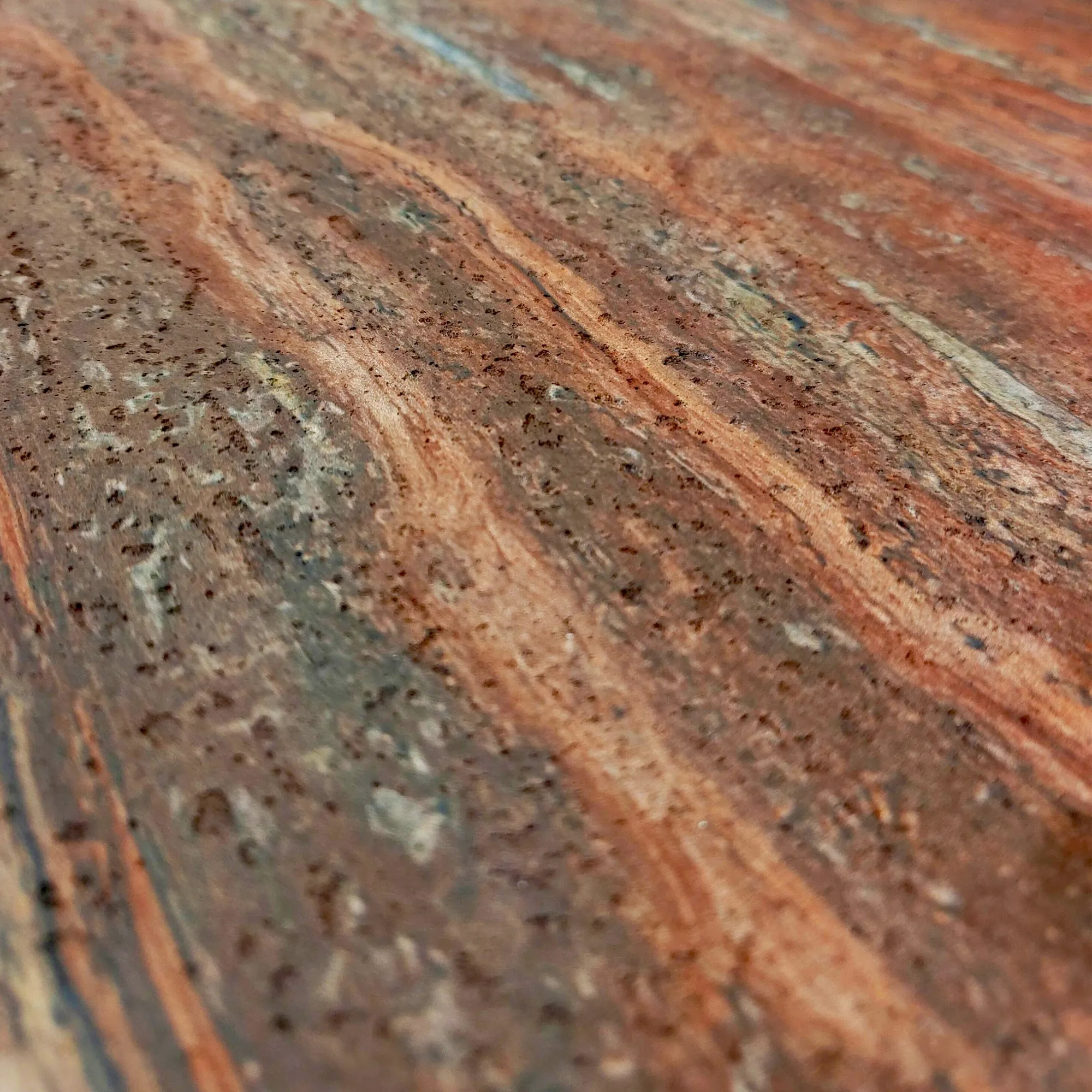
Red travertine is just one player in a much broader family of travertine colors. Walk through a stone quarry or a design showroom, and you'll encounter hues that seem to capture the sky at dawn, the desert at sunset, or even the night sky itself. Take travertine (starry red) and travertine (starry orange) , for example. These varieties get their "starry" nickname from tiny, glittering mineral inclusions—often mica or pyrite—that catch the light, adding a subtle sparkle to their base red or orange tones. While the base color still comes from iron oxides, those flecks of shimmer are caused by other minerals, like muscovite (a type of mica) or fool's gold, which get trapped in the stone during formation.
Compare that to travertine (starry blue) , a rarer variety that swaps iron oxides for copper or cobalt minerals, resulting in cool, moody shades that evoke deep oceans or twilight skies. Even within the red family, there's variation: some slabs lean toward brick-red, others toward rust, and a few—like the prized "terra cotta" travertine—have a warm, sunbaked orange-red that feels like a slice of the Mediterranean. All of these differences boil down to the unique cocktail of minerals in the groundwater where the travertine formed. A spring rich in iron will make red; one with manganese might lean purple; and a mix of iron and clay could create a soft, earthy lime stone(beige) —a cousin to travertine, but with a lighter, more neutral palette.
| Travertine Variety | Dominant Mineral(s) | Color Description |
|---|---|---|
| Red Travertine | Hematite (iron oxide) | Deep, earthy red to rust; opaque, with visible veining from mineral deposits. |
| Travertine (starry red) | Hematite + mica/pyrite | Red base with tiny, glittering "stars" from reflective minerals like mica. |
| Travertine (starry orange) | Goethite (iron hydroxide) + mica | Warm orange-red with a golden undertone; sparkle from mica inclusions. |
| Travertine (starry blue) | Copper/cobalt oxides + pyrite | Cool blue-gray base with metallic flecks; rare and prized for unique depth. |
| Lime stone(beige) | Calcium carbonate + clay minerals | Soft, neutral beige; minimal iron, resulting in a lighter, more uniform hue. |
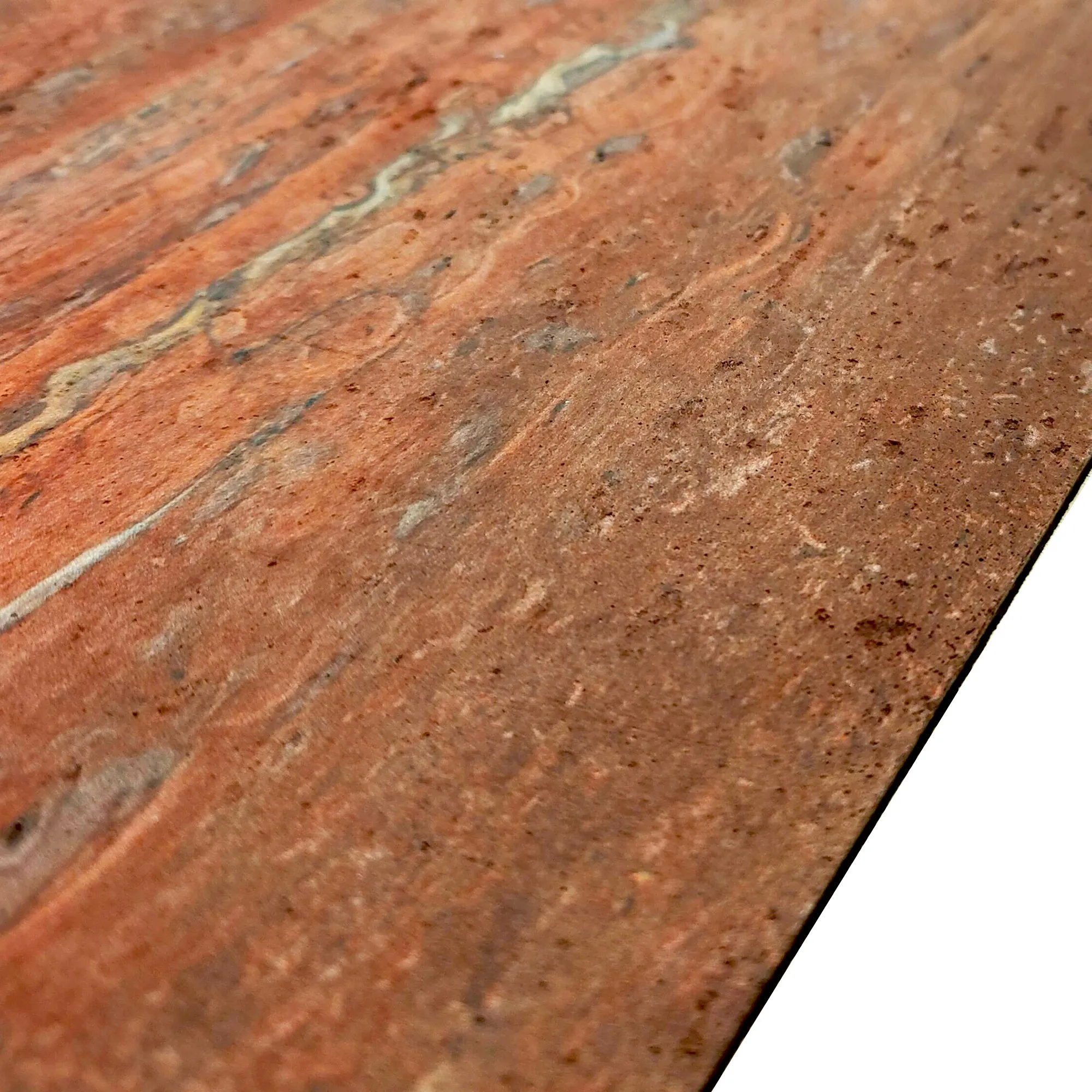
Color isn't the only thing minerals influence—they also shape travertine's durability and texture. Red travertine, rich in iron oxides, tends to be slightly denser than its beige or white counterparts. The iron acts like a natural "hardener," filling in some of the stone's pores and making it more resistant to scratches and stains. That's why you'll often find it used in high-traffic areas, like restaurant floors or outdoor patios, where both beauty and resilience are key. Of course, it's still porous—you'll want to seal it regularly to prevent liquids from seeping in—but its mineral makeup gives it a leg up on more delicate stones like marble, which can etch easily with acidic spills.
Texture, too, is a product of mineral composition. The size and distribution of hematite particles, for example, affect how rough or smooth the stone feels. Finer iron particles create a smoother surface, while larger clumps result in a more textured, "rustic" finish. Architects often play with this: a polished red travertine slab (where the surface is ground down to a smooth sheen) might grace a luxury bathroom wall, highlighting its rich color, while a honed or brushed finish (left more natural) could be used for a walkway, emphasizing its grip and earthy charm.
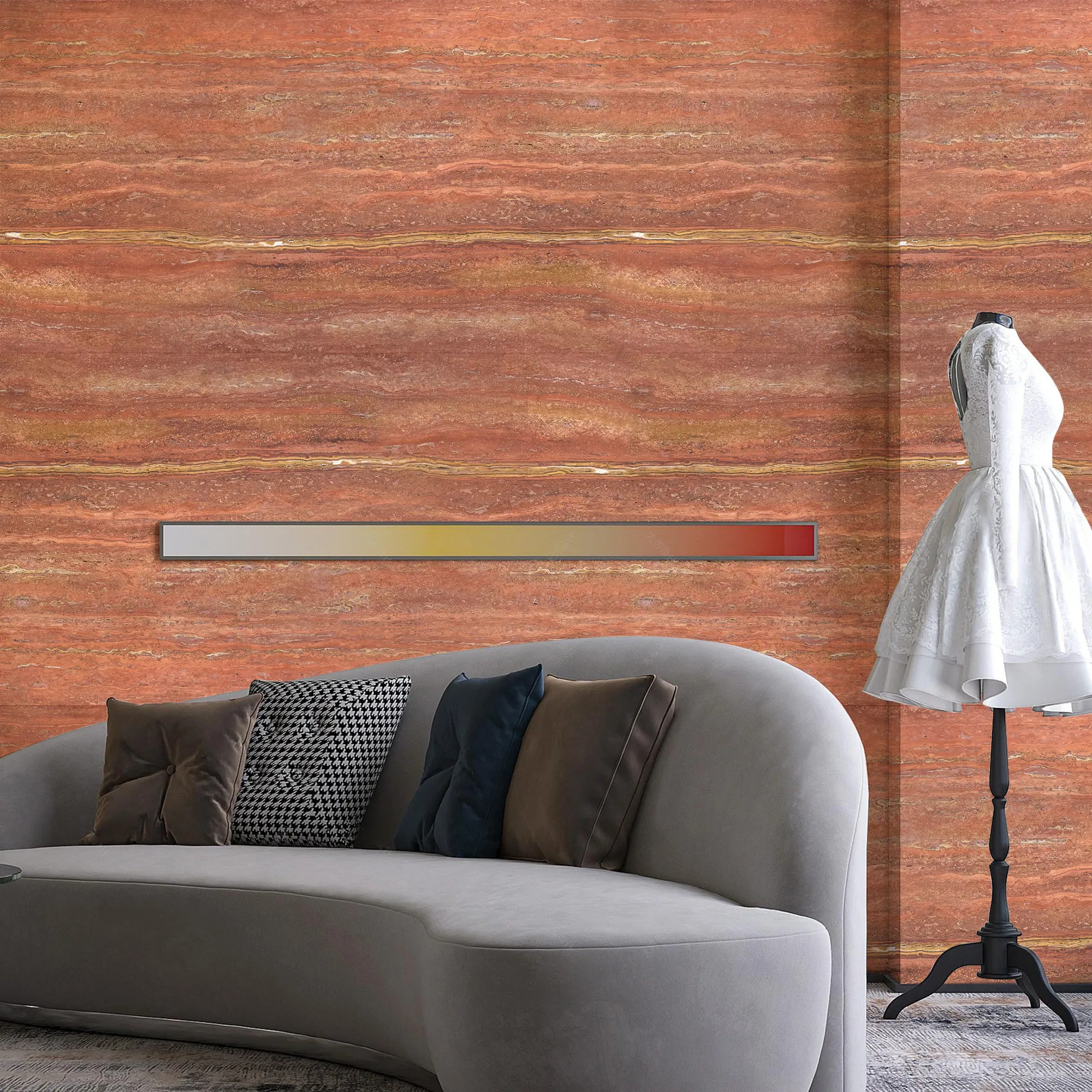
While travertine has been used for millennia—think of the ancient Roman Colosseum, where travertine blocks form its iconic exterior—modern technology is finding new ways to make this stone even more versatile. Enter mcm flexible stone , a cutting-edge material that takes the beauty of natural travertine and adds a twist: flexibility. Traditional travertine slabs are heavy and rigid, limiting their use to flat surfaces like floors or walls. MCM (Modified Composite Material) flexible stone, however, is made by bonding thin layers of real travertine to a flexible backing, allowing it to bend and curve around corners, columns, or even furniture. Suddenly, red travertine isn't just for floors—it can wrap a curved staircase, clad a cylindrical elevator shaft, or add texture to a statement wall with organic, flowing lines.
This innovation has opened up a world of possibilities for designers. Imagine a retail store with a sweeping, curved facade covered in red travertine MCM panels, catching the sun and drawing customers in. Or a home kitchen with a backsplash that follows the curve of the counter, its red tones complementing wooden cabinetry and brass fixtures. By preserving the mineral-rich beauty of natural red travertine but adding flexibility, MCM technology ensures this ancient stone remains relevant in modern design, where creativity and adaptability are key.
At the end of the day, red travertine is more than just a building material. It's a story—of Earth's slow, patient creation, of minerals carried by water and deposited over centuries, of human ingenuity in harnessing nature's artistry. Its red hue isn't just a color; it's a marker of the planet's own chemistry, a reminder that even the most beautiful materials are rooted in science. Whether used in an ancient monument or a sleek, modern home, red travertine connects us to something bigger: the cycles of nature, the passage of time, and the enduring appeal of materials that feel both timeless and alive.
So the next time you encounter red travertine, take a moment to appreciate it. Run your hand over its surface, notice the way light plays on its veins, and think about the minerals that gave it life. It's not just stone—it's Earth's way of painting our world in warmth.
Recommend Products











