
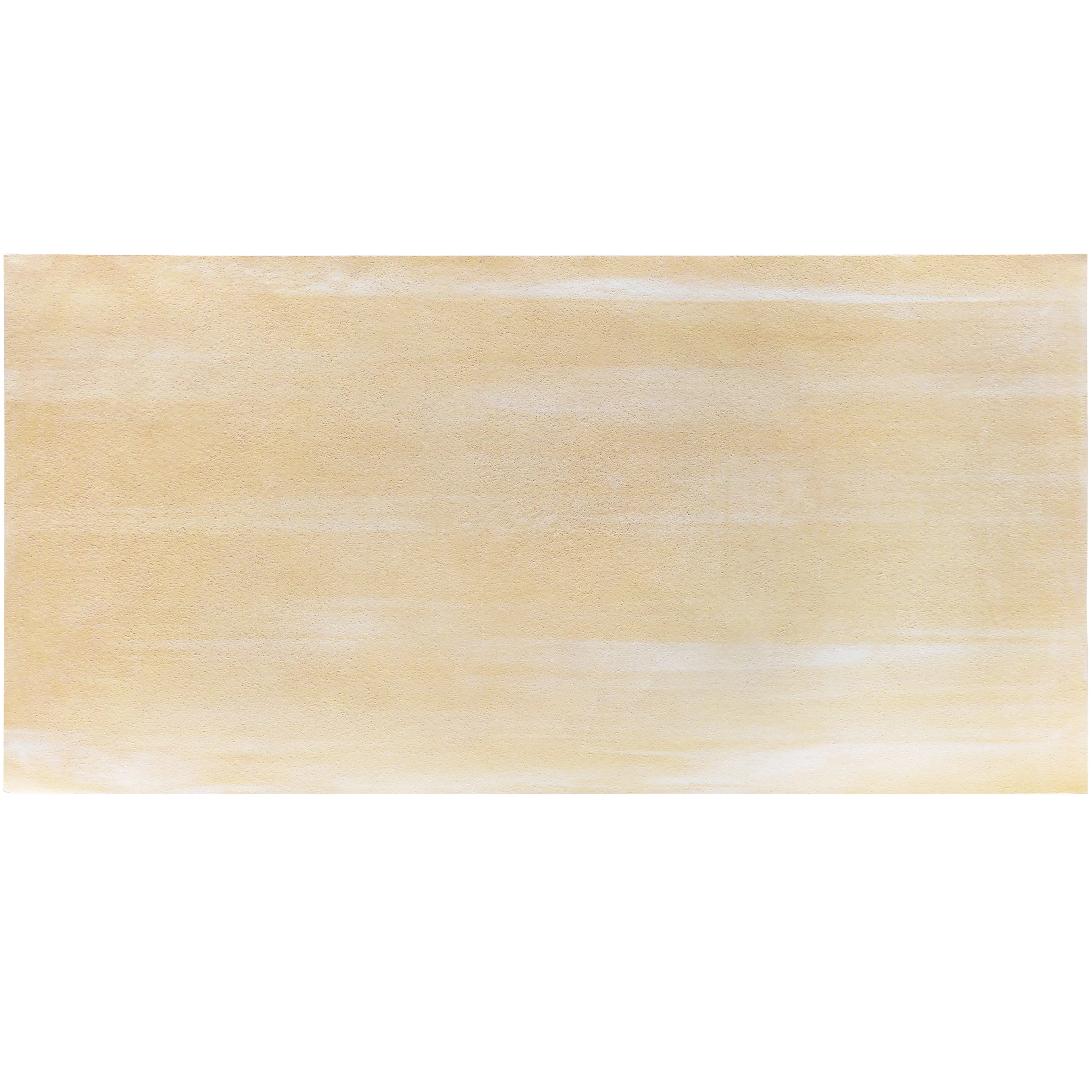
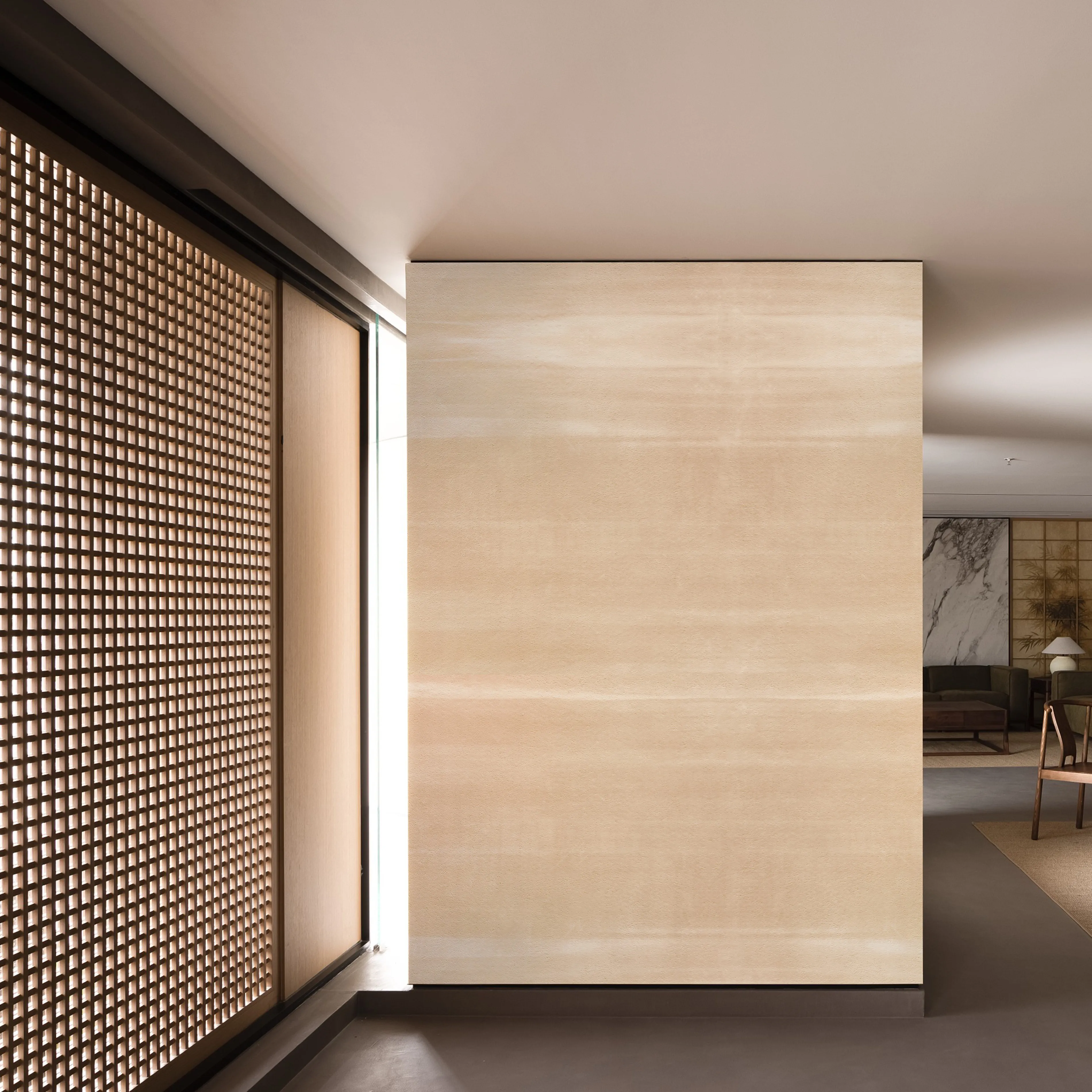
Walk into a contemporary café, a sleek corporate lobby, or a boutique hotel today, and you might find yourself pausing, hand brushing gently against a wall. It feels like stone—rough, organic, grounded in nature—but there's something different. It doesn't weigh the room down with the heft of traditional masonry. It bends subtly, as if breathing, and catches the light in ways that make you swear it's glowing from within. That's the quiet revolution of COLORIA's Sandstone Cloude, a material born from the marriage of geological science and cutting-edge engineering. More than just a building product, it's a bridge between the raw beauty of the earth and the limitless creativity of modern design. Let's dive into the story of how this innovation came to be, and why it's reshaping the future of architecture.
Before we get to Sandstone Cloude, let's talk about the star of the show: MCM, or Modified Composite Material. You've probably heard of composites before—materials made by blending two or more substances to create something stronger, lighter, or more versatile than the sum of its parts. But MCM takes that idea and runs with it, specifically tailored for the unique demands of architecture and design.
At its core, MCM is a symphony of natural minerals and high-performance polymers. Think crushed stone, sand, and mineral aggregates—harvested responsibly from quarries—mixed with eco-friendly binders that hold everything together without sacrificing flexibility. The result? A material that's thin (often just 3-5mm thick), lightweight (up to 80% lighter than traditional stone slabs), and surprisingly tough. It bends without breaking, resists scratches and stains, and stands up to rain, snow, and harsh sunlight like a champ. For architects and builders, that's a game-changer: suddenly, stone-like beauty isn't limited to ground floors or load-bearing walls. It can climb facades, curve around corners, or even hang from ceilings—all without straining the building's structure.
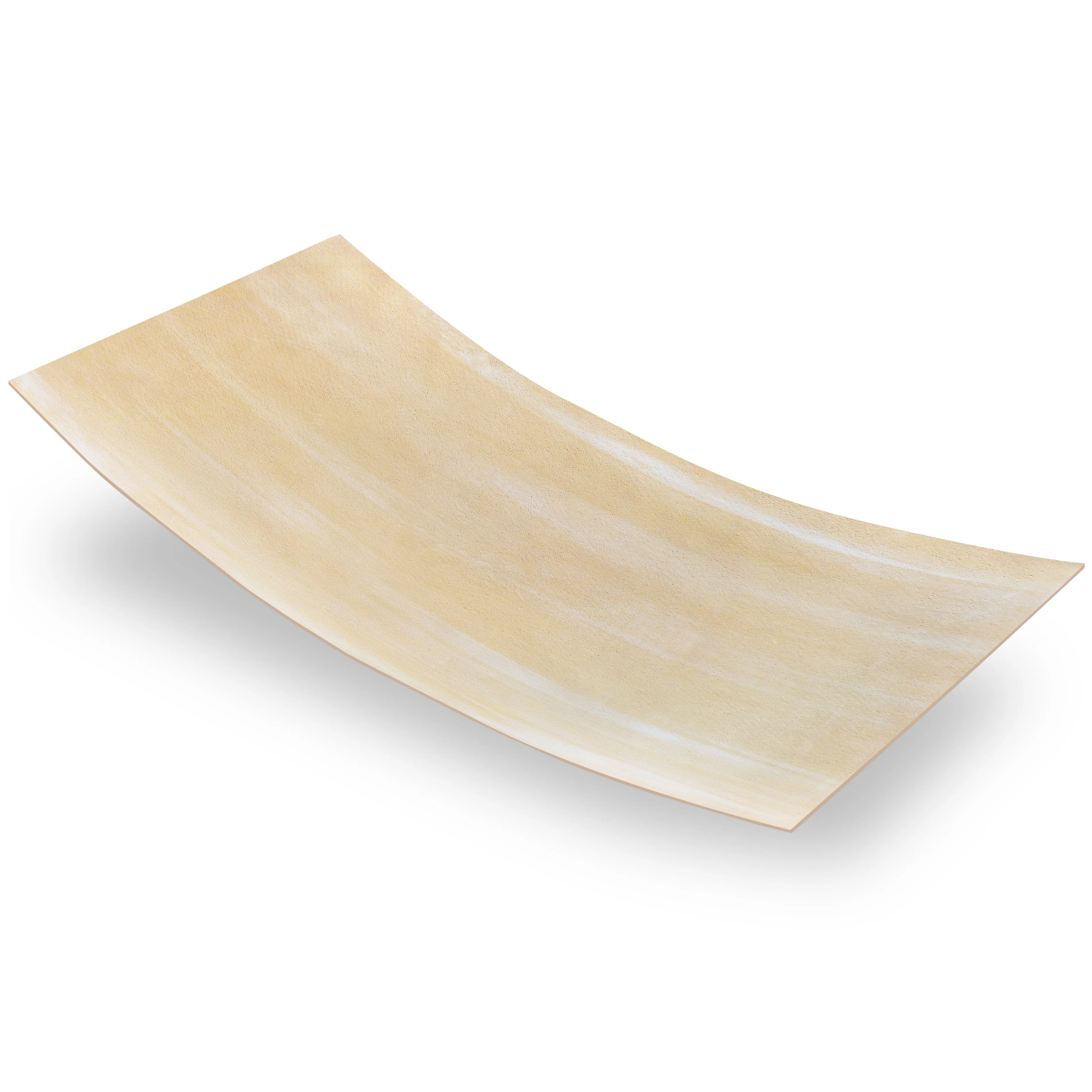
Sandstone Cloude isn't just a "type" of MCM—it's a masterpiece of material science, designed to capture the soft, billowy texture of desert sand dunes at dawn. To create it, COLORIA's engineers start with the finest natural sandstone aggregates, sourced from regions known for their unique mineral compositions. These aggregates are then washed, sorted, and ground into a powder that retains the stone's inherent warmth and color variations—no two panels are exactly alike, just like real sandstone.
The magic happens in the mixing phase. The sandstone powder is blended with a proprietary mix of polymers, carefully calibrated to balance strength and flexibility. This "dough" is then fed into advanced molding machines—some of which use 3D printing technology (a nod to COLORIA's MCM 3D printing series) to sculpt intricate textures that mimic the way wind carves patterns into desert sand. The panels are cured under controlled temperature and pressure, a process that fuses the minerals and polymers into a single, cohesive sheet. Finally, they're finished with a thin, transparent protective layer that enhances the stone's natural luster while shielding it from the elements.
The result? A panel that looks and feels like it was chiseled from a ancient sandstone cliff, but weighs about as much as a thick piece of cardboard. Run your hand over it, and you'll feel the subtle ridges and valleys of the texture—cool to the touch, yet somehow inviting. It's a material that doesn't just cover a wall; it tells a story, of time and nature and human ingenuity.
Sure, it looks stunning—but what makes Sandstone Cloude truly innovative is the science under the surface. Let's break down its most impressive properties:
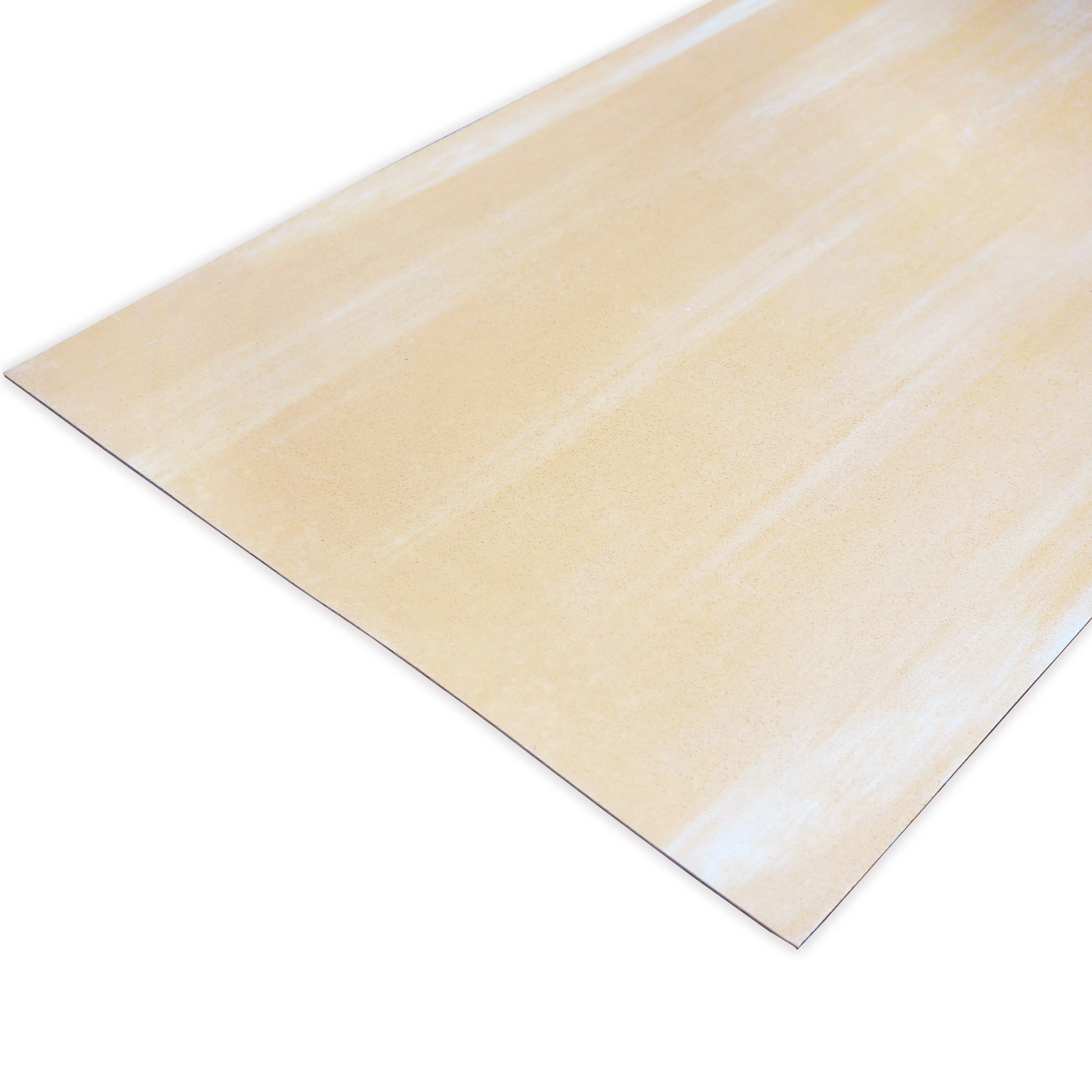
Traditional sandstone is beautiful but brittle. drop a slab, and it shatters. Try to bend it, and it cracks. Sandstone Cloude, thanks to its polymer matrix, bends. Not like rubber—we're talking subtle flexibility, enough to conform to curved surfaces or absorb minor impacts without damage. This makes installation a breeze: panels can be cut on-site with standard tools, and they're light enough for two people to carry and mount, reducing labor time and costs.
Unlike natural sandstone, which is porous and prone to absorbing water (leading to cracks in freezing temperatures), Sandstone Cloude is inherently water-resistant. The polymer binder fills in microscopic gaps between mineral particles, creating a barrier that repels moisture, mold, and mildew. It's also UV-stable, meaning the rich, warm tones won't fade even after years of direct sunlight. In coastal areas, where salt spray eats away at traditional stone, Sandstone Cloude panels stay looking fresh—no maintenance required beyond an occasional rinse.
Weight matters in architecture. A traditional 1m² slab of sandstone can weigh 50-60kg; Sandstone Cloude clocks in at just 8-10kg per m². That's a huge difference for buildings, where every kilogram adds stress to foundations and structural supports. With Sandstone Cloude, designers can clad entire facades or create dramatic overhangs without requiring reinforced steel frames. It's a freedom that opens up new possibilities for bold, sculptural architecture.
| Property | Traditional Sandstone | Sandstone Cloude (MCM) |
|---|---|---|
| Weight (per m²) | 50-60kg | 8-10kg |
| Flexibility | Brittle; prone to cracking | Flexible; bends without breaking |
| Water Resistance | Porous; absorbs moisture | Non-porous; water-repellent |
| Installation Complexity | Requires heavy machinery and structural support | Lightweight; can be installed with basic tools |
| Sustainability | High carbon footprint (quarrying, transportation) | Low carbon footprint; recyclable materials |
Sandstone Cloude is just the beginning. COLORIA's MCM lineup is a playground for designers, with textures and finishes that span the spectrum from rugged to refined. Let's take a closer look at a few standout siblings in the family:
If Sandstone Cloude is earthy and warm, the Lunar Peak series is otherworldly. Inspired by the moon's cratered surface, these panels feature a subtle, metallic sheen that shifts with light. Lunar Peak Silvery glows like moonlight on snow, while Lunar Peak Golden radiates a soft, amber warmth—perfect for adding a touch of luxury to hotel lobbies or restaurant accent walls. Even Lunar Peak Black, with its deep, starry texture, feels more like a night sky than a building material. Like Sandstone Cloude, they're lightweight and durable, but their metallic finish adds a futuristic edge that's hard to achieve with traditional stone.
For designers craving a raw, organic look, the Gobi Panel delivers. Named after the Mongolian desert, it mimics the rough, wind-eroded surface of desert rock, with deep grooves and uneven edges that tell a story of time and nature. Unlike real desert stone, though, Gobi Panel is surprisingly lightweight and easy to install—making it ideal for creating feature walls in homes or adding rustic charm to outdoor patios. It pairs beautifully with wood or metal accents, bridging the gap between industrial and natural design.
Concrete has long been a favorite for its minimalist, industrial vibe—but traditional concrete is heavy, prone to cracking, and hard to customize. COLORIA's Fair-faced Concrete MCM panels change that. They capture the raw, unfinished look of poured concrete, with subtle variations in color and texture that add depth and character. But unlike real concrete, they're thin, flexible, and can be cut into any shape—so you can clad a curved staircase or create a seamless concrete-look ceiling without the hassle of on-site pouring. It's industrial cool, without the industrial weight.
These materials aren't just lab experiments—they're transforming spaces around the globe. Take the Azure Hotel in Dubai, where the exterior is clad in Sandstone Cloude panels. The soft, sandy texture complements the desert landscape, while the panels' lightweight nature reduced the building's structural load by 40% compared to traditional stone. Inside, the lobby features Lunar Peak Golden accents on the reception desk, their warm glow welcoming guests as they enter. In Tokyo, a boutique office building uses Gobi Panel for its facade, standing out among the city's glass towers with its rugged, earthy texture.
Residential spaces are getting in on the action too. A family home in California replaced their living room drywall with Sandstone Cloude panels, creating a focal wall that feels like a slice of the desert, right in the city. Another homeowner in Sweden used Fair-faced Concrete panels for their outdoor kitchen, loving how they stand up to rain and snow without losing their industrial edge.
In an era where sustainability is non-negotiable, COLORIA's MCM materials shine. The production process uses up to 30% recycled materials, and the panels themselves are fully recyclable at the end of their lifespan (which, by the way, is decades longer than traditional materials like paint or wallpaper). Their lightweight design also reduces transportation emissions—trucks can carry more panels per trip, cutting down on fuel use. Perhaps most importantly, their durability means less frequent replacement, reducing waste and the need for new raw materials. For architects aiming for LEED or BREEAM certifications, these panels are more than just a design choice—they're a commitment to the planet.
Sandstone Cloude and COLORIA's other MCM innovations aren't just products—they're a glimpse into the future of architecture. A future where materials are as flexible as our imaginations, where beauty and performance go hand in hand, and where sustainability isn't an afterthought but a core principle. Whether you're designing a skyscraper or a small home, these panels invite you to rethink what's possible: to create spaces that feel alive, that tell stories, and that stand the test of time.
So the next time you walk into a space and find yourself drawn to a wall—touching its texture, marveling at its color—take a moment to appreciate the science behind it. Chances are, it's not just stone or concrete. It's MCM. It's innovation. It's COLORIA.
Recommend Products












