
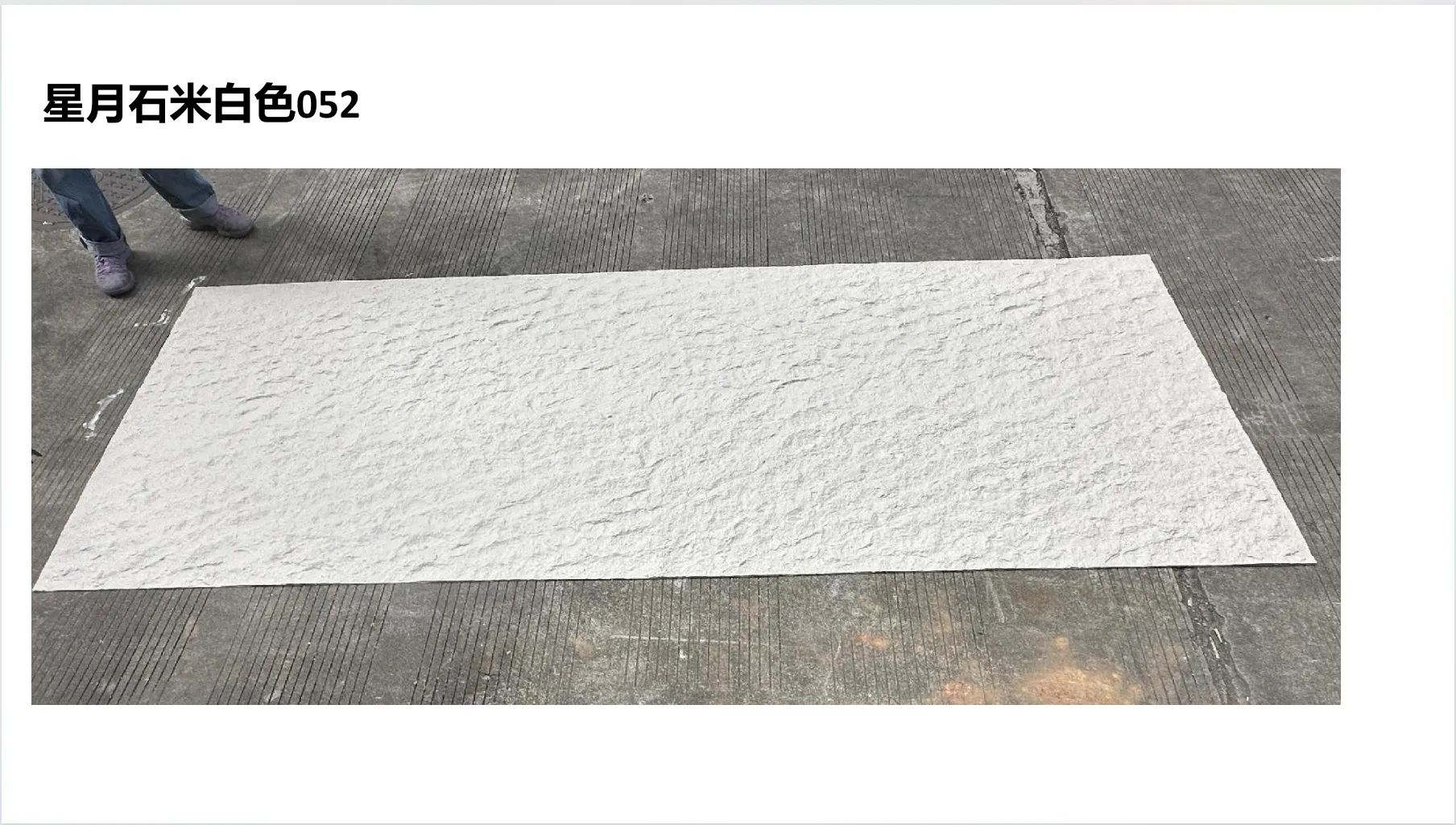
Walk into any modern architectural space today, and you'll likely notice a quiet revolution unfolding on walls, facades, and surfaces. Gone are the days when construction materials were chosen solely for durability—today's designers crave something more: materials that marry strength with flexibility, sustainability with aesthetic versatility, and innovation with timeless appeal. Enter MCM, or Modified Composite Material, a category that's redefining what's possible in building design. At the heart of this revolution lies Starmoon Stone , a standout product in the MCM lineup that's turning heads for its unique blend of science and artistry. But what makes MCM, and Starmoon Stone in particular, so much more impressive than the traditional cementitious materials we've relied on for decades? Let's dive in.
Before we get into the specifics of Starmoon Stone, let's clarify what MCM actually is. Short for Modified Composite Material, MCM is a engineered material designed to address the limitations of traditional building materials like concrete, natural stone, and cement boards. It's created by combining high-performance polymers with mineral aggregates, reinforced with fibers, and processed using advanced techniques—think 3D printing, precision molding, and layered bonding—to achieve properties that traditional materials simply can't match. Unlike rigid cementitious materials, MCM is lightweight, flexible, and highly customizable, making it a favorite among architects and designers looking to push creative boundaries.
MCM products come in a stunning array of textures, colors, and formats, from the sleek lines of MCM big slab board series to the intricate patterns of mosaic stone. But among them, Starmoon Stone stands out for its unique aesthetic and scientific engineering. Imagine a material that mimics the depth of natural stone but weighs a fraction of the weight, bends without breaking, and resists the wear and tear of time and weather. That's Starmoon Stone in a nutshell—and its magic lies in the science behind its creation.
Starmoon Stone isn't just a pretty face—it's a marvel of material science. Let's break down the key elements that make it outperform traditional cementitious materials:
Traditional cementitious materials, like concrete or cement boards, are dense and heavy. A single square meter of concrete facade can weigh upwards of 50 kg, putting strain on building structures and increasing transportation and installation costs. Starmoon Stone, by contrast, weighs in at just 6–8 kg per square meter. How? Its core is made of a lightweight mineral composite reinforced with glass fibers and polymer resins, creating a honeycomb-like internal structure that distributes weight evenly while maintaining rigidity. This "lightweight yet strong" balance is a game-changer for construction: it reduces structural load, cuts down on shipping fuel use, and makes installation faster and safer (no need for heavy machinery or multiple workers to lift a single panel).
One of the biggest flaws of traditional cementitious materials is their brittleness. Concrete and cement boards crack under stress—whether from temperature fluctuations, structural movement, or impact. Starmoon Stone, however, is engineered to flex. Its polymer matrix allows it to bend up to 30 degrees without permanent damage, absorbing stress that would shatter traditional materials. This flexibility is a lifesaver in regions with extreme weather, seismic activity, or buildings prone to minor structural shifts. Imagine a facade that can withstand a hailstorm without chipping, or a wall that bends slightly during an earthquake and bounces back—Starmoon Stone makes that possible.
Durability isn't just about strength—it's about resistance to the elements. Traditional cementitious materials are porous, meaning they absorb water, leading to mold, mildew, and freeze-thaw damage in cold climates. Starmoon Stone, on the other hand, has a non-porous surface treated with a UV-resistant coating, making it impervious to water, stains, and sun damage. Tests show that Starmoon Stone retains its color and texture even after 20+ years of exposure to harsh sunlight, rain, and pollution—far outlasting traditional cement boards, which often need replacement after 10–15 years.
In an era where sustainability is non-negotiable, MCM has another trick up its sleeve: it's eco-friendly. Traditional cement production is a major contributor to global CO2 emissions, responsible for about 8% of the world's total carbon footprint. MCM, including Starmoon Stone, is manufactured using recycled mineral aggregates and low-VOC (volatile organic compound) polymers, reducing its environmental impact. Additionally, its lightweight nature reduces transportation emissions, and its longevity means less waste over time. Compare that to natural stone, which requires extensive mining and processing, or cement boards, which often end up in landfills after they crack or wear out. Starmoon Stone isn't just better for buildings—it's better for the planet.
To really understand why MCM (and Starmoon Stone) is a cut above, let's put it head-to-head with traditional cementitious materials. The table below breaks down key attributes, from weight to sustainability, to show just how big the gap really is:
| Attribute | Starmoon Stone (MCM) | Traditional Cement Board | Natural Stone (e.g., Marble, Granite) |
|---|---|---|---|
| Weight (per sq.m) | 6–8 kg | 25–30 kg | 40–60 kg |
| Flexibility | Can bend up to 30° without cracking | Brittle; cracks under minimal flex | Extremely rigid; prone to chipping |
| Water Resistance | Non-porous; impervious to water | Porous; absorbs water, leading to mold | Porous; requires sealing every 1–2 years |
| Installation Ease | Lightweight; can be cut with standard tools; no heavy machinery needed | Heavy; requires power tools and multiple workers | Extremely heavy; requires specialized equipment and skilled labor |
| Sustainability | Recycled materials; low CO2 production; long lifespan (20+ years) | High CO2 production; short lifespan (10–15 years); non-recyclable | Extensive mining impact; high transportation emissions; non-renewable |
| Aesthetic Versatility | Customizable colors, textures, and patterns (e.g., mimics Travertine (starry green) or Foamed Aluminium Alloy Board (vintage silver) ) | Limited colors; uniform, industrial look | Natural variation, but limited by what's mined |
The numbers speak for themselves: Starmoon Stone outperforms traditional materials in nearly every category that matters to architects, builders, and property owners. It's lighter, more durable, easier to install, and better for the environment—all while offering the kind of design flexibility that makes creative visions a reality.
So, where exactly is Starmoon Stone making an impact? The answer is: everywhere. From commercial skyscrapers to residential homes, from interior accent walls to exterior facades, MCM products like Starmoon Stone are proving their versatility. Let's look at a few standout examples:
Imagine a 50-story building clad in heavy natural stone. The structural load alone would require massive steel supports, driving up costs and limiting design options. With MCM big slab board series and Starmoon Stone, architects can create sleek, modern facades that weigh a fraction of the traditional alternative. Take the recent renovation of a downtown office tower in Dubai, where Starmoon Stone panels were used to replace outdated concrete cladding. The result? A facade that's 70% lighter, 50% faster to install, and requires minimal maintenance—all while mimicking the look of expensive Travertine (starry green) for a fraction of the cost.
Indoors, Starmoon Stone shines as a material for feature walls, backsplashes, and even furniture surfaces. Its flexibility allows it to be curved around columns, shaped into custom patterns, or paired with other MCM products like Foamed Aluminium Alloy Board (vintage silver) for a mixed-material look. A boutique hotel in Bali recently used Starmoon Stone in its lobby, creating a wall that resembles weathered stone but is lightweight enough to hang without structural reinforcement. Guests often mistake it for natural stone—until they touch it and realize how smooth and warm it feels, thanks to its polymer core.
One of the most impressive uses of MCM is in historic preservation. Many older buildings can't support the weight of traditional materials, but Starmoon Stone's lightweight nature makes it ideal for restoring facades and interiors without damaging the original structure. A 19th-century theater in Rome, for example, used Starmoon Stone to replicate the look of the building's original travertine walls, ensuring historical accuracy while adding modern durability. The panels were custom-colored to match the aged stone, and their flexibility allowed them to fit the theater's uneven walls perfectly—something natural stone would never have been able to do.
As architects and designers continue to demand more from their materials—more flexibility, more sustainability, more beauty—MCM is poised to become the new standard. Starmoon Stone, with its blend of scientific innovation and aesthetic appeal, is leading the charge, proving that construction materials don't have to be boring or restrictive. Whether you're designing a cutting-edge commercial space, a cozy home, or a historic renovation, MCM offers a solution that checks every box: strong, lightweight, sustainable, and stunningly beautiful.
Traditional cementitious materials had their moment, but the future belongs to materials that work with us, not against us. Starmoon Stone and the broader MCM family are more than just building products—they're tools for creativity, enablers of bold design, and partners in building a more sustainable world. So the next time you walk into a space that takes your breath away, take a closer look at the walls. Chances are, you're looking at MCM—and experiencing the future of construction, one stunning surface at a time.
Recommend Products












