
Think about the last time a space made you feel something. Maybe it was a hotel lobby with a wall that looked like a forest at dawn, or a home kitchen backsplash that reminded you of your grandmother's old woven rug. Those feelings aren't accidental. Our brains are wired to respond to familiar, organic visuals—they ground us, evoke memories, and make even the most modern spaces feel welcoming. That's where real photos come in. Unlike generic patterns or printed decals, high-resolution, authentic imagery captures the nuance of real textures: the way light hits a travertine tile, the grain of weathered wood, or the subtle color shifts in a desert sunset. When woven into materials, these photos don't just look real—they feel real, turning cold concrete or synthetic composites into storytellers.
For designers and architects, this is a dream. Suddenly, you're not limited to the textures nature provides or the patterns factories can mass-produce. Want a feature wall that replicates the travertine real photos of the Colosseum? Or a backsplash that mirrors the weaving real photos of a Balinese market? Now you can—without the weight, cost, or maintenance of the real thing. And for homeowners or business owners? It's about creating spaces that reflect personality, not just trends. A café using wood concrete board real photos can channel the warmth of a mountain cabin, even in the heart of a city. That's the power of real imagery: it bridges the gap between the built environment and the natural world, making spaces feel less constructed and more lived-in.
First, let's talk about the base: modified cementitious materials. These aren't your average concrete mixes. Companies like MCM have spent years refining blends that mix cement with polymers, fibers, and additives to create something flexible, lightweight, and durable—think of it as "cement with a makeover." Take mcm flexible stone , for example. It starts with a cementitious core, but polymers are added to increase flexibility (so it can bend around corners without cracking) and reduce weight (making installation a breeze compared to real stone). This matrix is key because it needs to hold onto the photo imagery without warping, fading, or peeling over time. It's like a high-tech canvas—strong enough to protect the art, but porous enough to let it shine.
Not just any photo will do. To weave into a material, the image needs to be ultra-high resolution—we're talking 4K or higher—to capture tiny details like the pockmarks in travertine or the individual threads in a woven mat. Teams often travel to source these shots: hiking to capture lunar peak silvery textures at dawn, visiting quarries to photograph rust square line stone up close, or even collaborating with artisans to document traditional weaving techniques for weaving real photos . The goal? To capture the "soul" of the texture—the way light plays on it, the imperfections that make it unique. A flat, over-edited photo will look fake; a raw, detailed shot will feel alive.
Here's where the science gets fascinating. "Weaving" a photo into the material isn't about printing it on top—it's about embedding it into the matrix itself. The process starts with digitizing the photo and breaking it down into layers. These layers are then mapped onto the material's surface using specialized inks or pigments that bond chemically with the cementitious blend. Some techniques use 3D printing (hello, mcm 3d printing series ) to add texture, raising certain parts of the image to mimic depth—so when you run your hand over it, you can feel the "ridges" of a woven mat or the "grain" of wood. A protective topcoat (often a clear polymer) seals the image, making it resistant to scratches, moisture, and UV rays. The result? A material that looks like the real thing, but performs better.
Now that we understand the "how," let's look at the "who" making this happen. MCM's lineup of project boards, flexible stones, and 3D-printed materials are prime examples of how real photo weaving is changing the game. Let's break down a few standout series:
| Series Name | Core Material | Real Photo Technique | Key Aesthetic | Common Uses |
|---|---|---|---|---|
| MCM Project Board Series | Reinforced cementitious composite | High-res image embedding with 3D texture overlay | Industrial-chic with organic undertones (e.g., fair-faced concrete with wood grain photos) | Wall panels, furniture surfaces, retail displays |
| MCM Flexible Stone | Cement + polymer blend (ultra-lightweight) | Photo integration with flexible matrix (bends up to 90°) | Natural stone look (e.g., travertine (starry green) , rust mosaic stone ) | Curved walls, column wraps, backsplashes |
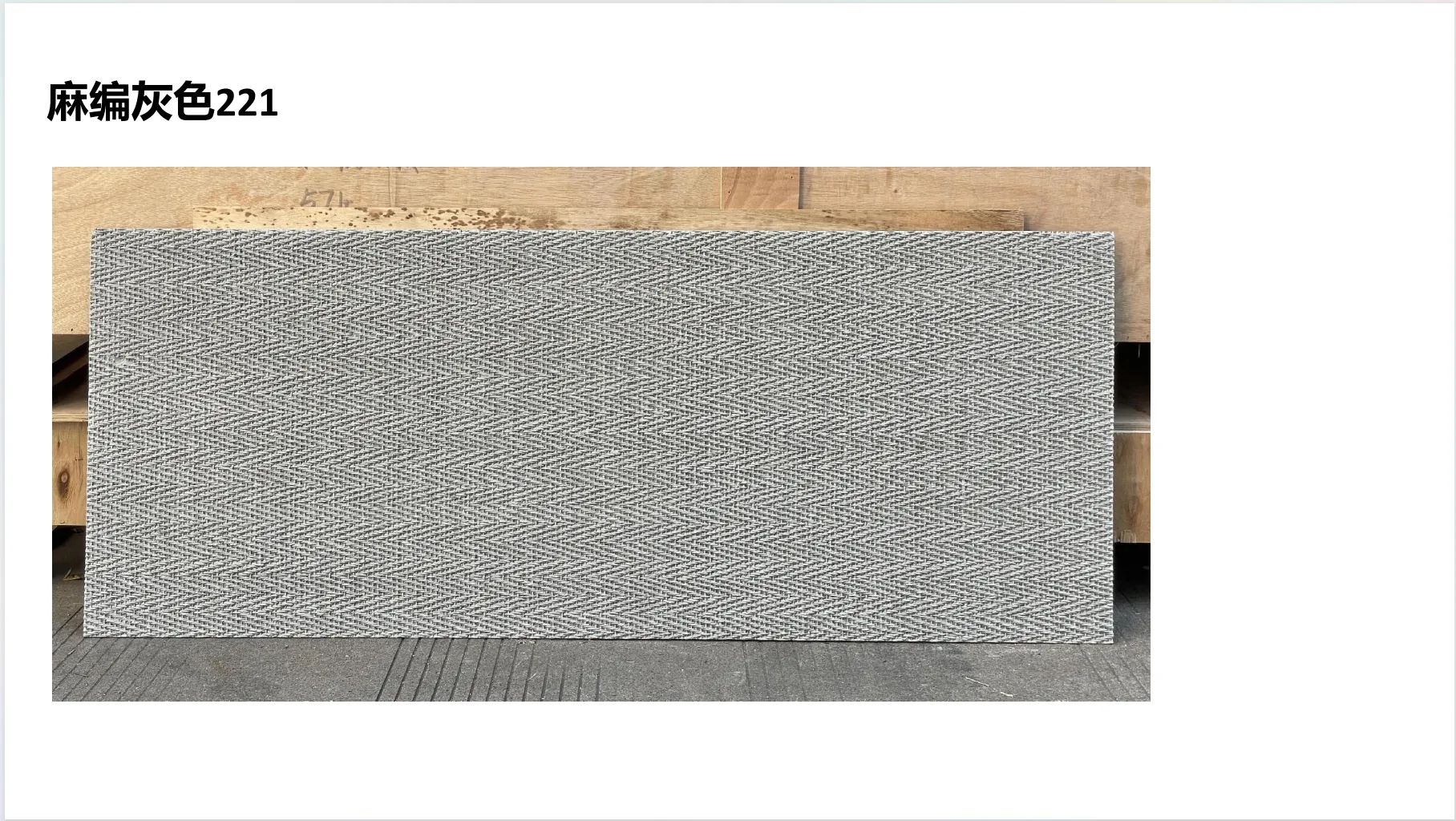
| Weaving Real Photos Collection | Cementitious base with textile fibers | Multi-layer photo weaving to mimic thread patterns | Textural depth (e.g., weaving (khaki) , bamboo mat board ) | Accent walls, headboards, restaurant booths |
| Wood Concrete Board | Cement + wood fiber composite | Photo-realistic wood grain embedding | Rustic warmth (e.g., wood concrete board real photos of oak, pine) | Flooring, countertops, outdoor patios |
Real stone is stunning, but it's heavy, expensive, and hard to install—especially in tight spaces or on curved surfaces. mcm flexible stone solves that. Its cement-polymer blend weighs a fraction of real stone, and because it's flexible, it can wrap around columns, follow curved walls, or even be used as a backsplash in a kitchen with odd angles. The real magic, though, is in the travertine real photos and stone imagery woven into it. Want the look of travertine (starry blue) (with those signature pockmarks and warm hues) in your bathroom? Now you can, without worrying about water damage or the cost of importing real travertine. It's stone, reimagined.
Textiles add warmth to any space, but fabric on walls or countertops? Not exactly practical. Enter MCM's weaving real photos collection. By embedding high-res images of woven mats, baskets, or even tapestries into a cementitious base, they've created a material that looks like a cozy textile but stands up to spills, scratches, and heavy use. Imagine a restaurant booth with weaving (khaki) imagery—patrons can run their hands over it and feel the "texture" of the weave, but the material wipes clean with a damp cloth. It's the best of both worlds: softness in look, toughness in function.
Let's be real—design is important, but if a material looks great but falls apart after a year, it's not worth it. The beauty of photo-woven modified cementitious materials is that they're as practical as they are pretty. Take wood concrete board real photos , for example. Real wood floors scratch, warp, and need refinishing every few years. But wood concrete board? It's water-resistant (so no warping in bathrooms or kitchens), scratch-resistant (pets and kids beware… or not), and doesn't fade in sunlight. Plus, it's often made with recycled materials, making it a greener choice than importing exotic woods or stones.
Installation is another win. Traditional materials like marble or slate require heavy machinery and skilled labor to install. Photo-woven materials like mcm flexible stone are lightweight enough for two people to carry and can be cut with standard tools. This cuts down on installation time (and costs) significantly. For businesses, that means less downtime during renovations. For homeowners, it means a weekend DIY project is actually feasible.
So, where do we go from here? As technology advances, the possibilities are endless. We're already seeing 3D printing take center stage with the mcm 3d printing series , allowing for even more intricate textures—think wave panel designs that mimic ocean swells, or star gravel surfaces that look like a night sky. High-dynamic-range (HDR) photography is making images even more lifelike, capturing the way light shifts on a surface throughout the day. And sustainability is a big focus: companies are experimenting with plant-based inks for photos and recycled aggregates in the cementitious matrix to reduce environmental impact.
There's also a push for customization. Imagine uploading a photo of your favorite beach, and having it woven into a backsplash for your home. Or a hotel chain using historical pathfinders stone imagery to tell the story of the local area. The future isn't just about replicating nature—it's about creating materials that tell your story.
At the end of the day, the science of weaving real photos into modified cementitious materials isn't just about technology—it's about connection. It's about making spaces that don't just serve a function, but mean something. Whether it's mcm flexible stone with the look of ancient travertine, or weaving real photos that bring the comfort of textiles to commercial spaces, these materials are redefining what "building materials" can be. They're not just products—they're storytellers, and in a world that often feels disconnected, that's a pretty powerful thing.
So the next time you're in a space that makes you pause and smile, take a closer look. Chances are, there's a photo-woven material working behind the scenes—turning cement and polymers into something truly human.
Recommend Products












