

How a modern composite material is redefining durability in architecture's harshest environments
Every building has a secret struggle. It's not against time alone, but against the unrelenting forces of nature—salt-laden winds that claw at coastal facades, desert sun that bakes surfaces to blistering temperatures, freezing rains that seep into cracks and expand, turning tiny flaws into gaping wounds. For architects and developers, choosing the wrong material in these battles isn't just a financial loss; it's a betrayal of the structure's purpose—to stand firm, to shelter, to endure.
Walk along the coast of any storm-prone city, and you'll see the casualties: natural travertine (starry blue) panels peeling like sunburned skin, their once-vibrant veins faded to ghosts by salt and UV rays. In mountain towns, fair-faced concrete walls crack and spall, victims of freeze-thaw cycles that turn water into ice, and ice into wrecking balls. Even in arid deserts, traditional rammed earth board (gradient) can shrink and warp under relentless heat, leaving buildings looking worn before their time.
These failures aren't just cosmetic. They compromise structural integrity, drive up maintenance costs, and shorten a building's lifespan. But what if there was a material that didn't just resist the elements, but thrived in them? Enter Fine Line Stone (White) MCM—a modified composite material panel that's rewriting the rules of durability in extreme weather.
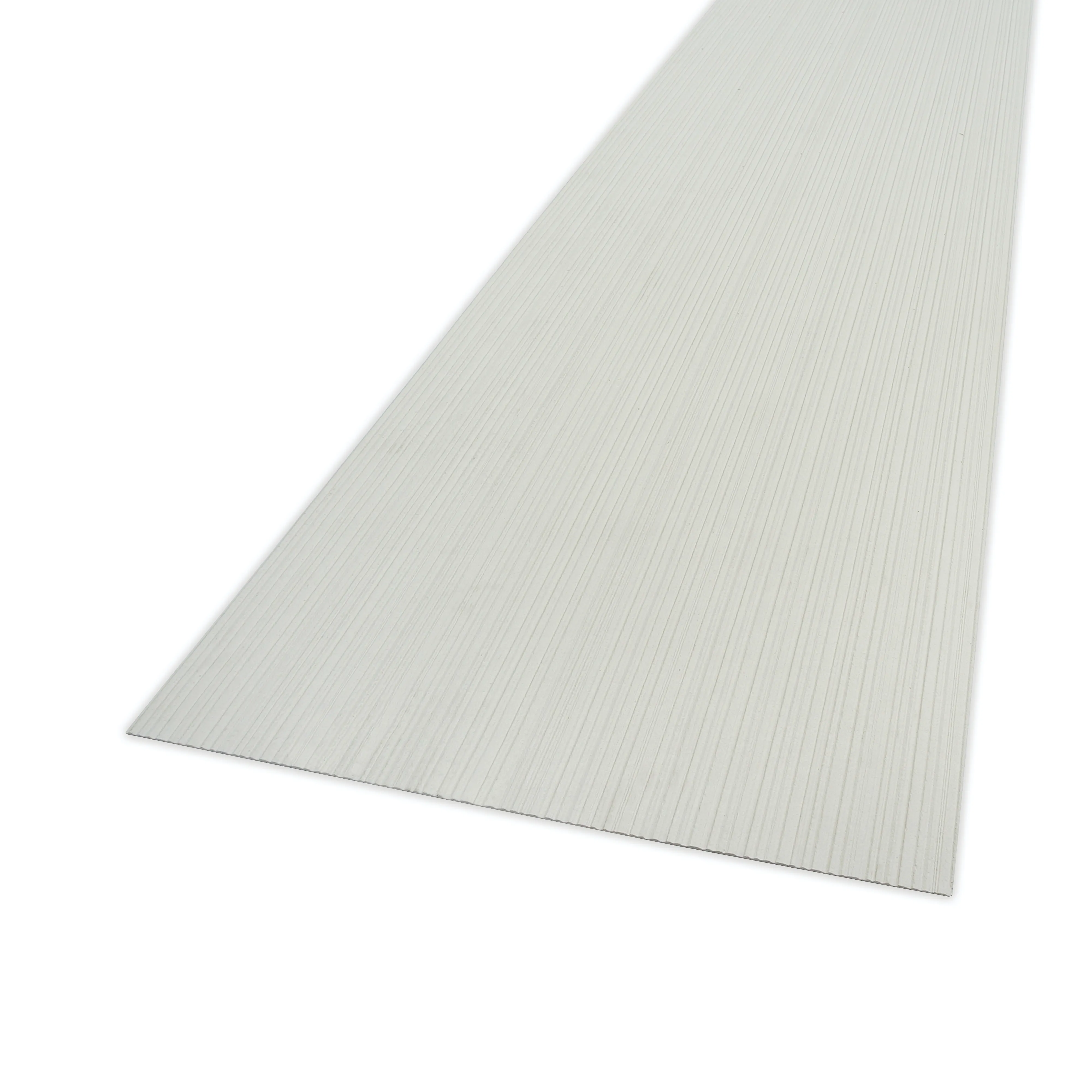
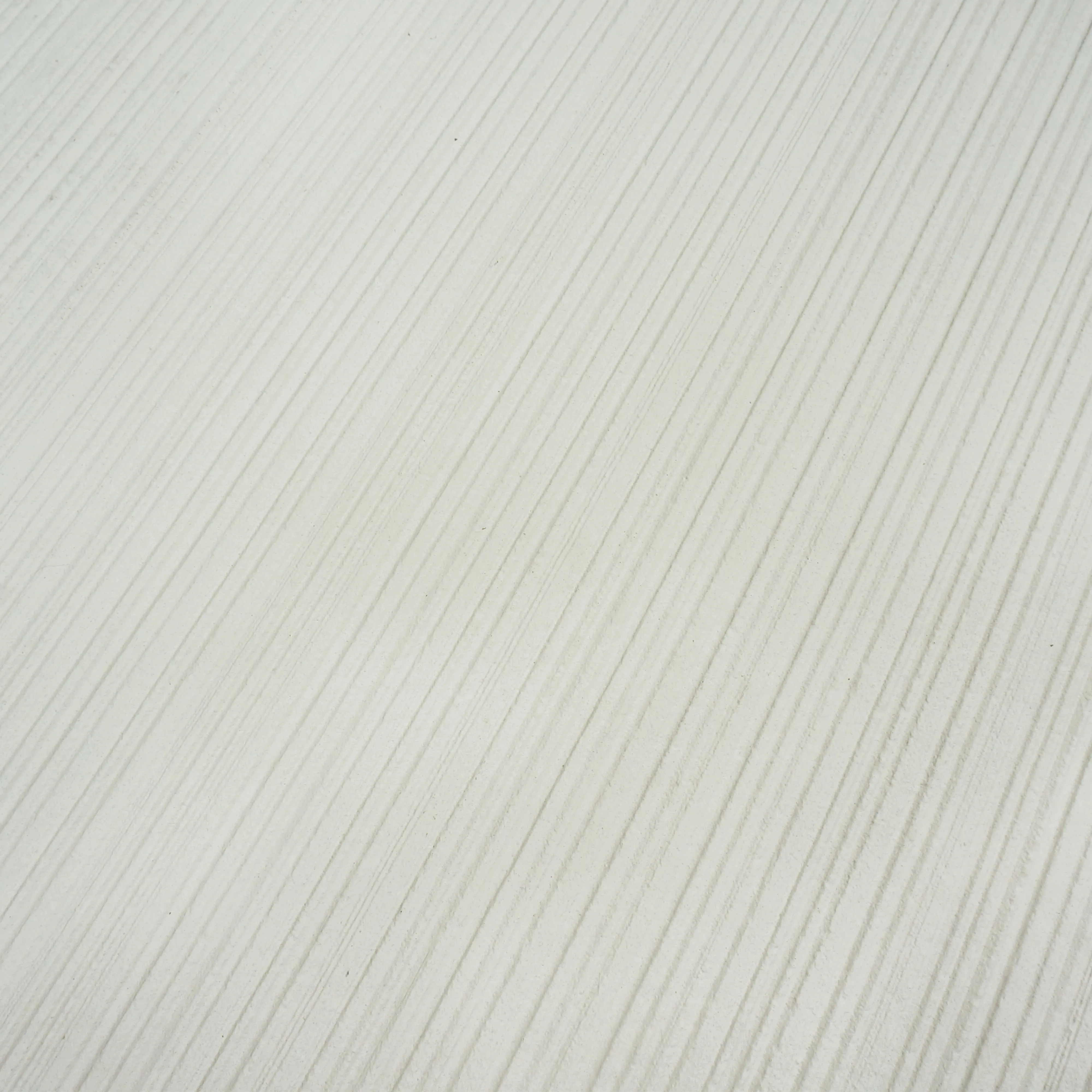
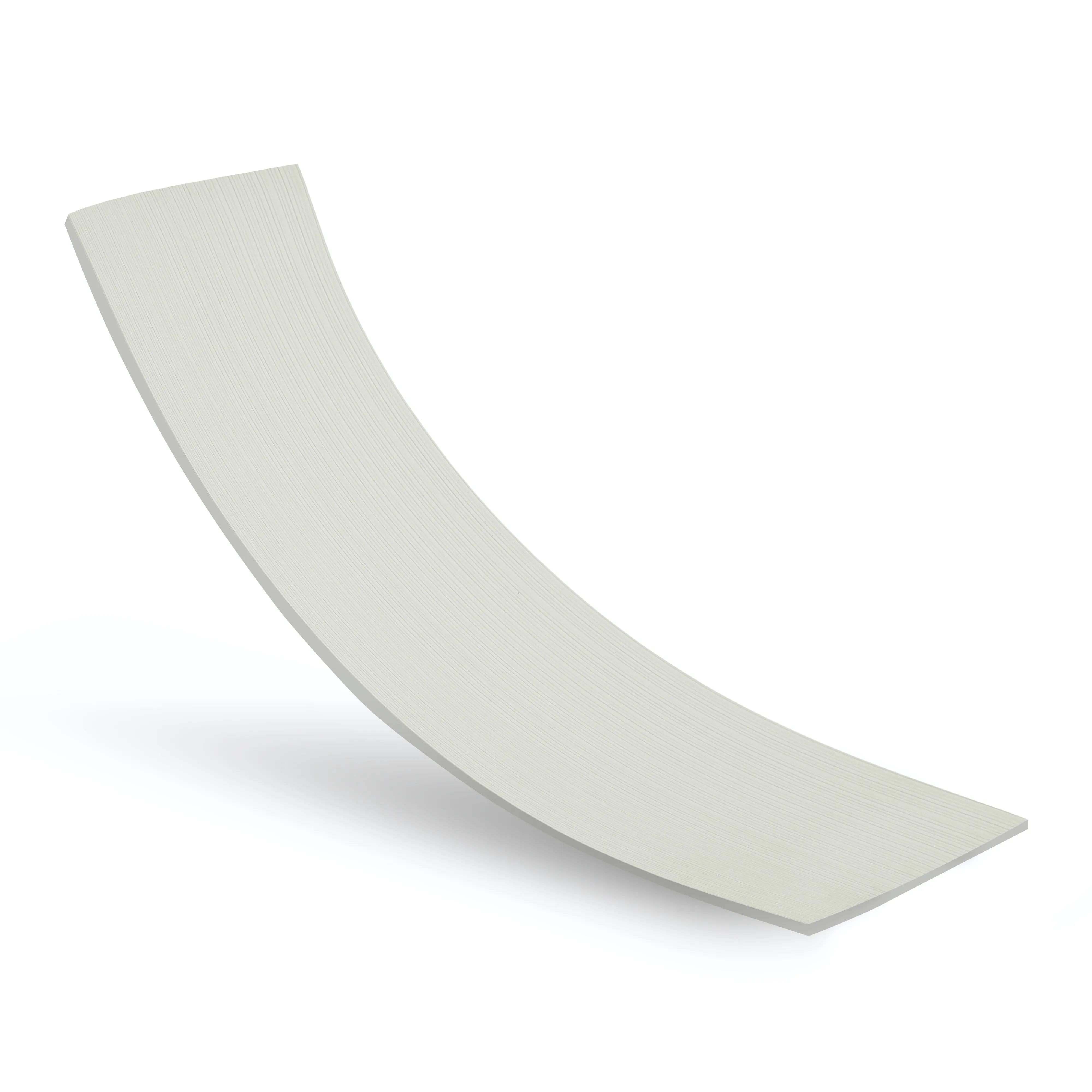
At first glance, Fine Line Stone (White) could be mistaken for a high-end natural stone. Its surface carries the subtle, elegant veining of fine marble, with a soft white backdrop that shifts in the light—warm and inviting, yet crisp and modern. But touch it, and you'll feel the difference: it's lighter than natural stone, with a slight flexibility that feels almost organic, like a material that bends with the elements rather than fighting them.
That flexibility is no accident. Unlike rigid materials like natural granite or even fair-faced concrete, Fine Line Stone (White) is part of the MCM flexible stone family—a category of modified composite material panels engineered to combine the best of natural aesthetics with the resilience of modern polymers. Its core is a blend of natural mineral aggregates (think crushed stone, quartz, and marble dust) bound together by a high-performance polymer matrix. This hybrid composition gives it two critical advantages: it's lightweight (about 1/5 the weight of natural stone) and it bends without breaking—a game-changer in environments where thermal expansion and contraction would crack traditional materials.
"We used to avoid specifying large-format stone panels on high-rise exteriors because the weight required beefing up the structure, and thermal movement always led to cracking over time," says Maria Gonzalez, lead architect at Coastal Designs, a firm specializing in beachfront properties. "Fine Line Stone (White) changed that. Its flexibility means it can expand and contract with temperature swings without stressing the building's frame. And because it's so light, we could cover entire facades without adding unnecessary load."
But flexibility is just the start. To understand why this material dominates in extreme weather, we need to dig deeper into its molecular makeup—and the rigorous testing it undergoes before ever reaching a construction site.
Imagine a material so resistant to water that even after 1,000 hours of submersion, it absorbs less than 0.5% of its weight in moisture. Or one that can withstand temperatures from -40°F to 180°F without warping, fading, or losing strength. That's not marketing hyperbole—that's the reality of Fine Line Stone (White) MCM, thanks to three key engineering breakthroughs:
Water is the enemy of most building materials. It seeps into pores, freezes, expands, and fractures stone. It dissolves minerals in concrete, leading to spalling. It rots wood and breeds mold. Fine Line Stone (White) fights back with a dual-layer defense: a dense polymer matrix that leaves minimal pores, and a surface treatment that repels water like a duck's back. In lab tests, it outperforms even lunar peak silvery MCM (another popular MCM variant) in water resistance, with a absorption rate of just 0.3%—compared to 3-5% for natural travertine and 8-10% for traditional rammed earth.
In the desert, daytime temperatures can soar to 120°F, while nights plummet to 40°F—a swing of 80 degrees in hours. Natural stone, rigid and unyielding, expands and contracts until it cracks. Fine Line Stone (White), with its polymer binder, has a thermal expansion coefficient similar to the aluminum framing it's mounted on, meaning both move together. "We installed it on a desert resort in Arizona where the previous facade—natural limestone—needed replacing every 5 years due to thermal cracking," says James Chen, project manager at Desert Builders. "Five years later, the Fine Line panels still look brand new. No cracks, no warping, no fading. Even the color hasn't shifted, which is unheard of for white materials in that sun."
Salt spray, acid rain, and UV radiation are silent killers. Salt breaks down metal fasteners and eats away at stone; UV rays degrade polymers and bleach colors. Fine Line Stone (White)'s polymer matrix is infused with UV stabilizers and corrosion inhibitors, while its mineral aggregates are naturally resistant to chemical attack. In salt spray tests (simulating 10 years of coastal exposure), it showed zero signs of corrosion or discoloration—unlike travertine (starry blue), which began to pit and fade after just 500 hours.
Lab tests are impressive, but real buildings tell the truest story. Let's look at three projects where Fine Line Stone (White) MCM faced extreme conditions—and emerged unscathed.
The Seaside Haven is a 12-story hotel on Florida's Atlantic coast, where hurricane-force winds, salt spray, and 90% humidity are annual realities. When it was built in 2019, the developers chose Fine Line Stone (White) for the exterior cladding, replacing the original plan for travertine (starry blue) after seeing test data. "We were skeptical at first—how could something so light stand up to a hurricane?" admits project engineer Raj Patel. "But after Hurricane Ian hit in 2022, we had our answer. The hotel's facade was unscratched, while neighboring buildings with natural stone panels had dozens blown off. Even the caulking around the Fine Line panels held—no water intrusion, no mold, nothing."
At 8,500 feet, the Alpine Lodge faces brutal winters: temperatures as low as -30°F, heavy snow, and freeze-thaw cycles that turn rain into ice inside wall cavities. The lodge's previous exterior—fair-faced concrete—needed patching every spring due to spalling. In 2020, they reclad with Fine Line Stone (White). "Two winters later, and there's not a single crack," says lodge manager Sarah Wells. "Even where ice dams formed, the panels didn't absorb water. We used to spend $20,000 a year on concrete repairs; now we spend nothing. Plus, the white color reflects sunlight, which helps keep snow from melting and refreezing on the roof. It's like the material was designed for this climate."
In the Sonoran Desert, summer temperatures regularly hit 115°F, and UV radiation is intense enough to fade paint in months. The Desert Mirage Resort used Fine Line Stone (White) for its poolside cabanas and exterior walls. "We were worried the white would yellow, but five years later, it's as bright as day one," says resort owner Miguel Torres. "And unlike the rammed earth board (gradient) we used on the guest rooms, it doesn't warp in the heat. Guests comment on how fresh the cabanas look—no cracked walls, no faded surfaces. It was a premium upfront, but it's paid for itself in maintenance savings."
Curious how Fine Line Stone (White) MCM measures up against traditional and other composite materials? The table below compares key performance metrics from independent lab tests:
| Metric | Fine Line Stone (White) MCM | Fair-Faced Concrete | Natural Travertine |
|---|---|---|---|
| Water Absorption (24hr submersion) | 0.3% | 6-8% | 3-5% |
| Thermal Expansion Coefficient | 25-30 x 10⁻⁶/°C (matches aluminum framing) | 10-12 x 10⁻⁶/°C (rigid, prone to cracking) | 5-8 x 10⁻⁶/°C (rigid, prone to cracking) |
| Salt Spray Resistance (1,000 hours) | No corrosion or discoloration | Minor pitting, efflorescence | Significant pitting and fading |
| Impact Resistance (ASTM D4226) | No cracking at 50 ft-lbs | Cracks at 20 ft-lbs | Cracks at 15 ft-lbs |
| Weight (psf) | 1.5-2.0 psf | 12-15 psf | 8-10 psf |
Strength and resilience are critical, but for architects, beauty matters just as much. Fine Line Stone (White) MCM doesn't just survive extreme weather—it does so while looking stunning. Its surface mimics the subtle veining of natural marble, with a matte finish that softens harsh light (ideal for bright desert sun) and a crisp white base that complements any design palette. Unlike lunar peak silvery MCM (which has a metallic sheen) or rammed earth board (gradient) (which leans rustic), Fine Line Stone (White) is a chameleon—it works in modern high-rises, coastal villas, mountain lodges, and even historic renovations where a clean, timeless look is needed.
"We used it on a boutique hotel in Napa Valley, pairing it with wood accents and large windows," says architect Gonzalez. "The white stone reflects the vineyard light beautifully, and because it's so lightweight, we could cantilever panels over the terrace without structural issues. Guests think it's natural marble—until we tell them it's MCM. Then they're shocked it can handle the valley's summer heat and winter rains."
And it's not just about color. Fine Line Stone (White) comes in large-format panels (up to 4x8 feet), reducing grout lines for a seamless look, and it can be cut into custom shapes for unique design elements—arches, curves, even 3D accents. For projects where texture matters, it pairs beautifully with other MCM lines, like the linear travertine (claybank) for warm contrast or the rough granite stone (medium grey) for a bold, industrial edge.
Buildings are more than structures—they're legacy. They outlive their designers, their builders, their first occupants. Choosing materials that can stand the test of time isn't just practical; it's an act of responsibility. Fine Line Stone (White) MCM represents a shift in how we think about construction: durability doesn't have to mean sacrificing beauty, and lightweight doesn't have to mean fragile.
In a world where climate extremes are becoming the norm—where coastal cities face rising seas, deserts grow hotter, and mountain regions see more freeze-thaw cycles—materials like this aren't just innovative. They're essential. They let us build buildings that don't just exist in harsh environments, but enhance them—standing tall, looking beautiful, and requiring little more than a hose to stay that way.
So the next time you walk past a building that looks as fresh as the day it was built, even after years of battling the elements, take a closer look. It might just be Fine Line Stone (White) MCM—proving that in the fight against nature, the best offense is a good defense.
Recommend Products












