
In the quiet hum of a construction site, where drills whir and hammers clang, there's a question that weighs on the minds of architects, builders, and even passersby these days: What price does our built environment exact on the planet? It's no secret that buildings are major players in global carbon emissions—accounting for nearly 40% of energy-related CO2 output, according to the UN Environment Programme. But as the world races to cut emissions, the spotlight is shifting from just how buildings use energy to how they're made . Enter the era of low-carbon building materials: substances that don't just stand the test of time, but do so with a lighter footprint on our climate. Today, we're diving into one such material—Glacial Slate—and pitting it against traditional options like fair-faced concrete and even some newer contenders, to see if it truly lives up to the hype as a sustainable choice.
Before we get into the nitty-gritty of slates and concretes, let's talk about why "carbon footprint" has become a buzzword in construction circles. Simply put, a material's carbon footprint measures the total greenhouse gas emissions released during its lifecycle—from extraction and manufacturing to transportation and installation. For decades, the industry focused on operational carbon (the energy used to heat, cool, and power buildings). But today, experts are sounding the alarm about embodied carbon —the emissions locked into materials before a building even opens its doors. In some cases, embodied carbon can make up 50% of a building's total emissions over its lifetime, especially for structures with short lifespans. For architects like Maya Chen, who leads sustainable design at a Boston-based firm, this shift is personal.
That's where materials like Glacial Slate come in. Mined from ancient, slow-formed stone deposits, it's gaining traction as a low-embodied-carbon alternative. But is it really better than tried-and-true options? Let's break it down.
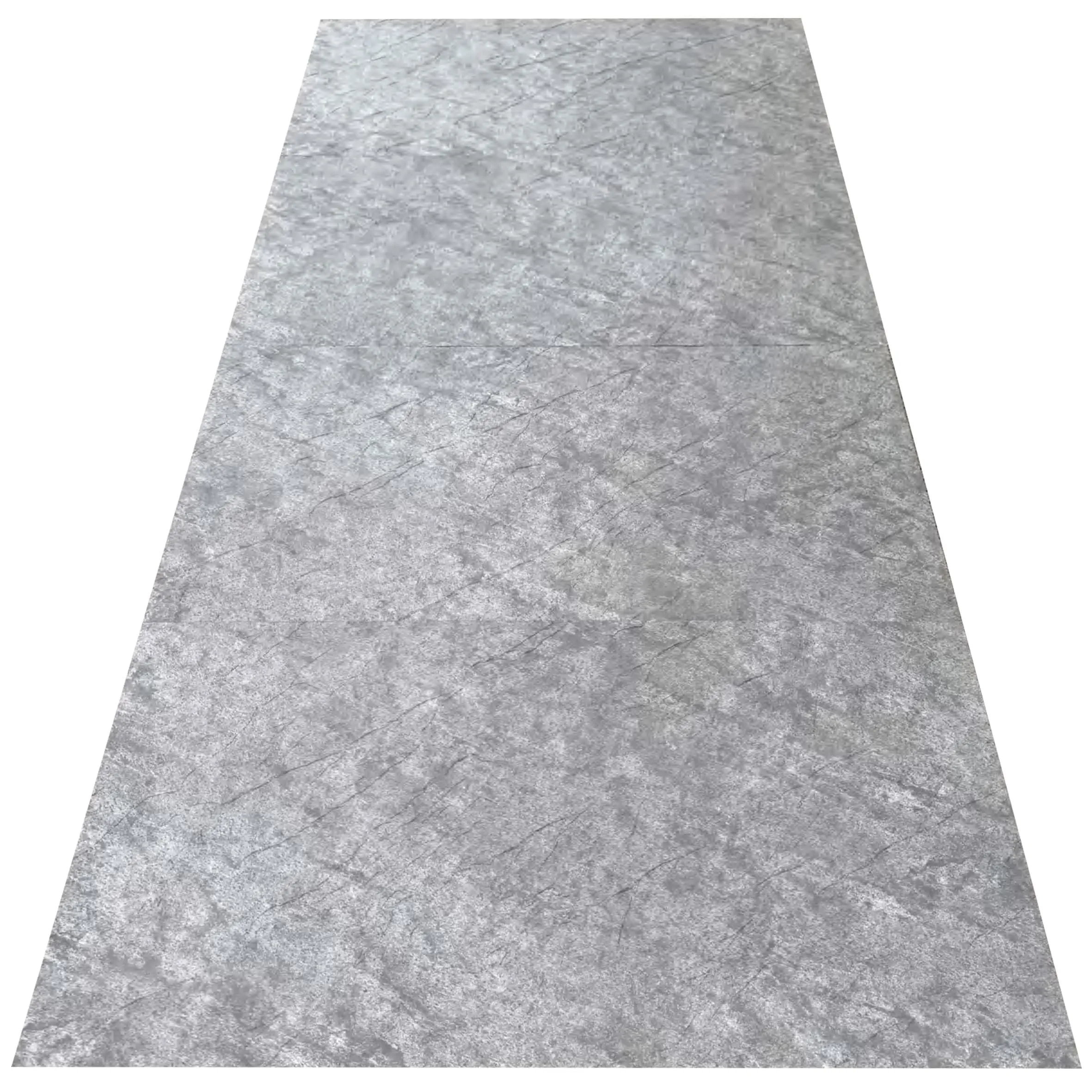
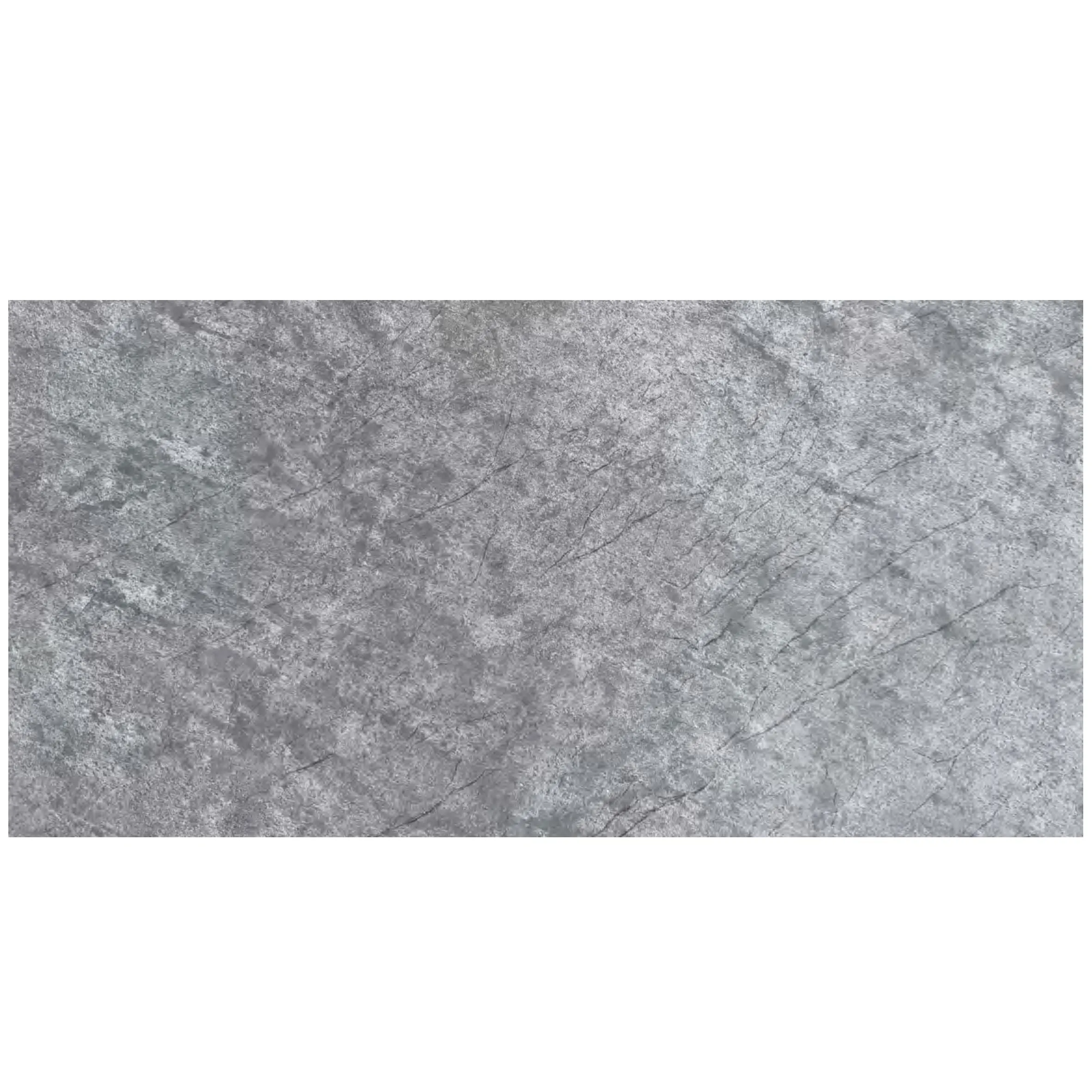
Glacial Slate isn't just a pretty face. Formed over millions of years by the pressure of glacial ice and mineral-rich groundwater, it's a metamorphic rock with a unique texture—think layered, matte surfaces that shift from deep grays to silvery blues, like a frozen lake at dawn. But its beauty is only part of the appeal. What sets it apart is how it's sourced and processed.
Unlike limestone or granite, which often require heavy machinery and energy-intensive cutting, Glacial Slate is typically quarried from deposits where the stone naturally splits into thin, usable sheets. This "natural cleavage" reduces the need for excessive grinding or polishing, slashing energy use during processing. "We're essentially working with the earth's own handiwork," says geologist Dr. James Lin, who studies sustainable quarrying practices. "In optimal conditions, extracting Glacial Slate emits about 15–20 kg of CO2e per square meter. Compare that to the 80–100 kg for standard concrete, and the difference is stark."
But it's not just extraction. Glacial Slate's durability adds another layer of sustainability. A well-installed slate facade can last 100+ years, reducing the need for replacements (and the emissions that come with manufacturing new materials). Take the Riverview Community Center in Portland, Oregon, which wrapped its exterior in Glacial Slate in 2018. "We calculated that over a 50-year lifespan, the embodied carbon savings alone would offset the cost of the material," says project manager Eliza Torres. "Plus, the community loves how it ages—those silvery blues get richer over time, like a well-worn book."
To truly appreciate Glacial Slate, let's stack it against two common traditional materials: fair-faced concrete and travertine (a popular limestone variant). Both have their merits—concrete is strong and versatile; travertine offers a timeless, earthy aesthetic—but their carbon footprints tell a different story.
Fair-faced concrete—those smooth, unplastered walls you see in modernist buildings—has long been a go-to for its industrial chic and low maintenance. But its Achilles' heel is cement. Producing cement, the binding agent in concrete, releases massive amounts of CO2: for every ton of cement, roughly 0.8 tons of CO2 are emitted. When you factor in quarrying sand and gravel, mixing, and transportation, the carbon footprint of fair-faced concrete clocks in at 80–100 kg CO2e per square meter. "It's the backbone of construction, but it's also a climate culprit," admits civil engineer Raj Patel, who specializes in low-carbon concrete alternatives. "We're getting better with additives like fly ash or carbon capture, but even 'green concrete' struggles to dip below 50 kg CO2e/m²."
Travertine, with its porous, honeycomb-like texture, is a staple in luxury construction—think hotel lobbies or high-end homes. Variants like Travertine (Starry Green), with its subtle green veining, are particularly prized. But here's the catch: travertine quarries, often located in regions like Italy or Turkey, require heavy machinery to extract large blocks, which are then cut, polished, and shipped globally. The result? A carbon footprint of 40–60 kg CO2e per square meter, driven largely by transportation and processing. "A slab of Travertine (Starry Green) might travel 5,000 miles to reach a job site in Chicago," explains Torres. "That shipping alone can add 15 kg to its footprint. Suddenly, that 'natural' stone doesn't feel so eco-friendly."
To visualize the differences, let's compare Glacial Slate with fair-faced concrete, travertine, and another rising star: MCM Flexible Stone, a lightweight, engineered material made from recycled stone and polymers.
| Material | Carbon Footprint (kg CO2e/m²) | Durability (Years) | Recyclability | Installation Ease | Cost (Relative) |
|---|---|---|---|---|---|
| Glacial Slate | 15–20 | 100+ | High (crushed for aggregate) | Moderate (requires skilled labor) | Medium-High |
| Fair-Faced Concrete | 80–100 | 50–70 | Low (recyclable but rarely done) | High (pour-in-place) | Low-Medium |
| Travertine (Starry Green) | 40–60 | 80–100 | Medium (crushed for decorative use) | Moderate (heavy slabs) | High |
| MCM Flexible Stone | 10–15 | 30–50 | High (recyclable polymers) | High (lightweight, flexible) | Medium |
At a glance, Glacial Slate and MCM Flexible Stone lead the pack in low carbon. But MCM, with its 10–15 kg footprint, edges out even Glacial Slate. So why not just default to MCM?
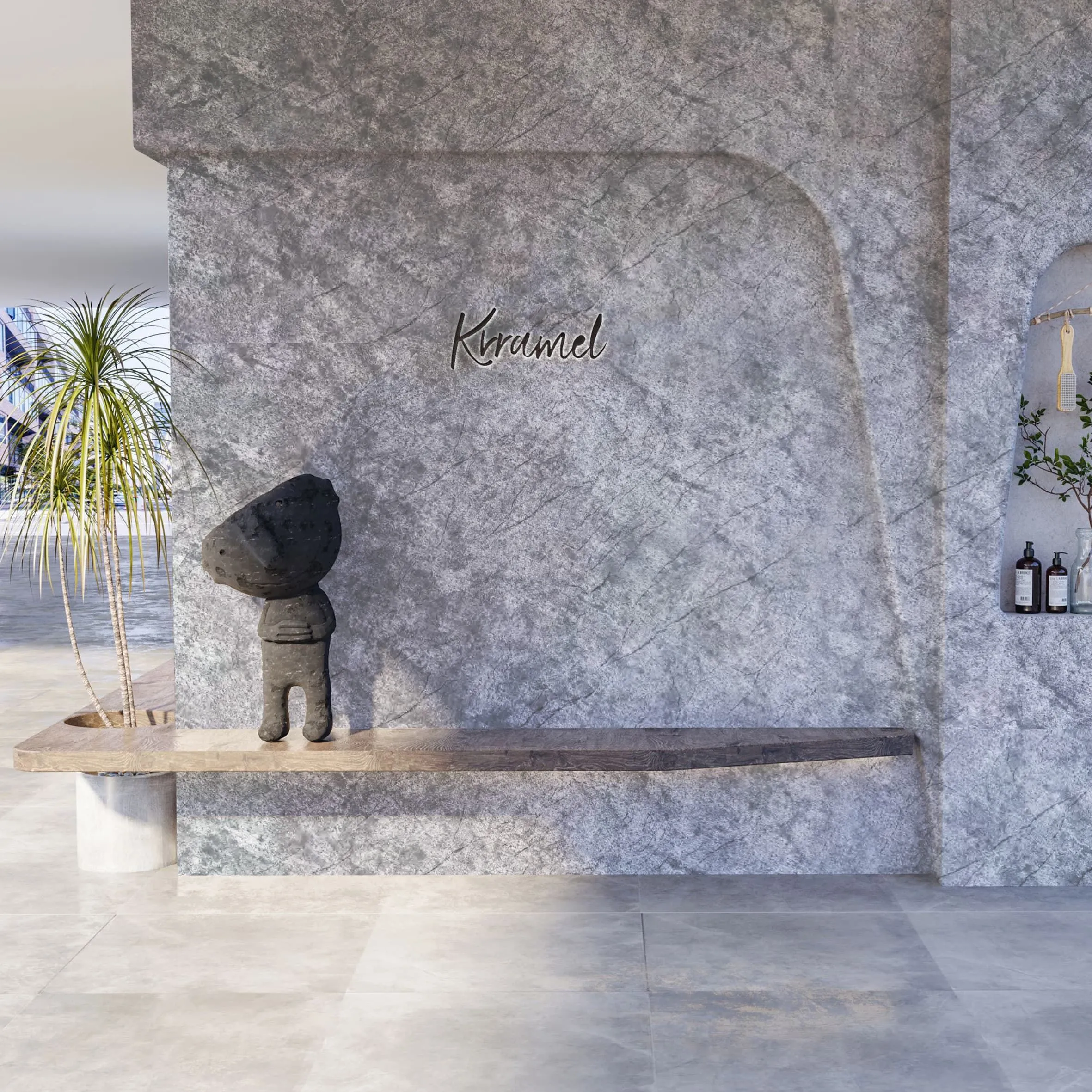
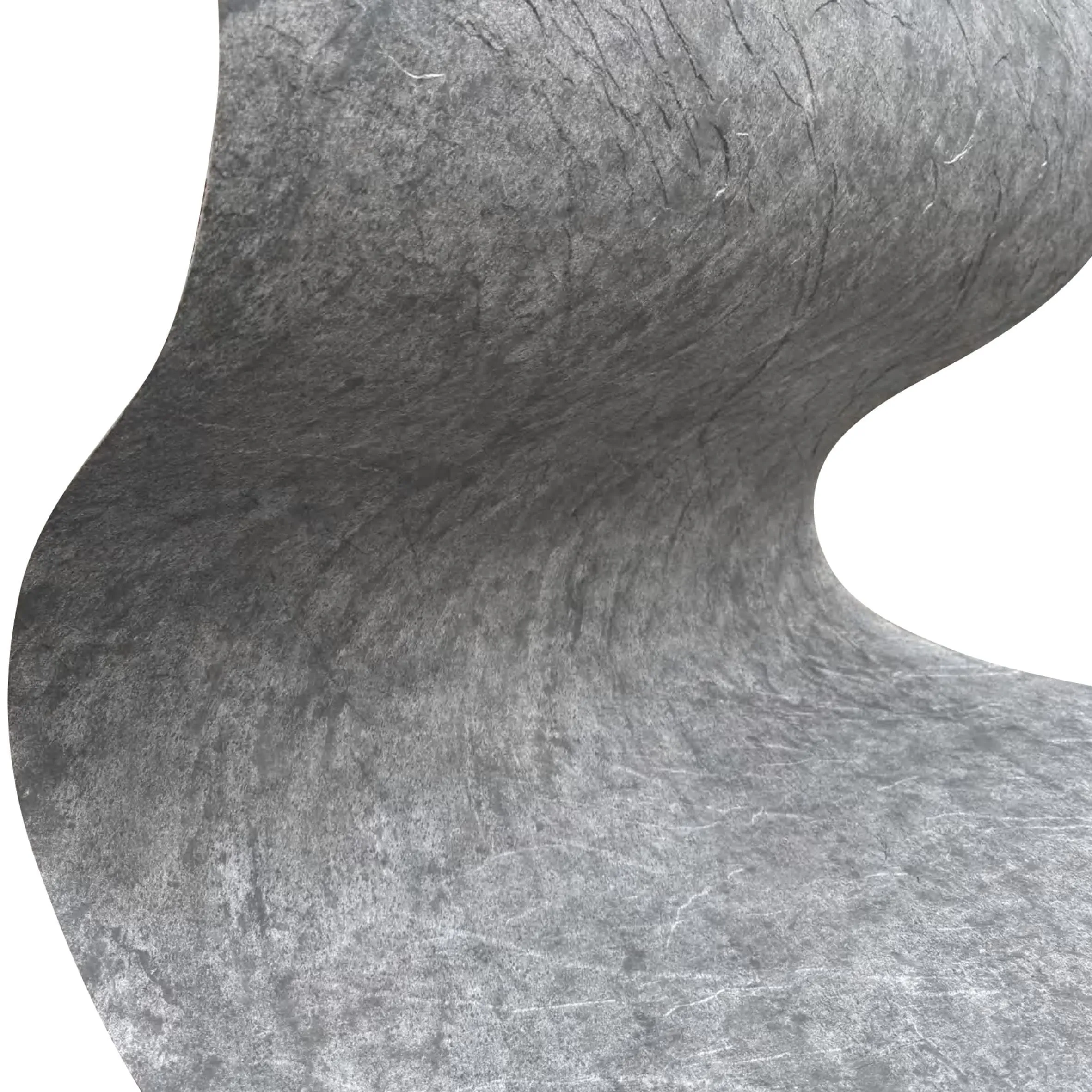
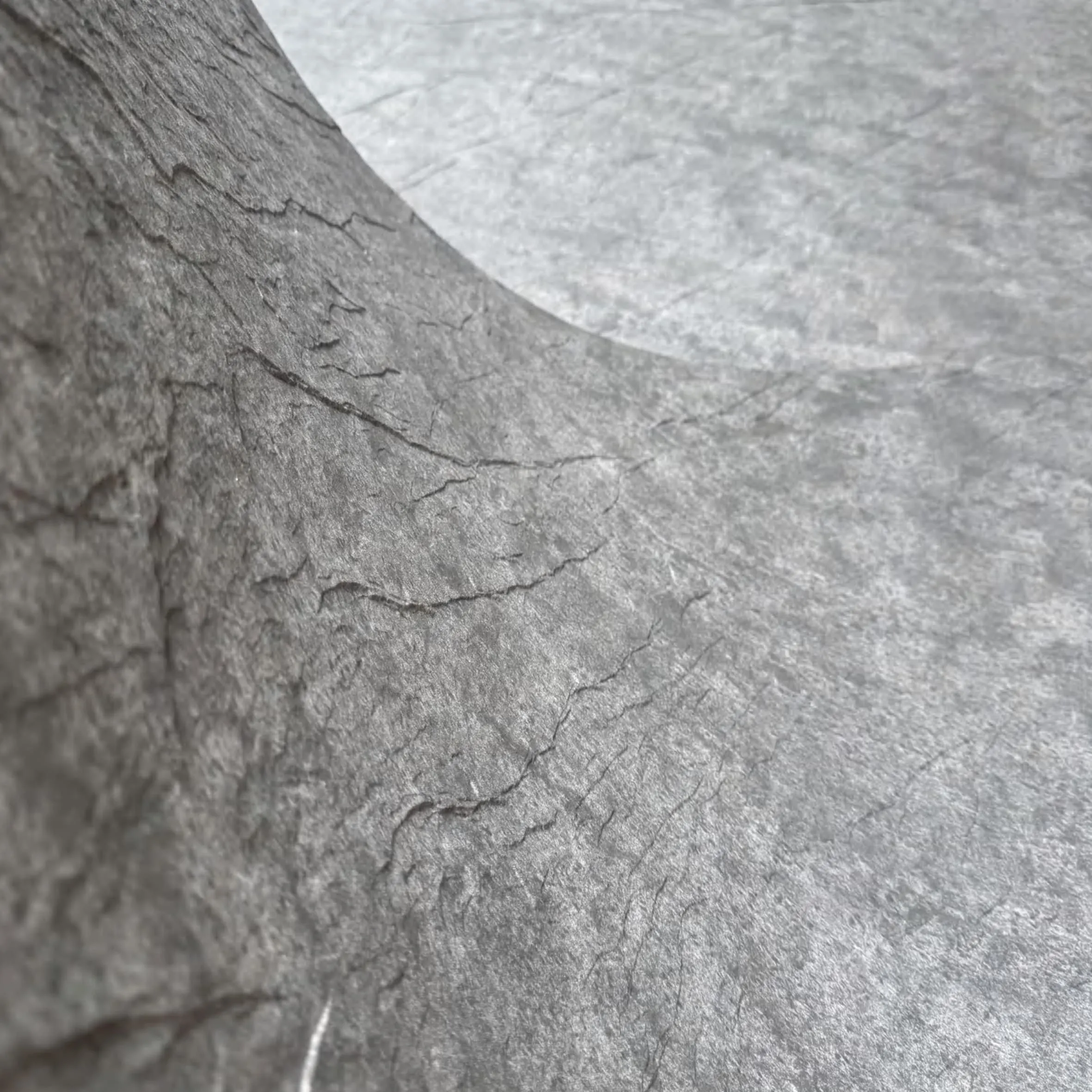
MCM Flexible Stone is a poster child for engineered sustainability. Made by blending recycled stone dust, glass fibers, and low-VOC polymers, it's thin (as little as 4mm thick), lightweight (5–8 kg/m²), and flexible enough to bend around curves. For architects, that means fewer support structures and easier installation—no need for heavy cranes or reinforced walls. "We used MCM Flexible Stone on a retail project in Seattle last year," says Chen. "Because it's so light, we cut transportation emissions by 30% compared to traditional stone. And since it's made from waste stone, we're diverting material from landfills."
But MCM isn't perfect. Its lifespan, while decent (30–50 years), is shorter than Glacial Slate's century-plus durability. For historic buildings or projects aiming for longevity, that's a trade-off. "If you're building a community center that's meant to last 100 years, MCM might need replacement halfway through," Torres notes. "Glacial Slate, on the other hand, could outlive the building itself."
Carbon footprint isn't the only metric that matters. Let's unpack other ways Glacial Slate and MCM Flexible Stone shine:
A Glacial Slate facade that lasts 100 years means fewer replacements, less demolition debris, and lower demand for new materials. In contrast, concrete structures often require repairs or resurfacing every 20–30 years. "Waste is a silent emissions driver," Patel points out. "Every time we tear down a wall, we're sending tons of material to landfills and manufacturing new stuff to replace it. Durable materials break that cycle."
Stone, by nature, has good thermal mass—it absorbs heat during the day and releases it at night, reducing the need for heating and cooling. Glacial Slate, with its dense composition, excels here. A study by the University of British Columbia found that buildings with stone exteriors used 15–20% less energy for temperature control compared to concrete ones. "It's a double win," Chen says. "Lower embodied carbon upfront, and lower operational carbon for decades."
Let's be honest: sustainability sells, but so does beauty. Glacial Slate's unique texture and MCM Flexible Stone's customizable designs (it can mimic everything from wood to marble) make them attractive to clients. "Ten years ago, I had to convince clients to choose sustainable materials," Chen laughs. "Now, they're asking for Glacial Slate or MCM by name. They want their buildings to tell a story—one about responsibility and style."
Numbers and tables are great, but let's look at how these materials perform in the wild.
In 2021, the Nordic Cultural Center in Oslo opted for Glacial Slate for its exterior cladding. The 12,000 m² building, which hosts art exhibitions and community events, aimed for net-zero emissions. By choosing Glacial Slate (sourced from a quarry 200 km away) over imported travertine, the project cut embodied carbon by 45%. "We calculated that over 50 years, the slate would save 1,200 tons of CO2—equivalent to taking 260 cars off the road for a year," says project architect Lars Nilsen. "Plus, the locals love it. They say it looks like the fjords, frozen in stone."
For a 1920s warehouse conversion in Brooklyn, developers chose MCM Flexible Stone (in a wood-grain finish) to replace damaged brick walls. The lightweight material reduced the need for structural upgrades, cutting construction time by 20%. "We saved on labor and materials, and the embodied carbon was 70% lower than if we'd used traditional brick," says developer Mia Rodriguez. "The best part? Tenants keep commenting on how 'warm' the space feels—they can't believe it's not real wood."
Of course, no material is without challenges. Glacial Slate's availability is limited—it's only found in certain regions (Scandinavia, Canada, parts of the U.S. Pacific Northwest), which can drive up costs for projects far from quarries. MCM Flexible Stone, while innovative, is still pricier than concrete upfront, though proponents argue the savings in transportation and installation offset the cost.
Then there's industry inertia. "Old habits die hard," admits Torres. "Contractors who've used concrete for 30 years are hesitant to switch to something new, even if it's better. We need more education, more incentives—like tax breaks for low-carbon materials—to push the needle."
But the tide is turning. Governments are starting to take notice: the EU's new "Embodied Carbon Regulation" will require large buildings to report material emissions by 2026, and cities like San Francisco and London are offering green building certifications with bonus points for low-carbon materials. "Five years ago, I was an outlier talking about embodied carbon," Chen says. "Now, it's in every RFP. That's progress."
As we stand at the crossroads of climate action and urban growth, the materials we choose for our buildings are more than just construction supplies—they're statements about the future we want to build. Glacial Slate, with its ancient origins and low footprint, and MCM Flexible Stone, with its innovative, recycled composition, aren't just alternatives to traditional materials; they're proof that sustainability and beauty can coexist.
Is Glacial Slate the perfect material? No. But in a world where every kg of CO2 counts, it's a powerful tool in the fight against climate change. And as more architects, builders, and clients demand low-carbon options, we'll see even more innovation—materials that are stronger, more durable, and kinder to the planet.
So the next time you walk past a construction site, take a closer look at the walls going up. Are they made of materials that harm the planet, or heal it? The answer might just shape the skyline—and the climate—for generations to come.
Recommend Products












