
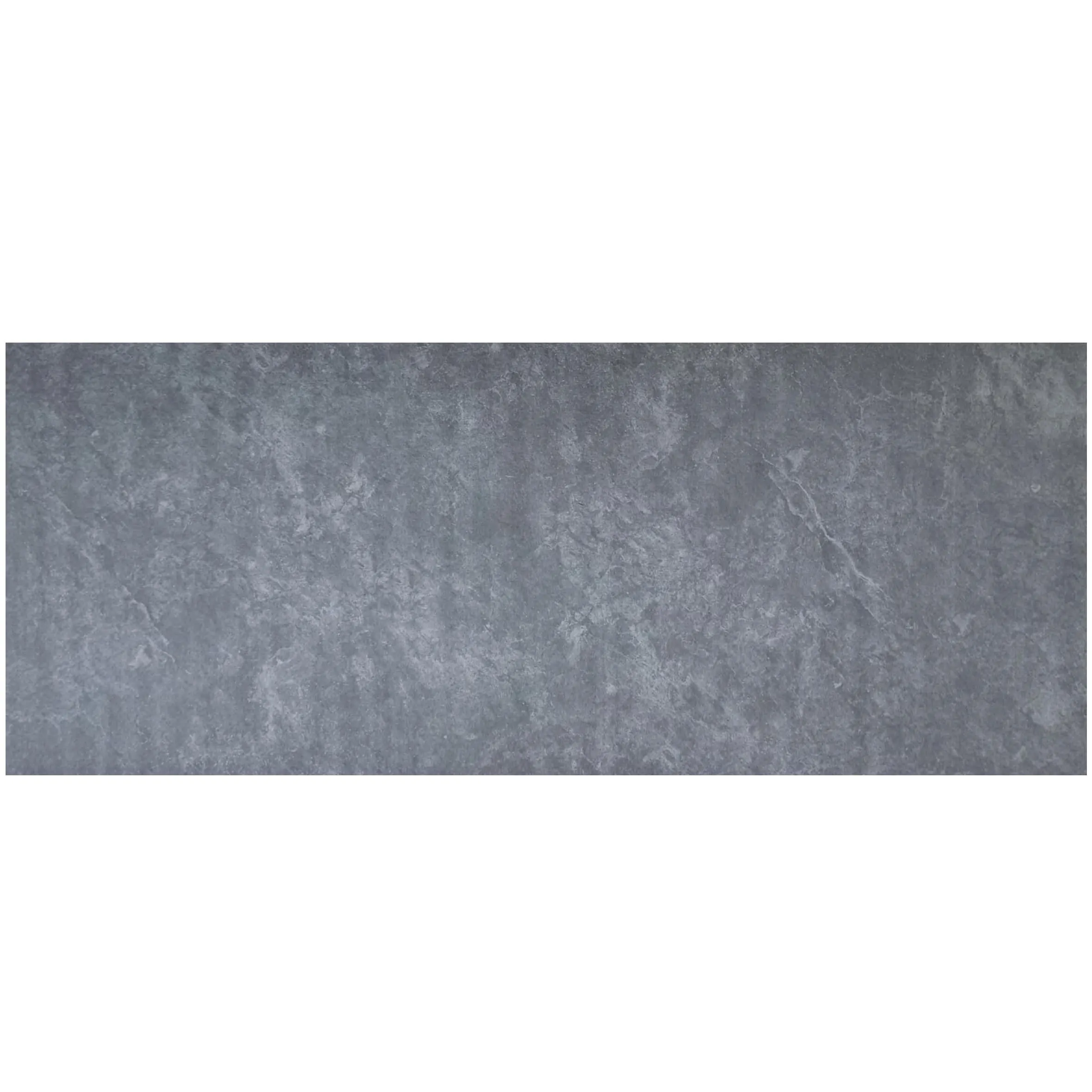
It was a quiet Tuesday morning in a sunlit design studio when I first encountered it. The slab lay across a wooden worktable, catching the light streaming through floor-to-ceiling windows. From across the room, it looked like a slab of storm clouds frozen mid-movement—deep, moody gray shot through with threads of silver and charcoal. But it wasn't until I crossed the room and let my palm rest on its surface that I understood: Marble Interstellar Gray isn't just a building material. It's a sensory experience, a story told in texture and light.
Let's start with the tactile. Run your fingers over polished marble, and it's smooth—almost slippery, like a sheet of glass. But Marble Interstellar Gray? It's different. Its finish is matte, not glossy, which means it doesn't repel the touch; it invites it. The surface has a subtle, sandpaper-like grain, not rough enough to catch on fabric, but just enough to make you pause. It's the kind of texture that makes you want to trace the veins with your (fingertips)—to follow the path of a silver streak as it winds through the gray, as if deciphering a secret message.
On a warm day, it stays cool to the touch, a gentle contrast to the heat outside. On a cold morning, it doesn't bite like stone often does; instead, it feels grounding, solid. I've heard designers joke that clients "test" it by pressing their cheek to the slab—a strange habit, but one that makes sense. There's an intimacy to it. It doesn't feel like a "product"; it feels like a piece of the earth, shaped by time, that's been invited into our homes.

If touch is its whisper, sight is its song. Marble Interstellar Gray's color isn't static—it's a chameleon. In harsh, direct light, the base gray deepens to near-charcoal, and the silver veins glow like moonlight on water. On overcast days, it softens, the gray turning into a misty haze, the veins fading into delicate shadows. At dusk, under warm incandescent bulbs, those same veins take on a golden tinge, as if someone sprinkled stardust across the surface.
The pattern is what truly sets it apart. Unlike the bold, uniform veining of some marbles, Marble Interstellar Gray's veins are irregular, almost organic. Some are thin, like pencil strokes; others are thicker, branching out like river deltas. There are no two slabs alike. One might have a cluster of silver streaks that look like a constellation; another could have a single, dramatic charcoal vein that cuts diagonally across the gray, like a shooting star. It's this unpredictability that makes it feel alive—as if the stone itself is still evolving, even after it's been quarried and polished.

Behind every slab of Marble Interstellar Gray is a balance of science and art. Quarried from select sites where the stone's natural patterns are most pronounced, each block is carefully cut to preserve the integrity of its veins. The finishing process is equally intentional: a light honing rather than a high polish, which (preserves) the stone's natural texture while making it more durable for everyday use. It's a choice that prioritizes character over perfection—and it shows.
I spoke with a master stonecutter once, who described working with Marble Interstellar Gray as "collaborating with the earth." "You don't force it into a shape," he said. "You listen to the veins. They'll tell you where to cut, how to angle the slab so the light hits it just right." That reverence for the stone's natural beauty is what gives each piece its soul. It's not just a slab of rock; it's a conversation between human hands and geological time.

Marble Interstellar Gray isn't just for "luxury" spaces—it's for spaces that want to feel intentional. In a home office, a desk made from this stone becomes more than a workspace; it's a surface that grounds you, its cool touch keeping you focused during long hours. In a bathroom, a shower wall clad in it turns a daily routine into a moment of calm, the gray and silver reflecting the steam like a foggy morning in the mountains. In a restaurant, a bar top made from it becomes a gathering point, where friends run their hands over its texture as they laugh, unconsciously connecting with the space around them.
Designers love pairing it with warm woods—oak or walnut—to balance its coolness, or with soft textiles like linen and wool to add layers of comfort. It works with both modern minimalism and cozy rustic styles, adapting to the mood of the room without losing its identity. "It's a team player," one interior designer told me. "But it's also the star. You can build a whole room around it, and it never feels overwhelming."

Marble Interstellar Gray isn't alone in its charm. It belongs to a family of marbles that each bring their own personality to a space. Here's how it compares to a few of its siblings:
| Marble Type | Color Palette | Pattern Character | Texture Profile | Ideal Space | Mood Evoked |
|---|---|---|---|---|---|
| Marble Interstellar Gray | Deep gray base with silver/charcoal veins | Irregular, stardust-like veining; no two slabs alike | Matte, subtly grainy; cool to the touch | Home offices, living rooms, restaurant bars | Serene yet dynamic; grounded with a hint of wonder |
| Marble Stream Stone | Light gray with flowing, river-like white veins | Smooth, continuous veins that mimic water movement | Polished, silky; reflects light brightly | Bathrooms, kitchens, entryways | Fresh, airy; evokes the calm of a quiet stream |
| Marble Veil White | Crisp white with soft gray "veils" | Delicate, wispy patterns like smoke or clouds | Ultra-smooth, high-gloss finish | Bedrooms, minimalist living spaces | Pure, tranquil; feels like a blank canvas for creativity |
| Marble Concrete Board | Warm gray with subtle, industrial-inspired flecks | Uniform, understated texture with tiny aggregate details | Matte, slightly rough; industrial-chic | Lofts, commercial spaces, home gyms | Edgy yet approachable; blends modernity with warmth |
At the end of the day, Marble Interstellar Gray's appeal isn't just about looks—it's about feeling. We live in a world of screens and smooth surfaces, where so much of what we interact with is flat and lifeless. This stone is the opposite: it has depth. It invites touch. It changes with the light, with the room, with the people in it. It's a reminder that the spaces we inhabit should do more than just exist—they should engage us, comfort us, and even surprise us.
I think back to that morning in the design studio, standing over the slab of Marble Interstellar Gray. I remember the way my hand lingered on its surface, the way the light shifted and turned the veins into something new. In that moment, it wasn't just a material sample. It was a promise: that a well-chosen stone can turn a house into a home, a room into a story, and a surface into a memory.
Marble Interstellar Gray is a testament to the power of texture and color to shape how we experience the world. It's a stone that doesn't just decorate a space—it becomes part of it, evolving with the people who live and work around it. Whether you're running your hand over it while deep in thought, watching the light play on its veins at sunset, or simply pausing to appreciate its beauty, it has a way of making you feel present. In a fast-paced world, that's a rare and precious gift.
So the next time you're choosing materials for a space, don't just look at the color swatches or the technical specs. Close your eyes, and run your hand over the surface. Listen to what the texture tells you. If it makes you pause, if it makes you want to reach out and touch it again—you've found something special. And if that something is Marble Interstellar Gray? You've found a stone that doesn't just fill a space. It makes it feel alive.
Recommend Products












