
Let's start with a scenario we've all lived through: It's the middle of summer, and you're standing in your kitchen, staring at the thermostat. The AC is cranked up to 68°F, but the walls still feel warm to the touch, and your energy bill from last month is haunting you. Or maybe it's January, and you're wrapped in a blanket, sipping hot tea, while the wind howls outside—your heating system is working overtime, but there's still a draft near the windows. Sound familiar? The truth is, the materials that make up our buildings play a huge role in how comfortable (and affordable) our spaces feel. And today, we're talking about a material that's been quietly changing the game: dolomitic travertine. Specifically, the dark grey and claybank varieties that are making waves in the world of green building materials. Paired with innovations like MCM flexible stone and architectural big slab solutions, this natural stone isn't just about looks—it's about creating spaces that stay cozy, cut energy costs, and leave a lighter footprint on the planet. Let's dive in.
First things first: Let's get to know the star of the show. Dolomitic travertine is a type of sedimentary rock, a cousin to regular travertine, but with a twist—it's rich in dolomite, a mineral made of calcium magnesium carbonate. This isn't just a geological detail; that extra dolomite is what gives it some of its unique properties, including the thermal insulation we're here to talk about. It forms in mineral-rich hot springs and limestone caves, where mineral-laden water cools and deposits layers of sediment over centuries. The result? A stone with a porous, layered structure that's as beautiful as it is functional.
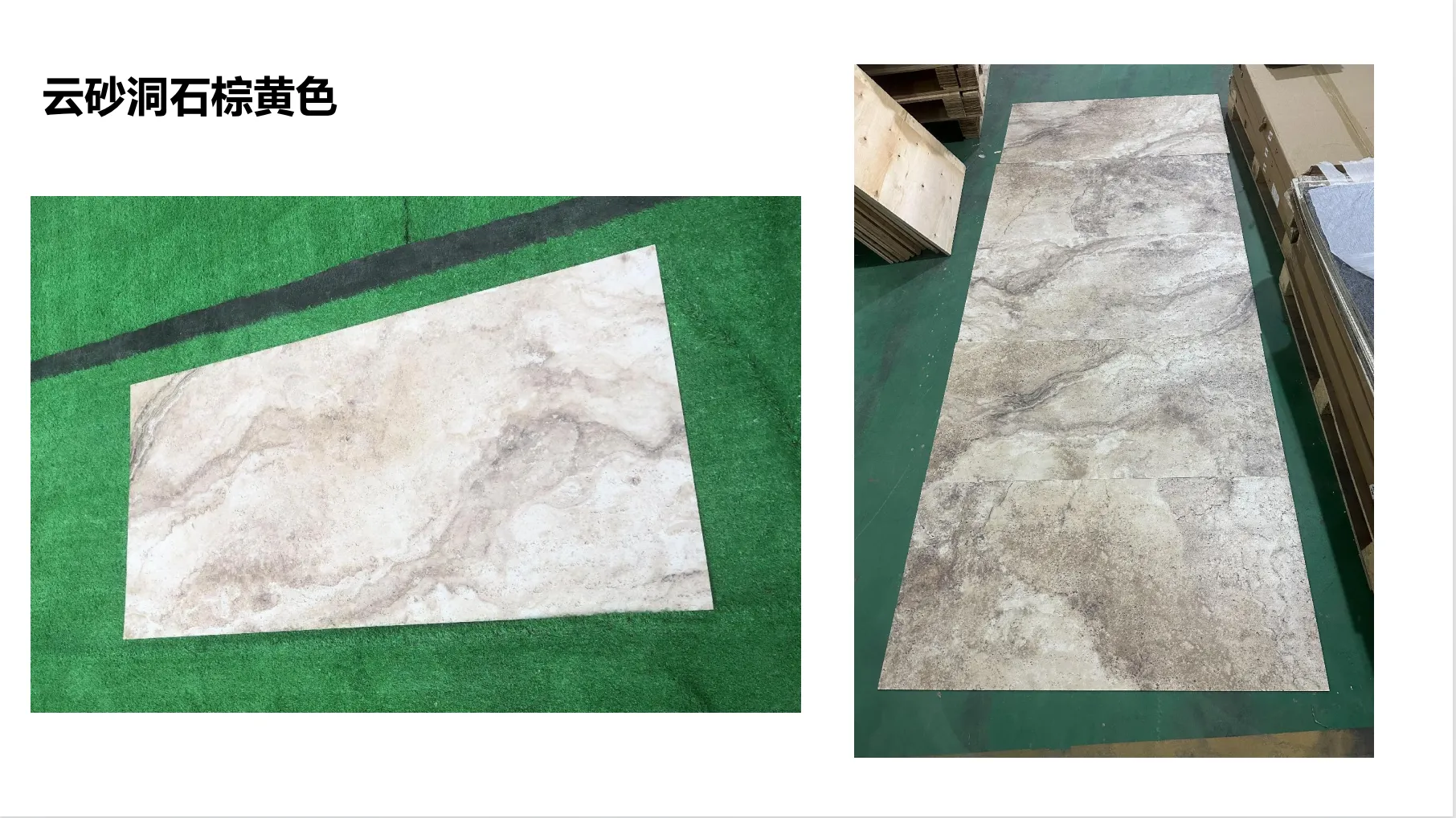
You've probably seen travertine before—maybe in a fancy hotel lobby or a high-end kitchen, with its characteristic pitted surface and earthy tones. Dolomitic travertine takes that up a notch, with two standout varieties in the spotlight: dark grey and claybank. The dark grey version is moody and sophisticated, with deep, shadowy veins that add drama to any space. Claybank, on the other hand, is warm and inviting, with soft, sandy hues that evoke sun-baked landscapes. But here's the kicker: both aren't just pretty faces. Their unique composition makes them powerhouses when it comes to keeping your home or office at the perfect temperature.
Think of it this way: If regular stone is a solid block, dolomitic travertine is more like a sponge—full of tiny, interconnected air pockets. These pockets aren't flaws; they're nature's insulation. And when you pair that natural structure with modern manufacturing techniques, like those used in MCM flexible stone, you get a material that's not only effective but also easy to work with. No more heavy, hard-to-install slabs that require reinforced walls—this is stone for the 21st century.
Let's get a little science-y, but don't worry—I'll keep it simple. Thermal insulation is all about slowing down the transfer of heat. When it's cold outside, you want to keep the warm air in; when it's hot, you want to keep the heat out. Materials that do this well have low thermal conductivity, which is a fancy way of saying they don't let heat pass through them easily. And dolomitic travertine? It's a pro at this, thanks to those tiny air pockets we mentioned earlier.
Air is a poor conductor of heat, which is why down jackets (filled with air pockets) keep you warm in winter. Dolomitic travertine's porous structure is like a permanent down jacket for your walls. Those little gaps between the mineral deposits trap air, creating a barrier that slows down heat transfer. So in winter, the warmth from your heater stays inside, and in summer, the hot sun's rays have a harder time seeping through. It's like having a natural thermostat built into your walls.
But don't just take my word for it. Let's look at the numbers. Thermal conductivity is measured in watts per meter-kelvin (W/m·K). The lower the number, the better the insulation. Here's how dolomitic travertine stacks up against other common building materials:
| Material | Thermal Conductivity (W/m·K) | Why It Matters |
|---|---|---|
| Dolomitic Travertine (Dark Grey) | 0.8–1.0 | Porous structure with natural air pockets; slow heat transfer |
| Dolomitic Travertine (Claybank) | 0.7–0.9 | Slightly higher porosity than dark grey; excellent for hot climates |
| Concrete (Standard) | 1.5–2.0 | Dense and solid, conducts heat quickly; poor natural insulation |
| Marble | 2.0–2.5 | Less porous than travertine; feels cold to the touch in winter |
| Brick | 0.8–1.2 | Similar to travertine but less durable and more prone to cracking |
| Gypsum Board (Drywall) | 0.16–0.20 | Great insulator, but soft and not weather-resistant (can't be used exterior) |
See that? Dolomitic travertine (both dark grey and claybank) has a thermal conductivity lower than concrete and marble, which means it insulates better. It's on par with brick but offers way more durability and style. And unlike drywall, it can be used on exteriors, where insulation matters most. That's a big deal. If you've ever touched a marble countertop on a cold day, you know how quickly it sucks the heat from your hand—that's high thermal conductivity. Dolomitic travertine, by contrast, feels warmer to the touch, even in cool weather, because it doesn't conduct heat away from your skin as quickly. That's the insulation working, right there.
There's another trick up dolomitic travertine's sleeve: thermal mass. This is the ability of a material to absorb, store, and release heat over time. Think of it like a battery for temperature. During the day, when the sun is shining or the heater is on, dolomitic travertine absorbs heat. Then, at night, when the temperature drops, it slowly releases that stored heat back into the space. This helps keep indoor temperatures stable, so you don't get those wild swings that make you reach for the thermostat every hour.
I experienced this firsthand when I visited a bed and breakfast in the Italian countryside last year. The owner had used claybank dolomitic travertine on the exterior walls. Even though the days were hot (we're talking 90°F+), the rooms stayed cool and comfortable without the AC running constantly. In the evening, as the air cooled down, the stone released the heat it had absorbed during the day, keeping the rooms from getting chilly. The owner (smiled and said) that her energy bill was a third of what it was when the house had concrete walls. "It's like the stone does the work for me," she said. "I don't have to fight the weather anymore."
Let's head to the Rockies, where winters are long and cold, and heating bills can be astronomical. A family in Boulder, Colorado, decided to renovate their 1970s home a few years back, and they were tired of paying $400+ monthly for heating. They'd heard about MCM flexible stone and architectural big slab solutions, so they opted for dark grey dolomitic travertine panels on the exterior walls and claybank on the interior accent walls.
The results? "We were blown away," the homeowner, Sarah, told me. "That first winter, our heating bill dropped to $280, and we were keeping the house 5 degrees warmer than before. The kids used to complain about cold spots near the windows, but now the whole house feels even. And the dark grey exterior? It looks incredible against the snow—it's like our house finally fits in with the mountains."
What made the difference? The combination of the stone's insulation and thermal mass. The exterior panels kept the cold out, while the interior walls absorbed and released heat from the wood stove, keeping the space warm long after the fire died down. "We even noticed that the humidity is more stable," Sarah added. "No more dry air making our skin itch in winter. The stone seems to balance things out."
Now let's flip the script to a hot, humid climate: a beach house in Charleston, South Carolina. The owner, Mike, was tired of his AC running nonstop from May to September, costing him over $300 a month. He chose claybank dolomitic travertine for the exterior, reasoning that its lighter color might reflect some sunlight, and paired it with MCM flexible stone panels for easy installation on the second floor.
"I was skeptical at first," Mike admitted. "Stone has a reputation for being heavy and hot, but this stuff is different. The first summer, we kept the AC at 78°F instead of 75°F, and the house felt just as comfortable. Our bill dropped to $180, and we're not killing the AC anymore. Plus, the claybank color looks amazing with the ocean view—it's like bringing the beach inside, but without the sand."
Mike also mentioned that the stone helped with sound insulation. "We used to hear every car that drove by, but now it's quiet—like we're in a little bubble. The porous structure must absorb sound too. Who knew stone could do double duty?"
We've talked about comfort and cost savings, but there's another big reason to love dolomitic travertine: it's a green building material. In a world where we're all trying to reduce our carbon footprint, choosing materials that lower energy use is a no-brainer. Buildings account for about 40% of global energy consumption, according to the U.S. Energy Information Administration. That means every time we opt for a material that insulates better, we're not just saving money—we're reducing demand for fossil fuels and cutting down on greenhouse gas emissions.
Dolomitic travertine checks all the green boxes: it's natural, abundant, and requires minimal processing compared to synthetic insulators. MCM flexible stone takes it a step further by using less material (thinner panels) and reducing waste during manufacturing. Plus, because it's so durable, it lasts for decades—no need to replace it every 10-15 years like some synthetic siding options. That longevity means less waste in landfills and fewer resources used over time.
Many architects and builders are now specifying dolomitic travertine in projects aiming for LEED (Leadership in Energy and Environmental Design) certification, a globally recognized symbol of sustainability. Points for energy efficiency, sustainable materials, and indoor environmental quality can all be earned by using products like MCM flexible stone and dolomitic travertine. "Clients are asking for green solutions more than ever," says Maria, an architect in Chicago. "Dolomitic travertine gives them both sustainability and style—they don't have to choose one or the other."
So you're sold on dolomitic travertine—now what? The first decision is which variety to go with: dark grey or claybank. Both insulate well, but there are subtle differences that might sway you one way or the other.
Dark Grey Dolomitic Travertine: This is the drama queen of the two (in the best way). Its deep, charcoal-like color with hints of blue and green adds richness and sophistication to any space. It's perfect for modern or industrial-style homes, where bold textures and colors shine. From a practical standpoint, dark grey absorbs a bit more heat, which can be a plus in colder climates—it soaks up sunlight during the day and releases it at night, giving your heating system a break. It also hides dirt and dust better than lighter stones, which is a win for busy households or commercial spaces like restaurants and offices.
Claybank Dolomitic Travertine: If you prefer a softer, more organic look, claybank is your go-to. Its warm, earthy tones—think sand, terracotta, and light brown—bring a sense of calm and connection to nature. It's ideal for coastal homes, rustic cabins, or spaces where you want to create a cozy, inviting vibe. Because it's lighter, it reflects more sunlight, which can help keep things cooler in hot, sunny climates. It also pairs beautifully with wood accents and greenery, making it a favorite for indoor-outdoor spaces like patios and sunrooms.
Of course, there's no rule that says you can't mix them. Many homeowners use dark grey on the exterior for durability and claybank on interior walls for warmth. "I wanted the outside to feel strong and protective, and the inside to feel soft and welcoming," Sarah (from the Boulder case study) told me. "Mixing the two stones gave me exactly that balance."
One of the biggest myths about natural stone is that it's hard to install and maintain. But with MCM flexible stone, that couldn't be further from the truth. MCM (Modified Composite Material) panels are thin—usually around 3-5mm thick—and lightweight, so they don't require the heavy structural support that traditional stone slabs need. This makes them perfect for retrofits, where you don't want to tear down walls or reinforce foundations.
Installation is a breeze, too. Most contractors can install MCM flexible stone panels in a day or two for a small project, compared to a week or more for traditional stone tiles. They're easy to cut with standard tools, so they fit perfectly around windows, doors, and other obstacles. And because they're flexible, they can even be used on curved surfaces—think accent walls or rounded archways. "I was worried about installing stone on our curved staircase wall," Mike (from the Charleston case study) said. "But the MCM panels bent right into place. It looks custom-made, but it was actually one of the easiest parts of the renovation."
As for maintenance? Dolomitic travertine is surprisingly low-maintenance. Unlike marble, which can etch with acidic substances, travertine is more resistant to stains and damage. A quick rinse with water is usually enough to clean exterior panels, and indoor walls can be wiped down with a damp cloth. If you want to give it extra protection, you can seal it once a year with a natural stone sealer, but it's not strictly necessary. "I've had my claybank walls for three years, and I've never sealed them," Sarah said. "They still look brand new. Kids, dogs, coffee spills—nothing phases them."
At the end of the day, dolomitic travertine isn't just a building material. It's a shift in how we think about our spaces—away from fighting the elements and toward working with them. It's about creating homes and offices that are comfortable, affordable, and kind to the planet. Whether you're building a new home, renovating an old one, or designing a commercial space, the dark grey and claybank varieties of dolomitic travertine offer a winning combination of style, function, and sustainability.
And with innovations like MCM flexible stone and architectural big slab solutions, there's never been a better time to make the switch. No more choosing between beauty and efficiency, or cost and sustainability. Dolomitic travertine proves you can have it all—walls that keep you cozy, bills that stay low, and a home that makes you proud to walk through the door every day.
So the next time you're thinking about building or renovating, ask yourself: What if my walls could do more than just hold up the roof? What if they could keep me comfortable, save me money, and help the planet? With dolomitic travertine, the answer is simple: they can. And that's a stone-cold fact.
Recommend Products












