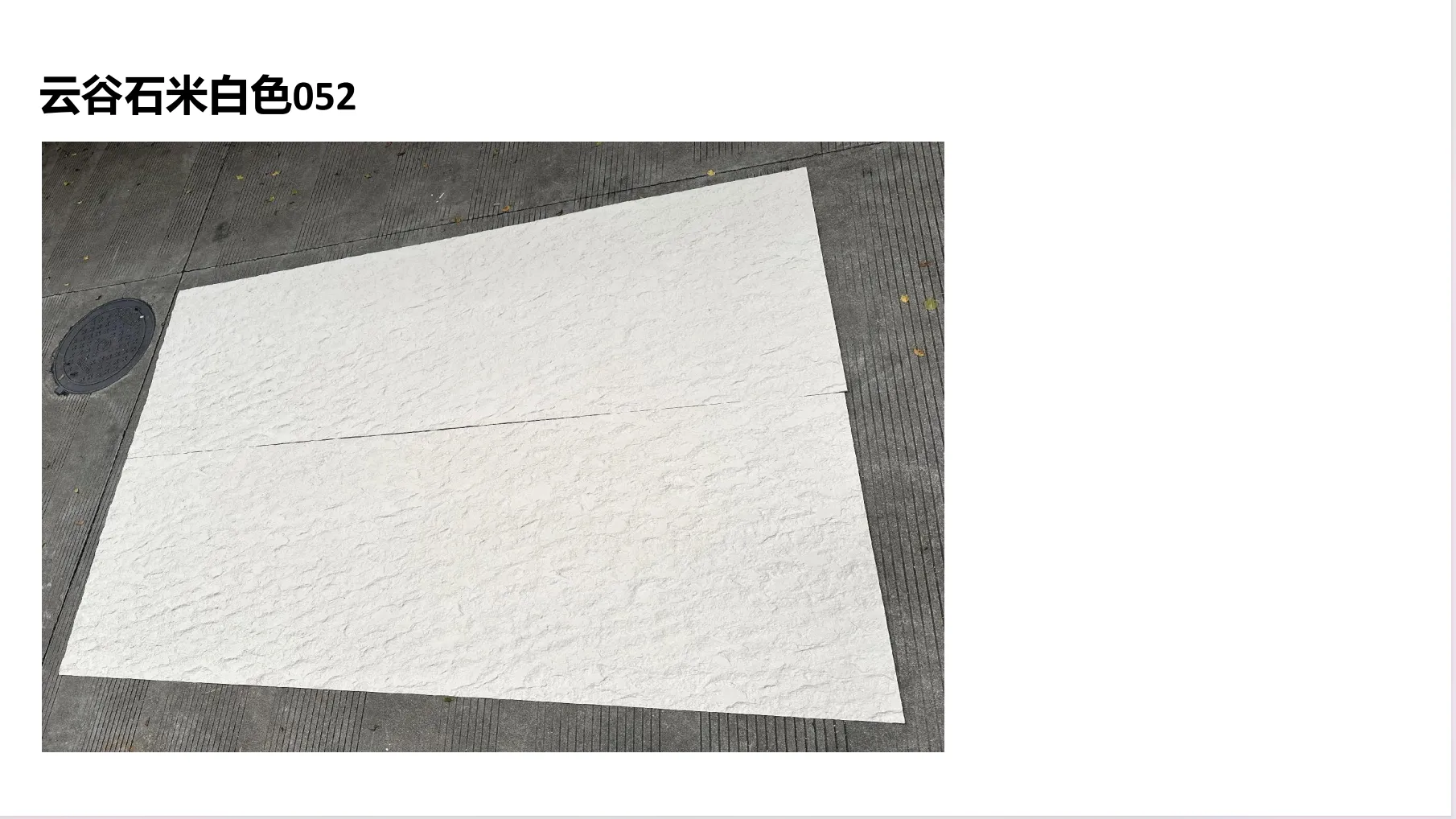
Walk into any well-designed space—a sunlit home, a bustling café, a sleek office—and you'll notice something quiet but powerful at work: the materials. They don't just fill a room; they shape how we feel in it. A rough-hewn stone wall might make us feel grounded, while a smooth, polished surface could evoke calm. Today, we're diving into a material that's been turning heads in the design world for its ability to blend nature's beauty with modern innovation:
Cloud Stone. If you've ever wished for a material that feels both timeless and fresh, that can turn a plain wall into a conversation piece, or a drab patio into an oasis, this guide is for you. Let's unpack what
Cloud Stone is, why it matters, and how it's transforming spaces from living rooms to city skylines.
Let's start with the basics.
Cloud Stone isn't your grandma's marble or the limestone you'd find on a historic courthouse (though it tips its hat to both). Think of it as nature's best traits—warmth, texture, depth—reimagined through 21st-century engineering. At its core,
Cloud Stone is part of the
MCM flexible stone
family, a category of materials that's revolutionizing construction and design. MCM, or Modified Composite Material, is all about flexibility (literally and figuratively): it's lightweight, durable, and can mimic the look of natural stone, wood, or even textiles without the heaviness or upkeep of the real thing.
So, where does
Cloud Stone fit in? It's a subset of
MCM flexible stone that leans into soft, ethereal aesthetics—think the misty glow of a mountain at dawn, or the way light filters through clouds on a overcast day. Its surface often has subtle veining, like watercolor strokes, and comes in hues that range from creamy whites to muted grays, with occasional pops of color (we'll get to the starry variants later). But don't let the "soft" vibe fool you: this stuff is tough. Unlike natural
travertine, which can be porous and prone to staining,
Cloud Stone is engineered to resist moisture, scratches, and fading. It's the kind of material that looks delicate but can handle a busy family home or a high-traffic hotel lobby.
To put it simply:
Cloud Stone is what happens when a designer says, "I want the beauty of natural stone, but I also want it to be easy to install, lightweight enough for a high-rise, and customizable to match my wildest color dreams." And the result? A material that feels both familiar and new—like meeting an old friend with a fresh haircut.
Let's get into the details. What sets
Cloud Stone apart from other MCM flexible stones, or even traditional materials like
fair-faced concrete
? Let's break it down:
Texture That Tells a Story
: Run your hand over
Cloud Stone, and you'll notice it's not perfectly smooth. There are tiny ridges, subtle indentations, and variations in surface depth—like the face of a stone that's been weathered by wind and rain, but in a controlled, intentional way. Some variants, like those inspired by
weaving (khaki)
, even have a textile-like texture, adding a tactile layer that makes a wall feel less like a barrier and more like a piece of art.
Color Palette That Plays Well with Others
:
Cloud Stone isn't about bold, in-your-face shades (though it can do that if you ask). Its sweet spot is in neutrals and soft pastels that complement other materials. Imagine a living room where
Cloud Stone in "misty gray" serves as the backdrop, paired with warm wood floors and pops of green from houseplants. Or a kitchen backsplash in "cloud white" that makes the countertop's dark granite pop. It's the ultimate team player in a design scheme.
Lightweight, But Not Lightweight on Quality
: Here's a fun fact: traditional natural stone can weigh upwards of 150 pounds per square foot.
Cloud Stone? Try 3–5 pounds per square foot. That might not sound like a big deal until you're a contractor trying to install it on the 10th floor of a building, or a homeowner doing a DIY renovation. Its lightness means easier transport, lower installation costs, and less stress on the structure of your home. And because it's flexible, it can be curved or cut into custom shapes—say, a circular accent wall or a wavy backsplash—without cracking.
Eco-Friendly Creds
: In a world where sustainability matters more than ever,
Cloud Stone checks that box too. Since it's a composite material, it uses fewer natural resources than mining and cutting real stone. Many manufacturers also use recycled materials in the mix, and because it's low-maintenance (no need for harsh sealants or cleaners), it's kinder to the planet in the long run. It's the material equivalent of bringing a reusable tote to the grocery store—small choices that add up.
You might be thinking, "Why not just use real
travertine or
fair-faced concrete
?" Fair question. Let's compare. Below is a quick breakdown of how
Cloud Stone holds up against two popular alternatives:
|
Feature
|
Cloud Stone (MCM Flexible)
|
Natural Travertine
|
Fair-Faced Concrete
|
|
Weight
|
3–5 lbs/sq ft (super lightweight!)
|
100–150 lbs/sq ft (heavy—needs strong support)
|
40–60 lbs/sq ft (moderate weight)
|
|
Durability
|
Resists scratches, moisture, fading
|
Porous—prone to staining, needs sealing
|
Durable but can crack if not installed properly
|
|
Installation
|
Easy—can be cut with standard tools, glued to walls
|
Requires professionals, heavy lifting equipment
|
Needs formwork, longer curing time
|
|
Aesthetics
|
Soft, ethereal veining; customizable colors
|
Classic, earthy; natural variations (can be inconsistent)
|
Raw, industrial; uniform but lacks warmth
|
|
Cost
|
Mid-range (more than concrete, less than high-end travertine)
|
High (especially rare colors)
|
Low to mid-range
|
The takeaway?
Cloud Stone isn't here to replace natural stone or concrete—it's here to offer something they can't: the best of both worlds. It's durable like concrete, beautiful like
travertine, and easy to work with like… well, like a really cooperative friend.
Now for the fun part: imagining where
Cloud Stone could live in your world. This material is versatile, but here are the spaces where it truly shines:
Picture this: You walk into a living room, and the first thing you notice is the accent wall. It's not painted a solid color—it's covered in
Cloud Stone in a soft, creamy white with faint gray veining, like a watercolor painting come to life. Sunlight streams through the window, and the stone seems to glow from within. Next to it, a
weaving (khaki)
rug adds texture underfoot, and a wooden coffee table brings warmth. This is
Cloud Stone in its element: creating a focal point that's calm, not chaotic. It works especially well behind a TV (no glare!) or as a backdrop for a gallery wall, where its subtle texture makes art pop without competing.
Businesses love
Cloud Stone because it's both stylish and practical. Take a trendy café, for example. The countertop could be
Cloud Stone in "misty gray," with a
travertine (starry blue)
backsplash adding a playful touch—small, shimmering flecks that catch the light like stars in a night sky. Patrons run their hands over the smooth surface while waiting for their lattes, and the material holds up to spills, heat, and daily scrubbing. In an office,
Cloud Stone might line a reception area, making visitors feel welcome without feeling corporate. It's the opposite of cold, sterile drywall; it says, "We care about how this space makes you feel."
Cloud Stone isn't just for indoors. Thanks to its lightweight nature, it's perfect for exterior cladding—think the siding of a modern home or the facade of a boutique hotel. Pair it with
lunar peak silvery
accents (a sleek, metallic MCM variant) for a look that's out of this world. Imagine a house with
Cloud Stone walls in "dusk pink" and
Lunar Peak Silvery trim around the windows; it would look like a spaceship landed in the suburbs, but in the best way. And because it's weather-resistant, it won't fade in the sun or warp in the rain—ideal for homes in rainy Seattle or sunny Miami.
Bathrooms are tricky: they need to be water-resistant, easy to clean, and (let's be real) nice to look at.
Cloud Stone checks all three boxes. A shower wall in
Cloud Stone "ocean mist" would make every morning feel like a spa day, with its soft blue-gray hues and smooth surface that repels water. No more scrubbing grout or worrying about mold—just a wall that looks like it belongs in a five-star resort. Pair it with a simple white vanity and
weaving (khaki)
shower curtains for a cohesive, calming vibe.
Who says outdoor spaces can't be as stylish as indoor ones?
Cloud Stone works wonders for patios or garden pathways, especially when paired with natural elements like wood or greenery. Imagine a backyard with a
Cloud Stone fire pit surround in "smoky quartz," where you gather with friends on cool nights. The stone holds up to heat, and its neutral color lets the flames and string lights take center stage. For a more whimsical touch, mix in
travertine (starry blue)
pavers—small, round stones with glittering flecks—to create a "starry path" from the patio to the garden. It's the kind of detail that makes your outdoor space feel like a secret retreat.
So, you're sold—now how do you actually use
Cloud Stone in your space? Here are a few tips to make sure it shines:
Play with Contrast
:
Cloud Stone's softness pairs beautifully with bold accents. Try a
Cloud Stone wall with a bright yellow couch, or a countertop in "cloud white" with
lunar peak silvery
bar stools. The contrast will make both elements pop.
Layer Textures
:
Cloud Stone has subtle texture, so balance it with other tactile materials. Think
weaving (khaki)
throw pillows, a shaggy rug, or a wooden bookshelf. The mix of textures will make the space feel layered and inviting.
Go Bold with Color Variants
: While
Cloud Stone is known for neutrals, don't sleep on the starry options.
Travertine (starry blue)
would make an epic accent wall in a home theater, or a backsplash in a kid's bathroom (hello, underwater theme!).
Keep It Simple
:
Cloud Stone is a statement material, so don't overdo it. One accent wall or a single countertop is enough—you don't need every surface covered. Let it breathe!
These days, we all want materials that look good and do good. The good news?
Cloud Stone is a solid choice for eco-conscious designers. Since it's part of the
MCM flexible stone family, it uses less natural stone than traditional options—meaning fewer quarries, less energy spent on mining, and less waste. Many manufacturers also use recycled plastics or byproducts from other industries in the composite mix, reducing the need for new materials.
And let's not forget longevity. A
Cloud Stone wall might last 30+ years without needing to be replaced, which is better for the planet than materials that wear out quickly (looking at you, cheap wallpaper). Plus, since it's lightweight, transporting it uses less fuel than hauling heavy natural stone—another win for carbon footprints.
Is it perfect? No—no material is. But compared to, say, importing marble from Italy or cutting down trees for hardwood,
Cloud Stone is a step in the right direction. It's proof that you don't have to sacrifice style to be kind to the planet.
At the end of the day, materials are about more than just building—they're about storytelling.
Cloud Stone tells a story of balance: between nature and technology, between beauty and practicality, between the past and the future. It's for the homeowner who wants a space that feels like "them," not a generic. It's for the designer who wants to push boundaries without breaking budgets. And it's for anyone who believes that our surroundings should lift us up—not just hold us up.
So, whether you're renovating your kitchen, designing a café, or just daydreaming about your future home, keep
Cloud Stone in mind. It might just be the material that turns "meh" into "magic." After all, in a world that's always in a hurry, isn't it nice to have something that feels like a quiet, beautiful cloud—strong enough to support you, soft enough to soothe you?
Now go forth, and let your spaces shine—cloud style.