
Walk through the heart of Rome, and you'll feel it—the quiet grandeur of travertine. From the Colosseum's weathered arches to the steps of St. Peter's Basilica, this stone has told stories for millennia. Its porous surface, warm earthy tones, and organic veining make it a timeless choice for architects and designers who crave that "ancient yet alive" aesthetic. But here's the modern reality: the Roman huge travertine we admire today comes with a heavy price—literally and figuratively. Sourcing large slabs is costly, transporting them risks breakage, and installing them requires specialized labor. And let's not forget sustainability: quarrying natural stone depletes finite resources, leaving ecological footprints that feel at odds with our planet's urgent need for greener solutions.
Enter MCM—Modified Composite Material—a category of building materials engineered to honor tradition while embracing innovation. MCM doesn't just mimic the look of Roman travertine; it reimagines what a building material can be. Lightweight yet durable, eco-friendly yet luxurious, MCM substitutes are quickly becoming the go-to for designers who refuse to compromise on beauty or practicality. In this guide, we'll explore why MCM is redefining the future of architectural design, spotlight standout products that rival Roman travertine, and show you why the next generation of iconic structures might just be wrapped in MCM.
Don't get us wrong—we're as captivated by Roman travertine as anyone. Its history alone makes it irreplaceable in heritage restoration projects. But for modern construction, sticking rigidly to traditional travertine often means signing up for a host of headaches. Let's break it down:
It's no wonder architects and developers are asking: Is there a way to get the beauty of Roman travertine without the baggage? The answer, as we'll see, is a resounding yes—and it's called MCM.
At its core, MCM (Modified Composite Material) is what happens when science meets art. It's a blend of natural minerals (think crushed stone, glass, or ceramic) and high-performance polymers, engineered to mimic the look and texture of natural materials—without the downsides. MCM panels are thin (often 3–6 mm thick), lightweight (6–12 kg per square meter), and surprisingly tough. They're also customizable, with finishes that range from rough-hewn stone to polished marble, and colors that span from earthy neutrals to bold, contemporary hues.
But MCM isn't just a "copycat." It's a reimagining of building materials. By combining natural elements with modern polymers, MCM panels are water-resistant, fire-retardant, and resistant to UV rays—meaning they'll keep their beauty for decades, even in harsh climates. And because they're lightweight, they reduce structural load, cut transportation costs, and simplify installation (many can be applied with adhesives or mechanical fasteners, no cranes needed).
Now, let's zoom in on the MCM products that are giving Roman travertine a run for its money. These aren't just substitutes—they're upgrades.
Whether you're chasing the celestial swirls of "starry" travertine or the industrial chic of raw concrete, MCM has a product that captures the essence of Roman travertine while adding modern perks. Here are our top picks:
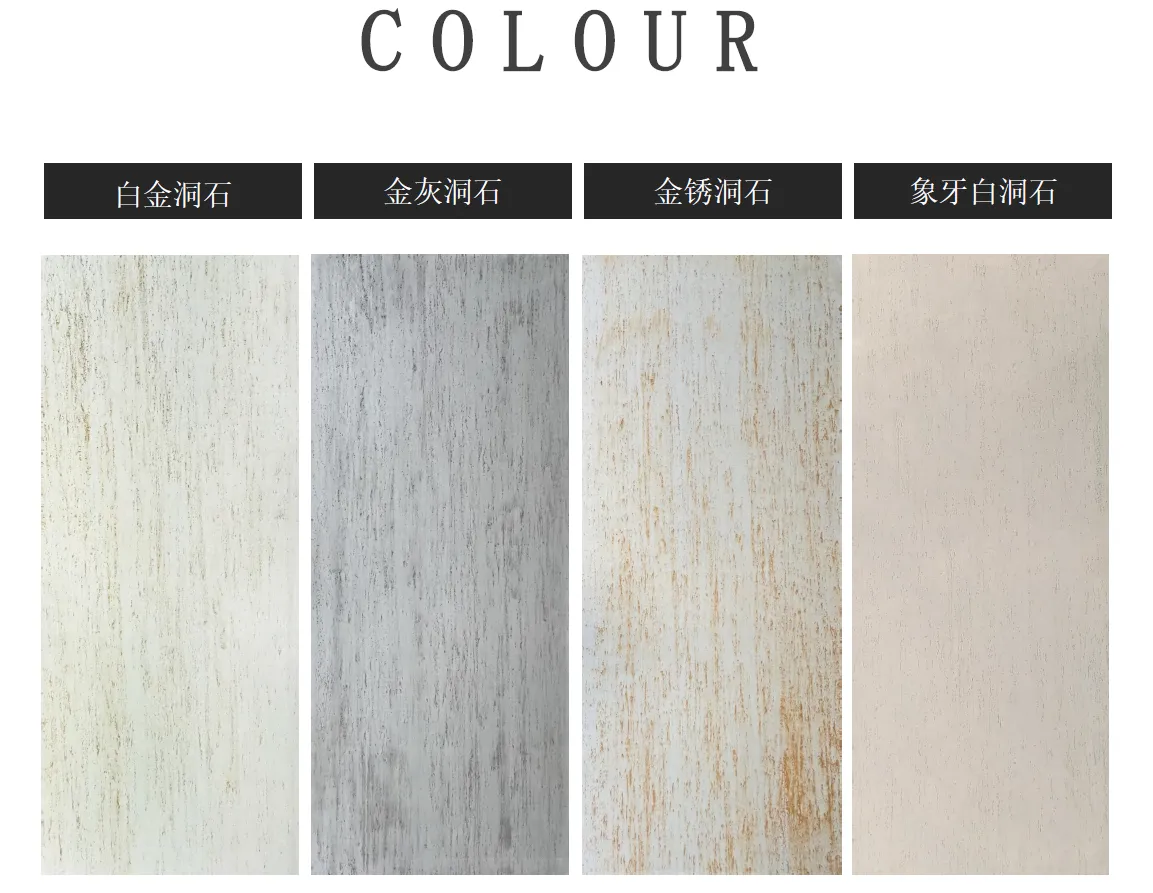
Imagine (oops, scratch that— picture ) a material that looks like hand-chiseled travertine but bends like a thin sheet of plastic. That's MCM Flexible Stone. Designed to mimic the organic texture of Roman travertine, this product is a game-changer for curved surfaces, columns, or custom furniture. Take travertine (starry green) , for example: it features the same pitted, honeycomb pattern as traditional travertine, but with a twist—swirls of deep green that evoke a starry night sky. It's perfect for accent walls in luxury hotels or residential lobbies, where you want to make a statement without the weight.
What makes it stand out? Its flexibility (it can bend up to 30 degrees) and lightweight nature (just 8 kg/m²) mean it can be installed on curved facades or even ceilings—something traditional travertine could never pull off. Plus, it's pre-finished, so there's no need for on-site sealing or polishing.
Roman architecture is all about grand scale—and the MCM Big Slab Board Series delivers that in spades. These panels come in sizes up to 1200x2400mm, mimicking the "huge" travertine slabs of ancient Rome but weighing a fraction of the real thing (10 kg/m² vs. 60 kg/m² for natural stone). The result? Seamless facades that exude monumentality without requiring reinforced steel supports.
Architects love using these slabs for commercial buildings, where first impressions matter. A recent project in Barcelona, for instance, used MCM Big Slab in a warm beige tone to replicate the look of Roman travertine on a 15-story office tower. The installers finished the job in 3 weeks instead of the projected 6—all because they didn't need cranes to hoist heavy slabs.
Not all travertine substitutes need to mimic stone. For designers craving a blend of ancient elegance and industrial edge, foamed aluminium alloy board (vintage silver) is a revelation. Its brushed, matte finish evokes the patina of aged metal, while its lightweight core (just 5 kg/m²) makes it ideal for interior accent walls or exterior cladding. Think of it as Roman travertine's cooler, more contemporary cousin—equally striking, but ready for the 21st century.
One boutique hotel in Tokyo paired this vintage silver alloy with warm wood accents, creating a space that feels both timeless and modern. The best part? Unlike real metal panels, MCM's foamed aluminium is rust-resistant and won't fade under harsh sunlight—so that "vintage" look stays fresh for years.
For those who love travertine's earthy, unpolished vibe but want something more understated, fair-faced concrete MCM panels hit the mark. They replicate the rough, tactile texture of poured concrete but with none of the weight or cracking issues of traditional concrete. Available in soft greys and beiges, these panels are perfect for minimalist homes, art galleries, or cafes where "less is more" is the design mantra.
A recent residential project in Portland used fair-faced concrete MCM for an outdoor patio, pairing it with wooden decking to mimic the look of ancient Roman courtyards. The homeowner was thrilled: "It feels like walking on history, but I don't have to worry about weeds growing through cracks or slabs shifting."
Still on the fence? Let's put the numbers (and features) side by side. Here's how Roman huge travertine stacks up against MCM's top substitutes:
| Feature | Traditional Roman Travertine | MCM Flexible Stone (Starry Green) | MCM Big Slab Board Series | Foamed Aluminium Alloy (Vintage Silver) |
|---|---|---|---|---|
| Weight (kg/m²) | 50–80 | 8 | 10 | 5 |
| Installation Time | Slow (requires cranes, specialized labor) | Fast (adhesive or mechanical fixing) | Fast (large slabs = fewer seams) | Very Fast (lightweight, easy to cut) |
| Durability | Prone to cracks, staining, and weathering | Water-resistant, UV-stable, impact-resistant | Highly durable (resistant to scratches, chips) | Rust-proof, fade-resistant, fire-retardant |
| Sustainability | High carbon footprint (quarrying, transport) | Made with recycled materials; low VOC emissions | 90% recycled content; recyclable at end of life | 100% recyclable aluminium; energy-efficient production |
| Design Options | Limited (natural variation, fixed sizes) | Custom colors, patterns, and textures (including "starry" effects) | Large formats, custom finishes | Metallic tones, brushed or polished finishes |
| Cost (per m², installed) | $300–$500 | $120–$180 | $150–$220 | $180–$250 |
In a world where "green building" isn't just a trend but a mandate, MCM's eco-credentials are hard to beat. Let's talk numbers:
For architects chasing LEED or BREEAM certifications, these factors are non-negotiable. MCM doesn't just help projects meet sustainability goals—it makes them lead on sustainability.
One of the biggest frustrations with traditional travertine is its lack of flexibility. You're stuck with the colors and patterns nature provides, and cutting custom shapes often leads to waste. MCM? It's like having a design playground.
Want to recreate the look of travertine (starry green) on a curved wall? MCM Flexible Stone bends to your will. Dream of a 10-meter-tall "monolith" facade that looks like a single slab of Roman travertine? MCM Big Slab Board Series can do that. Even better, MCM's 3D printing capabilities (hello, MCM 3D printing series ) let designers create intricate textures and patterns that would be impossible to carve into natural stone.
Interior designers are especially fond of MCM's versatility. A recent restaurant project in Paris used MCM's weaving (khaki) panels for booth backs, pairing them with travertine (starry orange) accent walls to create a space that feels both cozy and cosmic. "With MCM, I didn't have to choose between beauty and practicality," the designer noted. "I got both."
Roman travertine will always hold a special place in our architectural heritage. But heritage shouldn't be a prison—it should be a inspiration. MCM isn't here to replace the past; it's here to carry its spirit forward, adapting it to the needs of today's world.
From lightweight panels that make high-rises more efficient to sustainable materials that honor our planet, MCM is redefining what "iconic" looks like. It's for the architect who wants to build the next Colosseum, but with a fraction of the carbon footprint. For the homeowner who craves the warmth of travertine, but without the maintenance headaches. For the designer who refuses to choose between beauty and practicality.
So, the next time you walk past a stunning new building, take a closer look. Chances are, it's not wrapped in Roman travertine. It's wrapped in MCM—proving that some of the best tributes to the past are the innovations of the present.
Recommend Products












