
Walk into any thoughtfully designed space, and you'll notice it immediately—the materials tell a story. They whisper of texture, color, and intention, turning walls, countertops, and surfaces into more than just functional elements. For designers and homeowners alike, finding that perfect material—one that marries durability with soul—can feel like chasing a fleeting idea. But what if there was a line of products that didn't just meet expectations, but redefined them? Enter MCM's weaving series, a collection that blends innovation, artistry, and practicality into every thread and texture. In this guide, we'll journey through the world of MCM weaving real photos, from the first spark of design inspiration to the final, satisfying step of installation—because great spaces aren't just built; they're felt.
Before diving into design, let's talk about what makes MCM weaving materials stand out. At the heart of it all is MCM flexible stone —a revolutionary composite that's changing the game for architects and designers. Unlike traditional stone, which is heavy, brittle, and often limited in application, MCM flexible stone bends, adapts, and defies expectations. It's lightweight (up to 80% lighter than natural stone), yet incredibly durable, resistant to scratches, moisture, and the wear and tear of daily life. But numbers and specs only tell part of the story; the real magic is in the feel.
Take, for example, weaving (khaki) and weaving (beige) —two staples of the MCM weaving series. Run your hand across a sample, and you'll be struck by the depth of texture. The "weaving" pattern isn't just printed on; it's engineered into the material, creating a tactile experience that mimics the look of handwoven fabric, but with the strength of stone. Khaki, with its earthy, warm undertones, evokes a sense of groundedness—think of a sunlit cabin in the woods, or a cozy reading nook where time slows down. Beige, on the other hand, leans into minimalism, offering a soft, neutral canvas that elevates other design elements without overwhelming them. It's the kind of material that makes a kitchen backsplash feel both modern and inviting, or a bathroom wall feel like a spa retreat.
"I'll never forget the first time I held a sample of MCM weaving (khaki) in my hands," says Maria, an interior designer with 15 years of experience. "I was working on a residential project where the client wanted 'rustic charm without the maintenance headache.' Traditional woven materials would've frayed; natural stone was too heavy. This? It had the texture of a well-loved blanket, but the durability of a commercial-grade surface. That project sold me—now I specify MCM flexible stone in at least 70% of my designs."
Beyond the weaving series, MCM's big slab board series complements these textures beautifully. Imagine a living room where a 6-foot-tall MCM big slab board, with its smooth, seamless surface, serves as a backdrop to a wall clad in weaving (beige). The contrast is striking—bold yet balanced, modern yet warm. These big slabs, available in a range of finishes, act as the "quiet confidence" in a space, letting the weaving textures take center stage while providing a stable, cohesive foundation.
| Weaving Type | Texture Profile | Best For | Mood Evoked |
|---|---|---|---|
| Weaving (khaki) | Deep, tactile "threads" with a matte finish | Living rooms, bedrooms, accent walls | Warmth, coziness, rustic elegance |
| Weaving (beige) | Subtle, refined weave with a soft sheen | Kitchens, bathrooms, minimalist spaces | Calm, sophistication, timelessness |
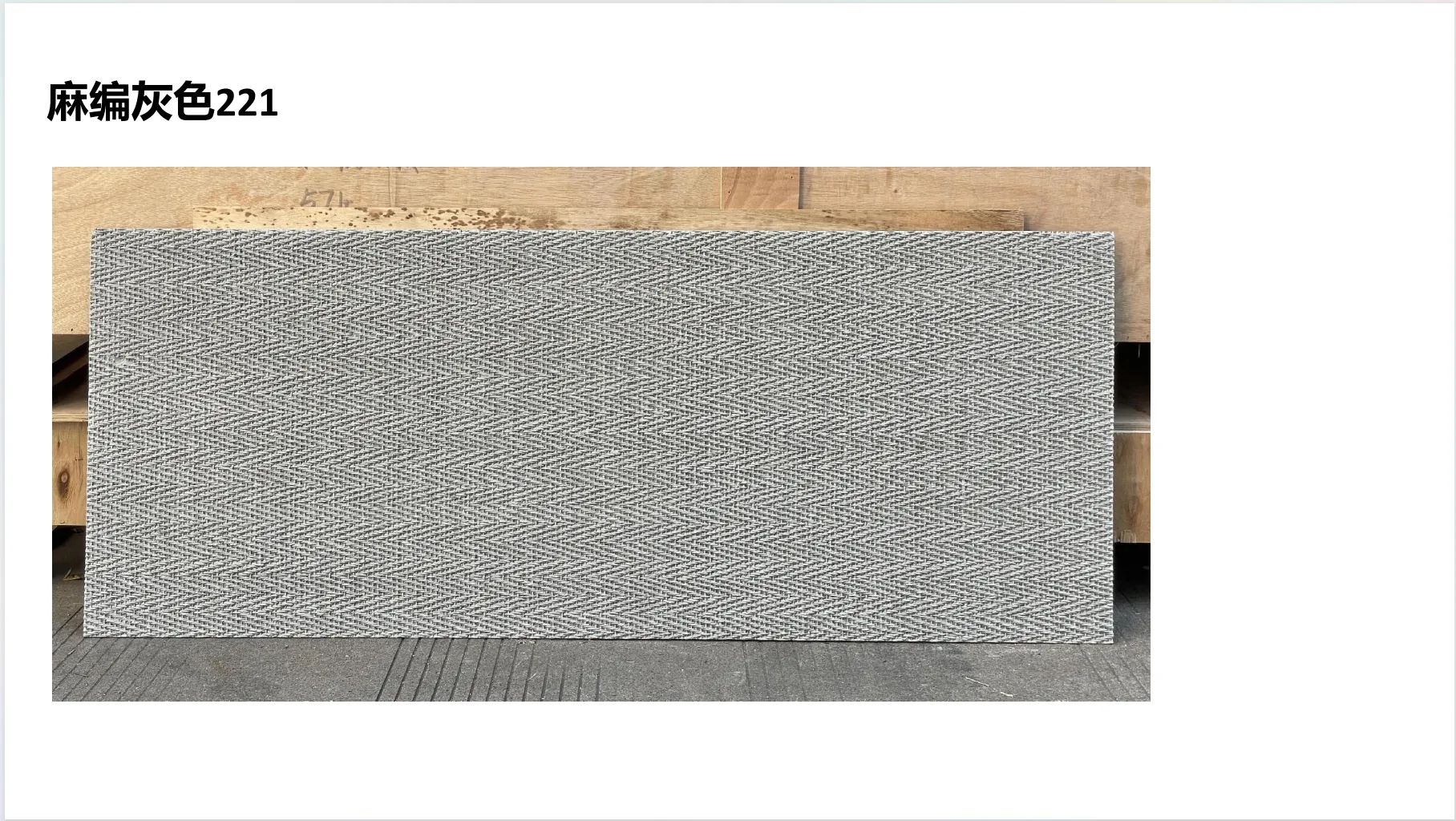
| Weaving (grey) | Neutral, textured weave with cool undertones | Offices, commercial lobbies, modern interiors | Professionalism, balance, understated luxury |
Designing with MCM weaving materials isn't just about picking a color—it's about crafting an experience. Here are a few principles to guide you:
Harmony Over Uniformity : Great design isn't about every surface matching perfectly; it's about them conversing . For example, pairing weaving (khaki) with MCM's wood grain board (another standout in the collection) creates a space that feels organic and layered. The woven texture adds softness, while the wood grain brings structure—like a forest floor covered in fallen leaves and tree trunks, each element supporting the other.
Lighting Matters : Weaving textures thrive in spaces with natural light. Watch how sunlight filters through a window and dances across weaving (beige) —the subtle variations in the weave cast soft shadows, adding depth that flat surfaces can't replicate. In rooms with artificial light, opt for warm-toned bulbs to enhance the material's earthy hues; cool-toned lights will bring out the crispness of grey or white weaves.
Scale with Intention : MCM's big slab boards are perfect for large, open areas—think a restaurant's feature wall or a hotel lobby. When using them alongside weaving materials, keep the ratio in mind: a 70-30 split (70% big slab, 30% weaving) keeps the space feeling balanced, while a 50-50 split creates bold contrast. Avoid overcrowding small rooms with too many textures; instead, let one weaving accent wall be the focal point.
Design starts with a feeling. Maybe it's the memory of a childhood home with woven rugs, or a magazine spread that made you pause and think, "I want that." For many, the next step is translating that feeling into a tangible plan—and that's where MCM's weaving real photos come into play. These high-quality images aren't just pretty pictures; they're tools. They let you visualize how weaving (khaki) might look in your kitchen, or how weaving (beige) would complement your existing furniture.
But here's a pro tip: never rely solely on photos. Visit an MCM showroom and touch the materials. Run your fingers over the weave, press gently to feel its flexibility, and hold samples up to different light sources. "I once had a client who fell in love with weaving (grey) online," recalls Raj, a showroom consultant. "But when she saw it in person, she realized the texture was more pronounced than she'd imagined—she ended up choosing weaving (beige) instead, and it was perfect. Photos capture color, but they can't convey the feel of a material."
Once you've selected your materials, it's time to create a mockup. Many designers use MCM's big slab boards and weaving samples to build small-scale models of the space, testing how the materials interact. For homeowners, even a simple mood board—with fabric swatches, paint chips, and MCM samples—can help clarify the vision. Don't rush this step; the goal is to avoid surprises later. Ask yourself: Does this texture make me feel calm? Excited? At home? If the answer is yes, you're on the right track.
Installing traditional stone or heavy materials can be a nightmare—think dust, noise, and a crew of workers taking days (or weeks) to finish. MCM weaving materials? They're a game-changer. Thanks to their lightweight nature (most panels weigh less than 5 lbs per square foot) and flexibility, installation is faster, cleaner, and far less disruptive.
Here's a simplified breakdown of the process:
1. Prep the Surface : Ensure walls or surfaces are clean, dry, and smooth. Unlike natural stone, MCM flexible stone doesn't require heavy-duty subfloors—just a flat, stable base. Fill any cracks or holes, and sand down rough spots.
2. Measure and Cut : MCM panels are easy to cut with standard tools (a utility knife or jigsaw works for straight lines). Measure twice, cut once—precision here ensures seamless joints.
3. Apply Adhesive : Use a high-quality, moisture-resistant adhesive (MCM recommends their proprietary formula for best results). Apply it evenly to the back of the panel, then press firmly onto the surface. The flexibility of the material means it conforms to minor irregularities, so you don't have to stress over perfect alignment.
4. Seal (If Needed) : Most MCM weaving materials come pre-sealed, but for high-moisture areas like bathrooms, an extra coat of sealant adds peace of mind.
"I've installed everything from marble to concrete in my career," says Carlos, a contractor. "MCM flexible stone? It's like installing wallpaper, but better. Last month, I did a full accent wall with weaving (khaki) in a client's bedroom—start to finish, it took 3 hours. With natural stone, that would've been a two-day job, minimum. And the client? She stood there running her hand over it, saying, 'It feels like it was always meant to be here.' That's the difference."
The best materials are the ones that age gracefully, and MCM weaving series is no exception. Caring for them is surprisingly simple—no special cleaners, no intensive routines. For day-to-day upkeep, wipe surfaces with a soft, damp cloth to remove dust and debris. For tougher stains (think kitchen grease or bathroom soap scum), mix a mild dish soap with warm water and gently scrub—avoid abrasive sponges, which can scratch the finish.
One thing to note: MCM flexible stone is resistant to fading, but prolonged exposure to direct sunlight can still cause subtle changes over time. If your weaving panels are near a south-facing window, consider adding UV-protective film to the glass—it's a small step that will keep colors vibrant for years. And if you ever notice a loose edge or a small scratch? Don't panic. MCM offers repair kits that blend seamlessly with the material, so your surface looks as good as new.
Design is personal. It's about creating spaces that reflect who you are, how you live, and what matters most. MCM's weaving series—with its rich textures, warm colors, and innovative flexibility—doesn't just provide materials; it provides a canvas. Whether you're drawn to the cozy charm of weaving (khaki) , the timeless elegance of weaving (beige) , or the bold statement of MCM big slab board series , these products invite you to build something that's not just beautiful, but deeply yours .
So the next time you're dreaming of a space that feels alive, remember: it starts with the right materials. It starts with texture you can touch, colors that resonate, and a material that works as hard as you do. It starts with MCM weaving real photos—and ends with a space that tells your story, one thread at a time.
Recommend Products












