
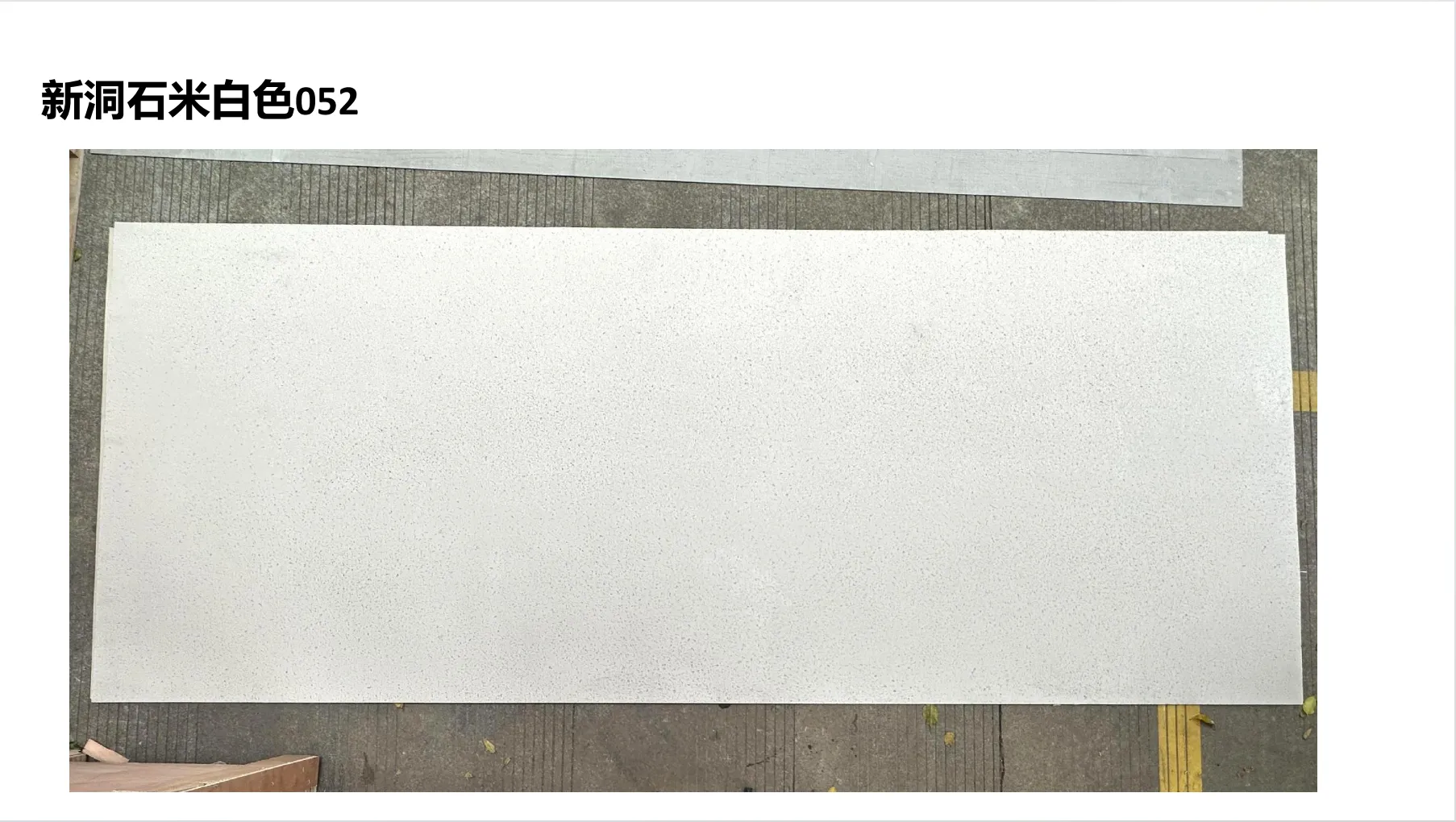
There's a reason stone has been a cornerstone of architecture for millennia—it speaks to something primal in us. It's the feel of cool marble underfoot in a sunlit hall, the rough-hewn charm of a stone cottage fireplace, or the quiet grandeur of a temple column that's stood for centuries. Among these natural wonders, White Travertino holds a special place. Its soft ivory hues, delicate veining, and porous texture tell a story of time itself, formed by mineral-rich hot springs depositing layer upon layer of calcium carbonate over eons. But in a world where design demands both beauty and practicality, is natural stone still the only choice? Enter COLORIA GROUP's MCM (Modified Composite Material) series—a collection that marries the allure of stone with the innovation of modern engineering. Let's dive into the world of White Travertino, its timeless appeal, and how COLORIA is redefining what's possible.
White Travertino, often called "the stone of emperors," traces its roots to regions like Tivoli, Italy—where ancient Romans quarried it to build the Colosseum and Pantheon—and modern-day Turkey, Iran, and Mexico. Unlike marble (formed from compressed limestone) or granite (an igneous rock), travertino is a sedimentary stone born in hot springs. As mineral-laden water cools and releases carbon dioxide, calcium carbonate crystallizes, forming layers of porous, banded rock. These layers trap tiny bubbles, fossils, and mineral deposits, giving each slab a unique "fingerprint"—no two pieces are ever identical.
True to its name, White Travertino leans toward light, warm tones—ivory, cream, and soft beige—with veins ranging from pale gold to gray or even faint pink. Its surface is gently porous, with small indentations (called "vugs") that add depth and tactile interest. When polished, it glows with a soft, matte luster; when left honed, it takes on a velvety, earthy finish. Imagine running your hand over a slab: cool, slightly rough, with the faint impression of water's passage. That's the tactile magic that makes White Travertino a favorite for spaces where texture matters as much as color.
Don't let its delicate appearance fool you—White Travertino is surprisingly durable. Its compressive strength (the ability to withstand weight) ranges from 20 to 30 MPa, making it suitable for flooring and countertops. However, its porosity (around 2-8% water absorption) means it's prone to staining if not sealed. Wine, coffee, or oil can seep into those tiny vugs, leaving permanent marks. This isn't a flaw, though; it's part of its character. Many designers embrace the patina that develops over time, seeing stains and wear as stories added to the stone's own ancient narrative.
White Travertino's versatility has made it a staple in both historic and contemporary design. Here's how it shines in different settings:
In homes, White Travertino stars as flooring, countertops, backsplashes, or fireplace surrounds. Its light color brightens rooms, making small spaces feel larger, while its texture adds coziness. A kitchen countertop in honed White Travertino pairs beautifully with wooden cabinets and brass fixtures, evoking a Tuscan villa vibe. In bathrooms, it adds spa-like serenity—imagine a walk-in shower with travertino walls, where steam condenses on the stone, enhancing its natural veining.
Hotels, restaurants, and museums love White Travertino for its ability to balance luxury and approachability. The lobby of a boutique hotel might feature a sweeping travertino floor, leading guests to a reception desk carved from a single slab. A high-end café could use it for tabletops, where its porosity resists scratches from mugs and cutlery. Even airports and office buildings opt for it in common areas—its neutral palette complements any decor, while its durability stands up to heavy foot traffic.
Outdoors, White Travertino thrives in patios, pool decks, and garden pathways. Its non-slip honed finish makes it safe underfoot, even when wet, and its natural resistance to weathering (when sealed) ensures it ages gracefully. Picture a backyard patio with travertino tiles, surrounded by greenery—the stone's warm tones echo the grass and flowers, creating a seamless transition between indoors and out.
Fun Fact: The Getty Center in Los Angeles is clad in 1.2 million square feet of White Travertino from Bagni di Tivoli, Italy. Architects chose it for its ability to reflect sunlight, keeping the building cool, and its timeless beauty—ensuring the center will look as striking in 100 years as it does today.
For all its charm, natural White Travertino comes with trade-offs. Its weight (around 20-25 kg per square meter for 2cm thickness) makes installation labor-intensive—walls may need reinforcement, and transportation costs add up. Its porosity demands regular maintenance: sealing every 1-2 years to prevent stains, and careful cleaning with pH-neutral products (no harsh chemicals, which can etch the surface). And then there's cost: high-quality natural travertino can run $80-$150 per square foot, putting it out of reach for many projects. For designers and homeowners alike, these challenges beg the question: Is there a way to get the look and feel of White Travertino without the hassle?
Enter COLORIA GROUP, a leader in sustainable building materials. Their MCM series reimagines stone, wood, and concrete as lightweight, durable, and eco-friendly composites. MCM (Modified Composite Material) is crafted by blending natural stone powder (often recycled from quarry waste) with polymer resins, creating panels that are 80% lighter than natural stone yet just as strong. They're flexible, too—able to bend around curves or adhere to uneven surfaces—and customizable, with finishes that mimic everything from rough-hewn travertino to sleek metal. Let's explore how COLORIA's MCM lines stack up as alternatives to White Travertino.
COLORIA's MCM flexible stone is a game-changer for designers craving travertino's texture without the weight. At just 3-5 mm thick and 3-5 kg per square meter, it's easy to install on walls, ceilings, furniture, or even curved surfaces (think a rounded fireplace or a custom headboard). The panels are made with real stone powder, so they look and feel authentic—you'd swear you're touching natural travertino. Best of all, they're pre-sealed, stain-resistant, and require minimal upkeep: a quick wipe with a damp cloth is all it takes. Perfect for high-traffic areas like retail stores or rental homes, where durability and low maintenance are key.
Natural stone slabs are typically limited to 3-4 feet in width—great for countertops but tricky for large walls or floors, which require unsightly seams. COLORIA's MCM big slab board series solves this with panels up to 120x240 cm (nearly 4x8 feet), creating seamless surfaces that mimic the grandeur of a single stone slab. Imagine a hotel lobby with a 20-foot wall clad in MCM Big Slab in a White Travertino finish—no grout lines, no breaks, just a sweeping expanse of soft ivory veining. It's dramatic, modern, and surprisingly affordable, since fewer panels mean faster installation and lower labor costs.
For projects that blend classic and contemporary, COLORIA's lunar peak silvery offers a fresh take on stone. Inspired by moonlit mountain peaks, this MCM finish features a cool, silvery base with subtle gray veining and a hint of metallic sheen—think White Travertino meets modern minimalism. It pairs beautifully with warm woods, black accents, or bold pops of color, making it ideal for offices, restaurants, or luxury apartments. Unlike natural stone, which is limited to earth tones, lunar peak silvery lets designers play with cooler palettes without sacrificing texture.
Not all alternatives need to mimic travertino directly. COLORIA's fair-faced concrete MCM panels offer an industrial edge with a nod to natural texture. Their matte gray surface has the subtle porosity of travertino but with a raw, modern vibe—perfect for lofts, art galleries, or coffee shops going for that "urban warehouse" aesthetic. Like all MCM products, they're lightweight, fire-resistant, and eco-friendly (made with recycled concrete and low-VOC resins), aligning with today's demand for sustainable design.
Still torn between natural White Travertino and COLORIA's MCM alternatives? Here's a side-by-side breakdown to help you decide:
| Feature | Natural White Travertino | COLORIA MCM Alternatives (e.g., Flexible Stone, Big Slab) |
|---|---|---|
| Weight | Heavy (20-25 kg/m² for 2cm thickness) | Lightweight (3-8 kg/m²) |
| Installation | Requires professional installers; may need wall reinforcement | DIY-friendly (adhesive-backed); no reinforcement needed |
| Maintenance | Seal every 1-2 years; prone to staining | Pre-sealed; stain-resistant; wipe clean with water |
| Customization | Limited by natural variation; fixed sizes | Custom colors, finishes, and sizes (up to 120x240 cm) |
| Sustainability | Quarrying can disrupt ecosystems; high transportation carbon footprint | Made with recycled materials; low-VOC; lightweight reduces transport emissions |
| Cost | High ($80-$150/sq ft installed) | Mid-range ($30-$60/sq ft installed) |
Today's designers aren't choosing between natural stone and MCM—they're blending them. A kitchen might feature a natural White Travertino countertop paired with MCM Flexible Stone backsplash in a complementary finish, balancing luxury with practicality. A restaurant could use MCM Big Slab for walls and natural travertino for flooring, creating visual harmony without breaking the budget. COLORIA's range supports this mix-and-match approach with finishes that echo natural stone (like their travertine real photos collection) or introduce bold contrasts (like weaving (khaki) or wood grain board ).
Sustainability is another key trend, and MCM leads here. COLORIA's panels are LEED-certified, made with up to 70% recycled materials, and produced in energy-efficient facilities. For eco-conscious clients, this is a selling point: choosing MCM reduces reliance on mined stone and cuts carbon emissions from transportation.
White Travertino will always hold a place in design history—it's a stone that carries the weight of millennia, yet feels fresh in any era. But for today's projects, where speed, cost, and sustainability matter as much as aesthetics, COLORIA GROUP's MCM series offers a compelling alternative. Whether you opt for the lightweight flexibility of MCM Flexible Stone, the seamless drama of MCM Big Slab, or the modern glow of Lunar Peak Silvery, you're not just choosing a material—you're choosing a vision. A vision where the past and future coexist, where natural beauty meets human ingenuity, and where every space tells a story as unique as the people who inhabit it.
So, whether you're designing a cozy home or a towering hotel, take a closer look at COLORIA's MCM options. You might just find that the stone of tomorrow is already here—and it's more beautiful, practical, and versatile than you ever imagined.
Recommend Products












