
Exploring the balance of nature, functionality, and energy efficiency in modern construction
A building's envelope is its first line of defense against the elements. It's the silent barrier that keeps winter's chill at bay, summer's heat outside, and ensures the indoor spaces we live and work in remain comfortable year-round. But beyond comfort, the thermal performance of this envelope directly impacts energy consumption, carbon footprints, and long-term sustainability. In an era where "green building" is no longer a trend but a necessity, choosing materials that marry durability, aesthetics, and insulation has become a cornerstone of architectural design.
Natural stone has been a building staple for millennia, from the pyramids of Egypt to the cathedrals of Europe. Yet today's construction demands more than just timeless beauty; it requires materials that actively contribute to energy efficiency. Enter rock cut dolomitic stone—a material that bridges the gap between tradition and innovation. With its unique composition and structural properties, it's emerging as a compelling choice for building envelopes, offering both the warmth of natural stone and the practical benefits of modern insulation. Let's dive into what makes this stone special, how it performs thermally, and why it might just be the material your next project has been waiting for.
To appreciate rock cut dolomitic stone's thermal properties, we first need to understand its origins. Dolomitic stone is a sedimentary rock formed primarily from dolomite, a mineral composed of calcium magnesium carbonate (CaMg(CO₃)₂). It forms over millions of years as seawater evaporates, leaving behind mineral deposits that crystallize and compact into solid rock. What sets "rock cut" dolomitic stone apart is its extraction method: quarried directly from rock formations and cut into slabs or tiles using precision tools, preserving its natural density and structural integrity.
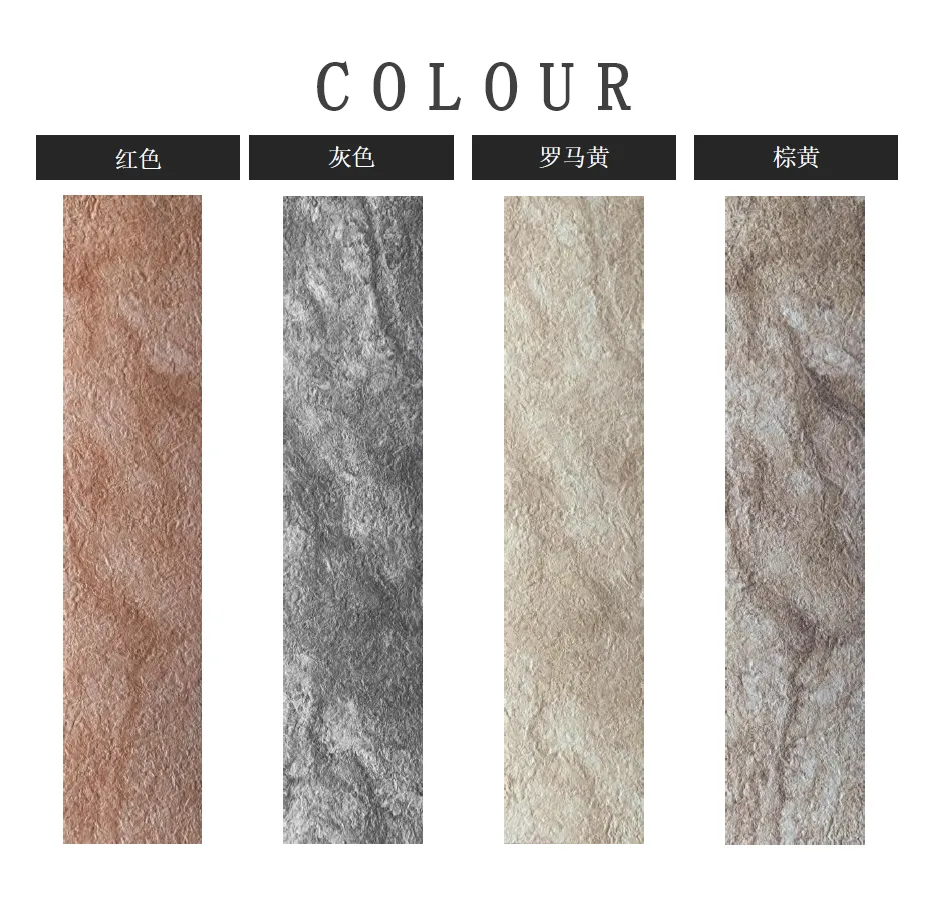
Visually, dolomitic stone is a study in earthy elegance. It comes in a range of hues, from the deep, moody tones of dolomitic travertine (dark grey) to the warm, terracotta-like dolomitic travertine (claybank) —variations that stem from mineral impurities and environmental conditions during formation. Its surface often features subtle veining or pitting, a result of gas bubbles trapped during crystallization, which not only adds character but also plays a key role in its thermal behavior.
Unlike synthetic materials, which are engineered in labs, rock cut dolomitic stone is a product of nature's slow craftsmanship. This natural formation gives it a unique microstructure—tiny pores and voids that act as pockets of air, a poor conductor of heat. It's this combination of density (from compaction) and porosity (from trapped air) that makes it such an interesting candidate for thermal insulation in building envelopes.
Thermal insulation in natural stones boils down to a simple principle: the ability to slow heat transfer. Heat moves through conduction (direct contact), convection (air/water movement), and radiation (heat waves). Stones like rock cut dolomitic stone excel at reducing conduction and convection, thanks to their physical structure.
Porosity is the star player here. Pores—small gaps between mineral grains or tiny cavities within the rock—trap air. Since air is a poor conductor of heat (thermal conductivity of air ≈ 0.026 W/(m·K)), these trapped pockets create a barrier that slows heat flow. Denser stones with fewer pores, like some granites, conduct heat more readily, while more porous stones (think sandstone or, in this case, dolomitic stone) insulate better. Rock cut dolomitic stone strikes a balance: it's dense enough to be durable but porous enough to trap air, making it a "middleweight" insulator that doesn't sacrifice strength.
Another factor is thermal mass—the ability to absorb, store, and release heat over time. Stones with high thermal mass, like dolomitic stone, can absorb heat during the day (from sunlight or indoor heating) and release it slowly at night, stabilizing indoor temperatures. This is a game-changer for energy efficiency: in winter, it reduces reliance on heating systems; in summer, it keeps interiors cool by delaying heat transfer. It's not just about stopping heat—it's about managing it.
To put rock cut dolomitic stone's performance into perspective, let's look at the metrics that matter to architects, builders, and homeowners. Below is a comparison of its thermal properties with other popular building materials, including dolomitic travertine (its close cousin), fair-faced concrete (a modern staple), and MCM flexible stone (a lightweight composite alternative).
| Material | Thermal Conductivity (k-value) [W/(m·K)] | Density [kg/m³] | Porosity [%] | R-Value per Inch [ft²·°F·h/Btu] |
|---|---|---|---|---|
| Rock Cut Dolomitic Stone | 1.2 – 1.5 | 2200 – 2500 | 8 – 12 | 0.8 – 1.0 |
| Dolomitic Travertine (Dark Grey) | 1.3 – 1.6 | 2100 – 2400 | 10 – 15 | 0.7 – 0.9 |
| Fair-Faced Concrete | 1.5 – 2.0 | 2300 – 2600 | 3 – 5 | 0.5 – 0.7 |
| MCM Flexible Stone | 0.8 – 1.0 | 1200 – 1500 | 15 – 20 | 1.0 – 1.3 |
Thermal Conductivity (k-value): This measures how well a material conducts heat. Lower values mean better insulation. Rock cut dolomitic stone's k-value of 1.2–1.5 W/(m·K) is lower than fair-faced concrete (1.5–2.0), meaning it slows heat transfer more effectively. While MCM flexible stone has a lower k-value (0.8–1.0), it's important to note that MCM is a composite, not a natural stone, and lacks the thermal mass of dolomitic stone.
Porosity: Rock cut dolomitic stone's 8–12% porosity is ideal—enough to trap insulating air but not so much that it compromises water resistance (when properly sealed). Dolomitic travertine (dark grey) has slightly higher porosity (10–15%), which can enhance insulation but may require more maintenance to prevent moisture absorption.
R-Value: This measures thermal resistance; higher is better. Rock cut dolomitic stone's R-value of 0.8–1.0 per inch is competitive, especially when you factor in its thermal mass. For context, a typical fiberglass batt has an R-value of ~3.5 per inch, but it lacks stone's durability and aesthetic appeal. When used as cladding over rigid insulation, dolomitic stone can contribute to a high-performance envelope that's both functional and beautiful.
No material exists in a vacuum, so let's see how rock cut dolomitic stone holds up against alternatives in real-world scenarios. Take fair-faced concrete , for example—a go-to for modern, industrial designs. While concrete is strong and affordable, its higher thermal conductivity (1.5–2.0 W/(m·K)) means it transfers heat more quickly, leading to draftier interiors and higher heating/cooling costs. Dolomitic stone, with its lower k-value, offers better insulation without sacrificing the "raw, natural" look that concrete is loved for.
Then there's MCM flexible stone , part of the MCM project board series . MCM (Modified Composite Material) is a lightweight, flexible option made by bonding stone particles to a backing. It's easy to install and has excellent insulation (k-value 0.8–1.0), but it's not a solid stone. For projects where authenticity matters—heritage restorations, luxury homes, or spaces aiming for a tactile, organic feel—MCM can't replicate the depth and character of rock cut dolomitic stone. It's a trade-off: convenience and insulation vs. natural beauty and thermal mass.
What about other natural stones? Dolomitic travertine (claybank) is a close relative, with similar composition but a more porous structure. It insulates slightly better (R-value 0.7–0.9) but is softer, making it prone to scratches and weathering. Rock cut dolomitic stone, with its denser matrix, is more durable for exterior use, making it a better choice for high-traffic or harsh-climate envelopes.
Perhaps the biggest advantage of dolomitic stone, though, is its versatility. It works as both cladding (applied over insulation) and load-bearing material, adapting to everything from sleek urban facades to rustic countryside homes. It doesn't force architects to choose between form and function—it lets them have both.
Rock cut dolomitic stone isn't a one-trick pony. Its thermal properties make it suitable for a range of building envelope applications, from residential to commercial. Let's break down where it excels:
One standout example is a recent eco-resort in the Italian countryside, where architects used dolomitic travertine (dark grey) for exterior cladding and rock cut dolomitic stone for interior walls. The result? A building that stays cool in summer (thanks to the stone's insulation and thermal mass) and warm in winter, all while blending into the surrounding hillside. Guests rave about the "natural comfort" of the spaces, and the resort reports a 25% reduction in energy costs compared to similar properties.
In construction, sustainability isn't just about energy efficiency—it's about the entire lifecycle of a material. Rock cut dolomitic stone scores high here. First, it's a natural resource, quarried from the earth without the heavy processing (and associated carbon emissions) of synthetic materials like PVC cladding or fiber cement. While quarrying does impact ecosystems, responsible practices—reclaiming quarries after extraction, using low-emission machinery—minimize harm.
Then there's durability. A well-maintained dolomitic stone facade can last 50–100 years, outliving synthetic alternatives that need replacement every 15–20 years. Fewer replacements mean less waste and lower embodied energy over time. When it does reach the end of its life, stone is 100% recyclable—crushed into aggregate for roads or reused in landscaping, closing the loop on its lifecycle.
Compare this to MCM flexible stone, which often contains plastic backings that are hard to recycle, or fair-faced concrete, which requires massive amounts of cement (a major CO₂ emitter). Dolomitic stone's "cradle-to-grave" impact is significantly lower, making it a favorite among architects prioritizing circular design.
Even the best insulation material can underperform if installed poorly. Here's how to ensure your rock cut dolomitic stone delivers on its thermal promise:
A pro tip from seasoned installers: always use stone from the same quarry batch. Slight variations in density or porosity between batches can lead to uneven thermal performance, creating "hot spots" in the envelope. Consistency in material means consistency in insulation.
No material is perfect, and rock cut dolomitic stone has its challenges. Weight is a big one: at 2200–2500 kg/m³, it's heavier than MCM or lightweight concrete, requiring structural support. This can add cost to foundation design, especially in retrofits where existing structures may not handle the load. The solution? Work with structural engineers early to assess load-bearing capacity, or use thinner slabs (3–5 cm) for cladding instead of solid walls.
Cost is another consideration. Natural stone is pricier than concrete or MCM, with quarring and cutting adding to the expense. But remember: its long lifespan and energy savings offset the upfront cost. Think of it as an investment—over 50 years, the lower energy bills and minimal maintenance costs often make it cheaper than frequent replacements of cheaper materials.
Finally, weathering. While durable, dolomitic stone can stain if exposed to oil, dirt, or harsh chemicals. Regular cleaning (with pH-neutral detergents) and resealing every 3–5 years keep it looking fresh and performing well.
The future of building materials is all about blending tradition with technology, and rock cut dolomitic stone is no exception. One exciting trend is the use of 3D printing in stone fabrication, part of the MCM 3D printing series . While 3D-printed stone isn't new, advances in technology are allowing for precision-cut dolomitic stone components with custom porosity—engineered to trap more air and boost insulation. Imagine a facade where each stone slab is 3D-printed with micro-channels that enhance thermal resistance, all while maintaining the stone's natural beauty.
Another area is smart integration with other materials. Researchers are experimenting with embedding thin, flexible solar panels into dolomitic stone facades, turning the envelope into both an insulator and an energy generator. Or combining stone with phase-change materials (PCMs)—substances that absorb and release heat as they melt/freezes—to supercharge thermal mass. These innovations could make dolomitic stone even more efficient, bridging the gap between natural and high-tech building solutions.
Finally, there's a growing focus on "biophilic design"—creating spaces that connect people to nature. Rock cut dolomitic stone, with its earthy tones and organic texture, is a natural fit. Future projects may prioritize stone not just for its insulation, but for its ability to reduce stress, improve mood, and create healthier indoor environments. It's not just about building envelopes—it's about building spaces that nurture us.
Rock cut dolomitic stone is more than a building material—it's a bridge between the past and the future. For centuries, natural stone has sheltered us; today, it's evolving to meet the demands of energy efficiency, sustainability, and biophilic design. Its thermal properties—balanced insulation, impressive thermal mass, and durability—make it a standout choice for building envelopes, while its natural beauty adds depth and character to any space.
Is it the right choice for every project? No—there will always be scenarios where MCM's flexibility or concrete's affordability wins out. But for projects that value authenticity, longevity, and a connection to nature, rock cut dolomitic stone delivers. It's a reminder that sometimes, the best solutions aren't found in labs or factories—they're found in the earth, shaped by time and refined by human ingenuity.
So the next time you walk past a stone building, take a moment to appreciate more than its beauty. Think about the silent work it's doing—insulating, stabilizing, enduring. That's the power of rock cut dolomitic stone: it doesn't just build envelopes; it builds spaces that stand the test of time, in every sense of the word.
Recommend Products












