
In a world where energy costs seem to climb higher with each passing season, and the urgency to reduce our carbon footprint grows more pressing by the day, the materials we choose to build and clothe our spaces have never mattered more. We've all been there: standing in a room during a sweltering summer, AC cranked to full blast, wondering why the heat still seeps in like an uninvited guest. Or shivering in winter, layers of blankets even with the heater running, staring at a wall that feels as cold as the outside air. The truth is, our buildings—whether homes, offices, or commercial spaces—are often letting us down, acting as leaky sieves for energy rather than protective cocoons. But what if the solution wasn't just about better insulation or smarter HVAC systems? What if the very walls, floors, and facades we build with could do the heavy lifting, keeping us comfortable while slashing energy bills and easing the strain on the planet? Enter Cloud Stone: a material that's not just changing the look of architecture, but redefining how we think about thermal efficiency in buildings.
For decades, the construction industry has relied on tried-and-true materials: brick, concrete, natural stone, and wood. These materials have their merits—durability, availability, and a certain timeless aesthetic—but when it comes to thermal performance, they often fall short. Take natural stone, for example: beautiful, yes, but its high thermal conductivity means it readily absorbs heat from the sun in summer and releases warmth from inside during winter, turning your walls into passive heat exchangers that work against your energy goals. Concrete, too, while strong, is a poor insulator on its own; without additional layers of fiberglass or foam, it does little to keep temperature-controlled air where it belongs. Even wood, a more insulating natural material, can warp, rot, or become susceptible to pests, requiring frequent maintenance that adds to both cost and environmental impact.
The result? Buildings that guzzle energy. According to the U.S. Energy Information Administration, residential and commercial buildings account for nearly 40% of total energy consumption in the United States, with a large chunk of that going toward heating and cooling. That's not just hard on our wallets—it's hard on the planet, too. Every kilowatt-hour of electricity used to power an AC unit or heater translates to greenhouse gas emissions, contributing to climate change. So, what if we could flip the script? What if the materials we use to build our walls, cladding, and facades could actively work with us, not against us, to keep indoor temperatures stable and energy usage low? That's where innovative materials like Cloud Stone come into play.
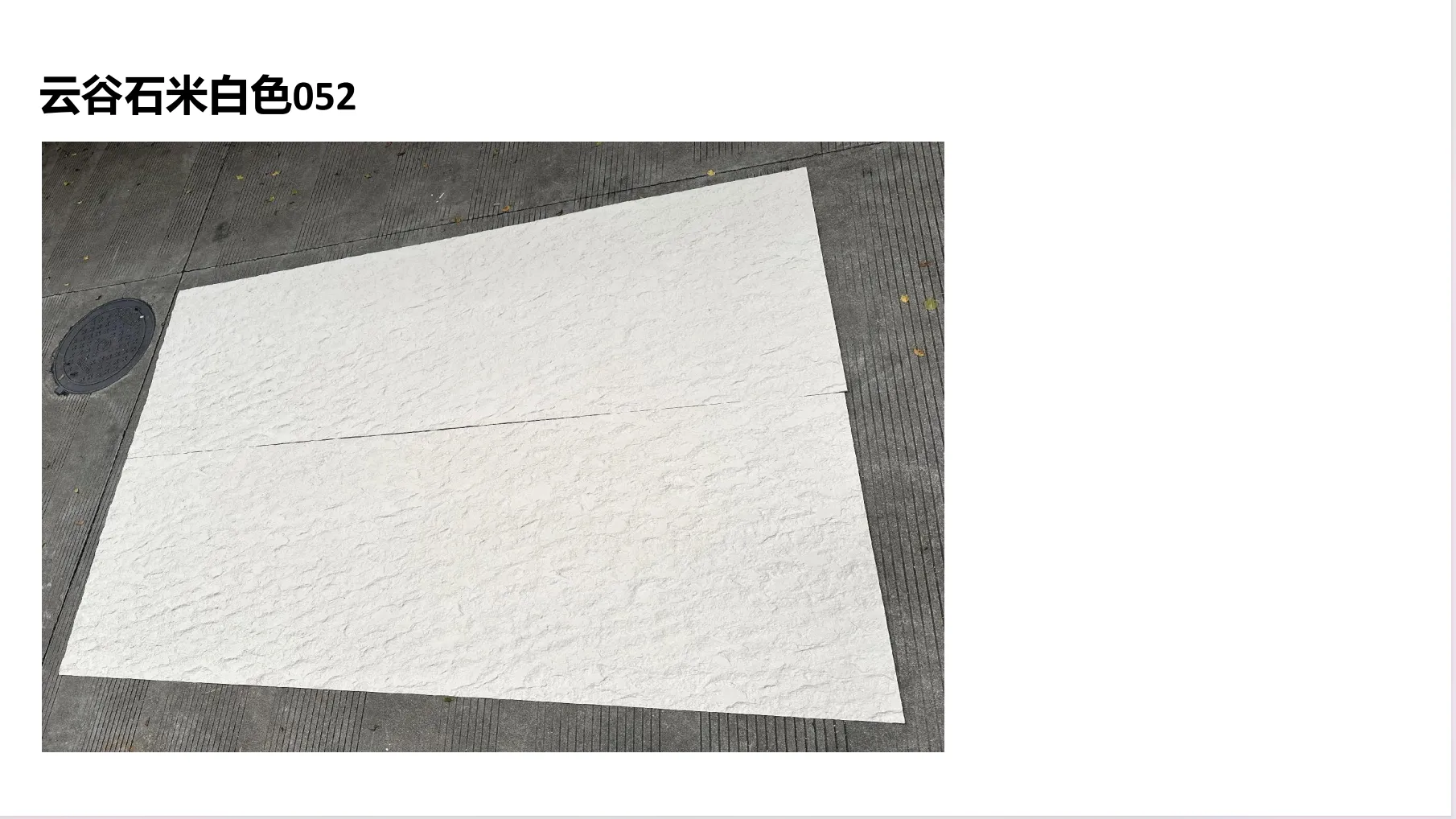
At first glance, Cloud Stone might strike you as just another beautiful building material—and make no mistake, it is that. With its soft, marbled texture that evokes the look of natural stone but with a modern, almost ethereal quality, it's the kind of material that turns heads. But dig a little deeper, and you'll find that its beauty is more than skin deep. Cloud Stone is a engineered composite material, crafted from a blend of natural minerals, recycled aggregates, and a proprietary binder that gives it both strength and exceptional thermal insulating properties. Unlike traditional stone, which is dense and heat-conductive, Cloud Stone is designed with a micro-porous structure that acts as a barrier to heat transfer. Think of it as a thermal blanket built right into the material itself—one that keeps the outside heat out in summer and the inside warmth in during winter.
To understand why this matters, let's talk about thermal conductivity, a measure of how well a material conducts heat. Traditional limestone, for example, has a thermal conductivity of around 1.5 W/(m·K), meaning it transfers heat relatively quickly. Cloud Stone, on the other hand, clocks in at just 0.3 W/(m·K)—that's five times less conductive. What does that mean for your home or office? In practical terms, it means that on a 95°F summer day, a wall clad in Cloud Stone will stay significantly cooler to the touch than one made of traditional stone, reducing the amount of heat that seeps into your space and forcing your AC to work overtime. In winter, the reverse happens: the material traps the warmth generated by your heater, keeping your rooms cozy without constant energy input. It's a simple concept, but the impact is profound.
But Cloud Stone isn't just about insulation—it's about versatility, too. Available in a range of finishes and colors, from the soft, neutral tones of lime stone(beige) to the striking depth of slate portoro , it can adapt to any architectural style, whether you're going for a modern minimalist look or a rustic, earthy vibe. Architects and designers love it for its ability to blend functionality with aesthetics; homeowners appreciate that they don't have to sacrifice beauty for efficiency. And because it's engineered, it's more consistent in quality than natural stone, which can vary widely in density and performance. No more worrying about a batch of stone that's more porous (and thus less insulating) than the last—Cloud Stone delivers reliable thermal performance, every time.
While Cloud Stone is a standout in the world of thermal insulation, it's not alone. The push for energy-efficient building has spurred innovation across the board, giving architects and builders a toolkit of materials that prioritize both performance and sustainability. One such material is mcm flexible stone —a lightweight, bendable cladding option that's taking the industry by storm. Unlike rigid stone panels, mcm flexible stone can be curved, folded, or cut to fit even the most complex architectural designs, making it ideal for unique facades or interior accent walls. But its flexibility isn't its only selling point; like Cloud Stone, it's engineered for thermal efficiency, with a low thermal conductivity that helps regulate indoor temperatures. Plus, because it's lightweight, it reduces the structural load on buildings, cutting down on construction costs and materials usage—another win for both your budget and the planet.
Then there's fair-faced concrete , a material that's been around for decades but has recently found new life in energy-efficient design. Known for its raw, industrial aesthetic—think exposed concrete walls with visible aggregates and subtle texture—fair-faced concrete is more than just a trend. When paired with insulating layers or used in conjunction with other materials like Cloud Stone, it becomes a powerful tool for thermal mass. Thermal mass refers to a material's ability to absorb, store, and release heat over time, helping to stabilize indoor temperatures. In hot climates, fair-faced concrete walls can absorb heat during the day and release it at night, keeping interiors cool without constant AC use. In colder climates, they can store heat from sunlight or heating systems, radiating it back into the space when temperatures drop. It's a passive strategy that reduces reliance on active heating and cooling, and when combined with the insulating properties of Cloud Stone, the results are even more impressive.
And let's not forget about green building materials as a category. Today's eco-conscious builders are prioritizing materials that are not only energy-efficient in use but also sustainable in production. Cloud Stone, for example, is often made with recycled aggregates, diverting waste from landfills and reducing the need for virgin materials. Mcm flexible stone, too, often incorporates recycled content, and its lightweight nature means less fuel is used during transportation. Even fair-faced concrete can be green: when made with fly ash (a byproduct of coal combustion) or other recycled materials, it has a lower carbon footprint than traditional concrete. These materials aren't just about saving energy—they're about rethinking the entire lifecycle of building products, from extraction to disposal, and minimizing environmental harm at every step.
To truly understand the impact of materials like Cloud Stone, mcm flexible stone, and fair-faced concrete, it helps to see how they compare to more traditional options. Below is a table breaking down key thermal properties, including thermal conductivity (how well they transfer heat), R-value (a measure of thermal resistance—the higher the R-value, the better the insulation), and typical applications. All values are approximate and based on standard product specifications.
| Material | Thermal Conductivity (W/(m·K)) | R-Value (per inch, ft²·°F·h/Btu) | Common Applications |
|---|---|---|---|
| Cloud Stone | 0.3 | 1.8 | Exterior cladding, interior walls, accent panels |
| MCM Flexible Stone | 0.4 | 1.5 | Curved facades, interior feature walls, ceiling panels |
| Fair-Faced Concrete | 1.2 | 0.5 | Structural walls, floors, exterior cladding (with insulation) |
| Traditional Limestone | 1.5 | 0.4 | Exterior cladding, flooring, countertops |
| Standard Concrete | 1.7 | 0.3 | Foundations, structural walls, driveways |
As the table shows, Cloud Stone and mcm flexible stone outperform traditional materials like limestone and standard concrete when it comes to thermal resistance. That higher R-value means less heat transfer, which translates to lower energy bills and more comfortable indoor spaces. And when you consider that these materials can be used in conjunction with each other—say, Cloud Stone cladding over fair-faced concrete walls with insulating foam in between—their collective impact becomes even more powerful. It's a holistic approach to building that prioritizes both efficiency and design, proving that you don't have to choose between form and function.
Numbers and tables are helpful, but nothing brings a material's benefits to life like real-world examples. Take the case of the GreenHaven Residence, a net-zero energy home in Austin, Texas, designed by architect Maria Gonzalez. When Gonzalez set out to build a home that could operate off the grid, she knew that thermal efficiency would be key. "Austin summers are brutal—temperatures regularly hit 100°F, and AC bills can skyrocket," she explains. "I needed materials that could keep the house cool without relying on constant energy use." After researching options, she chose Cloud Stone for the exterior cladding and mcm flexible stone for the interior accent walls. "The difference was immediate," Gonzalez says. "Even on the hottest days, the interior walls stay cool to the touch, and the HVAC system runs half as much as in comparable homes. The homeowners report saving over $200 a month on energy bills—and that's in a climate where AC is a necessity, not a luxury."
Then there's the Innovation Hub, a commercial office building in Portland, Oregon, that LEED Platinum certification. The project's sustainability consultant, James Chen, recommended a combination of Cloud Stone and fair-faced concrete for the building's envelope. "We wanted to maximize thermal performance while keeping the aesthetic modern and inviting," Chen says. "Cloud Stone's insulation properties helped us meet the strict energy efficiency requirements for LEED Platinum, and the fair-faced concrete added thermal mass to stabilize temperatures throughout the day. The result? The building uses 35% less energy than the average office building in Portland, and employees report higher satisfaction with indoor comfort. It's a win-win—better for the environment, better for the bottom line, and better for the people who work there."
These stories aren't anomalies. Across the country—and around the world—architects, builders, and homeowners are discovering that materials like Cloud Stone aren't just a niche product for eco-warriors or luxury projects. They're a practical, cost-effective solution for anyone looking to build or renovate with energy efficiency in mind. Whether you're building a tiny home or a skyscraper, the principles remain the same: invest in materials that work for you, not against you, and you'll reap the benefits for years to come.
Energy efficiency is just one piece of the sustainability puzzle. Today's building materials are also being evaluated on their embodied carbon—the total greenhouse gas emissions generated during their production, transportation, and installation. Traditional materials like concrete and steel have high embodied carbon, contributing significantly to a building's overall carbon footprint. Cloud Stone, by contrast, is engineered to minimize this impact. Many manufacturers use recycled aggregates, reducing the need for mining virgin materials, and the production process often relies on renewable energy sources like solar or wind. Some even offer carbon offset programs, ensuring that any emissions generated during production are balanced by investments in reforestation or renewable energy projects.
Mcm flexible stone takes sustainability a step further with its lightweight design. Because it's lighter than traditional stone or concrete, it requires less fuel to transport, cutting down on transportation emissions. Plus, its flexibility means less material waste during installation—no more cutting large, rigid panels to fit and ending up with scraps that go to landfills. And when a building reaches the end of its life, mcm flexible stone can often be recycled or repurposed, closing the loop on the material lifecycle.
Fair-faced concrete, too, is evolving in the sustainability space. Innovations like carbon-cured concrete capture and store CO2 during the curing process, reducing the material's carbon footprint by up to 30%. When used in conjunction with insulating materials like Cloud Stone, it becomes part of a system that's both energy-efficient in use and low in embodied carbon. It's a shift toward what experts call "circular construction"—designing buildings and materials with reuse and recycling in mind, rather than the traditional "take-make-dispose" model.
As we look to the future, it's clear that the days of choosing between beauty and efficiency are over. Materials like Cloud Stone, mcm flexible stone, and fair-faced concrete are leading the charge, proving that buildings can be both stunning and sustainable. But innovation doesn't stop there. Researchers are already exploring new frontiers, like phase-change materials that absorb and release heat to further stabilize temperatures, or self-healing concretes that reduce maintenance needs and extend building lifespans. The goal? To create buildings that are not just energy-efficient, but energy-positive —generating more energy than they consume, and giving back to the grid.
For homeowners and businesses, this means more choices than ever before. Whether you're building a new home, renovating an existing space, or designing a commercial project, there's a material out there that aligns with your aesthetic vision, budget, and sustainability goals. And with governments around the world offering incentives for energy-efficient construction—from tax credits to grants—now is the perfect time to invest in materials that will save you money and reduce your environmental impact for years to come.
At the end of the day, building is about more than just putting up walls. It's about creating spaces that nurture us, inspire us, and respect the planet we call home. Cloud Stone and materials like it are more than just building products—they're tools for creating a better future. A future where our homes and offices keep us comfortable without costing the earth. A future where beauty and efficiency go hand in hand. And that's a future worth building toward.
Whether you're an architect sketching your next masterpiece, a homeowner planning a renovation, or a business owner looking to cut costs and boost sustainability, the message is clear: the materials you choose matter. Cloud Stone, with its exceptional thermal insulation properties, beautiful aesthetic, and commitment to sustainability, is more than just a trend—it's a glimpse into the future of building. And when paired with other innovative materials like mcm flexible stone and fair-faced concrete, it becomes part of a system that transforms how we think about energy efficiency, comfort, and environmental responsibility.
So, the next time you walk into a room and feel that perfect temperature—neither too hot nor too cold—take a moment to look around. The walls, the cladding, the materials that surround you might just be working harder than you think. And if they're made with Cloud Stone? They're not just keeping you comfortable—they're helping to build a better world, one energy-efficient space at a time.
Recommend Products












