
Walk into a retail space today, and you're not just entering a store—you're stepping into a story. Modern consumers crave more than transactions; they seek experiences that linger in their memories, that make them feel seen, and that turn a quick errand into a moment of joy. This shift has turned retail design from an afterthought into a strategic cornerstone, where every texture, color, and layout choice is a brushstroke in a larger narrative. At the heart of this transformation lies "thread design"—a concept that weaves together physical elements, emotional cues, and functional flow to create a cohesive, immersive environment. And when it comes to bringing thread design to life, few materials offer the versatility and warmth of Modified Composite Materials (MCM).
MCM, with its innovative blend of durability, flexibility, and aesthetic range, has become a secret weapon for designers aiming to craft spaces that feel both intentional and inviting. From the soft grain of wood-inspired panels to the cosmic shimmer of starry travertine, MCM materials don't just cover walls or floors—they communicate . They guide customers through a space like a well-told story, where each "thread" of design leads seamlessly to the next, creating connections that turn first-time visitors into loyal patrons. In this article, we'll explore how thread design is redefining retail, and how specific MCM materials—like flexible stone, wave panels, and travertine in starry hues—are making it possible to turn ordinary stores into extraordinary experiences.
Imagine walking into a boutique where the floor transitions from warm, earthy wood grain to cool, polished concrete as you move from the casual "lifestyle" section to the high-end "designer" corner. Or a café where wave-like panels on the walls mimic the rhythm of conversation, guiding you from the bustling counter to a quiet nook by the window. This is thread design in action: the art of creating a visual and sensory "thread" that ties a space together, guiding customers through a deliberate journey while evoking specific emotions.
Thread design is rooted in the idea that retail spaces should feel like a journey , not a maze. It's about creating flow—leading customers naturally from entrance to product displays to checkout—while embedding subtle cues that reinforce a brand's identity. Think of it as storytelling through design: the "opening scene" (entrance) sets the mood, the "rising action" (product zones) builds interest, and the "resolution" (checkout or exit) leaves a lasting impression. But to tell this story well, designers need materials that can adapt to different "plot points"—materials that are as flexible as the narrative itself. That's where MCM comes in.
MCM, short for Modified Composite Material, is a game-changer in the world of architectural design. Unlike traditional materials—stone that's heavy and hard to shape, wood that warps, or concrete that feels cold—MCM blends natural elements (like stone powder, wood fibers, or mineral aggregates) with advanced polymers to create panels that are lightweight, durable, and endlessly customizable. This unique combination makes MCM the perfect partner for thread design, as it can mimic the look of luxury materials while offering the flexibility to bend, curve, and adapt to any space. Let's dive into five standout MCM materials that are redefining how we design retail spaces, each adding its own "thread" to the customer experience.
One of the biggest challenges in thread design is creating seamless transitions between spaces. Sharp corners, rigid walls, and abrupt material changes can disrupt the "flow" of the customer journey, making a store feel disjointed. Enter MCM flexible stone—a material that defies the traditional limitations of natural stone. Thin, lightweight, and surprisingly pliable, flexible stone can be curved, wrapped around columns, or even shaped into organic forms that guide the eye and the body through a space.
Picture a high-end fashion boutique where the walls aren't just flat surfaces but gentle, wave-like curves that lead customers from the accessories section to the apparel racks. With flexible stone, this isn't a design fantasy—it's a reality. The material retains the natural texture and depth of stone, with options ranging from rough-hewn "rock cut" finishes to smooth, polished surfaces, but without the weight that would make such curves impossible with traditional stone. For thread design, this means the "thread" of the space can literally bend to guide customers, creating a sense of movement that feels intuitive and inviting.
Beyond aesthetics, flexible stone offers practical benefits that keep the customer experience smooth. It's resistant to scratches, moisture, and fading, ensuring that high-traffic areas maintain their beauty even after months of use. And because it's easy to install, designers can experiment with bold shapes without worrying about excessive costs or delays. In short, flexible stone isn't just a material—it's a tool for creating spaces that feel both grand and intimate, structured yet organic.
If flexible stone is about flow, then wave panels are about rhythm. In music, rhythm is what makes a song memorable—it's the beat that you tap your foot to, the pattern that stays with you long after the music stops. In retail design, wave panels do the same: their undulating, repetitive patterns create a visual rhythm that guides customers through the space while adding a dynamic, almost musical energy.
MCM wave panels are typically made from a blend of mineral composites and polymers, shaped into gentle peaks and valleys that mimic the movement of water, wind, or even fabric. Available in a range of colors and textures—from muted grays that evoke calm oceans to warm terracottas that feel like desert dunes—they can be installed on walls, ceilings, or even as room dividers. Imagine a home décor store where a wall of wave panels in soft, sandy tones greets customers at the entrance, setting a relaxed, beachy vibe. As customers move deeper into the store, the panels gradually shift to deeper blues and greens, signaling the transition to a "coastal living" section. This isn't just decoration; it's a silent guide, using visual rhythm to tell customers, "This way to what you're looking for."
What makes wave panels particularly powerful for thread design is their ability to evoke emotion. Curved lines are inherently calming and inviting—our brains associate them with nature, safety, and comfort—while the repetition of the wave pattern creates a sense of order that feels reassuring. In a world where customers are overwhelmed by choices, this combination of calm and structure can turn a stressful shopping trip into a soothing escape. It's no wonder that brands focused on wellness, sustainability, or "slow living" are increasingly turning to wave panels to weave a sense of peace into their spaces.
Not all thread design is about soft curves and gentle rhythms. Some brands thrive on a more industrial, "raw" aesthetic that speaks to authenticity and craftsmanship. For these spaces, fair-faced concrete—an MCM material that mimics the look of unfinished concrete but with none of the heaviness or porosity—adds a bold, unapologetic thread to the design narrative.
Fair-faced concrete (also called "exposed concrete") has a rough, tactile surface that feels honest and grounded. It's the material of warehouses, factories, and urban lofts—spaces that feel lived-in and real. In retail, this translates to a sense of authenticity that resonates with modern consumers, who are increasingly drawn to brands that feel "unpolished" and transparent. A coffee roastery, for example, might use fair-faced concrete walls to evoke the industrial process of coffee production, pairing it with wooden shelves and warm lighting to balance the rawness with coziness. The result? A space that tells the story of the brand's craftsmanship, making customers feel connected to the "how" and "why" behind the products.
In thread design, fair-faced concrete acts as a "neutral thread" that anchors bolder elements. Its muted gray tones and subtle texture provide a backdrop that makes other materials—like vibrant wave panels or warm wood grain—stand out without clashing. It's also surprisingly versatile: with MCM technology, fair-faced concrete can be tinted, polished, or stamped with patterns (like "wood line" or "thread" textures) to soften its industrial edge or add unexpected detail. For designers, this means the material can adapt to the brand's personality, whether that's edgy and modern or rustic and artisanal.
If fair-faced concrete is the "industrial thread" of retail design, then wood grain board is the "warmth thread"—the element that makes a space feel like a second home. There's something inherently comforting about wood; its natural grain, varying tones, and soft texture trigger memories of hearths, cabins, and childhood homes. In retail, this emotional connection is gold: customers who feel "at home" in a store are more likely to linger, explore, and return.
MCM wood grain board captures the essence of real wood without the drawbacks. Unlike natural wood, which warps, fades, or scratches easily, MCM wood grain panels are durable, moisture-resistant, and low-maintenance. They're also available in an astonishing range of finishes, from the rich, dark hues of "ancient wood" to the light, airy tones of "white wood" or "bamboo mat board." This variety means designers can tailor the wood grain to the brand's story: a children's store might use light, honey-toned wood to create a playful, nurturing vibe, while a luxury leather goods store could opt for deep, espresso-colored grain to evoke sophistication and timelessness.
In thread design, wood grain board is often used to create "transition zones"—spaces where customers can pause, relax, and connect with the brand. A bookstore, for example, might line its reading nook with wood grain panels, pairing them with plush armchairs and soft lighting to create a cozy corner that invites customers to sit and browse. A clothing store could use wood grain shelving and wall panels to frame its products, making the garments feel more "crafted" and valuable. The key is that wood grain doesn't just look warm—it feels warm, turning a transactional space into a relational one.
Thread design isn't just about guiding customers through a space—it's about creating moments of surprise and delight that make the experience unforgettable. And few materials do this better than MCM travertine in "starry blue." Imagine looking up at a wall and seeing not just stone, but a night sky captured in material: tiny, iridescent flecks that shimmer like stars against a deep blue backdrop. It's magical, unexpected, and instantly Instagram-worthy—a "wow" moment that customers will talk about long after they leave.
Travertine has long been prized for its natural beauty, with its porous surface and earthy tones. But MCM takes it a step further with "starry" variants, which infuse the stone with metallic or iridescent particles that catch the light. Starry blue travertine, in particular, blends the groundedness of stone with the wonder of the cosmos, making it perfect for brands that want to evoke creativity, adventure, or luxury. A beauty boutique might use it as an accent wall behind a display of high-end skincare, turning the products into "treasures" under a starry sky. A travel accessories store could use it to create a "wanderlust" vibe, making customers dream of far-off destinations as they shop.
In thread design, starry blue travertine acts as a "highlight thread"—a moment that breaks the routine of the customer journey and creates a memory anchor. It's not overused (that would dilute its impact) but placed strategically: above a checkout counter, behind a signature product, or as a focal wall in the entrance. When paired with other MCM materials—like the smooth flow of flexible stone or the warmth of wood grain—it adds depth and intrigue, turning a store into a destination.
To better understand how these MCM materials work together in thread design, let's compare their key features, applications, and emotional impacts:
| Material | Texture & Finish | Thread Design Role | Emotional Impact | Best For… |
|---|---|---|---|---|
| MCM Flexible Stone | Natural stone texture; curved, pliable forms | Guiding flow; creating seamless transitions | Intuition, movement, harmony | Boutiques, high-end retail with organic layouts |
| Wave Panel | Undulating, repetitive patterns; smooth or textured | Adding rhythm; energizing the space | Calm, dynamism, curiosity | Wellness brands, lifestyle stores, cafes |
| Fair-Faced Concrete | Rough, raw surface; neutral gray tones | Anchoring bold elements; adding authenticity | Honesty, craftsmanship, groundedness | Industrial-chic brands, coffee roasteries, art galleries |
| Wood Grain Board | Natural wood grain; warm, varying tones | Creating comfort; fostering connection | Nostalgia, warmth, relaxation | Home goods, children's stores, bookshops |
| Travertine (Starry Blue) | Porous stone with iridescent "star" flecks; deep blue | Creating "wow" moments; memory anchors | Wonder, luxury, creativity | Luxury brands, beauty boutiques, travel stores |
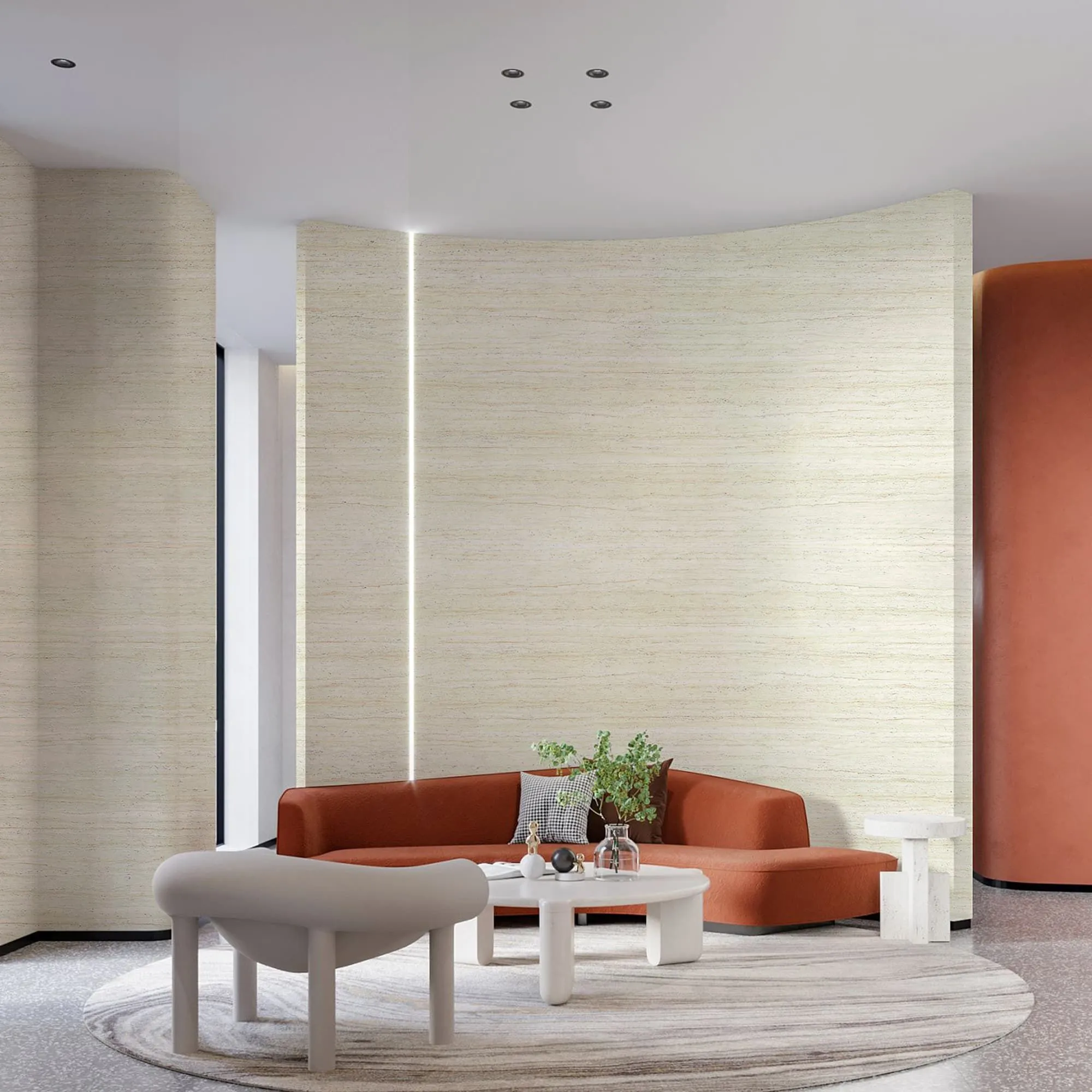
At its core, thread design is about more than aesthetics—it's about emotion. A well-designed retail space doesn't just look good; it feels good. It makes customers feel happy, inspired, or even nostalgic, and those feelings translate into loyalty. MCM materials are uniquely suited to this emotional work because they're not just "materials"—they're carriers of meaning.
Take, for example, a home décor store that uses a combination of wood grain board, wave panels, and starry blue travertine. The wood grain creates a sense of warmth, making customers feel at ease as they browse. The wave panels guide them through the space, their rhythm creating a sense of calm that encourages exploration. And the starry blue travertine accent wall, placed behind a display of decorative (lighting), adds a touch of magic, making the products feel special and desirable. Together, these materials tell a story: "This is a space where you can find beauty, comfort, and a little bit of wonder for your home." Customers don't just buy a lamp—they buy into that story.
Another example: a fitness apparel store using flexible stone, fair-faced concrete, and "lunar peak silvery" MCM panels. The flexible stone curves around the changing rooms, creating a sense of privacy and flow. The fair-faced concrete walls evoke durability and strength, aligning with the brand's focus on resilience. The lunar peak silvery panels, with their metallic sheen, add a futuristic edge that speaks to innovation. Together, the materials say, "This brand understands your journey—strength, resilience, and forward momentum." It's a message that resonates emotionally, making customers feel like the brand "gets" them.
Of course, beautiful design means little if it's not practical. MCM materials shine here, too, offering solutions to common retail challenges like durability, cost, and installation time. Let's break down the practical side of integrating these materials into thread design:
One of the biggest advantages of MCM is its ease of installation. Unlike traditional stone or concrete, which require heavy machinery and specialized labor, MCM panels are lightweight and can be cut, shaped, and installed with basic tools. This makes them ideal for both new builds and store renovations, where time and budget are often tight. For example, flexible stone can be applied to existing walls with adhesive, eliminating the need for demolition. Wave panels can be mounted on a simple frame, allowing for quick updates if the brand wants to refresh its look.
Retail spaces are high-traffic zones, so materials need to stand up to scuffs, spills, and constant use. MCM materials are engineered for durability: flexible stone resists scratches, fair-faced concrete is stain-resistant, and wood grain board won't warp or fade in sunlight. Maintenance is also a breeze—most MCM panels can be cleaned with a damp cloth and mild soap, eliminating the need for expensive sealing or treatments. For busy retailers, this means less downtime and more focus on what matters: the customer experience.
Modern consumers care about sustainability, and brands are taking notice. MCM materials are often more eco-friendly than their traditional counterparts, as they use recycled materials (like reclaimed stone powder or recycled polymers) and require less energy to produce and transport. For example, "foamed aluminium alloy board" MCM panels are lightweight, reducing transportation emissions, while "epoch stone" and "century stone" variants mimic natural stone without depleting finite resources. By choosing MCM, brands can weave sustainability into their thread design narrative, appealing to eco-conscious customers and reducing their environmental footprint.
As retail continues to evolve, so too will thread design and MCM materials. Here are a few trends to watch:
Sustainability as a Core Thread: Expect to see more MCM materials made from recycled or biodegradable components, with "green" certifications front and center in design narratives. Brands will use materials like "gobi panel" (inspired by desert landscapes) or "historical pathfinders stone" (mimicking ancient, weathered stone) to tell stories of resilience and connection to the planet.
Tech-Integrated Materials: MCM panels with built-in lighting, touch-sensitive surfaces, or even digital displays could become more common. Imagine wave panels that light up to guide customers to sales or starry travertine that changes color with the time of day, creating a dynamic, ever-evolving space.
Personalized Spaces: With MCM's flexibility, brands may start creating "modular" thread designs that can be updated seasonally. A clothing store, for example, could swap out "travertine (vintage gold)" panels for "travertine (starry orange)" in the fall to reflect seasonal themes, keeping the space fresh and engaging.
Retail design is no longer about filling a space with products. It's about creating experiences that matter, and thread design is the art of making those experiences cohesive, emotional, and unforgettable. MCM materials—with their flexibility, durability, and ability to tell stories—are the perfect tools for this art. Whether it's the flow of flexible stone, the rhythm of wave panels, the warmth of wood grain, or the wonder of starry travertine, each material adds a unique "thread" to the retail narrative, guiding customers on a journey that feels both intentional and natural.
As we look to the future, one thing is clear: the most successful retail spaces will be those that feel like stories—stories that customers want to be part of. And with MCM, designers have everything they need to write those stories beautifully. So the next time you walk into a store and feel that pull to explore, to touch, to linger—chances are, you're feeling the magic of thread design, woven into every MCM panel, curve, and texture.
Recommend Products












