
Last month, I found myself in a lively debate with a group of architects over coffee in downtown Portland. The topic? The biggest challenge in modern facade design. "It's the balance," said Elena, a senior architect at a firm specializing in sustainable buildings. "You want something that looks stunning, lasts decades, and doesn't weigh the building down like a lead blanket. Oh, and it needs to handle whatever the weather throws at it—rain, wind, even the occasional hailstorm." As the conversation went on, one term kept popping up: Thread Technology. Not the kind you find in a sewing kit, but a game-changing innovation quietly redefining how we approach architectural cladding. Intrigued, I spent the next few weeks digging into labs, talking to material engineers, and visiting construction sites to understand why this technology is becoming the secret weapon for architects and designers worldwide.
If you've ever marveled at a building that seems to defy the limits of traditional materials—think a curved stone facade that looks impossibly lightweight, or a textured wall that shimmers with depth—there's a good chance Thread Technology played a role. It's not just about adding pretty patterns; it's about reimagining the very structure of cladding materials to make them smarter, stronger, and more adaptable. In this article, we'll break down what Thread Technology is, how it works, and why it's quickly becoming indispensable in modern architecture. We'll also explore how it's transforming familiar materials like MCM flexible stone and travertine (starry blue) into something entirely new, and why even classic choices like fair-faced concrete are getting a high-tech upgrade. Let's dive in.
Let's start with the basics. When we talk about Thread Technology in cladding, we're referring to a manufacturing process that integrates ultra-thin, high-strength fibers (the "threads") into the core of cladding materials. These threads—often made from materials like fiberglass, carbon fiber, or advanced polymers—are woven, layered, or embedded into the material matrix. The result? A product that retains the aesthetic appeal of traditional materials (think the warmth of wood, the elegance of stone) but with a boost in performance that's hard to overstate.
Here's a simple way to think about it: Imagine a regular sheet of stone cladding. It's heavy, brittle, and if you try to bend it even a little, it cracks. Now, imagine adding thousands of tiny, flexible threads throughout that stone—like reinforcing a cake with straws, but on a microscopic scale. Suddenly, that stone can flex without breaking, resist impact better, and even shed weight because the threads add strength without bulk. That's the magic of Thread Technology: it turns rigid, heavy materials into something surprisingly adaptable.
What really sets Thread Technology apart, though, is its precision. Unlike traditional reinforcement methods (which often involve adding a separate mesh layer), these threads are integrated during the material's formation. This means engineers can control exactly where the strength goes. Want a panel that's extra flexible along its edges for curved surfaces? Embed more threads there. Need a section that's highly resistant to moisture? Mix in water-repellent threads. It's like tailoring a material's DNA to fit the project's specific needs.
"We used to design around the limitations of materials," explained Raj, a materials engineer at a leading cladding manufacturer I visited in Denver. "If a client wanted a curved facade, we'd have to use lightweight metal panels because stone was too rigid. Now, with Thread Technology, we can take a material like travertine (starry blue) —which is naturally porous and brittle—and make it bendable enough to wrap around a building's curves. The threads act like a skeleton, holding everything together while letting the stone keep its natural beauty."
To understand the science, let's step into the lab for a minute (don't worry, I'll keep the chemistry jargon to a minimum). Most cladding materials—stone, concrete, even some woods—are made up of a matrix (the main material) and natural or artificial binders that hold it together. In traditional manufacturing, these matrices are often dense and uniform, which is why they're strong but inflexible. Thread Technology disrupts that uniformity by introducing a network of fibers that interact with the matrix in two key ways: load distribution and crack resistance.
When a material is stressed—say, by wind pushing against a facade—the force tends to concentrate in weak spots, leading to cracks. Threads act like tiny bridges, spreading that force evenly across the panel. If a small crack does start to form, the threads catch it, preventing it from spreading. It's similar to how a spider's web absorbs the impact of a falling leaf: the threads distribute the energy so no single point takes the brunt.
The type of thread matters, too. For example, fiberglass threads are great for adding tensile strength (resistance to stretching) and are cost-effective, making them a popular choice for materials like MCM flexible stone . Carbon fiber threads, on the other hand, are lighter and stronger, ideal for high-performance applications where weight is a concern—think skyscrapers or buildings in earthquake-prone areas. Some manufacturers even mix thread types: a base layer of fiberglass for durability, topped with a layer of polymer threads for flexibility. It's material engineering as a fine art.
Curious about how this actually gets made? I toured a production facility in Atlanta that specializes in Thread Technology cladding, and the process was equal parts high-tech and surprisingly hands-on. Let's take MCM flexible stone as an example. MCM, or Modified Composite Material, is already known for being lightweight, but adding threads takes it to another level. Here's a simplified breakdown:
The whole process takes just a few hours, which is why Thread Technology cladding is often more cost-effective than traditional materials—no need for expensive cutting or reinforcement after production. "We can produce a curved wood grain board panel with Thread Technology in half the time it used to take with traditional methods," Raj told me. "And it costs 30% less because we're not wasting material on excess thickness for strength."
So, why are architects and builders racing to adopt Thread Technology? After talking to dozens of industry professionals, five benefits stood out as the most transformative:
"Weight is the enemy of modern architecture," Elena, the Portland architect, told me. "Every pound adds stress to the building's structure, which means more steel, more concrete, and higher costs." Traditional stone cladding can weigh 20–30 pounds per square foot; Thread Technology versions? As little as 5–8 pounds. That's a game-changer for retrofits, where the existing structure can't support heavy materials, or for tall buildings where wind resistance is critical. A 50-story tower using Thread Technology cladding could save thousands of pounds in structural support—money that can be redirected into other design features.
Gone are the days when cladding had to be flat or slightly angled. Thread Technology allows panels to bend up to 30 degrees without cracking, opening up a world of design possibilities. I visited a construction site in Seattle where workers were installing MCM flexible stone panels in a sweeping, wave-like pattern for a performing arts center. "Ten years ago, this would have required custom metal panels that looked nothing like stone," said the site foreman. "Now, we're using real stone composite with threads, and it bends like fabric. The client wanted the building to look like it's 'dancing,' and this technology made it possible."
In a lab test I witnessed, a Thread Technology fair-faced concrete panel was subjected to 500 cycles of freeze-thaw (a common test for weather resistance). Traditional concrete panels typically crack after 300 cycles; this one? It showed no signs of damage. The threads act as a "shock absorber," preventing small cracks from spreading into big problems. "We warranty our Thread Technology cladding for 50 years," Raj said. "Traditional stone cladding warranties are usually 20–25 years. That's the difference threads make."
Want a facade that looks like woven fabric? Weaving (beige) cladding with integrated threads can mimic the texture of a handwoven rug. Dream of a building that shimmers like a starry sky? Travertine (starry blue) with metallic threads embedded in the matrix creates that effect. Thread Technology isn't just about function—it's about unlocking new aesthetic possibilities. "Clients used to say, 'I want stone, but I want it to curve,' and we'd have to say no," Elena laughed. "Now, we say, 'How curvy do you want it?'"
Sustainability isn't just a buzzword anymore—it's a requirement. Thread Technology checks multiple green boxes: lighter panels mean less fuel for transportation, less material waste during production, and lower energy use for heating and cooling (since lightweight cladding can be paired with better insulation). Many Thread Technology materials, like MCM flexible stone , are also recyclable, and the reduced need for structural steel cuts down on a building's carbon footprint. "We used Thread Technology cladding on a net-zero office building last year," Elena said. "It helped us meet LEED Platinum certification because of the weight savings and recyclability."
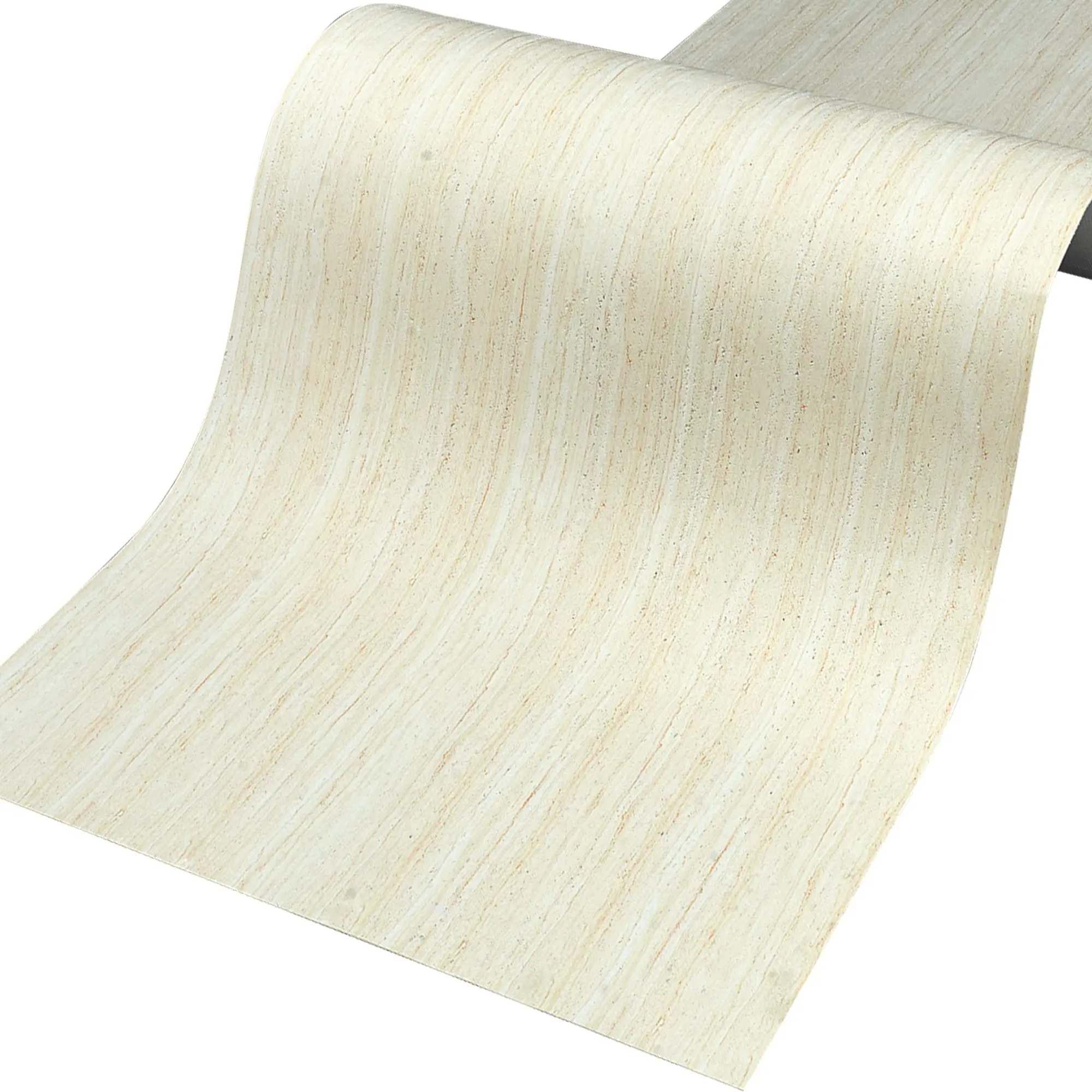
Thread Technology isn't limited to one material—it's a versatile process that enhances everything from stone to concrete. Here's how it's transforming five popular cladding options, along with real-world examples of how they're being used:
| Material | How Thread Technology is Applied | Key Advantage | Ideal Project Type |
|---|---|---|---|
| MCM Flexible Stone | Carbon fiber threads woven in a diagonal pattern for maximum flexibility. | Can bend up to 25 degrees without cracking; 70% lighter than natural stone. | Curved facades, retrofits, high-rise buildings. |
| Travertine (Starry Blue) | Fiberglass threads embedded in a grid pattern to reinforce porous stone. | Resists water absorption (critical for freeze-thaw climates); retains natural veining. | Feature walls, hotel lobbies, outdoor plazas. |
| Weaving (Beige) | Polymer threads mixed with natural fibers (jute, cotton) for a textile-like texture. | Soft, warm appearance with the durability of composite material; fire-resistant. | Interior accent walls, retail spaces, hospitality venues. |
| Wood Grain Board | Bamboo threads woven into the core to mimic wood grain and add stability. | Resists warping and rot; looks like real wood but lasts 3x longer outdoors. | Residential exteriors, decking, outdoor pavilions. |
| Fair-Faced Concrete | Steel threads mixed with the concrete matrix for crack resistance. | Thinner panels (1–2 inches vs. 4–6 inches) with the same strength; industrial-chic look. | Modern homes, art galleries, commercial warehouses. |
To see these materials in action, look no further than the Riverfront Arts Center in Chicago, which opened last spring. The building's signature feature is a 12-story curved facade made from travertine (starry blue) with Thread Technology. "We wanted the facade to look like a river flowing upward," said James Chen, the project's lead designer. "Traditional travertine would have been too heavy and brittle to curve, but with Thread Technology, we could create those sweeping lines. And the starry blue color—achieved with mineral pigments mixed into the matrix—shimmers in the sunlight. It's become a landmark because it looks impossible, but it's totally functional."
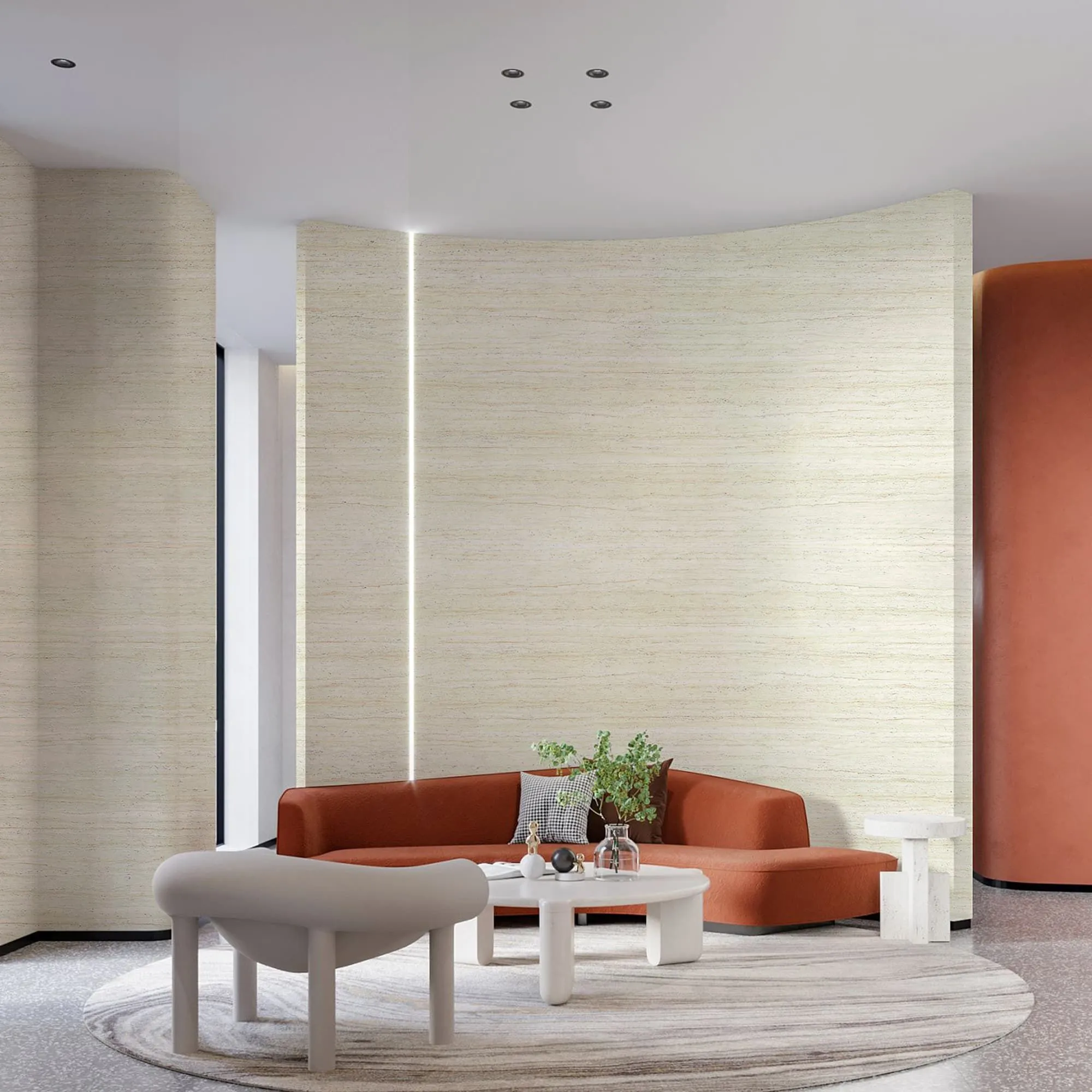
The center's lobby also features weaving (beige) cladding on the walls, which mimics the texture of handwoven fabric. "We wanted a warm, inviting space that felt less like a museum and more like a community hub," Chen explained. "The weaving (beige) panels add softness, and because they're reinforced with threads, we didn't have to worry about damage from foot traffic or humidity. Six months in, they still look brand new."
If Thread Technology is so great, why hasn't it been around longer? The answer lies in materials science: it took decades to develop threads strong enough, thin enough, and affordable enough to integrate into cladding. Carbon fiber, for example, was once reserved for aerospace applications; now, advances in manufacturing have made it accessible for construction. "Ten years ago, a square foot of Thread Technology cladding would have cost $100," Raj told me. "Now, it's $25–$30—comparable to high-end traditional materials, but with better performance."
Another factor? The rise of extreme weather. As storms, heatwaves, and freeze-thaw cycles become more frequent, buildings need cladding that can withstand the elements. Thread Technology materials are proving their resilience: a fair-faced concrete panel with thread reinforcement survived Hurricane Ian in Florida with no damage, while neighboring buildings with traditional concrete cladding had cracks and water leaks. "Climate change isn't coming—it's here," Elena said. "Thread Technology isn't just about aesthetics; it's about building for survival."
Then there's the demand for unique, Instagram-worthy architecture. In a world where buildings are shared on social media, standing out matters. Thread Technology lets architects push boundaries—curves, textures, and materials that were once impossible are now feasible. "Clients want their buildings to be memorable," Chen said. "Thread Technology gives us the tools to create something that stops people in their tracks, without compromising on function."
The innovation doesn't stop here. Material engineers are already working on next-gen Thread Technology, including self-healing threads (which can repair small cracks when exposed to heat) and conductive threads (which could turn cladding into a solar panel or heating element). "Imagine a wood grain board facade that generates electricity from sunlight," Raj said, eyes lighting up. "Or a travertine (starry blue) panel that heats up in winter to melt snow. We're not there yet, but we're close."
There's also a push for more sustainable thread materials. Companies are experimenting with hemp fibers and recycled polyester threads to reduce the environmental impact even further. "We're testing a version of MCM flexible stone with threads made from recycled plastic bottles," Raj told me. "Early results are promising—same strength, 50% lower carbon footprint."
As I wrapped up my research, I visited a construction site in Austin where workers were installing wood grain board cladding with Thread Technology on a affordable housing complex. "This project would have been impossible with traditional wood cladding," the site manager told me. "We needed something durable, lightweight, and affordable. Thread Technology checked all three boxes, and the tenants love how it looks—like a high-end apartment, not 'affordable housing.'"
That's the real power of Thread Technology: it's not just for luxury buildings or iconic skyscrapers. It's for schools, hospitals, community centers—spaces where durability, cost, and aesthetics matter most. It's about making great design accessible to everyone, regardless of budget or location. As Elena put it: "Architecture is about solving problems. Thread Technology is the solution we've been waiting for."
So, the next time you walk past a building with a facade that seems to bend, shimmer, or defy the odds, take a closer look. Chances are, Thread Technology is the invisible hand holding it all together—strong, flexible, and ready to shape the skyline of tomorrow.
Recommend Products












