
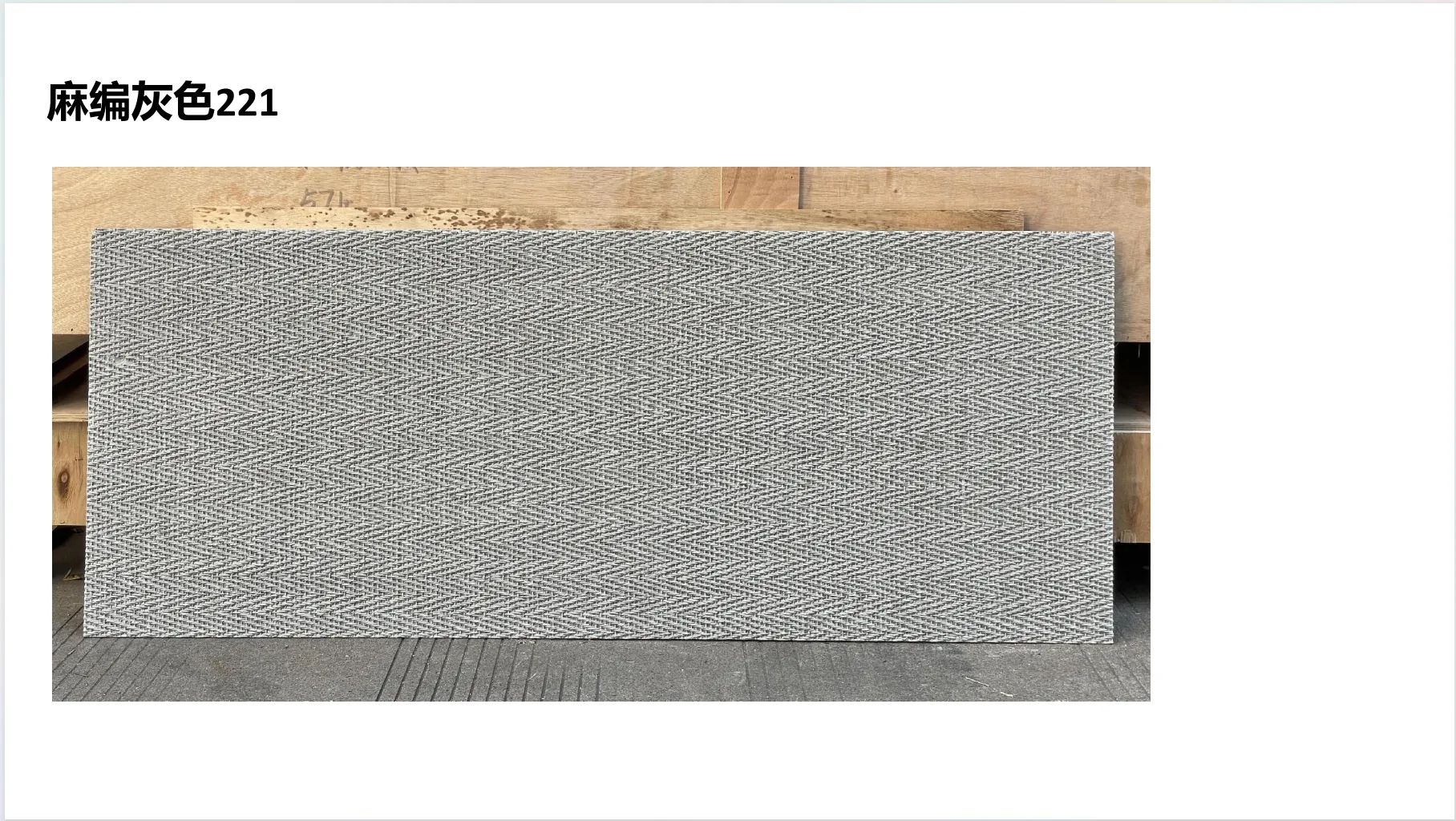
Shopping malls have evolved far beyond mere retail spaces. Today, they are dynamic hubs of experience, where architecture, design, and ambiance converge to create memories. In this era of "experiential retail," the materials that clothe a mall's walls, ceilings, and facades play a pivotal role—they don't just fill space; they tell stories, evoke emotions, and shape how visitors connect with the environment. Enter the MCM Big Slab Board Series , a lineup of innovative building materials designed to redefine commercial aesthetics. Among its standout offerings is weaving real photos —a texture that marries the tactile warmth of woven fabrics with the authenticity of real captured imagery. In this article, we'll explore why integrating weaving real photos into MCM Big Slab Boards is a game-changer for modern shopping mall design, delving into five key reasons that blend artistry, functionality, and human-centric appeal.
In a world saturated with generic mall designs, differentiation lies in storytelling. Shoppers don't just buy products—they seek experiences rooted in meaning, nostalgia, or inspiration. Weaving real photos, as a surface texture in MCM Big Slab Boards, transforms static walls into dynamic storytellers. Unlike flat, uniform materials like fair-faced concrete or even textured options like wood grain board , weaving real photos embeds actual imagery into the material's weave—think snapshots of sunlit meadows, vintage textiles, or cultural motifs—creating a visual depth that invites closer inspection.
Consider a luxury mall aiming to evoke a sense of "timeless elegance." By using weaving real photos that replicate the intricate patterns of antique silk tapestries, the walls themselves become part of the brand's narrative, transporting visitors to a world of craftsmanship and heritage. Similarly, a youth-focused mall might opt for weaving real photos of urban street art or digital pixel patterns, aligning with the energetic, trend-driven tastes of its audience. The key here is authenticity: these are not digitally rendered simulations but high-resolution, real photos captured and integrated into the MCM slab's surface during production, ensuring each thread, each color gradient, feels genuine.
This storytelling power is amplified by the MCM Big Slab Board Series' large format. With slabs spanning up to 3 meters in length, weaving real photos can create sweeping, immersive visuals—ideal for feature walls in atriums, food courts, or entrance lobbies. Imagine a mall's central corridor lined with these slabs, where the woven texture shifts from images of local flora (connecting to the region's identity) to abstract geometric patterns (appealing to modern sensibilities). It's not just decoration; it's a journey—one that encourages visitors to slow down, engage, and share their experience on social media, turning the mall into a "Instagrammable" destination.
Shopping malls cater to diverse audiences, from high-end luxury shoppers to families seeking casual outings. A one-size-fits-all design approach falls flat, which is where the versatility of weaving real photos in MCM Big Slab Boards shines. Unlike rigid materials such as granite portoro or marble veil white , which often lock designers into a specific aesthetic (e.g., opulence, minimalism), weaving real photos offers endless customization—both in imagery and texture.
Visually, the "weaving" element adds layers of complexity. The interplay of light and shadow on the textured surface creates depth, making spaces feel larger and more dynamic. For instance, a mall with a warm, earthy theme might pair weaving real photos (featuring images of jute fibers or dried palm leaves) with travertine (beige) accents, while a sleek, futuristic mall could opt for woven patterns with metallic threads and foamed aluminium alloy board (vintage silver) highlights. The material's adaptability ensures it complements, rather than clashes with, existing design elements—whether that's wood, metal, or glass.
Tactilely, weaving real photos adds a sensory dimension often missing in commercial spaces. Run a hand over the surface, and you'll feel the subtle ridges of the woven "threads," a contrast to the cold smoothness of polish concrete or the hardness of rough granite stone . This tactile quality is particularly impactful in family-friendly malls, where children (and curious adults) are drawn to textures they can touch. It also enhances accessibility: the gentle texture provides visual and tactile cues for visually impaired visitors, aligning with inclusive design principles.
To illustrate this versatility, let's compare weaving real photos with other popular MCM textures using a quick breakdown:
| Feature | Weaving Real Photos | Wood Grain Board | Fair-Faced Concrete |
|---|---|---|---|
| Visual Style | Dynamic, narrative-driven (real imagery + woven texture) | Rustic, organic (mimics natural wood patterns) | Industrial, minimalist (raw, uncoated finish) |
| Customization | Unlimited (photos, colors, thread patterns) | Limited (wood species, grain direction) | Low (color tinting only) |
| Tactile Appeal | High (textured "threads," varying depth) | Medium (subtle grain texture) | Low (smooth or slightly porous) |
| Ideal Mall Vibe | Eclectic, experiential, storytelling-focused | Warm, cozy, nature-inspired | Modern, industrial, understated |
As the table shows, weaving real photos isn't just another texture—it's a chameleon, able to shift from bohemian to contemporary, from nostalgic to cutting-edge. This flexibility makes it a go-to choice for mall designers looking to balance brand consistency with fresh, evolving aesthetics.
Beauty means little if it can't withstand the demands of a busy shopping mall. High foot traffic, accidental scrapes, spills, and exposure to varying temperatures (from air conditioning to sunlight through glass roofs) test even the sturdiest materials. Here, the MCM Big Slab Board Series' inherent durability, paired with the resilience of weaving real photos, delivers a solution that's as tough as it is attractive.
MCM (Modified Composite Material) is engineered for performance: lightweight (up to 80% lighter than natural stone), impact-resistant, and weatherproof. Weaving real photos, integrated into the MCM matrix during production, inherits these properties. Unlike traditional woven fabrics (which fade, fray, or stain), the "threads" in weaving real photos are actually high-density polymer composites, printed with UV-resistant inks. This means they won't fade under prolonged sunlight, won't absorb stains from food or drink spills, and can be easily cleaned with a damp cloth—critical for high-traffic areas like food courts or kids' play zones.
Installation is another practical advantage. MCM Big Slab Boards are flexible, allowing them to be curved or bent around architectural features (think circular columns or curved walls in a modern mall). Weaving real photos, with its seamless design, maintains visual continuity even on curved surfaces—a feat difficult to achieve with rigid materials like boulder slab or cut stone (grey) . This flexibility also reduces installation time and labor costs, a boon for mall developers working on tight schedules.
Longevity is key, too. MCM materials are designed to last decades, and weaving real photos is no exception. Unlike painted walls (which require frequent touch-ups) or wallpaper (prone to peeling), these slabs retain their vibrancy and texture over time. For mall operators, this translates to lower maintenance costs and a consistently fresh, appealing look—ensuring the space remains inviting year after year.
Today's shoppers—especially millennials and Gen Z—care deeply about sustainability. They're more likely to support brands (and by extension, malls) that prioritize eco-friendly practices. Weaving real photos in MCM Big Slab Boards aligns with this trend, offering a greener alternative to resource-intensive materials like natural marble or granite.
MCM production uses up to 70% recycled materials (including industrial byproducts and post-consumer plastics), reducing reliance on quarried stone or mined metals. Weaving real photos takes this a step further by eliminating the need for additional decorative elements (like separate wall art or fabric panels), which often have short lifespans and end up in landfills. Instead, the imagery is integral to the slab itself, ensuring no wasteful add-ons.
Moreover, the lightweight nature of MCM reduces transportation emissions—critical for large-scale projects where materials are shipped from manufacturers to construction sites. A single truck can carry far more MCM slabs than natural stone, cutting down on fuel use and carbon footprint. For mall developers aiming for green building certifications (like LEED or BREEAM), this sustainability edge can contribute to points in categories like "Materials and Resources" or "Innovation in Design."
There's also a subtle psychological benefit here. Shoppers increasingly seek "authentic" and "natural" experiences, and weaving real photos—with its imagery of organic textures (think bamboo mat board patterns or stream limestone ripples)—taps into this desire without depleting natural resources. It's a "win-win": malls get the aesthetic of natural materials, and consumers feel good about supporting a space that prioritizes the planet.
In a crowded retail landscape, malls must cultivate a distinct brand identity to stand out. Is it a luxury destination? A family-friendly community hub? A trendsetting lifestyle center? Weaving real photos in MCM Big Slab Boards becomes a visual extension of that identity, reinforcing the mall's "personality" in the minds of visitors.
Consider two hypothetical malls: "Heritage Plaza," which celebrates local culture, and "Futura Mall," a tech-forward space for young innovators. Heritage Plaza might use weaving real photos featuring historical pathfinders stone imagery—replicas of ancient carvings or traditional textiles from the region—on its facade and interior walls, immediately signaling its commitment to local heritage. Futura Mall, by contrast, could opt for weaving real photos with lunar peak silvery and ethereal shadow travertine patterns, creating a sleek, otherworldly vibe that appeals to its tech-savvy audience.
This brand alignment fosters deeper customer engagement. When a mall's design feels intentional and authentic, visitors are more likely to develop an emotional connection. They'll associate the space with positive feelings—nostalgia, excitement, belonging—and are thus more likely to return, spend more time, and recommend it to others. Weaving real photos enhances this connection by making the mall feel "human": not just a collection of stores, but a place with character and stories to tell.
Even small design choices can this. For example, a mall targeting wellness might use weaving real photos with imagery of gobi panel textures (evoking calm desert landscapes) in its yoga studio or wellness center. A pet-friendly mall could integrate weaving real photos of bali stone and wood line patterns in its outdoor pet park, creating a warm, inviting space for both pets and their owners. These details don't just decorate—they communicate that the mall understands and caters to its audience's needs.
Shopping malls are no longer just about transactions; they're about creating spaces that inspire, connect, and endure. The MCM Big Slab Board Series, with its innovative weaving real photos texture, embodies this shift. It's a material that tells stories, adapts to diverse aesthetics, stands up to daily wear, aligns with sustainability values, and strengthens brand identity—all while adding a layer of human warmth often missing in commercial design.
For mall developers and designers, the message is clear: to create spaces that resonate, you need materials that do more than fill walls—they engage, evoke, and endure. Weaving real photos in MCM Big Slab Boards isn't just a design choice; it's an investment in experiences that turn first-time visitors into loyal patrons, and malls into beloved community landmarks. In the end, it's not about the slabs themselves—it's about the memories they help create.
Recommend Products












