
Everything architects, designers, and builders need to know about this timeless material
If you've spent any time scrolling through luxury hotel lobbies, high-end residential exteriors, or iconic commercial spaces lately, there's a good chance you've encountered Roman Huge Travertine —and maybe even stopped to admire its striking presence. This material has exploded in popularity among architects and designers, thanks to its ability to blend grandeur with subtlety, ancient charm with modern durability. But with that popularity comes questions: How is it different from regular travertine? Is it suitable for my climate? What about installation? To clear the air, we sat down with MCM's team of materials specialists—seasoned pros with decades of experience in stone and composite materials—to get the inside scoop. Here's what they had to say.
"Great question," says Maria Lopez, MCM's Senior Materials Specialist, with a smile. "Let's start with the basics: travertine is a natural stone formed by mineral deposits from hot springs, known for its porous texture and earthy tones. But Roman Huge Travertine takes that foundation and amplifies it—literally. The 'huge' in the name refers to its size: these slabs are massive, often measuring up to 3 meters in length and 1.5 meters in width. That's a game-changer for designers who want seamless, monolithic surfaces without the hassle of multiple small tiles."
But size isn't the only differentiator. "Roman Huge Travertine is also quarried using more precise techniques," Maria explains. "Traditional travertine can be inconsistent in density and color, but we source our Roman Huge slabs from specific quarries in Italy and Turkey that have been producing high-quality stone for centuries. The result is a material with fewer voids, more uniform coloration, and enhanced structural integrity. It's like comparing a hand-painted mural to a mass-produced print—both are art, but one has that extra level of craftsmanship."
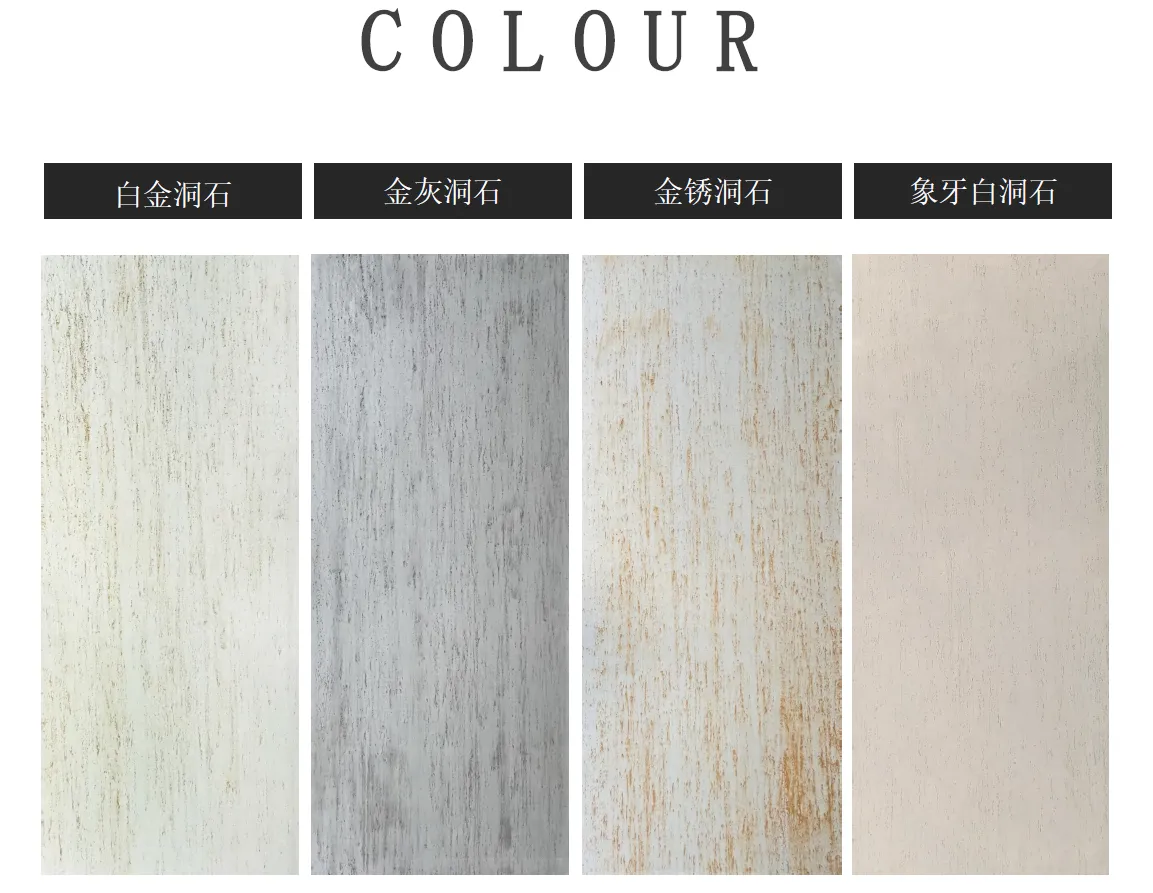
Another key distinction? Finish options. While standard travertine often comes in polished or honed finishes, Roman Huge Travertine offers specialized treatments like "vintage silver" or "vintage gold" patinas, which give it a weathered, timeworn look that feels both historic and contemporary. "We've had clients pair it with travertine (starry green) accents for a celestial-inspired design, or contrast it with fair-faced concrete for an industrial-meets-classic vibe," Maria adds. "The versatility is unmatched."
"This is probably the most common question we get," admits Raj Patel, MCM's Technical Director, leaning forward. "And the short answer is: absolutely—but it depends on preparation." Raj explains that while natural stone can be porous, Roman Huge Travertine undergoes a proprietary sealing process at the factory that fills in micro-voids and creates a barrier against moisture, stains, and UV rays. "We tested it in our lab against everything from desert heat (think Dubai summers) to freezing rain (like in northern Europe), and it held up impressively. The key is proper installation and maintenance, which we'll get to later."
For high-traffic areas—think airport terminals or shopping mall floors—Raj recommends pairing Roman Huge Travertine with MCM flexible stone in high-wear zones. " MCM flexible stone is a composite material that mimics the look of natural stone but with added flexibility and impact resistance," he notes. "Use Roman Huge for the main surfaces to make a statement, then integrate flexible stone in areas prone to scuffs or heavy foot traffic. It's a one-two punch of beauty and practicality."
He also points to real-world examples: "We supplied Roman Huge Travertine for a luxury resort in the Maldives a few years back. The pool deck is exposed to saltwater, intense sun, and constant foot traffic, and after three years, it still looks brand new. The sealing held up, and the stone's natural thermal resistance keeps it cool underfoot—even in 35°C weather. That's the durability we're talking about."
"Ah, installation—where even the most beautiful material can go wrong if you cut corners," says Carlos Mendez, MCM's Installation Specialist, with a knowing nod. "Roman Huge Travertine slabs are heavy—we're talking 80-100kg each—so the first rule is: hire a crew with experience in large-format stone. You don't want someone used to tiling kitchen backsplashes tackling this."
Carlos breaks down the process step by step: "Start with the substrate. It needs to be perfectly level and structurally sound—no cracks, no unevenness. We recommend using a reinforced mortar bed or a high-strength adhesive specifically designed for natural stone. For exterior walls, consider a rainscreen system to allow for drainage and prevent moisture buildup behind the slabs."
Another pro tip? "Dry-fit the slabs first," Carlos emphasizes. "Lay them out on the ground to check for color consistency and pattern flow. Roman Huge Travertine has natural variations—those are part of its charm—but you want to arrange them so the transitions feel intentional, not random. It's like arranging a puzzle: take your time, and the end result will be worth it."
For projects where weight is a concern—like high-rise exteriors—Carlos suggests exploring MCM big slab board series as an alternative or complement. " MCM big slab board series offers the look of large-format stone but at a fraction of the weight, since it's a composite material," he explains. "We often see clients mix Roman Huge Travertine for lower levels (where weight isn't an issue) with big slab boards for upper floors. It keeps the design cohesive while making installation safer and more efficient."
"Oh, the design possibilities are endless," says Lila Chen, MCM's Creative Director, her eyes lighting up. "Right now, we're seeing two big trends: 'monolithic minimalism' and 'ancient-modern fusion.'" Let's unpack that.
"Monolithic minimalism is all about using large, unbroken slabs of Roman Huge Travertine to create a sense of calm and spaciousness," Lila explains. "Think a entire living room wall clad in the stone, with hidden lighting to highlight its texture, or a kitchen countertop that extends seamlessly from the cabinets to the backsplash. The key is to let the stone speak for itself—no busy patterns, just clean lines and the stone's natural beauty."
Then there's ancient-modern fusion: "Designers are pairing Roman Huge Travertine with ultra-modern materials to create contrast. For example, we worked on a boutique hotel in Lisbon where the lobby features Roman Huge Travertine floors with foamed aluminium alloy board (vintage silver) accents—think sleek metal panels alongside the stone's organic texture. The result is a space that feels both timeless and cutting-edge."
She also mentions color coordination: "Don't sleep on complementary stones! Travertine (starry green) is a favorite right now—it has these subtle iridescent flecks that pop when paired with Roman Huge's warm neutrals. Or for a bolder look, try travertine (starry red) as an accent wall. It's unexpected but surprisingly harmonious."
"Sustainability is non-negotiable for us at MCM," says James Wilson, MCM's Sustainability Lead. "So let's be transparent: natural stone quarrying does have an environmental impact, but Roman Huge Travertine is actually one of the more sustainable options out there—especially when sourced responsibly."
James breaks it down: "First, travertine is a renewable resource, in the sense that new deposits are constantly forming (though very slowly). But more importantly, our quarries follow strict EU and international standards for land restoration. After extraction, we replant native vegetation, restore waterways, and ensure the land can be reused for agriculture or forestry. We also minimize waste by using 95% of the stone extracted—even the offcuts are repurposed into smaller tiles or crushed for aggregate."
He also highlights the material's longevity: "A Roman Huge Travertine installation can last 50+ years with proper care, which means less frequent replacement compared to synthetic materials that degrade faster. That longevity is a huge sustainability win—less waste, less energy spent on manufacturing and transportation over time."
For clients who want to go even greener, James suggests combining Roman Huge Travertine with MCM 3D printing series components. "Our 3D-printed materials use recycled stone dust and low-VOC binders, so you can reduce the amount of natural stone needed while still achieving the look you want. It's a win-win."
"This is a common comparison, and honestly, it depends on the project's goals," says Maria Lopez, jumping back in. "Both are excellent, but they shine in different scenarios. Let's put it side by side."
| Feature | Roman Huge Travertine | MCM Big Slab Board Series |
|---|---|---|
| Material Type | Natural stone | Composite (natural stone particles + polymer resin) |
| Weight | Heavy (80-100kg per slab) | Lightweight (30-40kg per slab) |
| Customization | Limited by natural variation | Highly customizable (colors, textures, finishes) |
| Durability | Excellent (resistant to heat, stains with sealing) | Very high (impact-resistant, moisture-proof) |
| Best For | Statement pieces, high-end aesthetics, historical restorations | High-rise exteriors, curved surfaces, budget-conscious projects |
"So, if you're after that authentic natural stone look and feel, and weight isn't a concern, Roman Huge Travertine is the way to go," Maria summarizes. "But if you need something lighter, more customizable, or easier to install on vertical surfaces, the Big Slab Board Series is a fantastic alternative. And remember—they can also work together! Use Roman Huge for the lobby floor and Big Slab for the elevator interiors. Clients often mix them to balance cost, weight, and aesthetics."
"Maintenance is simpler than you might think," says Carlos Mendez, returning to the conversation. "The key is to stay ahead of issues, not chase them." Here's his advice:
"First, sealing is non-negotiable—do it when the stone is installed, then reseal every 2-3 years (more often for high-moisture areas like bathrooms). Use a high-quality penetrating sealer, not a topical one—it'll protect the stone from the inside out without altering its texture."
"For day-to-day cleaning: avoid harsh chemicals or acidic cleaners (like vinegar or lemon), which can etch the stone. Stick to mild soap and warm water, or a pH-neutral stone cleaner. Sweep or vacuum regularly to prevent grit from scratching the surface, and wipe up spills immediately—even sealed stone can stain if liquids sit too long."
"And don't panic if you see a chip or scratch! Small imperfections can often be repaired with a stone filler and touch-up kit. For larger issues, call a professional—they have the tools to grind and polish the stone back to its original condition. With a little care, Roman Huge Travertine will age gracefully, developing a beautiful patina that only adds to its character."
As our conversation wraps up, one thing is clear: Roman Huge Travertine isn't just a material—it's a design statement, a blend of history and innovation that can elevate any space. Whether you're designing a boutique hotel, a luxury home, or a commercial landmark, understanding its nuances will help you make the most of its potential. And with MCM's range of complementary materials—from MCM flexible stone to travertine (starry green) —the possibilities are truly endless.
"At the end of the day," Maria Lopez says, "it's about creating spaces that feel timeless and alive. Roman Huge Travertine does that better than almost any material out there. We can't wait to see what you build with it."
Recommend Products












