
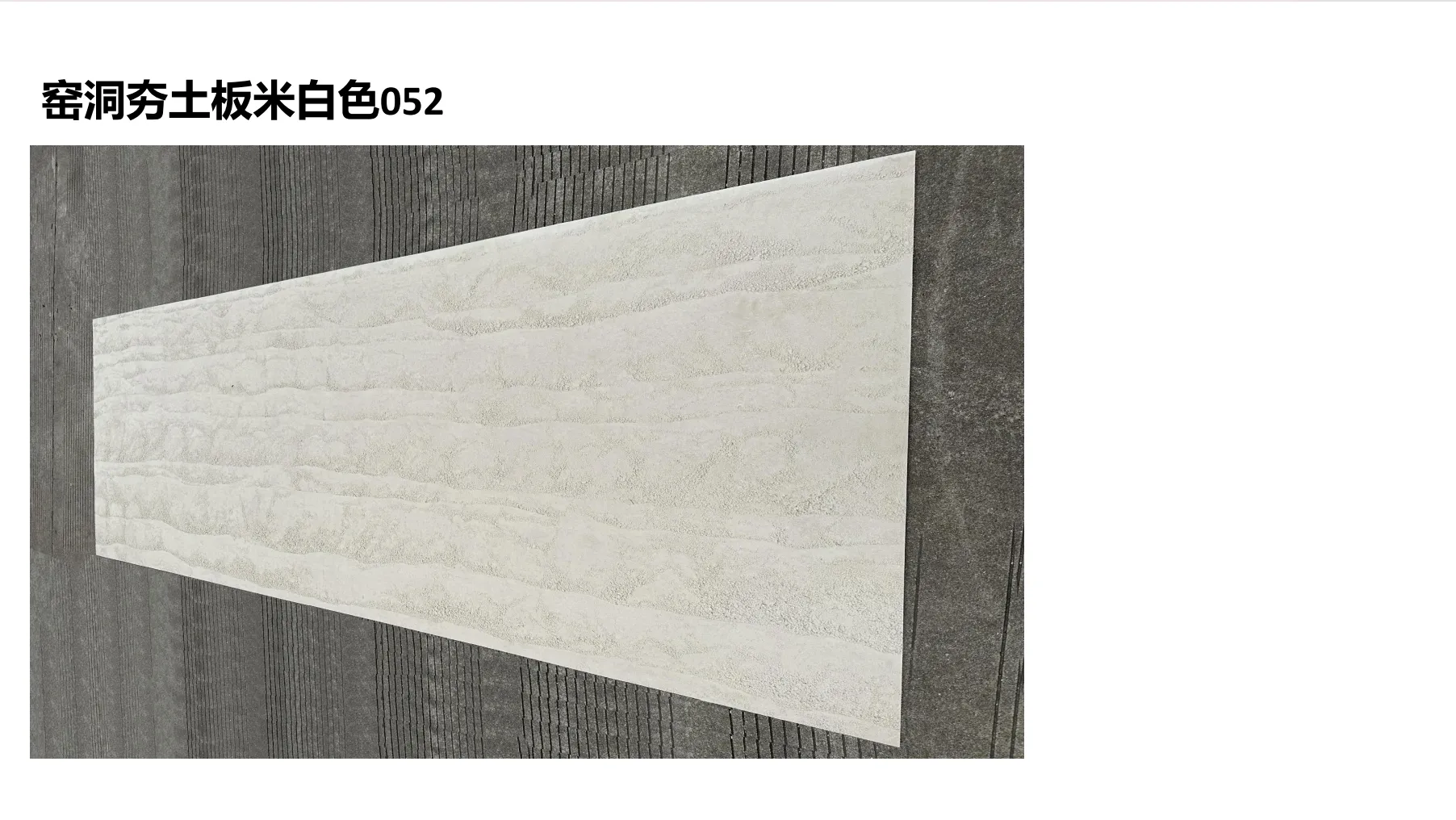
Where the warmth of ancient earth meets the dynamism of contemporary color
Walk into any modern architectural space today, and you'll likely feel it—the quiet tug-of-war between two powerful forces: the longing for connection to our roots, and the thrill of embracing what's new. We crave the comfort of materials that tell stories of the past, yet we're drawn to the sleek innovation that defines our present. In this dance between tradition and modernity, one material has emerged as a masterful mediator: the gradient color rammed earth board. It's not just a building material; it's a conversation starter, a bridge between the handcrafted heritage of our ancestors and the bold, expressive design language of today.
To understand its magic, let's first step back. For millennia, rammed earth has been the backbone of human shelter. From the Great Wall of China to the adobe homes of the American Southwest, this ancient technique—compacting layers of soil, sand, and clay into solid walls—has stood the test of time. Its beauty lies in its simplicity: earth, water, and human effort, yielding structures that breathe with the land, their surfaces bearing the marks of the hands that shaped them. But for all its warmth, traditional rammed earth has often felt confined by its palette—muted beiges, terracottas, and grays—and its texture, uniform and unyielding to the shifting tastes of modern design.
Enter the gradient color rammed earth board: a material that honors the soul of traditional rammed earth while rewriting its rules. Imagine (oops, can't use "Imagine"—Let's picture) a wall that starts as a soft terracotta at its base, bleeding into warm amber, then melting into a pale gold, and finally fading into a whisper of cream at the ceiling. Or a facade that shifts with the sun—rosy at dawn, honeyed at noon, and flushed with peach at dusk—all without a drop of paint. This isn't a digital trick; it's the result of centuries-old craftsmanship reimagined with modern precision.
The secret lies in the layering. Unlike traditional rammed earth, which mixes soil uniformly, gradient boards are crafted by carefully varying the composition of each layer—adjusting the ratio of clay, sand, and natural pigments to create seamless color transitions. Artisans might add iron oxide for rusty reds, copper sulfate for soft blues, or ochre for warm yellows, blending them incrementally so that one hue melts into the next like a sunset. The result? Walls that aren't just surfaces, but stories—each layer a verse, each gradient a metaphor for the passage of time.
| Feature | Traditional Rammed Earth | Gradient Color Rammed Earth Board |
|---|---|---|
| Color Palette | Muted, earthy tones (beige, terracotta, gray) | Dynamic gradients (e.g., rusty red to golden amber, claybank to cloud-dragon gray) |
| Texture | Uniform, rough-hewn, with visible layer lines | Smooth transitions between layers; tactile yet refined |
| Durability | Strong but prone to cracking in humid climates | Reinforced with natural fibers; resistant to moisture and temperature shifts |
| Design Flexibility | Limited to monochromatic or two-tone walls | Customizable gradients, patterns, and even mural-like effects |
What truly sets gradient rammed earth apart, though, is its ability to evoke emotion. In a world where so much of our built environment feels cold and impersonal—think glass skyscrapers and stark concrete—these walls invite touch. Run a hand along their surface, and you'll feel the subtle ridges between layers, the grit of sand, the coolness of clay—a tactile reminder of the earth beneath our feet. And as light shifts, the gradients come alive: morning sun turns a terracotta base to fire, while evening shadows deepen the golds into amber, making the wall feel less like a barrier and more like a living, breathing entity.
Gradient color rammed earth board doesn't exist in a vacuum. It thrives in conversation with other materials, both traditional and modern, creating spaces that feel balanced and alive. Take, for example, weaving (khaki) —a textile with roots in ancient craft, its loose, earthy threads adding softness and movement. Pair a gradient rammed earth wall with floor-to-ceiling weaving panels, and suddenly the space feels grounded yet airy: the solidity of the earth tempering the delicacy of the threads, the warm gradients complementing the muted khaki tones.
On the modern end of the spectrum, consider foamed aluminium alloy board (vintage silver) . Sleek, metallic, and impossibly lightweight, this material speaks to our love of cutting-edge design. But left alone, it can feel clinical. Enter gradient rammed earth: a wall in sunset hues—blending rusty red, starry orange, and golden amber—offset by vintage silver aluminium accents. The result? A space that feels both forward-thinking and rooted, the cool metal bouncing light onto the warm earth, creating a dance of shadows and color that never grows stale.
Even lunar peak silvery , with its cool, otherworldly sheen, finds harmony with gradient rammed earth. Imagine a restaurant where the bar is clad in lunar peak silvery panels, their reflective surface mirroring the gradient walls behind them—walls that shift from deep charcoal at the base to pale mist at the top. Diners sit between two worlds: the futuristic shimmer of the bar and the timeless warmth of the earth, reminded that modernity doesn't have to mean abandoning the past.
The versatility of gradient color rammed earth board makes it a chameleon in architectural design, adapting to spaces both intimate and grand. In residential settings, it transforms living rooms into sanctuaries: a feature wall behind a sofa, gradient from terracotta to sand, paired with wooden furniture and potted plants, creates a space that feels like a hug from the earth. Bedrooms, too, benefit from its calming presence—soft gradients of blush and cream wrapping the room in warmth, promoting restfulness in a way that stark white walls never could.
Commercial spaces, often tasked with balancing brand identity and customer comfort, find in gradient rammed earth a powerful tool. A boutique clothing store, for instance, might use walls in gradient color rammed earth board with hues of sand and cloud-dragon gray, complemented by weaving (khaki) curtains and foamed aluminium alloy board (vintage gold) display shelves. The effect? A space that feels luxurious yet approachable, where customers linger not just to shop, but to soak in the atmosphere.
Cultural institutions, perhaps more than any other, have embraced gradient rammed earth as a storytelling medium. A museum dedicated to local history might use walls that gradient from deep rusty red (echoing the region's soil) to pale gold (symbolizing its future), with exhibits displayed on rough granite stone (medium grey) plinths. Visitors don't just read about the past—they feel it, the walls themselves becoming part of the narrative.
In an era where sustainability is no longer a trend but a necessity, gradient color rammed earth board shines as a champion of eco-friendly design. Like its traditional predecessor, it relies on natural, locally sourced materials—soil, sand, clay, and mineral pigments—reducing the carbon footprint of transportation. Its production requires minimal energy, as the earth is compacted using manual or low-powered machinery, and its durability means walls last for decades, if not centuries, reducing the need for replacement.
Even better, gradient rammed earth is breathable, regulating indoor humidity by absorbing and releasing moisture—a natural alternative to energy-intensive HVAC systems. In hot climates, its thermal mass keeps interiors cool during the day and warm at night, cutting down on energy use. For architects and designers committed to green building, it's not just a material choice; it's a statement: that beauty and sustainability can, and should, go hand in hand.
In the end, gradient color rammed earth board is more than a building material. It's a reminder that the best design doesn't choose between tradition and modernity—it marries them. It honors the wisdom of our ancestors, who built with the earth beneath their feet, while embracing the creativity of today's innovators, who dare to ask, "What if?"
As we move forward, designing spaces that feel both new and familiar, gradient rammed earth will undoubtedly play a starring role. It's a material that speaks to our collective longing for connection—to the land, to our past, and to each other—all while looking boldly toward the future. And in a world that often feels divided, that's a bridge worth building.
Recommend Products












