
There's a quiet magic in the way sunlight filters through the slats of a well-crafted wood fence in a Middle Eastern village. The air carries the faint scent of sandalwood and aged cedar, and if you listen closely, you might hear the creak of a gate hinges that have seen decades of dawns. I remember visiting my grandmother's house in a small town outside Beirut as a child—her fence, made of weathered date palm wood, wasn't just a boundary. It was a storyteller. Carved into its posts were tiny geometric patterns, stars and crescents that my grandfather had etched by hand, each marking a year of their marriage. That fence taught me early that in the Middle East, wood isn't just a material; it's a language, spoken through grain and groove, silence and shadow.
To understand the traditional wood fences of the Middle East is to trace a history as old as the region itself. Long before steel and concrete dominated construction, wood stood as a companion to stone, clay, and straw—materials shaped by the land and its people. In arid deserts where water was scarce and trees grew tough and gnarled, fences weren't just about keeping livestock in or strangers out; they were about survival. They shaded doorways from scorching sun, buffered homes from sandstorms, and marked the delicate line between public and private life in tight-knit communities.
Archaeological records and oral histories speak of fences in ancient Mesopotamia, where date palm trunks were driven into the ground to enclose mud-brick compounds. In the Levant, ruins of Canaanite villages reveal wooden palisades reinforced with historical pathfinders stone —large, flat rocks laid as a base to prevent wood from rotting in damp soil. These early fences weren't just functional; they were a testament to adaptability. Bedouin tribes, nomadic by nature, crafted lightweight fences from woven goat hair and thin acacia branches—easy to dismantle and carry when moving to new pastures. In contrast, settled communities along the Nile or Euphrates built more permanent structures, using cedar imported from Lebanon (once called the "cedars of God") for their resistance to pests and decay.
By the Islamic Golden Age (8th–14th centuries), wood fence design became an art form, influenced by the region's rich cultural exchanges. Traders along the Silk Road brought back bamboo from Southeast Asia, introducing bamboo mat board —flexible, lightweight, and ideal for hot climates—to coastal areas like Oman and Yemen. Meanwhile, Persian and Andalusian craftsmen added intricate carvings, turning fence panels into canvases for arabesques, calligraphy, and geometric motifs that mirrored the beauty of mosques and madrasas. These designs weren't random; they held meaning. A repeating star pattern might symbolize divine protection, while interlocking circles represented the unity of the community.
In the mountain villages of Kurdistan, I once watched a craftsman named Mustafa shape a length of oak into a fence slat. His hands, gnarled like the tree itself, moved with the precision of a musician. "Wood has a memory," he told me, running his palm over a knot in the wood. "You don't force it—you listen." That philosophy lies at the heart of Middle Eastern fence-making: respect for the material, and a belief that good craftsmanship honors both the tree and the people it will shelter.
The process begins with selection. In the Hijaz region of Saudi Arabia, craftsmen seek out acacia trees that have weathered at least 10 harsh summers—their wood dense and resistant to termites. In the Alborz Mountains of Iran, they harvest walnut wood for its rich, dark grain, prized for decorative panels. Once felled, the wood is air-dried for months, sometimes years, in shaded yards where it's turned regularly to prevent warping. Rushing this step is sacrilege; a craftsman might say, "A fence that dries too fast will crack, just as a story told too soon will lose its truth."
Then comes the design. Here, the wood line takes center stage—a term that refers not just to the physical arrangement of slats, but to the rhythm and pattern they create. In Islamic-inspired designs, the wood line often follows mathematical ratios, like the 1:√2 proportion found in mosque domes, creating a sense of harmony that's almost musical. Some slats are carved with shallow grooves, catching light and shadow to form ever-changing patterns as the sun moves. Others are left smooth, their natural grain telling its own story of growth rings and weathering.
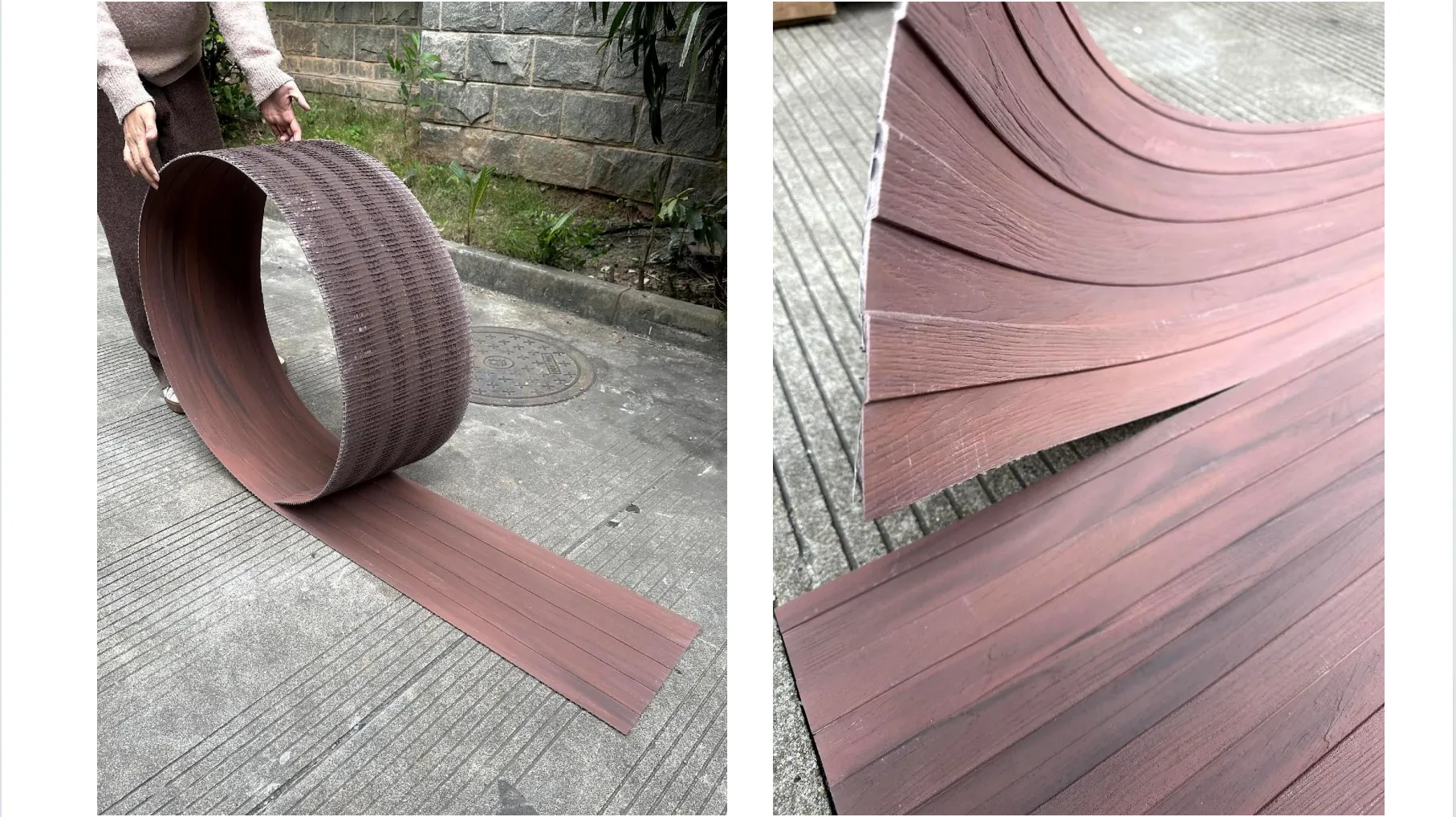
For flexibility, especially in regions prone to earthquakes or where fences need to be temporary, bamboo mat board is a favorite. Split into thin strips and woven into mats, bamboo bends without breaking, making it ideal for curved or sloped boundaries. In coastal Oman, fishermen's huts often have bamboo mat fences that roll up like curtains, letting in sea breezes during the day and closing tight against nighttime chill. The mats are dyed with natural pigments—indigo from local plants, saffron for a golden hue—turning functional barriers into works of art.
What truly sets Middle Eastern wood fences apart, though, is the craftsmanship of joining. Nails are rare; instead, craftsmen use mortise-and-tenon joints, where a projection on one piece fits into a hole on another, or dovetail joints that lock together like puzzle pieces. Some even use palm fronds soaked in date syrup as natural adhesives, creating bonds that can last generations. In the village of Deir el-Qamar in Lebanon, there's a fence around an 18th-century monastery held together entirely by such joints—no metal in sight—and it still stands, sturdy and true, after 300 years.
In the Middle East, a fence is never just a fence. It's a greeting, a secret, a promise. "A home without a fence is like a book without a cover," a Jordanian elder once told me. "It tells the world you have nothing to protect—but more importantly, nothing to share." This idea—that fences are vessels of culture—runs deep in the region's collective consciousness.
Take hospitality, a cornerstone of Middle Eastern culture. In many villages, the front fence is intentionally low or has gaps between slats, sending a clear message: "Our home is open to you." In Yemen's mountain villages, fences around guest houses are often carved with images of coffee pots and dates—symbols of welcome—while in Iran's Caspian region, fences near doorways have small shelves built into them, where visitors can leave a stone or a sprig of herbs as a sign they've called (a tradition that predates text messages). Even the height speaks volumes: a fence that rises to shoulder level around a courtyard says, "This is where we gather," while a taller, more solid section behind the house whispers, "This is where we rest."
Fences also tell stories. In the Kurdish regions of Iraq, it's common for families to carve their history into fence posts: a date palm for a bountiful harvest, a camel for a successful trade journey, a star for a child who survived illness. In Palestine's West Bank, some fences are adorned with fragments of pottery—shards from old family homes destroyed in conflicts, now embedded in the wood as a reminder of resilience. These aren't just decorations; they're archives, passed from parent to child, so that even the youngest members of the community know where they come from.
And then there's the role of fences in ritual. In rural Turkey, during weddings, the bride's family adorns their fence with ribbons and flowers, turning it into a beacon for the groom's procession. In Oman, during Ramadan, fences around mosques are strung with lanterns, their light filtering through wood slats to paint the ground with patterns like stained glass. For the Bedouin, a fence made of goat hair and palm fronds is part of the naming ceremony for a newborn: the child is passed through the fence three times, symbolizing their entry into the community and the protection it offers.
Like the region's cuisine or music, Middle Eastern wood fences vary wildly by geography, shaped by climate, available materials, and cultural influences. What works in the lush valleys of Lebanon won't survive the sandstorms of Saudi Arabia, just as the needs of a farming village differ from those of a nomadic tribe. Here's a closer look at some of the most distinctive styles:
| Region | Primary Material | Design Feature | Cultural Context |
|---|---|---|---|
| Bedouin (Saudi Arabia, UAE, Qatar) | Acacia branches, goat hair, palm fronds | Lightweight, hexagonal or circular frames; detachable panels for portability | Semi-nomadic lifestyle: fences must be easy to assemble, disassemble, and transport with the herd |
| Persian-Influenced (Iran, Azerbaijan) | Walnut, cedar, wood line carvings | Intricate geometric patterns; integration with gardens (fences as backdrops for roses and jasmine) | Emphasis on beauty and symmetry; influence from Persian gardens, where "paradise" (pairi-daeza) means "walled garden" |
| Levantine (Lebanon, Syria, Jordan) | Cedar, pine, historical pathfinders stone (base) | Mixed wood and stone construction; carved panels with floral motifs | Mountainous terrain: stone bases anchor fences against landslides; wood provides warmth and flexibility |
| Coastal (Oman, Yemen, Bahrain) | Bamboo mat board , date palm, coconut wood | Woven mats, sloped roofs to shed rain; bright dyes (indigo, turmeric) for mats | Trade links with South Asia: bamboo imported via maritime routes; need for ventilation in humid climates |
| Anatolian (Turkey, Kurdistan) | Oak, chestnut, wood line lattice work | Horizontal slats with carved notches; "eyebrow" designs over gateways (curved wood to deflect evil eye) | Rural farming communities: fences mark property lines and protect crops; carvings have protective symbolism |
Each style tells a story of adaptation. In the deserts of the UAE, Bedouin fences are often low and wide, their hexagonal shape inspired by the beehives of wild bees—efficient, strong, and easy to repair with materials found on the go. In contrast, the cedar fences of Lebanon's Mount Lebanon region are tall and sturdy, their posts sunk deep into historical pathfinders stone to withstand heavy snowfall. The wood is left untreated, aging to a silvery gray that blends with the mountain mist, as if the fence itself is part of the landscape.
Perhaps the most visually striking are the Persian fences of Shiraz and Isfahan, where wood line patterns reach dizzying complexity. Some slats are carved so precisely that when viewed from a distance, they form calligraphic verses from the Quran or poems by Hafez. These fences aren't just around homes; they're around gardens, schools, and shrines, turning public spaces into galleries of living art. I once stood before a fence in Isfahan that, at noon, cast a shadow spelling "Allah" on the ground—a trick of light and geometry that left me breathless.
In recent years, there's been a quiet revolution in Middle Eastern architecture: a return to roots. As cities like Dubai and Doha race toward futuristic skylines, designers and homeowners are rediscovering the beauty and functionality of traditional wood fences, blending old craftsmanship with new needs. These aren't just replicas; they're reimaginings, proving that heritage can thrive in the 21st century.
Take luxury resorts, for example. In Oman's Al Hajar Mountains, a five-star hotel uses bamboo mat board fences around its villas, weaving them into curved screens that frame views of the mountains while maintaining privacy. The mats are dyed with natural indigo,ing the blue of the nearby sea, and hung from steel frames for durability—a nod to tradition with a modern twist. In Marrakech, Morocco, a boutique riad has replaced its concrete walls with wood line fences, their geometric slats inspired by zellige tile patterns, allowing breeze and light to flow through while keeping out the hustle of the medina.
Urban homes are also embracing the trend. In Beirut, where space is tight, architects are using slim cedar slats arranged in wood line patterns to create "green fences"—vertical gardens where climbing plants like jasmine and bougainvillea grow through the wood, softening the city's concrete edges. In Tehran, a family renovated their 1970s apartment building, adding a wooden fence to the rooftop terrace that mimics the intricate carvings of traditional Persian gardens, turning a utilitarian space into a sanctuary.
Heritage preservation projects are another area where traditional fences shine. In the Old City of Sana'a, Yemen, where centuries-old mud-brick homes are under threat from conflict and neglect, NGOs are training local craftsmen to repair and rebuild fences using historical pathfinders stone bases and date palm wood, ensuring that the city's unique architectural identity isn't lost. Similarly, in Palestine's Bethlehem, a community-led initiative is restoring fences around olive groves, using traditional wood joints and carvings to teach younger generations about their cultural heritage while supporting local farmers.
Even commercial spaces are getting in on the action. In Dubai's Design District, a café features a wood line fence that doubles as a menu: the slats are carved with the names of dishes, and as they weather, new slats are added, creating a living timeline of the café's offerings. In Istanbul, a co-working space uses bamboo mat board partitions, their flexibility allowing the space to be reconfigured for meetings or events—practical, sustainable, and full of character.
Standing before a traditional Middle Eastern wood fence, it's easy to see why they've endured. They're not just structures; they're living, breathing parts of the community—witnesses to weddings and funerals, harvests and droughts, laughter and loss. To touch their weathered wood is to touch the hands of the craftsmen who built them, the families who loved behind them, the stories that shaped them.
In a world that often values speed over skill, and novelty over tradition, these fences remind us of the beauty in patience. A craftsman might spend months selecting and drying wood; a family might pass down a fence for generations, each new carver adding their mark. This isn't just craftsmanship—it's love, poured into every joint and groove.
So the next time you see a wood fence in the Middle East, take a moment to look closer. Run your fingers over the wood line patterns, notice how the light plays through the slats, listen to the creak of the gate. You might just hear the whispers of the past—and the promise of a future where heritage and innovation walk hand in hand.
Recommend Products












