
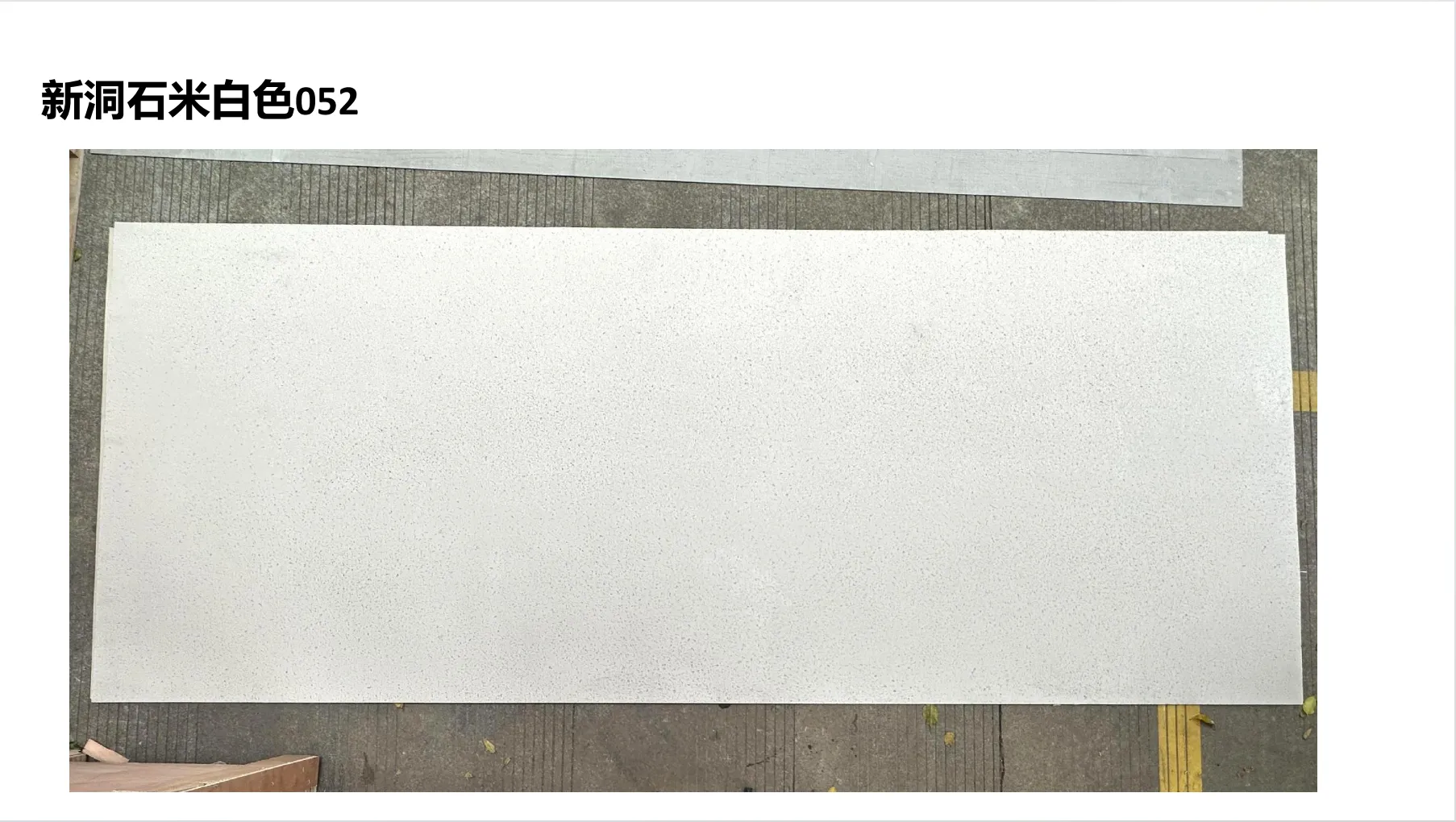
Walk through the lobby of a cutting-edge smart building today, and you might notice something surprising: alongside sleek glass, glowing screens, and sensors that adjust lighting to your mood, there's a material that feels almost ancient. It's travertino—with its soft, porous texture, warm earth tones, and veins that tell stories of time. In a world obsessed with the "next big thing" in tech, why are architects and designers turning back to this stone that's been used since the days of the Roman Empire? The answer lies in a powerful synergy: travertino isn't just a nod to the past; it's a bridge to the future of smart buildings. When paired with innovations like MCM flexible stone, 3D printing series, and modern alloys, travertino becomes more than a decorative element—it becomes a functional, adaptive part of buildings that think, breathe, and respond. Let's dive into how this timeless stone is redefining what smart buildings can be.
To understand travertino's place in smart buildings, you first have to appreciate its roots. Quarried from mineral-rich springs (most famously in Tivoli, Italy), travertino is a form of limestone formed by the rapid precipitation of calcium carbonate. Its signature look—pitted surfaces, subtle color variations from ivory to golden beige, and delicate veining—comes from gas bubbles trapped as the stone solidifies. For millennia, humans have been drawn to its beauty and durability: the Colosseum's facade, the Trevi Fountain, and even the White House's exterior all feature travertino. It's a stone that doesn't just last; it improves with time, developing a patina that adds character rather than showing wear.
But travertino isn't just a relic. Modern architects love it for the warmth it brings to spaces dominated by cold steel and glass. In smart buildings, where technology can sometimes feel impersonal, travertino adds a tactile, human element. Imagine stepping into an office where the walls are lined with travertino panels—your hand brushes against the stone, and suddenly the room feels less like a machine and more like a place where people live and work. That's the magic of travertino: it grounds us, even as the world around us gets smarter.
Let's clarify what a "smart building" really is. It's not just a building with Wi-Fi and a few smart thermostats. Smart buildings use sensors, IoT (Internet of Things) devices, and data analytics to optimize everything from energy use to indoor air quality. They learn from occupants' behavior, adjust lighting and temperature in real time, and even predict maintenance issues before they happen. But here's the catch: for all their efficiency, smart buildings can feel sterile. People don't just want buildings that work—they want buildings that feel alive, that reflect the complexity of human experience. That's where materials like travertino step in.
Smart buildings also demand materials that can keep up with their dynamic needs. Traditional stone, while beautiful, can be heavy, hard to install, and tricky to modify if a building's systems need updating. Enter MCM flexible stone—a game-changer in the world of architectural materials. MCM (Modified Composite Material) flexible stone takes the look and feel of natural stone (including travertino) and wraps it in a lightweight, bendable layer. Suddenly, that timeless travertino texture isn't limited to flat surfaces or heavy slabs. It can curve around corners, adhere to irregular shapes, and even be integrated with the wiring and sensors that make smart buildings tick.
If travertino is the heart of this story, MCM flexible stone is the circulatory system that keeps it beating in smart buildings. Think of MCM as travertino's more adaptable cousin. It starts with real stone particles—crushed travertino, in this case—mixed with polymers and fibers to create a thin, flexible sheet (often less than 3mm thick). The result? A material that looks and feels like travertino but weighs a fraction of the real thing, bends without cracking, and installs in half the time. For architects, this is a dream come true. No more struggling with heavy slabs that require cranes and reinforced structures; MCM flexible stone can be applied like wallpaper, even on curved facades or interior accent walls.
But the real genius of MCM flexible stone is how it plays nice with smart building tech. Because it's lightweight and easy to cut, it can be precision-fitted around sensors, LED strips, or even embedded heating elements. Imagine a conference room where the travertino-look MCM panels have built-in motion sensors that dim the lights when the room is empty, or a hotel lobby where the walls "breathe" because the flexible stone allows for ventilation systems behind it. MCM doesn't just mimic travertino's beauty—it amplifies its functionality, making it a key player in the smart building revolution.
If MCM flexible stone makes travertino adaptable, 3D printing series makes it customizable. 3D printing isn't new, but its application to stone materials is changing the game. With MCM's 3D printing series, designers can create travertino-inspired panels with intricate patterns, textures, and even functional features that would be impossible with traditional stone cutting. Want a travertino-look facade that's shaped like a honeycomb to improve insulation? 3D printing can do that. Need custom light diffusers that mimic travertino's pores to soften harsh LED lighting? 3D printing makes it possible.
The benefits go beyond aesthetics. 3D printing reduces waste by using only the material needed for each piece, unlike traditional quarrying and cutting, which can discard up to 30% of stone as scrap. It also allows for on-demand production, meaning architects can tweak designs late in the process without delaying construction. For smart buildings, this precision is crucial. 3D-printed travertino panels can be engineered with channels for wiring, recesses for sensors, or even hollow sections that house microchips—all while maintaining that organic, natural look that makes travertino so appealing. It's like having a sculptor and a tech engineer working in perfect harmony.
Even the most versatile material needs good partners, and travertino (and its MCM counterpart) shines when paired with other modern materials. Take foamed aluminium alloy board in vintage silver, for example. This lightweight, corrosion-resistant material has a sleek, metallic finish that contrasts beautifully with travertino's earthy tones. In smart buildings, it's often used for accents—think elevator doors, ceiling panels, or facade trim—that add a touch of industrial chic while hiding wiring for smart systems. The vintage silver hue complements travertino's golden beige, creating a palette that feels both timeless and contemporary.
Then there's fair-faced concrete—a material that's all about raw, unadorned beauty. With its smooth, gray surface and subtle texture, fair-faced concrete provides a neutral backdrop that lets travertino's warmth take center stage. In smart buildings, it's prized for its thermal mass (which helps regulate temperature) and compatibility with embedded sensors. Imagine a residential building where the exterior is a mix of fair-faced concrete and MCM travertino panels: the concrete absorbs heat during the day, releasing it at night to reduce heating costs, while the travertino panels, with their porous structure, help insulate and dampen noise. Together, they create a building that's energy-efficient, quiet, and visually striking.
| Material | Key Features | Smart Building Benefits | Aesthetic Vibe |
|---|---|---|---|
| Travertino (Natural) | Porous, warm tones, durable | Thermal insulation, sound dampening | Timeless, organic, historic |
| MCM Flexible Stone (Travertino) | Lightweight, bendable, real stone look | Easy sensor/wiring integration, quick installation | Authentic travertino feel, adaptable to any shape |
| 3D Printed Stone Panels | Custom patterns, precision-engineered | Waste reduction, functional design (e.g., light diffusers) | Modern, intricate, sculptural |
| Foamed Aluminium Alloy (Vintage Silver) | Lightweight, metallic, corrosion-resistant | Conductive (for tech wiring), durable facade trim | Sleek, industrial, contemporary |
| Fair-Faced Concrete | Smooth, gray, thermal mass | Energy efficiency, sensor compatibility | Minimalist, raw, grounded |
Let's bring this all to life with a hypothetical (but realistic) example: Nexus Tower, a 40-story office building in Dubai designed by award-winning firm Atelier 5. The client wanted a building that was "smart but soulful"—a space that used the latest tech to boost productivity but didn't feel like a sterile tech lab. The solution? A facade that blends MCM flexible stone (travertino finish), 3D printed accents, and foamed aluminium alloy (vintage silver) trim, paired with a fair-faced concrete core.
The exterior features large MCM travertino panels that wrap around the building's curves, their warm beige tones softening the harsh desert sun. Between the panels, 3D printed stone "fins" (inspired by travertino's natural veining) act as sunshades, automatically adjusting their angle based on the sun's position (thanks to embedded sensors) to reduce cooling costs by 25%. The vintage silver foamed aluminium accents frame the windows, hiding the wiring for the building's IoT network, while the fair-faced concrete core helps stabilize temperatures, reducing the need for constant AC.
Inside, the lobby uses natural travertino for the floors and accent walls, paired with MCM flexible stone on the reception desk (which has built-in wireless charging pads and a touchscreen info center). Employees often comment on how the space feels "calm" despite being packed with tech—credit to travertino's ability to absorb noise and create a sense of warmth. Nexus Tower isn't just smart; it's human-centered , and travertino is a big reason why.
So, where does this journey go next? The future of travertino in smart buildings is all about integration—taking the stone's natural properties and enhancing them with digital tools. Imagine travertino panels that have "digital twins"—virtual replicas that architects can tweak in 3D models before 3D printing the real thing. Or MCM flexible stone embedded with nanosensors that monitor air quality and send data to the building's management system, all while maintaining that classic travertino texture.
There's also the rise of "adaptive facades." With MCM flexible stone and 3D printing, we could see travertino-inspired panels that change color slightly to reflect sunlight in summer or absorb heat in winter, all controlled by AI. Or imagine a hospital where the travertino-look walls have embedded LED lights that shift from warm to cool tones based on patient needs—calming blue for recovery rooms, energizing gold for rehabilitation spaces. Travertino isn't just a static material anymore; it's becoming a canvas for innovation.
At the end of the day, smart buildings are about more than efficiency or gadgets—they're about creating spaces where people thrive. Travertino, with its history, warmth, and versatility, reminds us that technology should serve humanity, not the other way around. When paired with MCM flexible stone, 3D printing series, and modern materials like foamed aluminium alloy, travertino doesn't just fit into the smart building puzzle—it makes the puzzle more beautiful, more functional, and more human.
So the next time you walk into a smart building and run your hand over a travertino wall, take a moment to appreciate the magic happening there. You're touching a stone that's seen empires rise and fall, now working alongside sensors and algorithms to build a better future. That's the power of timeless design: it doesn't just stand the test of time—it shapes it.
Recommend Products












