
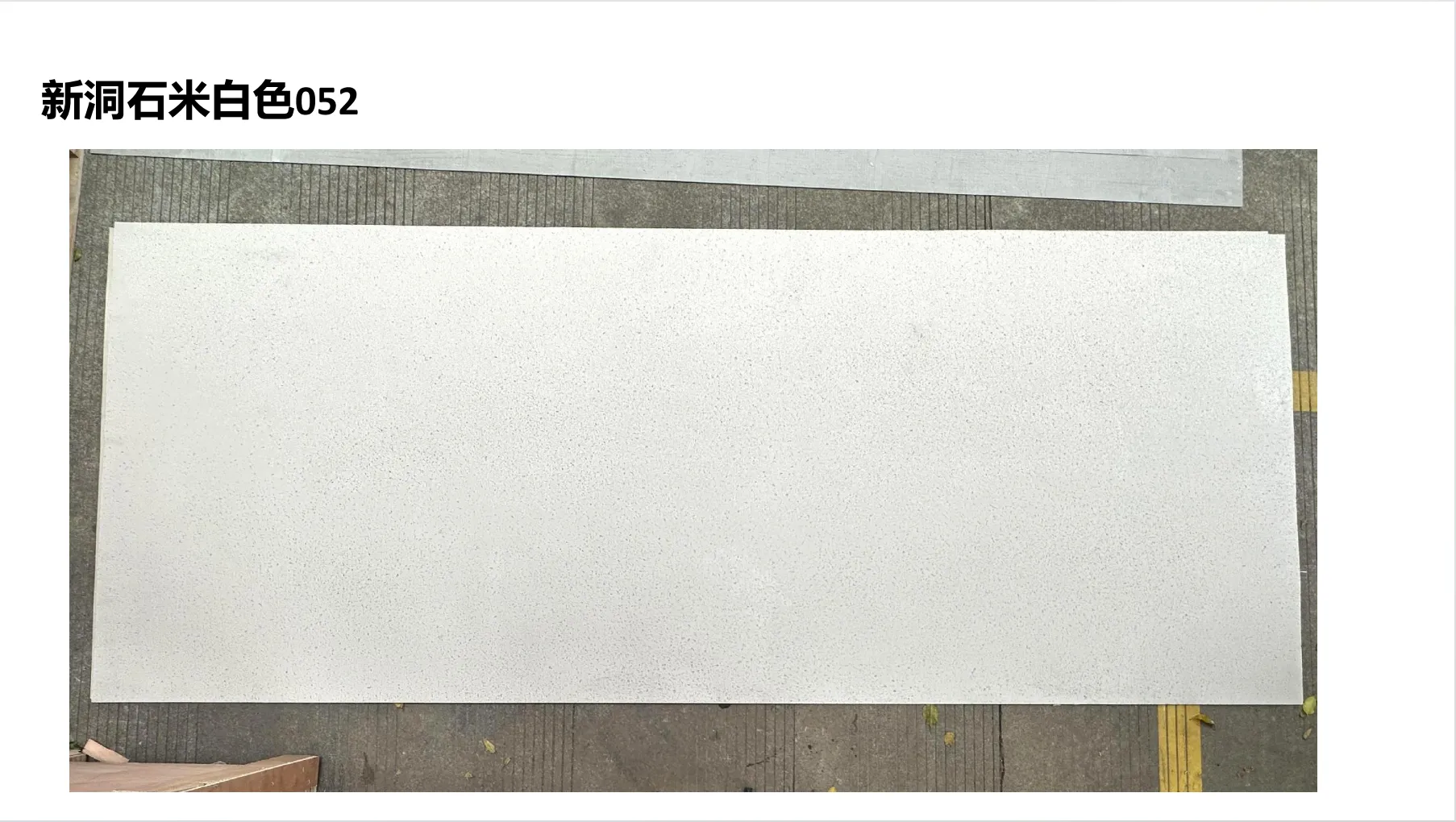
There's something almost magical about coastal architecture. The way sunlight dances off the waves, the salty breeze that carries the scent of the ocean, and the seamless blend of natural beauty with human design—these are the elements that make coastal homes and buildings so desirable. For decades, architects and homeowners alike have turned to travertino, or travertine, to capture that timeless, earthy elegance. Its soft, porous texture, warm tones, and unique veining make it a favorite for cladding, flooring, and outdoor spaces. Imagine a beachfront villa with travertine (starry green) walls, their surface glistening like a night sky reflected on the sea—stunning, right? But here's the catch: that same coastal environment that makes travertine look so breathtaking is also its greatest enemy. Saltwater, humidity, and the relentless coastal elements pose significant challenges to travertine's durability, turning dream homes into maintenance nightmares. Let's dive into the saltwater resistance struggles of travertine in coastal areas, and explore how modern innovations like mcm flexible stone are changing the game.
Before we talk about the challenges, let's celebrate why travertine has been a staple in coastal design. Travertine is a form of limestone formed by mineral deposits from hot springs, giving it a unique, organic appearance. Its neutral color palette—beiges, creams, soft grays, and even striking variants like travertine (starry green) with its subtle, star-like flecks—complements the blues and greens of the ocean effortlessly. It's porous enough to feel warm underfoot even on hot days, and its natural texture adds depth to otherwise sleek coastal designs. Think of a restaurant patio with travertine flooring, where diners enjoy seafood while the stone under their feet feels like a piece of the nearby cliffs. Or a home's exterior cladded in travertine (starry red), standing out against the pale sand and turquoise water. Travertine doesn't just build spaces; it tells stories of nature's artistry.
But coastal regions demand more than just beauty—they demand resilience. And that's where travertine starts to falter. Let's take a closer look at the invisible battle happening between travertine and the coastal environment.
Coastal air isn't just salty—it's a cocktail of moisture, salt spray, and wind that eats away at building materials over time. For travertine, the biggest threat comes from salt crystallization, a process that sounds scientific but is surprisingly relatable. Here's how it works: when saltwater mist lands on travertine, it seeps into the stone's pores (remember, travertine is porous by nature). As the water evaporates under the sun, it leaves behind salt crystals. These crystals grow over time, expanding inside the pores and creating pressure—like tiny wedges splitting the stone from the inside out. The result? Cracks, pitting, and a rough, worn surface that loses its original luster. What was once a smooth travertine (starry orange) wall might start to look like it's been sandblasted, with those star-like flecks now hidden under a layer of erosion.
Then there's the issue of chloride ions. Saltwater is rich in chloride, which reacts with the calcium carbonate in travertine. This chemical reaction breaks down the stone's structure, weakening it and making it more susceptible to further damage. Over the years, this can lead to spalling—where chunks of stone flake off—or even discoloration. Imagine investing in a travertine (starry blue) patio, only to watch it fade to a dull grayish-blue within five years, with small holes dotting the surface where salt crystals have eaten through. It's not just about aesthetics; weakened stone can compromise the structural integrity of a building, turning a beautiful facade into a safety hazard.
Fun Fact: A study by the Coastal Construction Institute found that travertine facades in high-salt environments (like coastal cities with frequent salt spray) show signs of erosion within 3–5 years, compared to 15–20 years inland. That's a stark difference for homeowners and businesses counting on their investments to last.
To understand why travertine is so vulnerable, we need to talk about its structure. Unlike dense stones like granite, travertine is formed from layers of mineral deposits that trap air bubbles and create tiny pores. These pores are what give travertine its unique texture and thermal properties, but they're also open invitations for saltwater. Think of a sponge—dip it in water, and it soaks up liquid quickly. Travertine does the same with saltwater, but unlike a sponge, it can't be wrung out. Those pores become permanent homes for salt crystals, leading to the damage we discussed earlier.
Another factor is travertine's mineral composition. It's primarily made of calcium carbonate, which is soluble in acidic environments. Coastal rainwater, often slightly acidic due to pollution, can dissolve the calcium carbonate, further weakening the stone. Combine that with salt's abrasive effect, and you've got a perfect storm for travertine degradation. Even "harder" travertine varieties, like dolomitic travertine (dark grey), aren't immune—they might hold up longer than their beige counterparts, but they still fall prey to the coastal onslaught eventually.
So, what's the alternative? Do coastal designers have to give up the beauty of natural stone for something cold and industrial? Not at all. Enter mcm flexible stone—a revolutionary material that's changing how we think about coastal cladding. MCM, which stands for Modified Composite Material, is a lightweight, durable alternative to traditional stone. It's made by combining natural stone aggregates with polymers, creating a material that has the look and feel of travertine but with none of the vulnerability to saltwater.
What makes mcm flexible stone so special? For starters, it's non-porous. Unlike travertine, it doesn't absorb saltwater or moisture, so salt crystals can't form inside. It's also flexible, which means it can withstand the expansion and contraction caused by coastal temperature swings (hot days, cool nights) without cracking. And because it's lightweight, it's easier and cheaper to install on coastal buildings, reducing structural stress—a big plus in areas prone to storms.
Take, for example, a recent project in Miami Beach. A luxury hotel was originally designed with travertine (vintage gold) cladding, but halfway through construction, the architects switched to mcm flexible stone after consulting with coastal engineers. "We loved the look of vintage gold travertine, but the maintenance costs over time were prohibitive," said lead architect Maria Gonzalez. "MCM flexible stone gave us the same warm, metallic finish without worrying about salt erosion. Five years later, the facade still looks brand new, even after two hurricanes."
To really understand mcm flexible stone's advantages, let's compare it to two other common coastal cladding materials: traditional travertine and fair-faced concrete. Fair-faced concrete is known for its raw, industrial look and durability, but it lacks the organic warmth of travertine. It's also heavy and can develop cracks over time if not properly reinforced. Traditional travertine, as we've discussed, is beautiful but high-maintenance. MCM flexible stone, on the other hand, bridges the gap—it has the aesthetic appeal of travertine, the durability of fair-faced concrete, and the added benefits of flexibility and light weight.
Another material gaining traction in coastal areas is Lunar peak silvery. With its sleek, metallic sheen, Lunar peak silvery offers excellent saltwater resistance, but it leans more toward modern, minimalist designs. For homeowners wanting a classic, stone-like look, mcm flexible stone is often the better choice. It can mimic not just travertine, but also other natural stones like Bali stone or even wood grain board, giving designers endless possibilities without sacrificing durability.
Bali is famous for its stunning coastal villas, many of which have historically used Bali stone for cladding. Bali stone, a local sandstone, has a warm, earthy tone that fits the island's tropical vibe. However, in recent years, villa owners have noticed significant erosion, especially in areas exposed to direct salt spray. Take Villa Serenity, a beachfront property in Seminyak. Built in 2010 with Bali stone walls, by 2018 the stone had developed deep cracks and discoloration. "We spent thousands on sealing and repairs, but it was a losing battle," said owner David Chen. "The saltwater just kept eating away at it."
In 2019, David renovated the villa, replacing the Bali stone with mcm flexible stone designed to mimic Bali stone's texture and color. "At first, I was worried it would look fake, but the craftsmanship is incredible—guests still think it's natural stone," he said. "Three years later, there's no sign of erosion. Even after the monsoon season, the walls stay intact and vibrant. It was the best decision we made for the villa's longevity."
For those who are deeply attached to traditional travertine and are willing to put in the work, all hope isn't lost. With proper maintenance, you can extend the life of travertine in coastal areas—though it will never be as low-maintenance as mcm flexible stone. Here are some tips:
Keep in mind, though, that even with perfect maintenance, traditional travertine in coastal areas will still degrade faster than inland. It's a labor of love, not a long-term solution.
As climate change intensifies coastal weather patterns—stronger storms, higher salt levels, more acidic rain—the demand for durable, low-maintenance building materials will only grow. MCM flexible stone is at the forefront of this shift, but it's not the only innovation. Materials like foamed aluminium alloy board (vintage silver) and fair-faced concrete are also gaining popularity for their salt resistance, though they lack travertine's natural warmth. For those who want the best of both worlds, mcm flexible stone remains the top choice, offering the aesthetic of travertine with the resilience of modern composites.
Looking ahead, we can expect even more advancements in composite materials, with manufacturers working to replicate rare travertine varieties like travertine (starry blue) or dolomitic travertine (claybank) in mcm form. Imagine a world where you can have the unique, starry patterns of travertine (starry green) without worrying about saltwater damage—a world where coastal architecture doesn't have to choose between beauty and durability.
Travertine will always hold a special place in the hearts of designers and homeowners. Its natural beauty is unmatched, and its history as a building material spans centuries. But in the harsh reality of coastal environments, love alone isn't enough. Saltwater resistance challenges demand practical solutions, and mcm flexible stone is leading the way, proving that we don't have to sacrifice aesthetics for durability.
Whether you're building a beachfront home, a coastal restaurant, or a public boardwalk, the choice between traditional travertine and modern alternatives like mcm flexible stone comes down to priorities: short-term beauty with long-term upkeep, or lasting resilience with timeless appeal. In the end, the most successful coastal designs are those that honor the environment they inhabit—strong enough to withstand the salt and wind, yet beautiful enough to reflect the ocean's ever-changing grace.
So, the next time you walk along a coastal street and admire a building's cladding, take a closer look. Is it the weathered charm of traditional travertine, telling a story of years of battle with the sea? Or is it the fresh, unyielding beauty of mcm flexible stone, ready to stand the test of time? Either way, it's a reminder that in coastal architecture, as in life, adaptability is key to lasting beauty.
Recommend Products












