
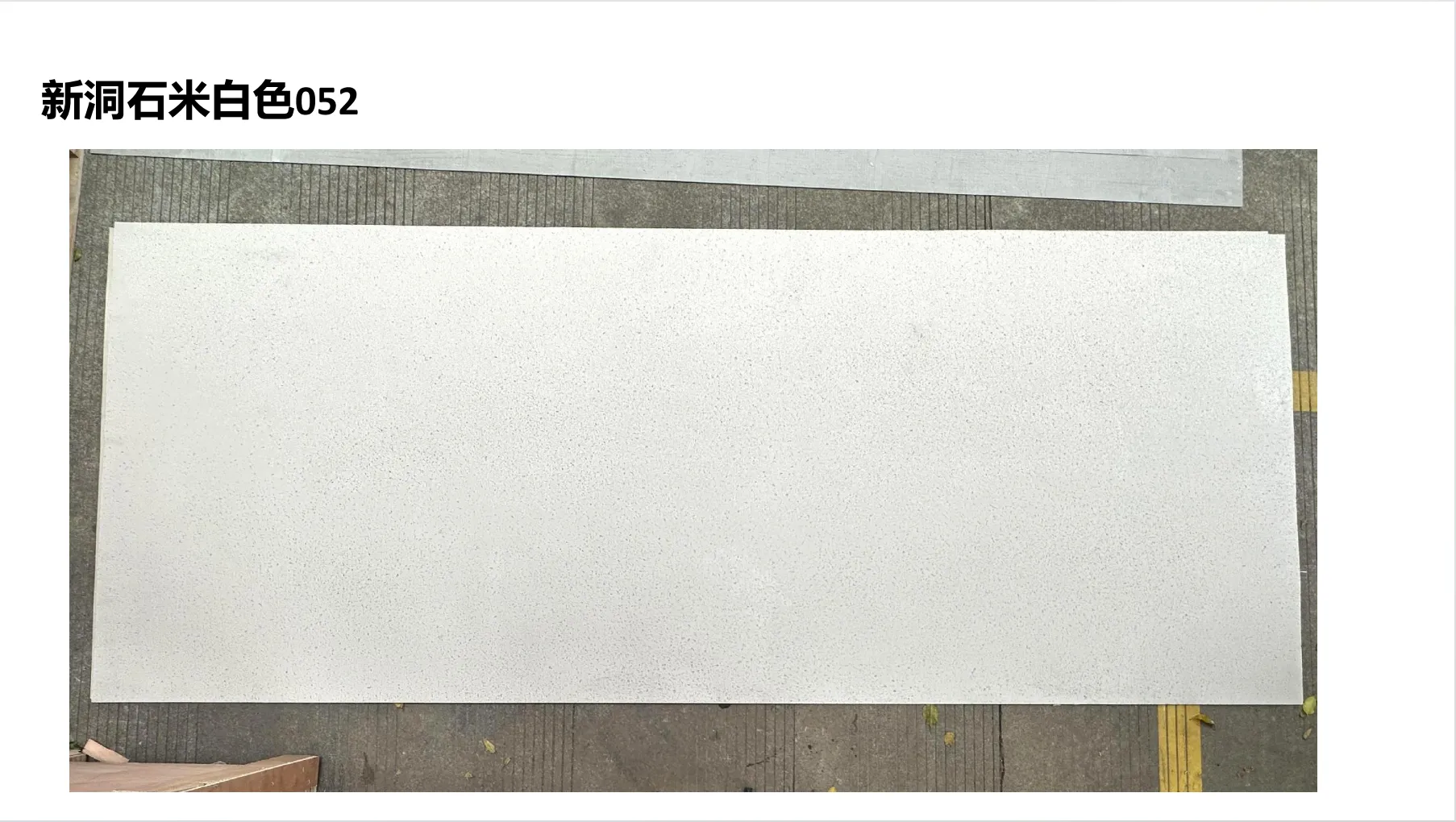
Walk into any truly memorable commercial lobby, and you'll notice something intangible yet powerful—the space doesn't just exist ; it communicates . It tells a story about the brand, the people who work there, and the experience they want to offer. In a world of generic glass and steel, the materials that clothe these spaces have become silent narrators. And lately, one material has been stepping into the spotlight with quiet confidence: travertino (white) . This natural stone, with its earthy texture and timeless elegance, isn't just a surface—it's a conversation starter. Let's explore why travertino is redefining what commercial lobbies can feel like, how it plays well with other materials like wood grain board and fair-faced concrete , and why its "imperfections" might just be its greatest strength.
First things first: travertino isn't your average countertop stone. Formed over thousands of years in mineral-rich hot springs, it's a type of limestone with a personality all its own. Picture this: as groundwater bubbles up from the earth, it carries dissolved calcium carbonate, which slowly crystallizes and builds up layer by layer. Along the way, gas bubbles get trapped, leaving behind tiny, irregular voids—those little pockets and pits that give travertino its signature texture. It's like the stone is wearing its history on its sleeve, and that history feels deeply, unapologetically real .
While travertino comes in shades from warm beiges to deep golds, travertino (white) has emerged as a favorite for commercial spaces. Its light, airy tone brightens lobbies without feeling sterile, and its subtle variations—swirls of cream, faint hints of gold, or the occasional darker vein—add depth that no man-made material can replicate. Run your hand over a polished slab, and you'll feel a gentle roughness in the voids, a tactile reminder that this stone was shaped by nature, not a factory. That duality—smooth yet textured, bright yet warm—is what makes it so versatile.
Let's be honest: commercial lobbies take a beating. They're high-traffic zones, exposed to everything from coffee spills to scuffing shoes, and they need to look good doing it. Travertino doesn't just meet that challenge—it thrives. Here's why designers are choosing it:
Modern design often leans on sleek, cool materials—glass, steel, polished metals. They're sharp, but they can feel cold, like walking into a spaceship rather than a welcoming entryway. Travertino (white) balances that out. Its soft color and organic texture add warmth, making even the most minimalist lobby feel inviting. Imagine a lobby with floor-to-ceiling travertino walls: the natural light filters through, catching the voids and casting delicate shadows that shift throughout the day. It's dynamic, alive, and infinitely more interesting than a flat, uniform surface.
And let's talk about versatility. Travertino plays well with just about every design style. Pair it with wood grain board accents for a cozy, biophilic vibe (think a hotel lobby that feels like a mountain retreat). Mix it with fair-faced concrete for an industrial-chic look (perfect for a creative agency). Or let it stand alone, polished to a high sheen, for a timeless luxury that feels both grand and understated—ideal for a high-end corporate lobby.
Natural stone has a reputation for being fragile, but travertino is surprisingly tough. It's resistant to scratches, heat, and stains (when properly sealed), making it a practical choice for lobbies that see hundreds of visitors daily. Unlike marble, which can etch easily with acidic spills, travertino's density and porosity (when sealed) hold up to the chaos of real life. A well-maintained travertino lobby won't just look good on opening day—it'll still turn heads a decade later, with a patina that only enhances its character.
Today's clients care about sustainability, and travertino delivers. As a natural material, it doesn't require the energy-intensive manufacturing processes of synthetic alternatives like laminate or vinyl. Plus, its longevity means less frequent replacement, reducing waste over time. For brands looking to align their spaces with eco-friendly values, travertino sends a clear message: you care about both beauty and the planet.
Of course, travertino isn't the only player in the game. Let's compare it to three other popular lobby materials to see why it often comes out on top:
| Material | Aesthetic Vibe | Durability | Maintenance Needs | Best For |
|---|---|---|---|---|
| Travertino (White) | Warm, organic, with natural texture and light color variation | High (resistant to scratches, heat; needs sealing every 2-3 years) | Mild soap and water; avoid harsh chemicals; re-seal periodically | Creating a welcoming, timeless space with natural character |
| Marble Veil White | Luxurious, with bold veining and a high-gloss finish | Medium (prone to etching from acids; scratches more easily) | Specialized cleaners; frequent sealing; avoid acidic spills | High-end, low-traffic spaces where luxury is the top priority |
| Fair-Faced Concrete | Industrial, raw, with a matte, uniform look | Very high (extremely durable; resistant to wear and stains) | Minimal (sweep and damp mop; stains can be hard to remove if unsealed) | Modern, edgy spaces aiming for a "raw" aesthetic |
| Wood Grain Board | Warm, cozy, with natural wood patterns and texture | Medium (prone to water damage; scratches show easily) | Polish regularly; avoid moisture; refinish every 5-7 years | Adding warmth to complement cooler materials like stone or concrete |
As the table shows, travertino hits that sweet spot: it's durable enough for high traffic, easy enough to maintain, and its aesthetic brings a unique warmth that marble (too fussy) and concrete (too cold) often miss. And when paired with wood grain board? Magic. The stone's earthy texture and the wood's organic patterns create a space that feels grounded, like bringing a piece of the outdoors in.
Designers are getting creative with travertino, blending it with unexpected materials to craft lobbies that feel fresh and on-trend. Here are a few looks we're loving:
Biophilic design—bringing nature into built spaces—is more than a trend; it's a response to our collective craving for connection to the natural world. Travertino (white) and wood grain board are a match made in biophilic heaven. Imagine a lobby where travertino covers the floor and reception desk, while wood grain board lines the walls or ceilings. The combination feels like a forest clearing—bright, open, and deeply calming. It's no wonder hotels and wellness centers are leaning into this look; it instantly puts visitors at ease.
For brands that want to balance edge with sophistication, travertino and fair-faced concrete are a dynamic duo. The concrete's raw, gray texture contrasts beautifully with travertino's light warmth, creating a space that feels modern but not cold. Think exposed concrete columns flanking a travertino feature wall, or a concrete ceiling paired with travertino flooring. It's industrial without being harsh, elegant without being stuffy—perfect for tech companies or creative studios that want to showcase their innovative spirit.
Remember those voids we talked about earlier? Designers are no longer hiding them—they're celebrating them. Some are filling the pockets with colored resin (think soft blues or greens) to add a pop of color, while others are leaving them empty to create a play of light and shadow. In one recent lobby design, a travertino wall was backlit, turning the voids into tiny, glowing windows that shift as the sun moves. It's a reminder that imperfection can be beautiful, and that natural materials tell a richer story than perfect, uniform ones.
We've all heard the horror stories: "Natural stone is impossible to keep clean!" or "Travertino stains if you look at it wrong!" Let's set the record straight. With a little care, travertino will stay beautiful for decades:
Is it more maintenance than, say, vinyl flooring? Sure. But for the beauty and longevity travertino brings, most designers and building managers agree it's worth the effort. After all, you wouldn't skimp on for a piece of fine art—and travertino is art for your lobby.
Still not convinced? Let's look at two real-world examples where travertino (white) took a lobby from "meh" to "memorable":
The Haven, a boutique hotel in downtown Chicago, wanted its lobby to feel like a "home away from home" for travelers. The design team chose travertino (white) for the floors and reception desk, pairing it with wood grain board accent walls and soft, warm lighting. The result? A space that feels luxurious but not intimidating. Guests often comment on how the travertino's texture makes the lobby feel "grounded," like stepping into a cozy cabin rather than a busy city hotel. Even better, after two years of heavy foot traffic, the travertino floors still look brand-new—proof of its durability.
Vertex Tech, a cutting-edge software company, wanted a lobby that reflected its innovative spirit while avoiding the "cold tech" clichés. The solution? Travertino (white) feature walls with backlit voids, paired with fair-faced concrete columns and sleek metal accents. The travertino softens the industrial edge of the concrete, creating a space that feels forward-thinking but still human. Employees love how the natural light plays off the stone throughout the day, and clients often mention the lobby as a highlight of their visit—proof that travertino can hold its own in even the most modern settings.
At the end of the day, commercial lobbies are about more than just getting from the door to the elevator. They're about making a first impression, setting a mood, and creating a space that people remember. Travertino (white) does all that and more. It brings the warmth of nature into built environments, stands up to the chaos of daily life, and pairs beautifully with other materials to create unique, layered spaces.
So the next time you walk into a lobby and find yourself pausing to admire the walls or run your hand over a countertop, take a closer look—it might just be travertino, quietly telling the story of the earth, one beautiful, imperfect slab at a time. And if you're designing a lobby yourself? Consider letting nature take the lead. Your visitors (and your brand) will thank you.
Recommend Products












