
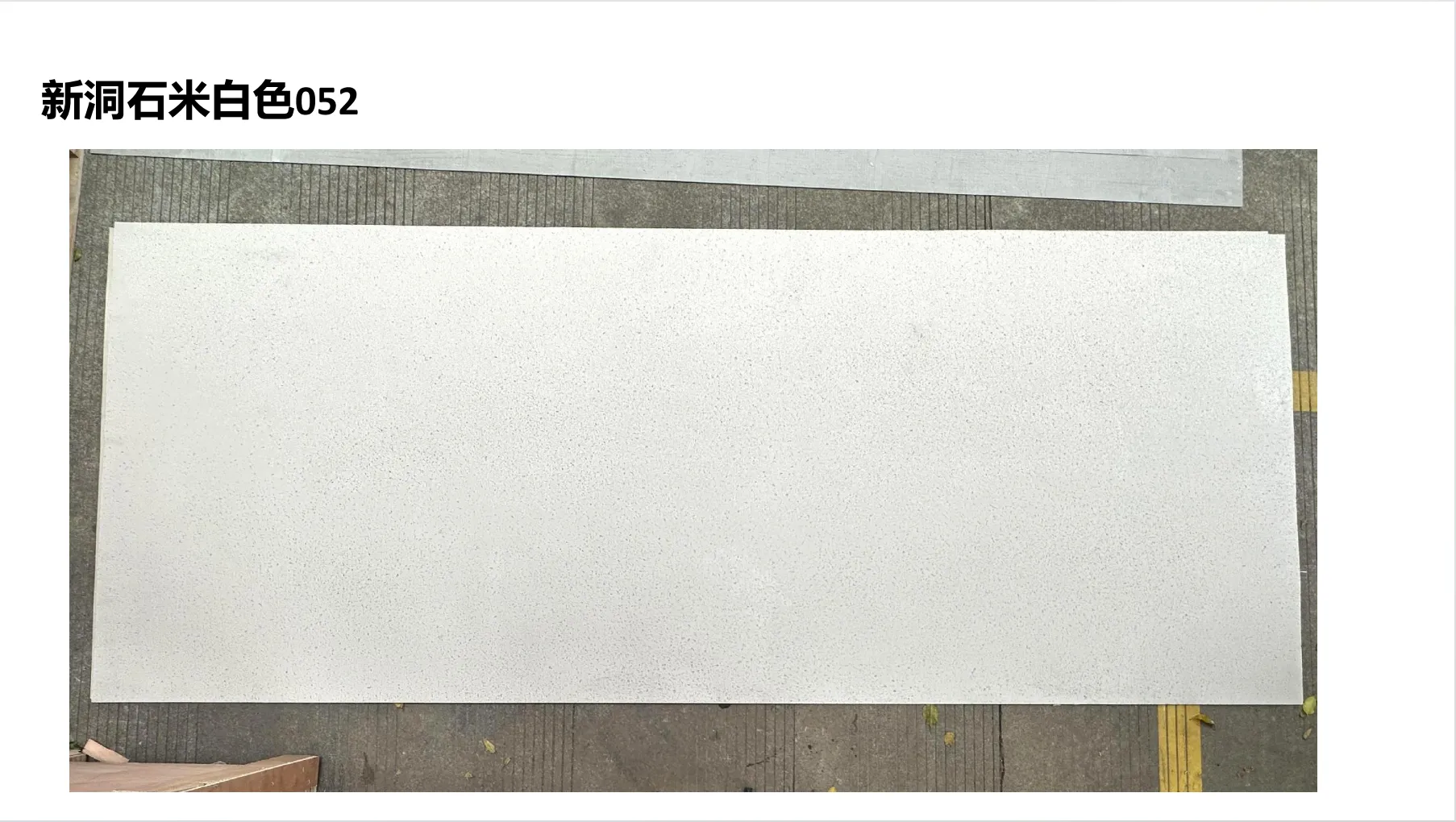
When it comes to choosing building materials, the conversation often starts and ends with upfront costs. But any homeowner, architect, or property manager will tell you: the real price tag of a material reveals itself over time. Maintenance, repairs, and replacements add up, turning a "budget-friendly" initial choice into a long-term financial drain. Today, we're diving into two popular options—classic travertine (beige) and innovative MCM flexible stone —to uncover which truly delivers value when you factor in years of upkeep. Spoiler: It's not just about elegance; it's about endurance.
Travertine has been gracing homes and landmarks for centuries, and it's easy to see why. Its warm, earthy tones (like the ever-popular travertine (beige) ) and unique veining exude a rustic charm that feels both ancient and inviting. But this natural stone comes with a hidden catch: its porous nature. Imagine a sponge—every tiny hole is an open invitation for spills, dirt, and moisture to seep in. And unlike a sponge, you can't just wring it out.
First, sealing. Travertine demands annual sealing (more often in high-traffic areas like kitchens or entryways) to keep those pores from becoming stain magnets. A gallon of quality travertine sealer costs $50–$100, and hiring a pro to apply it adds another $2–$4 per square foot. Skip this step, and that morning coffee spill or rainy boot print becomes a permanent part of your "design."
Then there's cleaning. Forget harsh detergents or vinegar—travertine is sensitive to acidic substances, which can etch its surface. You'll need specialized, pH-neutral cleaners ($15–$30 per bottle) and soft brushes to avoid scratching. Even with careful cleaning, wear and tear sneak in: cracks from shifting foundations, chips from dropped objects, or dulling from foot traffic. Repairs? Patching a small chip might cost $100–$200, but replacing a cracked slab? Up to $500, not including labor.
Let's put this in perspective: A 200 sq ft travertine floor might cost $3,000 initially. But over 10 years, sealing alone would add $2,000–$4,000 (if done professionally), plus $500 in cleaners, and $1,000 in repairs. Suddenly, that "affordable" stone is costing you nearly twice its initial price.
Enter MCM flexible stone —a material born from the question, "Why can't we have beauty without the hassle?" MCM, short for Modified Composite Material, is a blend of natural minerals and high-performance polymers, engineered to mimic the look of stone but with a flexible, durable core. Think of it as stone's smarter cousin: it looks just as stunning but laughs off spills, scratches, and the elements.
First, no pores. MCM's non-porous surface means liquids bead up and wipe away—no sealing required, ever. A glass of red wine on MCM big slab board series ? A quick wipe with a damp cloth, and it's like nothing happened. No specialized cleaners, either—mild soap and water work just fine, saving you $15–$30 a month on fancy products.
Durability is another win. MCM's flexible backing resists cracking, even in areas with temperature swings or minor foundation shifts. Scratches? They're rare, and if they do occur, most can be buffed out with a soft cloth. Compare that to travertine, where a stray chair leg can leave a permanent mark. And since MCM panels are lightweight and easy to install, replacing a damaged section (if needed) costs a fraction of travertine—around $50–$100 per panel, including labor.
Take lunar peak silvery , a sleek MCM finish that mimics the moon's iridescent glow. It's used in outdoor patios, kitchen backsplashes, and even commercial facades—all places where travertine would struggle. And because MCM comes in large slabs (thanks to MCM big slab board series ), there are fewer grout lines to trap dirt, cutting down on cleaning time even more.
Let's stop talking in hypotheticals. Below is a side-by-side comparison of travertine (beige) and MCM flexible stone over 20 years, based on a 200 sq ft residential installation. We'll include initial material costs, annual maintenance, and average repair expenses to see which truly saves you money.
| Cost Category | Travertine (Beige) | MCM Flexible Stone |
|---|---|---|
| Initial Material Cost | $3,000 (≈$15/sq ft) | $4,000 (≈$20/sq ft) |
| Annual Sealing Cost | $400 (professional sealing, $2/sq ft) | $0 (no sealing needed) |
| Annual Cleaning Supplies | $120 (specialized cleaners) | $30 (mild soap/water) |
| Average Annual Repair Cost | $150 (cracks, chips, etching) | $30 (minor scratches, rare replacements) |
| 5-Year Total Cost | $3,000 + (5×$400) + (5×$120) + (5×$150) = $6,350 | $4,000 + (5×$0) + (5×$30) + (5×$30) = $4,300 |
| 10-Year Total Cost | $3,000 + (10×$400) + (10×$120) + (10×$150) = $9,700 | $4,000 + (10×$0) + (10×$30) + (10×$30) = $4,600 |
| 20-Year Total Cost | $3,000 + (20×$400) + (20×$120) + (20×$150) = $16,400 | $4,000 + (20×$0) + (20×$30) + (20×$30) = $5,200 |
By year 5, MCM has already closed the gap on travertine's lower initial cost. By year 20? You'll have saved over $11,000 with MCM. That's a new kitchen renovation, a family vacation, or a chunk of your mortgage—all from choosing a material that works with you, not against you.
Numbers tell one story, but real people tell another. Take Sarah, a homeowner in Colorado who installed travertine (beige) in her kitchen 12 years ago. "I fell in love with the look, but I didn't realize I'd be sealing it every 6 months because of our hard water," she says. "Last year, a frozen pipe leaked, and the water stained the floor so badly I had to replace three slabs—$1,200 down the drain."
Then there's Mike, who used MCM big slab board series for his outdoor patio in Arizona. "We get 110°F summers and monsoon rains, but the lunar peak silvery panels still look brand new," he notes. "I hose it off once a month, and that's it. No sealing, no stains, no stress. My neighbor has travertine, and he's already resurfaced his patio twice in the time I've had mine."
Commercial projects tell the same tale. A restaurant in Chicago switched from travertine floors to MCM panels five years ago. "We used to spend $800 a year on sealing and another $500 on repairs from food spills," says the manager. "Now? Maybe $100 on cleaning supplies. The MCM has paid for itself twice over."
Saving money is great, but MCM offers more than just financial relief. Its flexibility means it can be installed on curved surfaces—think accent walls or rounded fireplaces—where rigid travertine would crack. And with finishes that mimic everything from fair-faced concrete to weathered wood, you don't have to sacrifice style for practicality.
Sustainability is another bonus. MCM uses recycled materials in its composite blend, and its durability reduces the need for frequent replacements—lowering your carbon footprint. Travertine, on the other hand, requires heavy quarrying and transportation, making it a less eco-friendly choice.
Travertine will always have a place in design history for its timeless allure. But when it comes to long-term value, MCM flexible stone is the clear champion. Its higher initial cost is quickly offset by zero sealing, minimal cleaning, and rare repairs—saving you thousands over decades. Whether you're choosing materials for a home, a business, or a public space, remember: the most beautiful material isn't the one that looks best on day one. It's the one that still looks great on day 3,650.
So, next time you're drawn to the warm glow of travertine (beige) , pause and ask: Can I afford to love it forever ? With MCM, the answer is yes—without breaking the bank.
Recommend Products












