
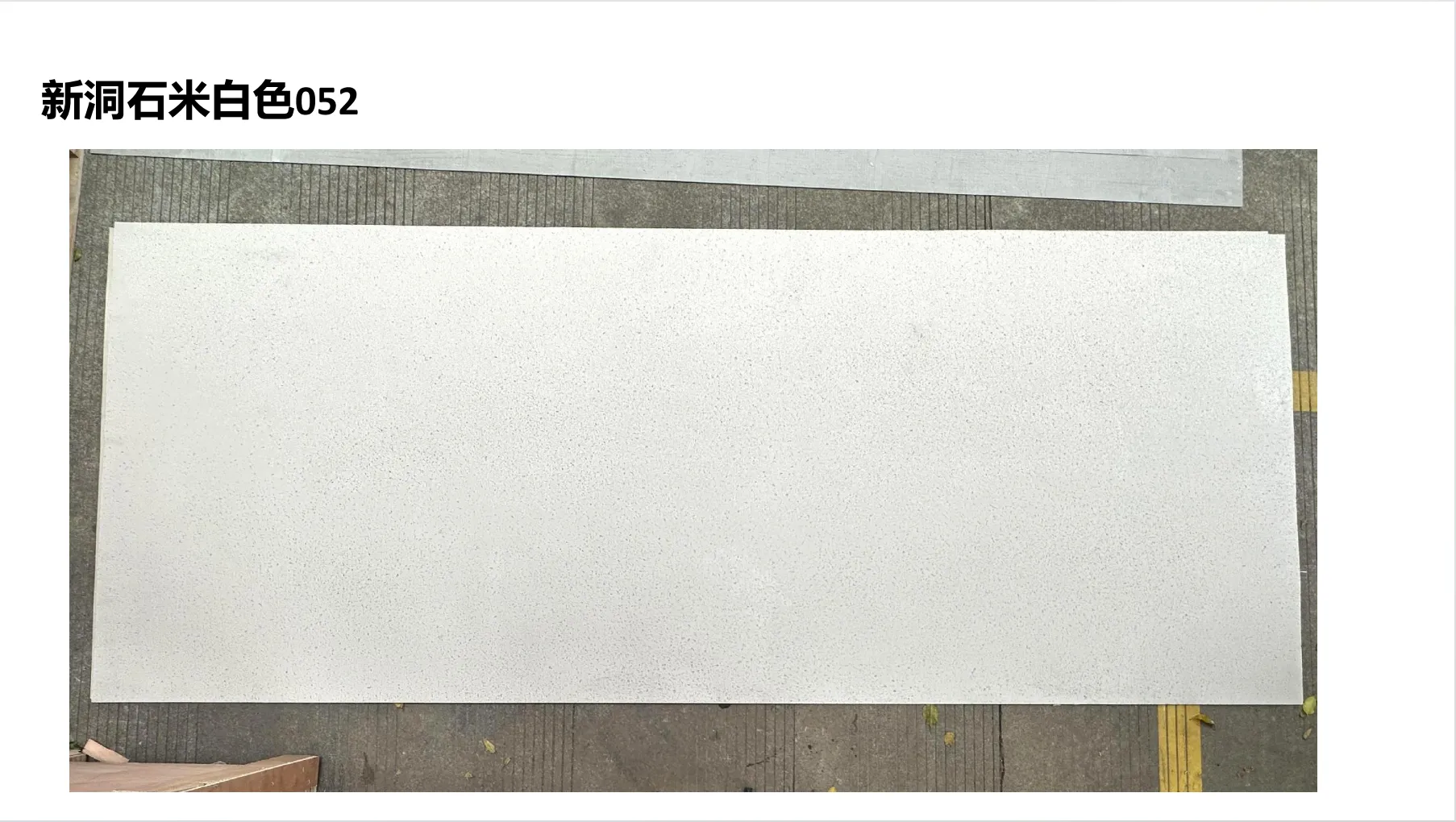
There's a moment in every architect's or homeowner's journey when a material stops being just a surface—it becomes a story. I first felt that with travertino. Picture this: sunlight streaming through a kitchen window, casting warm streaks across floors that look like they've been kissed by time. The stone's creamy base, swirled with honeyed veins and tiny fossilized bubbles, isn't just beautiful; it's alive . For centuries, travertino has been the quiet star of grand piazzas, ancient baths, and modern minimalist homes alike. But here's the hard truth I learned later, standing at the edge of a travertino quarry in Tuscany: that beauty often comes at a brutal cost.
Travertino forms slowly, over millennia, in mineral-rich hot springs. It's a gift of geology, unique and irreplaceable. But extracting it? That's a fast, messy business. Quarrying travertino isn't about gently lifting stones from the earth—it's about heavy machinery tearing into hillsides, dynamite fracturing rock, and tons of debris washing into nearby rivers. I'll never forget the quarry worker who shook his head when I asked about the land. "Fifteen years ago, this was olive groves," he said, gesturing to a vast, dusty pit. "Now? The soil's gone. The water's too polluted to drink. Even the birds don't come back."
The environmental toll isn't just local. Globally, quarrying contributes to 24% of industrial air pollution, according to the Environmental Protection Agency. For travertino specifically, the numbers sting: a single quarry can consume 20,000 gallons of water daily for dust suppression, while deforestation to make way for operations displaces wildlife and releases stored carbon. Then there's waste—for every ton of usable travertino extracted, up to 3 tons of rock are discarded as "overburden," left to erode into soil and waterways. And when the quarry is exhausted? It leaves a scar that nature might take centuries to heal, if it ever does.
Worst of all, this isn't just an "out there" problem. I met a family in a small Italian village whose well ran dry after a quarry expanded upstream. "We used to grow tomatoes and grapes," the grandmother told me, her voice tight. "Now we buy bottled water and watch our kids play in a field that used to be green." That's when I started asking: Is there a way to have the beauty of natural stone without breaking the planet?
Enter MCM—Material Composite Matrix. At first, I was skeptical. "Composite" sounded like plastic siding or cheap imitation stone. But then I visited an MCM factory in Germany, and everything changed. Instead of bulldozers, I saw recycled stone dust, glass fibers, and plant-based resins being mixed into a lightweight, flexible material that could mimic the look of travertino, marble, even aged metal—without a single or truckload of waste. MCM isn't just a "green alternative"; it's a reimagining of what building materials can be: kind to the earth, kind to designers, and kind to the people who live with them.
Let's talk about the products that are making waves. These aren't just "sustainable substitutes"—they're design powerhouses with personalities of their own. Take mcm flexible stone , for example. I watched a contractor wrap it around a curved fireplace last year, and I swear, my jaw dropped. Traditional travertino would have cracked or required custom cutting (and more waste), but this stuff bent like fabric, hugging the curve perfectly. The result? A seamless, organic look that felt both modern and timeless. And because it's made from 70% recycled materials, the homeowner didn't just get a stunning fireplace—they got peace of mind, too.
MCM isn't limited to imitating stone. It's a chameleon, and that's where the fun begins. For the minimalist who craves understated elegance, there's fair-faced concrete . Unlike the cold, industrial concrete of parking garages, MCM's take is warm and tactile, with subtle variations that make each panel feel handcrafted. I used it in a client's home office, paired with light wood and large windows, and now she calls it her "calm cave"—a space that feels grounded but never sterile.
Then there are the showstoppers, like lunar peak silvery . Imagine a wall cladding that shimmers like moonlight on water, with a texture that looks like it was carved from a meteorite. A hotel in Iceland used it in their lobby, and guests keep stopping to run their hands over it. "It's like bringing the night sky indoors," the designer told me. "And since it's MCM, we didn't have to mine a single piece of actual lunar rock—though you'd never know it from the reactions."
For those who love the vintage vibe, foamed aluminium alloy board (vintage silver) is a game-changer. It has that weathered, industrial charm of old metal, but it's 80% lighter than real aluminium and won't rust or corrode. A brewery in Portland used it for their exterior, and now it's become a local landmark—passersby snap photos, not realizing the "aged" panels are actually brand-new and built to last 50+ years.
Sustainability isn't just a buzzword here—it's measurable. Let's stack traditional travertino quarrying against MCM production. The difference? Staggering.
| Metric | Traditional Travertino Quarrying | MCM Production |
|---|---|---|
| Carbon Footprint | High: Heavy machinery + long-haul transport (avg. 12kg CO₂ per sq.m) | Low: 70% recycled materials + local production (avg. 2.5kg CO₂ per sq.m) |
| Water Usage | Extreme: 20,000+ gallons/day per quarry for dust control | Minimal: 95% of water used is recycled in production |
| Waste Generation | 3 tons of waste per 1 ton of usable stone | <5% waste, all recyclable |
| Habitat Impact | Severe: Deforestation, soil erosion, water pollution | Negligible: No mining; factory-based production with eco-friendly practices |
These numbers aren't just impressive—they're transformative. A 5,000 sq.m commercial project using MCM instead of quarried travertino saves roughly 47,500kg of CO₂ emissions. That's the equivalent of taking 10 cars off the road for a year. And because MCM is lightweight, it reduces the need for heavy steel supports, cutting construction emissions even further.
I recently worked with a nonprofit building a community center in rural Kenya. They wanted the space to feel rooted in the local landscape, but they also needed materials that could withstand harsh rains and high temperatures—all on a tight budget. Traditional stone was out of the question (too heavy, too expensive to transport), but travertine (starry green) MCM panels checked every box. The deep green hue echoed the surrounding hills, and the "starry" texture (tiny, reflective flecks) added a touch of magic that the kids adored. Best of all? The panels were shipped flat, reducing transport costs, and installed in a week. Now, the center isn't just a building—it's a source of pride, proving that sustainability and beauty can lift up communities.
Another project that stuck with me: a historic renovation in Paris. The architect was determined to preserve the building's 19th-century charm but needed to replace damaged travertino facades. Using new quarried travertino would have been costly and environmentally reckless, but travertine (vintage gold) MCM was a revelation. The panels matched the original stone's color and veining so closely that even preservationists couldn't tell the difference. "It's like giving the building a second life without taking anything from the earth," the architect said. That's the power of MCM—it honors the past while protecting the future.
I still love travertino. I'll always admire its history and its warmth. But I no longer see it as the only option. MCM has taught me that we don't have to choose between aesthetics and ethics. We can have walls that make us gasp, floors that tell stories, and facades that turn heads—all while leaving the planet better than we found it.
The next time you walk into a space and feel that "material story" tug at you, I hope it's a story of innovation, not exploitation. Imagine a world where every beautiful surface is a testament to our creativity, not our greed. That world isn't just possible—it's here, in the flexibility of mcm flexible stone , the elegance of lunar peak silvery , and the simplicity of fair-faced concrete . It's in the hands of designers, builders, and homeowners who refuse to accept that "good enough" for the planet means compromising on beauty.
So let's build that world. Let's choose materials that don't just look like they've been kissed by time—materials that respect time. Because the best stories aren't just told in stone; they're told in how we care for the earth that gives us so much.
Recommend Products












