
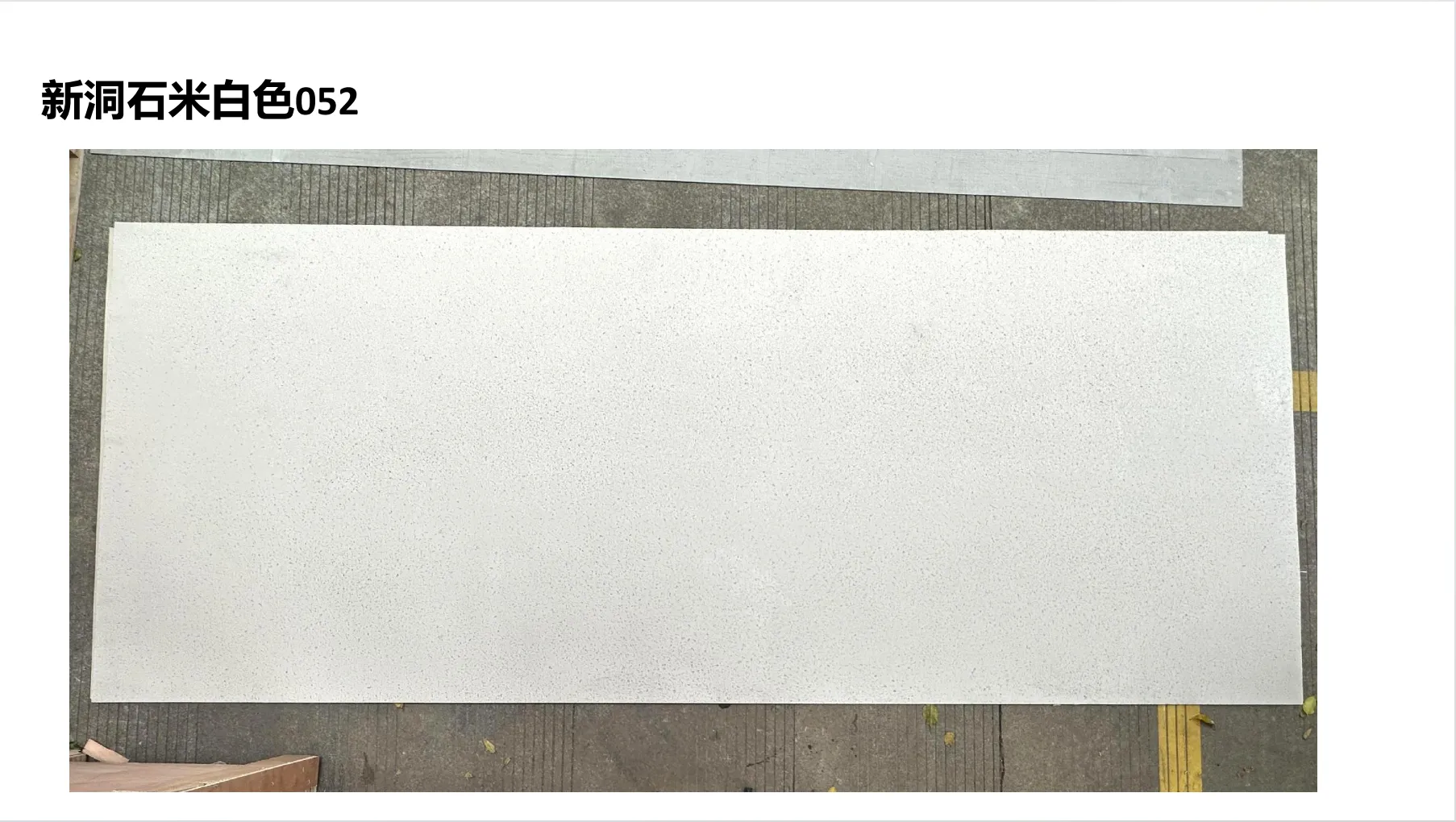
There's a quiet magic in travertine. Run your hand over its surface, and you'll feel the whisper of time—the way water once flowed through its pores, leaving behind delicate veining and tiny fossilized bubbles that catch the light like scattered stars. I first fell for it in a 19th-century villa in Tuscany, where the foyer floor was laid with (large slabs of) travertine, each piece bearing unique marks from decades of footsteps, furniture legs, and the occasional spilled glass of Chianti. It wasn't just stone; it was a living chronicle of the home's history. But later, on a visit to a construction site outside Rome, I saw something that haunted me: a dumpster overflowing with broken travertine fragments, discarded like yesterday's trash. "Too chipped for the new wing," the foreman shrugged. "Cheaper to quarry fresh than fix." That moment stuck with me. If travertine is nature's art, why are we throwing so much of it away? And more importantly—can we do better?
Today, as architects and builders grapple with the urgent need for sustainability, travertino recycling has emerged as a compelling question. Travertine, with its warm tones and timeless texture, has been a staple of design for millennia, from the Colosseum's arches to modern minimalist kitchens. But traditional quarrying and production leave a heavy environmental footprint, and construction waste—including leftover or damaged stone—clogs landfills worldwide. The good news? Innovators are reimagining what happens to "waste" travertine, turning fragments into functional, beautiful materials that honor both the stone's legacy and the planet's limits. Let's dive into this journey: the challenges, the breakthroughs, and why repurposing travertine might just be the next chapter in sustainable design.
To understand why recycling matters, let's start with the status quo. Travertine forms over centuries, created by mineral-rich hot springs depositing calcium carbonate layer by layer. It's a slow, natural process—but human demand for this stone moves at a breakneck pace. Quarries in Italy, Turkey, and Iran (some of the world's top producers) extract millions of tons annually, and the process is far from gentle.
Picture a quarry: vast, open pits carved into hillsides, where heavy machinery tears into rock faces, sending plumes of dust into the air. Deforestation often precedes extraction, stripping ecosystems to make way for equipment and access roads. Water sources nearby? They're frequently diverted or polluted by runoff containing chemicals from cutting fluids or loose sediment. Then there's the carbon footprint: once extracted, raw travertine is transported to factories for cutting, polishing, and shipping—often across continents. A single slab traveling from Turkey to a building site in the U.S. can emit hundreds of kilograms of CO2.
But the waste doesn't stop at the quarry. On construction sites, up to 15% of travertine ends up as scrap—chipped edges, offcuts too small for the design, or pieces damaged during installation. In 2023, the Global Construction Waste Management Report estimated that stone waste alone accounts for 8-10% of all construction debris globally. That's millions of tons of material that could tell a second story, instead of rotting in landfills, where it might take centuries to break down (if it ever does).
"We treat natural stone like it's infinite," says Elena Rossi, a sustainable materials consultant based in Milan, who's worked with architects across Europe. "But travertine isn't just 'rock'—it's a finite resource shaped by millions of years of geology. When we throw away even a small fragment, we're discarding a piece of that history."
So, what if we stopped seeing those broken fragments as trash? Enter travertino recycling—a process that's equal parts science, art, and ingenuity. It starts with collection: recyclers partner with quarries, construction companies, and even demolition crews to gather leftover stone. This "feedstock" includes everything from small chips to larger slabs with cracks or uneven edges. The first step? Sorting. Workers separate travertine from other materials (like concrete or metal) and check for contaminants—adhesives, paint, or sealants that could affect the recycled product. "It's like panning for gold," jokes Marco Alvarez, operations manager at a Barcelona-based recycling facility. "You have to be patient to find the good stuff."
Once sorted, the travertine is cleaned—first with high-pressure water to remove dirt, then with eco-friendly solvents if needed to dissolve stubborn residues. Next comes processing: depending on the desired end product, the stone is crushed into gravel-sized pieces, ground into powder, or cut into smaller slabs using diamond-tipped saws. Here's where innovation kicks in: one of the most promising methods today involves bonding these recycled fragments into new panels using MCM flexible stone technology. MCM, or Modified Composite Material, is a lightweight, durable backing that can be layered with recycled travertine particles, creating thin, flexible sheets that mimic the look of solid stone but weigh up to 70% less. "It's a game-changer," Alvarez explains. "Traditional travertine slabs are heavy, which limits where they can be used—think high-rise facades or walls with weight restrictions. MCM flexible stone panels? You can install them almost anywhere, and they use 60-80% recycled content."
Another approach is 3D printing, part of the MCM 3D printing series . By mixing travertine powder with a biodegradable binder, manufacturers can "print" custom shapes—think decorative tiles, wall art, or even furniture components. The precision of 3D printing means minimal waste during production, and the end result retains travertine's natural texture. "We had a client who wanted a kitchen backsplash with a wave pattern," says Lina Patel, a designer at a London-based 3D printing studio. "Using recycled travertine powder, we printed each tile to interlock perfectly. The veining in the powder created this beautiful, organic gradient—something you couldn't get with new stone. It felt like the travertine itself was guiding the design."
Critics sometimes argue that recycled stone is "inferior"—duller, less durable, or less uniform than new travertine. But ask anyone who's worked with it, and they'll tell you the opposite. Recycled travertine has a character all its own, born from its past life. "Original travertine is lovely, but it's often processed to look 'perfect'—uniform color, minimal flaws," says Rossi. "Recycled pieces? They might have chips, uneven edges, or patches of different veining. That's not a flaw—that's a story. It's the stone's way of saying, 'I was here before, and now I'm here again.'"
Durability? Tests show recycled travertine, especially when reinforced with MCM backing, is just as strong as new stone. It resists scratches, heat, and moisture, making it suitable for floors, walls, and even outdoor use. And cost? Recycled travertine can be 20-40% cheaper than new, since it skips the extraction and transportation costs of quarrying fresh stone. For budget-conscious projects, that's a huge win. "We recently used recycled travertine MCM panels for a boutique hotel in Lisbon," Patel recalls. "The client was worried about cost, but the recycled material saved them 30% on the stone budget. And the guests? They kept asking where we sourced the 'antique' travertine. They loved the uniqueness."
Then there's the environmental impact. A 2024 study by the European Stone Recycling Association found that producing recycled travertine emits 65% less CO2 than extracting and processing new stone. It also reduces landfill waste: one ton of recycled travertine keeps approximately 1.2 tons of debris out of landfills, according to the report. "Sustainability isn't just a buzzword here," says Alvarez. "It's measurable. Every panel we make with recycled content is a step toward a lower-carbon built environment."
| Feature | New Travertine | Recycled Travertine (MCM Panels) |
|---|---|---|
| Carbon Footprint (per ton) | ~850 kg CO2 | ~300 kg CO2 |
| Weight (per sq.m) | 25-30 kg | 8-12 kg |
| Cost (per sq.m) | $80-$150 | $45-$90 |
| Unique Aesthetics | Uniform, minimal variation | Patina, veining, and color variations from prior use |
| Sustainability Certifications | Often uncertified | Eligible for LEED, BREEAM points |
To see recycled travertine in action, step into Caffè Storia, a cozy spot in Berlin's Neukölln neighborhood. The owner, Klaus Müller, wanted the space to feel "rooted in history but forward-thinking"—so when his architect suggested using recycled travertine for the accent wall, he jumped at the idea. "I grew up in a village with a travertine quarry," Müller says. "I remember my grandfather talking about how they used every piece, even the small ones. It felt right to honor that mindset here."
The wall is made from MCM flexible stone panels, each embedded with recycled travertine fragments sourced from a nearby quarry that was closing down. The panels vary in tone—warm beiges, soft grays, and hints of terracotta—echoing the color palette of Müller's childhood. "The installer told me some of these fragments might be 50 years old, leftover from when the quarry supplied stone for East Berlin's government buildings," he says. "Now they're here, making people smile over their lattes. It's like the stone is still telling stories."
Beyond aesthetics, the choice made practical sense. The building's old walls couldn't support heavy stone, so the lightweight MCM panels were a must. And the cost? "We saved enough to add outdoor seating," Müller laughs. "Plus, customers love knowing they're supporting something sustainable. I've had at least ten people ask where we got the stone so they can use it in their own homes."
For all its promise, travertino recycling faces hurdles. One of the biggest is contamination. "A lot of construction waste has travertine mixed with other materials—like mortar, drywall, or even lead paint from older buildings," explains Rossi. "Separating it is labor-intensive, and if we miss a contaminant, it can ruin a batch of recycled panels. That adds cost and risk."
Then there's the perception gap. Some architects and homeowners still associate "recycled" with "lower quality." "I've had clients say, 'We want the real thing,'" Patel admits. "They don't realize recycled travertine can be just as beautiful, if not more so. It takes education—showing them samples, explaining the process, letting them feel the texture. Once they see it, the hesitation usually fades."
Processing infrastructure is another challenge. While recycling facilities exist in Europe and parts of North America, they're scarce in regions like Asia or Africa, where travertine is also widely used. Without local collection and processing networks, transporting waste stone long distances negates the environmental benefits. "We need more facilities, more investment," Alvarez says. "Governments could help by offering tax incentives for recycling or mandating that construction projects divert a percentage of stone waste from landfills."
Recycled travertine isn't the only sustainable option out there. Materials like fair-faced concrete (which requires minimal finishing, reducing waste) and foamed aluminium alloy boards are gaining traction. But travertine offers something these alternatives often lack: warmth and history. "Fair-faced concrete is sleek and modern, but it can feel cold," Rossi says. "Travertine, even recycled, has a living quality. It breathes, it ages gracefully, it connects us to nature in a way man-made materials can't."
What's more, recycled travertine aligns with global green building standards. Projects using it can earn points under LEED (Leadership in Energy and Environmental Design) or BREEAM (Building Research Establishment Environmental Assessment Method) certifications, which reward materials with low embodied carbon and recycled content. "Developers are starting to see this as a selling point," Patel notes. "Ten years ago, sustainability was a niche concern. Now it's a priority for investors, tenants, and homeowners. Recycled travertine isn't just good for the planet—it's good for business."
The future of travertino recycling is bright—and it's being shaped by innovation, demand, and a growing commitment to circularity. One trend to watch is the expansion of the MCM 3D printing series, which could soon allow for on-site printing of custom travertine elements, reducing transportation needs even further. "Imagine a construction site with a 3D printer that uses local recycled travertine powder to make exactly the pieces needed," Alvarez says. "No waste, no shipping—just stone, reborn."
Another area is consumer education. Brands are starting to market recycled travertine not as a "sustainable alternative" but as a premium, design-forward choice. "We're seeing more high-end projects embrace it—luxury hotels, boutique offices—because they want to stand out," Patel adds. "Recycled travertine's uniqueness is its superpower. In a world of mass-produced materials, people crave authenticity."
Perhaps most importantly, the next generation of architects and builders is demanding change. "My students talk about 'material ethics' like it's second nature," Rossi says. "They don't want to specify materials that harm the planet. They're asking, 'Where does this come from? Can it be recycled?' That pressure is going to drive the industry forward."
Travertino recycling isn't just about sustainability—it's about respect. Respect for the earth that forged this stone over millennia, respect for the craftspeople who once shaped it, and respect for the future generations who deserve to inherit a world with resources intact. When we repurpose travertine, we're not just saving landfill space or cutting carbon emissions. We're giving a piece of history a new voice—a chance to be part of someone's home, someone's workspace, someone's memory.
So the next time you see travertine, whether in a grand monument or a humble café, take a moment to wonder: What stories has it lived? And what stories could it live next? The answer, I think, is up to us. We can keep treating it as a disposable commodity, or we can embrace its potential to be reborn—stronger, more beautiful, and more meaningful than before.
After all, the best materials aren't just built to last. They're built to evolve.
Recommend Products












