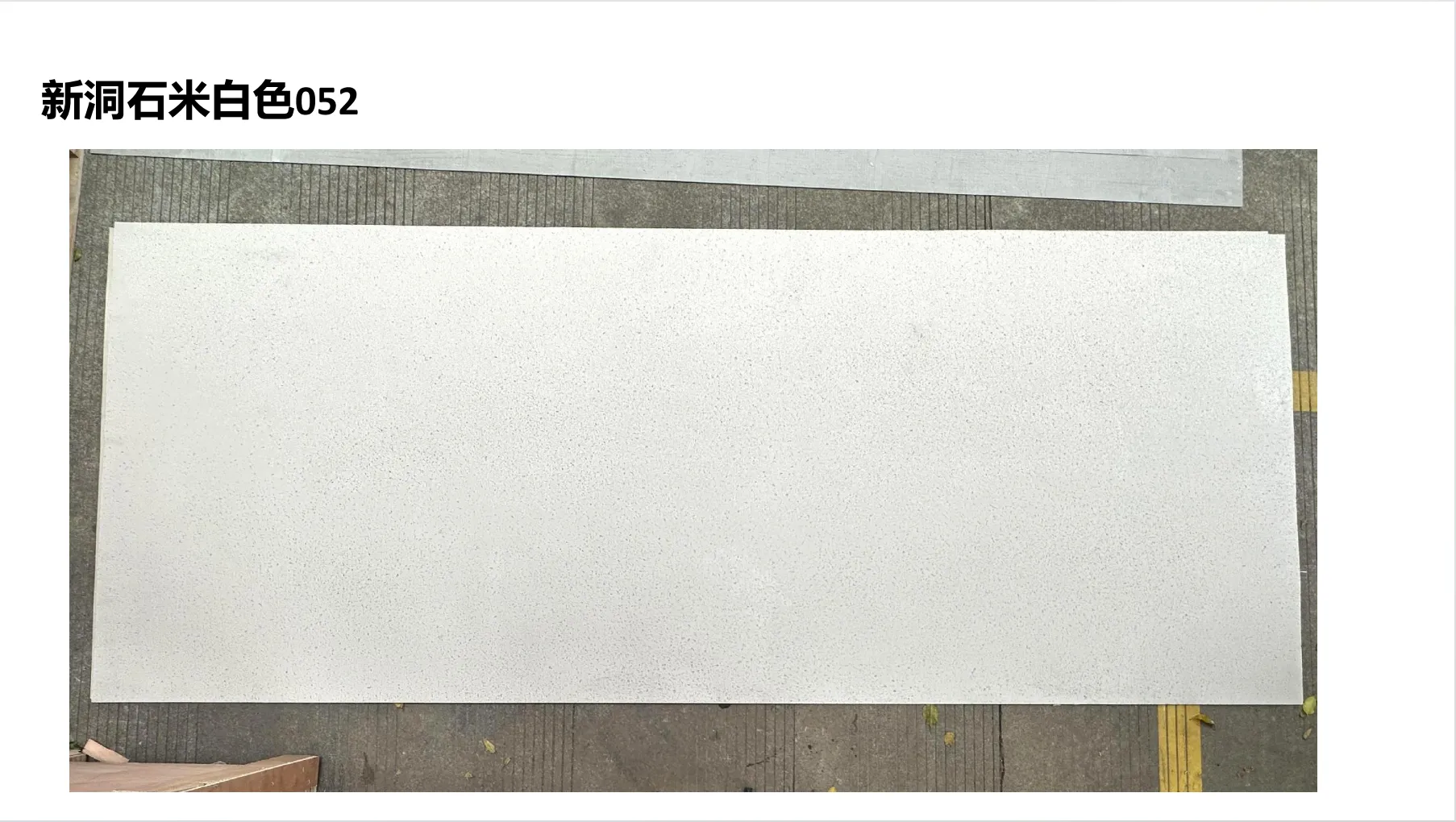
Picture this: You've just finished designing your dream kitchen. The countertops gleam with the warm, honeyed tones of natural
travertine, its unique veining telling a story millions of years in the making. You host a dinner party, and as you're serving dessert, a guest accidentally knocks over a glass of red wine. Before you can react, the deep crimson liquid seeps into the stone, leaving a splotch that no amount of scrubbing seems to erase. Sound familiar? For homeowners and designers who've fallen in love with natural stone, this scenario is all too common.
Travertino—with its timeless beauty—has long been a staple in high-end interiors, but its Achilles' heel? Stains. Enter
MCM flexible stone
: a revolutionary building material that marries the aesthetic allure of natural stone with the practicality modern life demands. In this article, we'll dive into why
travertino struggles with stains, how MCM material solves that problem, and why it's quickly becoming the go-to choice for anyone who refuses to choose between beauty and functionality.
The Allure of Travertino—and Its Dirty Little Secret
Let's start with the obvious:
travertine is stunning. Formed from mineral-rich hot springs, this sedimentary rock boasts a porous structure filled with tiny cavities (called vesicles) created by trapped carbon dioxide bubbles. These vesicles give
travertine its characteristic "holey" texture, which designers adore for adding depth and organic charm to spaces. From ancient Roman amphitheaters to contemporary minimalist homes,
travertine has stood the test of time as a symbol of elegance. But here's the catch: those same vesicles that make
travertine so visually interesting are also its biggest weakness when it comes to stains.
Think about your morning routine. You brew a cup of coffee, and a few drops spill onto your
travertine backsplash. By the time you grab a cloth, the liquid has already seeped into the stone's pores. By noon, that small spill has oxidized into a dark, permanent mark. Or consider a family dinner: a splatter of tomato sauce, a drizzle of olive oil, or even a drop of fruit juice can leave a lasting reminder on
travertine floors. The problem isn't just the stains themselves—it's the anxiety that comes with owning such a high-maintenance material. Homeowners often find themselves tiptoeing around their own spaces, afraid to live fully for fear of ruining their investment.
To combat this, many turn to sealants. But sealing
travertine is a temporary fix. Most sealants last only 6–12 months, and even then, they don't make the stone completely stain-proof—they just slow down absorption. Reapplying sealant is a messy, time-consuming process that involves deep cleaning, drying, and applying multiple coats, often requiring you to vacate the space for hours (or days). And let's not forget the cost: professional sealing can run hundreds of dollars per treatment, adding up significantly over the years. For commercial spaces like restaurants or hotels, where spills are daily occurrences, the upkeep becomes a logistical nightmare.
What Is MCM Material, Anyway? The Game-Changer in Stone Design
If
travertine's porosity is the problem, then
MCM flexible stone
is the solution. Short for Modified Composite Material, MCM is an engineered building material designed to mimic the look and feel of natural stone—without the inherent flaws. Developed by combining natural minerals (like marble dust, quartz, and stone aggregates) with high-performance polymers, MCM is created using advanced manufacturing techniques, including the
mcm 3d printing series
, which allows for hyper-realistic texture replication. The result? A material that looks indistinguishable from natural
travertine (or any other stone, for that matter) but behaves like a modern, low-maintenance wonder.
What makes MCM different? Let's break it down. Unlike natural stone, which is mined and cut, MCM is
engineered
at the molecular level. The polymers in its composition fill in the gaps that would otherwise create pores, making MCM non-porous and inherently stain-resistant. But it's not just about stain resistance—MCM is also flexible (hence the name "flexible stone"), lightweight, and incredibly durable. Imagine a material that can bend around curved surfaces, weigh a fraction of natural stone, and stand up to scratches, impacts, and UV rays without fading. That's MCM in a nutshell.
And here's the best part: MCM doesn't limit your design choices. While we're focusing on
travertine here, MCM comes in a staggering array of styles, from the metallic sheen of
lunar peak golden
to the industrial chic of
foamed aluminium alloy board (vintage silver)
. Whether you're after the rustic charm of a mountain lodge or the sleek minimalism of a downtown loft, there's an MCM variant to match. Designers rave about its versatility—you can use it for countertops, walls, floors, facades, and even furniture. It's like having the world of natural stone at your fingertips, minus the stress.
Let's get practical. We've talked about the "why," but how does MCM actually perform when faced with real-world stains? To find out, let's put both materials through a series of common household and commercial spills. We'll simulate coffee, red wine, olive oil, and soy sauce—four of the most notorious stain culprits—and see how they hold up.
Coffee Test:
Natural
travertine, even sealed, will absorb coffee within minutes. After 24 hours, the stain requires heavy-duty cleaners (think baking soda paste, hydrogen peroxide, or specialized stone cleaners) and may still leave a faint discoloration.
MCM flexible stone? Wipe it with a damp cloth, and the coffee disappears. No scrubbing, no harsh chemicals—just a clean surface.
Red Wine Test:
Red wine is a nightmare for
travertine. Its deep pigment seeps into pores quickly, and oxidation turns it into a dark, stubborn stain. Even with immediate blotting, you'll likely need to call a professional to attempt removal. MCM, on the other hand, repels the wine entirely. A quick wipe with soapy water leaves zero trace—no discoloration, no residue.
Olive Oil Test:
Oil is perhaps the trickiest stain for natural stone, as it doesn't evaporate and can linger in pores indefinitely.
Travertine will absorb olive oil, leaving a greasy, dark spot that often requires poultice treatments (a paste of absorbent material like baking soda and water) left on for 24–48 hours. MCM's non-porous surface rejects oil entirely. A paper towel wipe removes the oil, and the surface remains unchanged.
Soy Sauce Test:
Salty and pigmented, soy sauce is a double threat. On
travertine, it stains quickly and deeply, often requiring multiple cleaning sessions. With MCM, soy sauce wipes away with a damp sponge, no effort needed.
The science behind this is simple: MCM's polymer matrix creates a barrier that prevents liquids from penetrating the surface. Natural
travertine, by contrast, has an open-cell structure that invites absorption. To quantify this, let's look at water absorption rates: natural
travertine typically absorbs 3–5% of its weight in water, while MCM absorbs less than 0.1%. That's a difference of 30–50 times—more than enough to make or break a stain's permanence.
Beyond Stains: MCM's Other Winning Traits
Stain resistance is the star of the show, but MCM has plenty of other tricks up its sleeve. Let's explore why it's not just a better alternative to
travertine—it's a superior building material, period.
Durability That Lasts:
Natural
travertine is brittle. A heavy object dropped on it can crack or chip, and over time, foot traffic can wear down its surface, dulling its finish. MCM, however, is engineered to withstand daily wear and tear. Its flexible nature means it can absorb impacts without breaking, and its surface resists scratches from furniture, pets, and even high heels. In commercial settings, where floors take a beating, MCM has been known to last 20+ years with minimal maintenance.
Lightweight and Easy to Install:
Natural stone is heavy—really heavy. A standard 12x12-inch
travertine tile can weigh 5–7 pounds, making installation a two-person job and requiring additional structural support for walls and facades. MCM, by comparison, weighs just 3–4 pounds per square foot. This not only makes installation faster and cheaper (no need for extra labor or structural reinforcements) but also opens up design possibilities. Imagine cladding a curved staircase or a dome-shaped ceiling with stone—with MCM, it's possible. Traditional stone would be too heavy and rigid to bend without breaking.
Low Maintenance, High Reward:
We've touched on this, but it's worth repeating: MCM requires almost no maintenance. No sealing, no special cleaners, no annual treatments. A simple wipe with soap and water is all it takes to keep it looking brand new. For busy homeowners and commercial property managers, this translates to huge time and cost savings over the years.
Eco-Friendly Credentials:
Mining natural stone is resource-intensive, often involving quarrying that disrupts ecosystems and consumes large amounts of energy. MCM, by contrast, uses recycled stone aggregates and requires less energy to produce. It also lasts longer, reducing the need for replacement and further minimizing its environmental footprint. For architects and builders focused on sustainable design, MCM is a win-win.
|
Feature
|
Natural Travertine
|
MCM Flexible Stone
|
|
Porosity
|
High (vesicles and pores throughout)
|
Non-porous (polymer matrix prevents absorption)
|
|
Stain Resistance
|
Poor (requires sealing every 6–12 months; still vulnerable to deep stains)
|
Excellent (resists coffee, wine, oil, and more with simple wiping)
|
|
Water Absorption
|
3–5% of weight
|
<0.1% of weight
|
|
Durability
|
Brittle; prone to cracking, chipping, and wear
|
Flexible; resistant to impacts, scratches, and UV fading
|
|
Installation Weight
|
5–7 lbs per sq ft
|
3–4 lbs per sq ft
|
|
Maintenance Needs
|
High (sealing, specialized cleaners, professional treatments)
|
Low (soap and water only; no sealing required)
|
|
Aesthetic Options
|
Limited to natural variations (beige, cream, rust, gold)
|
Extensive (travertine, lunar peak series, foamed aluminium, and more)
|
|
Cost Over Time
|
High (initial cost + ongoing maintenance)
|
Moderate (higher initial cost than some stones, but no maintenance fees)
|
Real-World Impact: How MCM Transformed a Busy Restaurant Kitchen
Let's hear from someone who's been there. Maria Rodriguez owns a popular Italian restaurant in downtown Chicago, where spills are part of the daily grind. "We originally installed
travertine floors in our kitchen and dining area because we loved the warm, rustic look," she recalls. "But within six months, the floors were covered in stains—tomato sauce, olive oil, red wine, you name it. We were sealing them every three months, and even then, the stains kept coming back. Our maintenance crew was spending hours scrubbing, and we were losing money on downtime."
After researching alternatives, Maria switched to
MCM flexible stone with a
travertine finish. "It was a game-changer," she says. "Now, when a busboy spills a tray of pasta sauce, we just wipe it up with a cloth. No scrubbing, no stains, no stress. The floors still look brand new, even after two years of heavy use. Our maintenance costs have dropped by 70%, and we've saved countless hours of labor. Plus, our customers can't tell the difference—they still comment on how beautiful the 'stone' floors are."
Maria's story isn't unique. From hotels and airports to residential kitchens and bathrooms, MCM is proving to be a practical, beautiful solution for spaces that need to look great
and
work hard.
But Does It Look "Fake"? Debunking the MCM Aesthetic Myth
One of the most common objections to MCM is the fear that it will look artificial. After all, natural stone's beauty lies in its imperfections—the unique veining, the subtle color variations, the organic texture. Can a man-made material really replicate that?
The short answer: yes. Thanks to advancements in technology, particularly the
mcm 3d printing series
, MCM manufacturers can now capture the intricate details of natural stone with stunning accuracy. Take
travertine, for example: MCM replicas include the same vesicle patterns, veining, and color gradients as the real thing. Run your hand over an
MCM flexible stone panel, and you'll feel the same texture as natural
travertine—rough in some spots, smooth in others. The only difference? You won't feel the pores.
Designers often note that MCM actually offers more consistency than natural stone. With natural
travertine, each slab is unique—which can be a pro or a con. If you're trying to create a uniform look across a large space, you might end up with mismatched colors or patterns. MCM, by contrast, allows for consistent coloring and texture, ensuring a cohesive design. And if you
want
variation, manufacturers can intentionally introduce subtle differences to mimic the natural stone experience.
Take
lunar peak golden
, for instance. This MCM variant mimics the iridescent glow of stone found in mountainous regions, with flecks of gold that catch the light. It's a look that would be nearly impossible to achieve with natural stone, yet it feels just as organic and luxurious. Similarly,
foamed aluminium alloy board (vintage silver)
offers a modern, metallic twist on traditional stone, proving that MCM isn't just copying natural stone—it's elevating it.
The Future of Building Materials: Why MCM Is Here to Stay
As we look to the future, it's clear that building materials need to do more than just look good—they need to be practical, sustainable, and adaptable. MCM checks all these boxes. With urbanization on the rise and spaces becoming smaller and more multi-functional, lightweight, flexible materials like MCM will play a crucial role in maximizing design potential.
Architects are already embracing MCM for its ability to push boundaries. Imagine a skyscraper facade that mimics the look of
travertine but weighs half as much, reducing the building's carbon footprint. Or a zero-waste home where MCM walls double as insulation, thanks to their lightweight, thermal properties. The possibilities are endless.
And as technology advances, we can expect even more innovation from MCM. Manufacturers are experimenting with self-cleaning coatings, integrated lighting, and even smart sensors embedded in MCM panels. The future isn't just about replacing natural stone—it's about creating materials that are smarter, more efficient, and more beautiful than anything that came before.
Final Thoughts: Beauty Without the Burden
At the end of the day, choosing building materials is about balance. We want spaces that inspire us, that feel warm and inviting, that reflect our personal style. But we also want to live in those spaces without fear—fear of stains, fear of damage, fear of endless maintenance. For decades, natural stone like
travertine has forced us to choose between beauty and practicality.
MCM flexible stone changes that.
Whether you're a homeowner dreaming of a stain-free kitchen, a designer looking for durable yet stunning materials, or a commercial builder aiming to reduce costs and downtime, MCM offers a solution that doesn't compromise. It's not just a material—it's a mindset shift. A recognition that beauty shouldn't come with a price tag of stress and upkeep.
So, the next time you find yourself admiring a
travertine surface, ask yourself: do I love it enough to spend hours maintaining it? Or would I rather have that same beauty, minus the burden? With MCM, you don't have to choose. You can have it all—timeless elegance, unbeatable durability, and the freedom to live fully in the spaces you love.