
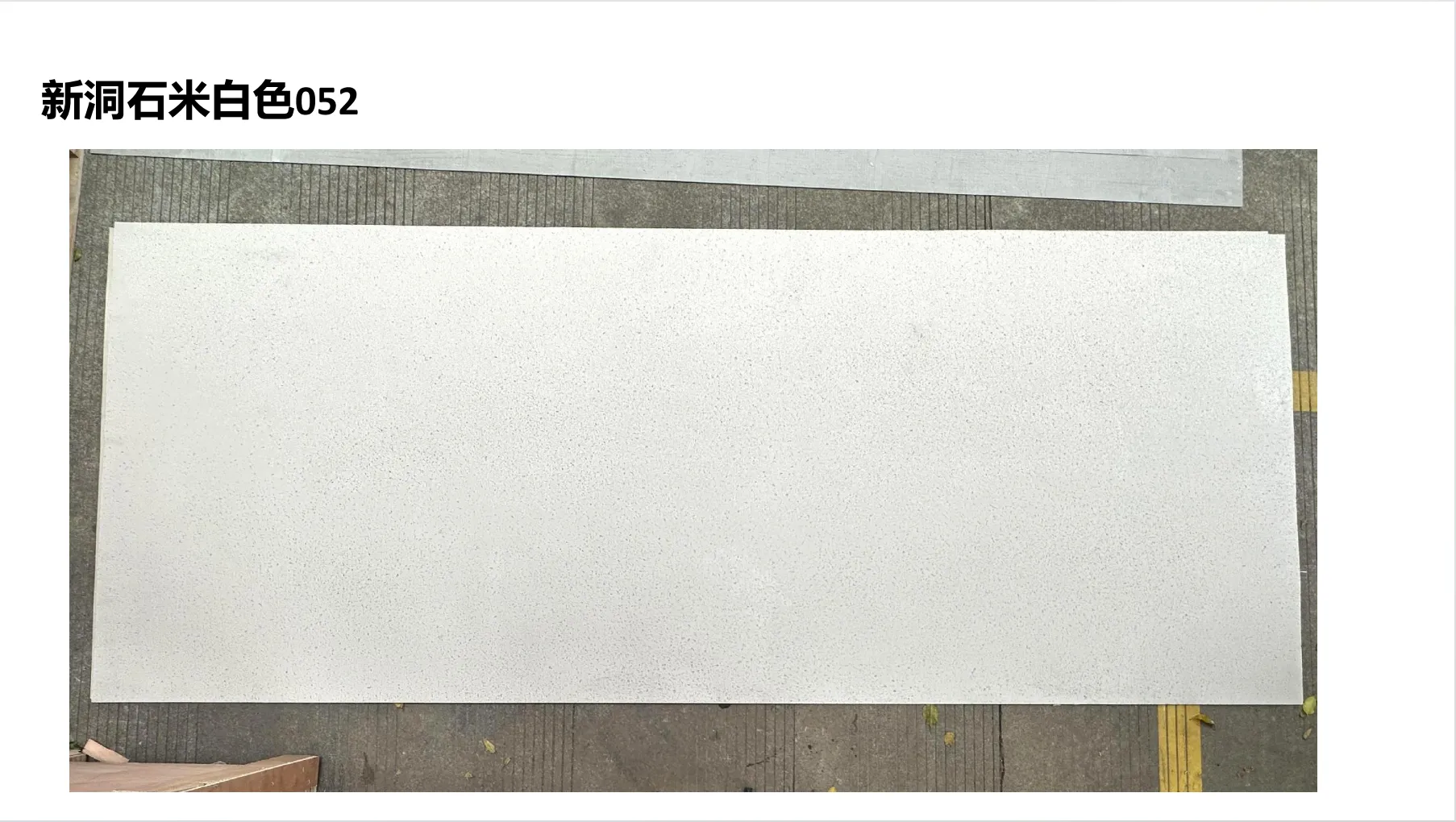
If you've ever stepped into a space where travertino takes center stage—whether it's a sunlit kitchen with travertine (beige) floors, a grand foyer with towering travertino walls, or a cozy bathroom wrapped in travertino (vintage gold)—you know its magic. There's a warmth to travertino that's hard to replicate: the way light dances off its porous surface, the subtle veining that tells a story of ancient mineral deposits, the earthy hues that feel both grounded and elevated. But here's a little secret the pros know: that stunning travertino finish? It's only as strong as the subfloor beneath it. The subfloor—the hidden layer that supports every tile, slab, or panel—is the foundation of your stone's longevity. Skimp on the subfloor, and even the most expensive travertino can crack, shift, or lose its charm faster than you'd expect. So today, let's pull back the curtain and talk about what it really takes to build a subfloor that lets your travertino shine for decades.
First, let's get to know travertino a little better. Unlike, say, MCM flexible stone—a modern composite material designed to bend and adapt—natural travertino is a bit of a perfectionist. It's formed from mineral-rich hot springs over thousands of years, which gives it that unique porous texture, but also makes it somewhat brittle. Think of it like a delicate piece of pottery: beautiful, but not built to withstand stress or uneven pressure. If the subfloor underneath it dips, shifts, or has even tiny imperfections, travertino can't "give" like a more flexible material might. Instead, that stress transfers directly to the stone, leading to cracks, chips, or loose tiles over time.
And it's not just about physical stress. Travertino is also porous, which means it's prone to absorbing moisture. If the subfloor traps water or humidity, that moisture can seep into the stone, causing efflorescence (those unsightly white salt deposits), staining, or even mold. Then there's levelness: travertino tiles or slabs aren't forgiving of uneven surfaces. A subfloor that's off by just 1/8 of an inch over a 10-foot span can create "lippage"—where edges of adjacent tiles stick up unevenly—making your floor feel bumpy and look unprofessional. In short, the subfloor isn't just "extra work"—it's the difference between a travertino installation that wows for 50 years and one that starts failing in 5.
So what does a "perfect" subfloor for travertino look like? It's not just about slapping down some concrete and calling it a day. Let's break down the must-haves, step by step.
Travertino is picky about who it "hangs out" with. The subfloor material needs to be chemically compatible with both the stone and the adhesive you'll use to install it. For example, if you're using a cement-based thinset, a subfloor made of untreated wood could react poorly, leading to adhesion issues. Similarly, subfloors with high alkalinity might leach chemicals into the travertino, causing discoloration—especially in lighter shades like travertino (vintage silver).
Fair-faced concrete is a top choice here. You've probably seen fair-faced concrete in modern designs: that smooth, uncoated finish that celebrates the material's raw texture. It's dense, non-reactive, and provides a rock-solid base for travertino. Unlike painted or sealed concrete, fair-faced concrete has a porous surface that bonds well with adhesives, creating a strong, lasting connection. Plus, it's moisture-resistant by nature, which is a big win for travertino (more on moisture later).
Other materials can work too—plywood, cement board, or even foam board in some cases—but they come with caveats. The key is to match the subfloor to your travertino's needs: rigidity, stability, and zero chemical drama.
If travertino had a nemesis, it would be excess moisture. Those tiny pores we love so much? They're like little sponges, ready to soak up water from the subfloor. Over time, that moisture can lead to all sorts of problems: mold growing between the subfloor and stone, tiles lifting as the adhesive breaks down, or efflorescence—those white, powdery deposits that form when water evaporates and leaves mineral salts behind. Trust us, efflorescence on a beautiful travertine (starry blue) wall is not the vibe you're going for.
So how do you keep moisture in check? Start with a moisture test. Yep, even if your subfloor "looks dry," you need hard numbers. For concrete subfloors, use a moisture meter to check the relative humidity (RH)—aim for less than 75% RH for most travertino installations. If you're working with wood subfloors, test for moisture content (MC)—ideally between 6% and 12%, depending on your climate.
If moisture levels are too high, don't panic. A good vapor barrier can save the day. Think of it as a raincoat for your subfloor: a thin, waterproof layer (like a polyethylene sheet or liquid-applied membrane) that blocks moisture from seeping up into the travertino. Just make sure the vapor barrier is compatible with your adhesive—some barriers can interfere with bonding, so check the manufacturer's specs.
Imagine laying a sheet of paper over a bumpy table. The paper would crease, fold, and never lie flat. Travertino tiles work the same way—if the subfloor isn't perfectly level and flat, the stone will take on those imperfections, leading to stress cracks or uneven seams. And when we say "level," we're not talking "close enough." The industry standard for stone installations is a maximum variation of 1/8 inch over 10 feet and 1/16 inch over 2 feet. That's less than the thickness of a dime! Even tiny dips can cause tiles to rock when walked on, weakening the adhesive over time.
So how do you check for levelness? Grab a 4-foot straightedge and a feeler gauge (a thin metal tool that measures gaps). Lay the straightedge across the subfloor in different directions—lengthwise, widthwise, diagonally—and slide the feeler gauge under any gaps. If you find spots where the gap is bigger than 1/8 inch, you'll need to fix them before installing travertino. For small dips, a self-leveling compound (mixed with water to a pourable consistency) can smooth things out. For larger bumps, grind down the high spots with a concrete grinder. It might feel tedious, but trust us: a flat subfloor means a travertino installation that looks professional and lasts.
Travertino isn't light. A standard 12x12-inch travertino tile weighs about 5-6 pounds, and larger formats—like a boulder slab (vintage black) or a 24x48-inch travertino panel—can tip the scales at 20 pounds or more. Multiply that by hundreds of tiles, and you're looking at a lot of weight resting on the subfloor. If the subfloor isn't strong enough to support that load, it will flex or sag, and your travertino will pay the price.
So what's "strong enough"? For residential floors, the subfloor should handle at least 40 pounds per square foot (PSF) of live load (that's people, furniture, etc.) plus the dead load of the stone itself (about 10-15 PSF for travertino). For commercial spaces—think hotels, restaurants, or retail—you'll need even more strength, often 50-100 PSF. To check, consult a structural engineer or refer to your local building code—they'll specify the minimum requirements for your project.
If you're working with wood subfloors, pay extra attention to joist spacing. Most travertino installations require joists spaced no more than 16 inches on center (OC) to prevent sagging. If your joists are 24 inches OC, you may need to add blocking (extra pieces of wood between joists) or install a second layer of plywood to beef up the strength. For concrete subfloors, the compressive strength (how much weight it can handle without cracking) should be at least 3,000 psi (pounds per square inch)—ask your contractor for test results from the concrete supplier to be sure.
You wouldn't paint a dirty wall, right? The same logic applies to subfloors and travertino. Even if your subfloor is level, dry, and strong, a dirty surface can ruin the installation. Dust, grease, oil, old adhesive residue, or even loose concrete particles will prevent the new adhesive from bonding properly, leading to tiles that pop up or shift over time.
So prep work is non-negotiable. Start by sweeping or vacuuming up all loose debris. For concrete subfloors, use a stiff brush to scrub away any stubborn dirt, then mop with a mild detergent (avoid harsh chemicals that might leave a residue). If there are old adhesive patches, scrape them off with a floor scraper or grind them down. For wood subfloors, sand away any splinters or rough spots, and fill gaps with wood filler. Once the surface is clean, give it a final wipe with a damp cloth to remove any remaining dust—you want it to feel smooth and clean to the touch.
In some cases, you might also need to "prime" the subfloor. A primer is a thin coating that seals the surface, improves adhesion, and prevents the subfloor from sucking moisture out of the adhesive too quickly. For porous subfloors like fair-faced concrete or plywood, a primer is a smart move—it ensures the adhesive cures properly and forms a strong bond with both the subfloor and the travertino.
Now that we know what the subfloor needs to do, let's talk about the most common materials and how they stack up for travertino installations. Each has its pros and cons, so choosing the right one depends on your space, budget, and project goals.
| Subfloor Material | Advantages | Disadvantages | Best For | Key Prep Steps |
|---|---|---|---|---|
| Fair-Faced Concrete |
• High strength and rigidity
• Moisture-resistant • Bonds well with adhesives • Low maintenance long-term |
• Can crack if not cured properly
• Heavy (not ideal for upper floors with weight limits) • Requires precise leveling during installation |
Ground floors, basements, commercial spaces, outdoor patios |
• Test moisture levels (RH < 75%)
• Fill cracks with epoxy or patching compound • Grind down high spots • Clean thoroughly and prime porous surfaces |
| Plywood |
• Lightweight (great for upper floors)
• Easy to cut and install • Works well with underlayment systems |
• Susceptible to moisture damage
• Can flex if joists are spaced too far apart • Requires a vapor barrier in damp areas |
Residential upper floors, walls (non-wet areas) |
• Use exterior-grade plywood (minimum 5/8 inch thick)
• Secure with screws (not nails) every 6 inches along edges • Install a vapor barrier over the plywood • Add a cement board underlayment for wet areas |
| Cement Board |
• Moisture-resistant (ideal for bathrooms, kitchens)
• Stiff and stable • Bonds well with stone adhesives |
• Heavy (requires extra support)
• Can crack if not installed with screws • Needs taping and mudding of seams |
Wet areas (showers, backsplashes), floors over wood subfloors |
• Install over a clean, level subfloor
• Secure with corrosion-resistant screws every 8 inches • Tape seams with fiberglass mesh tape and thinset • Sand edges to remove sharp corners |
Okay, so you've prepped your subfloor—now it's time to lay the travertino. The installation process varies a bit depending on the subfloor material, so let's break it down.
Fair-faced concrete is travertino's BFF, but you still need to play by the rules. Start by mixing your adhesive—for travertino, a polymer-modified thinset is usually best. It's stronger than standard thinset and has better flexibility, which helps absorb minor subfloor movement. Apply the thinset with a notched trowel—use a 1/4-inch notched trowel for small tiles (up to 8x8 inches) and a 1/2-inch trowel for larger tiles or slabs. Hold the trowel at a 45-degree angle to create even ridges, which ensures full coverage under the stone.
When placing the travertino, press firmly and twist slightly to bed it into the thinset—you should see a little thinset squeeze out from the edges (that's a good sign it's making full contact). Use tile spacers to keep grout lines consistent, and check levelness with a 2-foot level every few tiles. If a tile is uneven, gently lift it, add or remove thinset, and reset it. Let the thinset cure for 24-48 hours (check the manufacturer's instructions) before grouting.
If you're using plywood (common in upper floors), adding a cement board underlayment is a must—especially in wet areas. Start by securing the plywood to the joists with 2-inch screws (screws hold better than nails and reduce squeaking). Then, cut the cement board to size with a utility knife or circular saw (use a carbide blade to avoid dulling). Lay the cement board with a 1/8-inch gap between sheets (to allow for expansion) and secure it with cement board screws every 8 inches along the edges and every 12 inches in the field (the middle of the board).
Next, tape the seams with fiberglass mesh tape and cover them with a thin layer of thinset (this prevents cracks from forming in the grout later). Once the thinset is dry, sand the seams smooth, and you're ready to install the travertino. Follow the same adhesive and placement steps as with concrete, but be extra careful not to overtighten screws—you don't want to crack the cement board.
Foam board subfloors are less common for travertino, but they work for lightweight wall installations (think accent walls or backsplashes). Choose an extruded polystyrene foam board (XPS) with a minimum thickness of 1/2 inch, and secure it to the wall studs with foam-compatible screws. Since foam is flexible, you'll need to use a heavy-duty construction adhesive (like PL Premium) to bond the travertino—thinset alone won't be strong enough. Apply the adhesive in a 1/4-inch bead around the edges of the travertino and a few dots in the center, then press firmly against the foam board. Hold it in place with painter's tape until the adhesive cures (usually 24 hours).
Even with careful planning, subfloor issues can pop up. Here's how to spot and fix the most common problems before they ruin your travertino:
Small cracks (less than 1/8 inch wide) are common in concrete and usually harmless, but larger cracks can shift over time, stressing the travertino. Fix them by cleaning out the crack with a wire brush, then filling it with an epoxy concrete repair kit (mix the epoxy, apply with a putty knife, and smooth it flush with the surface). For hairline cracks, a concrete patching compound (mixed with water to a paste consistency) works well.
If you see dark spots or warping on plywood, it means moisture has seeped in. replace any damaged sections—don't try to cover them up! Then, install a vapor barrier (10-mil polyethylene sheet) over the entire subfloor, overlapping seams by 6 inches and taping them shut with waterproof tape. This will block future moisture from reaching the travertino.
If your plywood subfloor feels bouncy when you walk on it, the joists are probably spaced too far apart or undersized. Add blocking between joists (cut 2x4s to fit snugly between the joists and nail them in place) to reduce flex. For severe sagging, consult a structural engineer—you may need to sister the joists (add a second joist next to the existing one) to strengthen them.
Grease and oil are adhesive killers. To remove them from concrete, mix a solution of trisodium phosphate (TSP) and warm water, scrub the area with a stiff brush, and rinse thoroughly. For tough stains, use a degreaser like Krud Kutter, then neutralize with water and let dry completely before installing travertino.
At the end of the day, installing travertino is a labor of love—and that love starts with the subfloor. It might not be as glamorous as choosing between travertino (starry red) and travertino (starry orange), or debating boulder slab sizes, but it's the most important step in ensuring your stone stands the test of time. Think of it like building a house: you wouldn't skip the foundation to save time or money, right? The same goes for travertino. A little extra time spent testing moisture, leveling the subfloor, or prepping the surface will pay off in decades of beautiful, trouble-free stone.
So whether you're tackling a DIY project or working with a contractor, don't be afraid to ask questions about the subfloor. Request moisture test results, check the levelness yourself with a straightedge, and make sure the prep work is done thoroughly. Your travertino—and your future self—will thank you.
After all, travertino isn't just a building material—it's a legacy. It's the stone that will welcome your guests, ground your daily routines, and age gracefully alongside your life's moments. And with the right subfloor, it will do all that and more.
Recommend Products












